
Which non-crumbly treats work for training out and about?
For training on the move, the best non-crumbly training treats for your pocket are small, soft, easy to grab, and appealing enough to keep your dog engaged. Aim for pieces no larger than a pea, and half that size for very small dogs. Crunchy rewards can leave crumbs, while larger pieces can slow the session as your dog chews.
That matters on a trail, in a busy park, or beside the ring: rewards need to travel cleanly and arrive fast. A treat that suits one dog may not motivate another, so your dog’s preferences matter as much as texture. You’ll learn how to weigh treat size, softness, appeal, and cost when choosing rewards for frequent practice. We’ll also cover how to portion treats before heading out and what makes them easier to handle from a pocket or bait bag, so you can focus on the next cue instead of a messy reward.
Key Takeaways
- Keep rewards small and quick to chew so training can keep moving, especially when you're working on the go.
- Let your dog’s preferences guide your choice; a high-value reward is one your dog is motivated to work for.
- Choose treats that are easy to handle and break cleanly, helping keep pockets and treat pouches tidier.
- For frequent practice, consider how easily you can portion and carry treats as well as their overall value.
1. Treat size and texture for quick training rewards
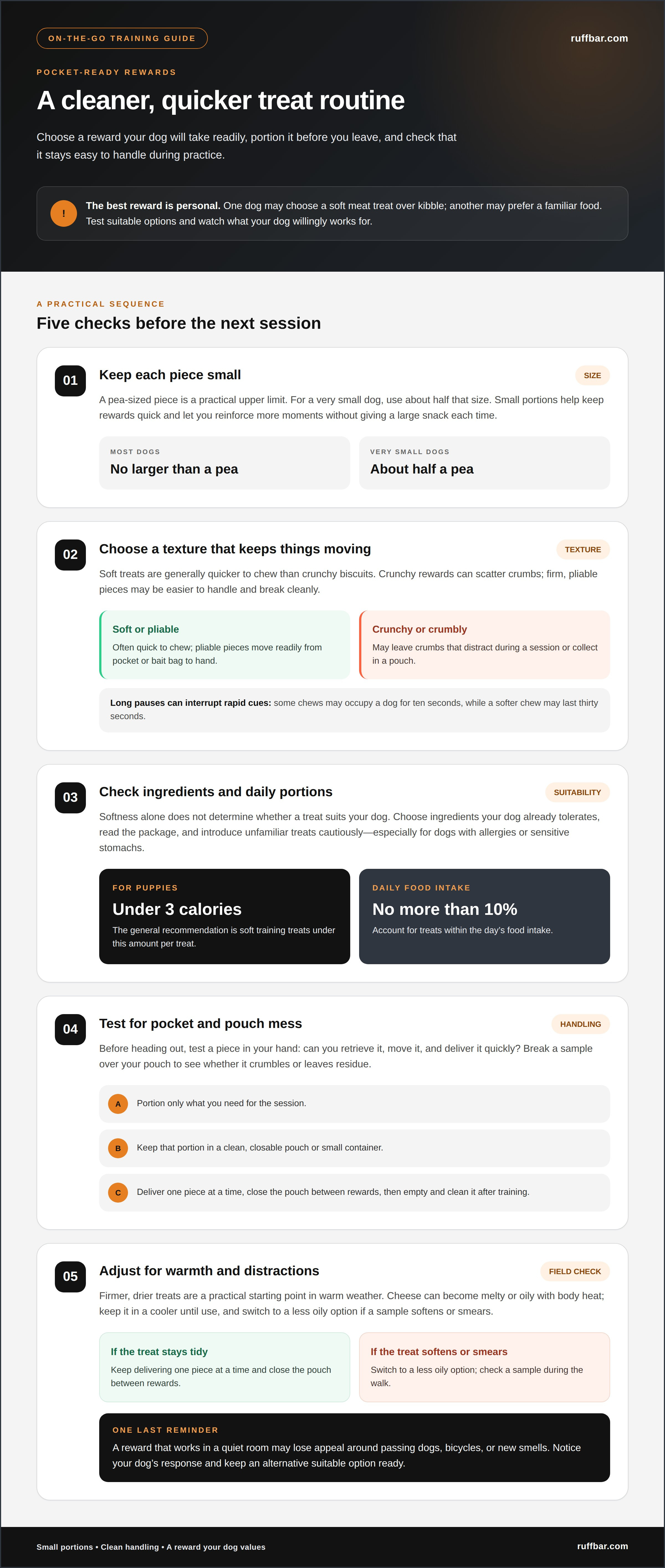
Choose a reward small enough for your dog to take and swallow without interrupting movement. A pea-sized piece is a practical upper limit; for very small dogs, use half that size. Smaller portions let you reinforce more moments without offering a large snack each time.
Texture affects the pace of training. Soft treats are generally easier and faster to chew than crunchy biscuits, which can break into crumbs and distract during a session. A pliable treat also moves readily from pocket or bait bag to hand. Some chews can occupy a dog for ten seconds, while a softer chew may last thirty seconds, both long pauses for rapid-fire cues.
For puppies, the general recommendation is soft training treats under 3 calories. Choose pieces your puppy can eat quickly, then account for treats within the day’s food intake. Treats should make up no more than 10% of daily food intake.
Popular options differ in feel and cleanup: soft pieces tend to be quick to chew, while crunchy biscuits can scatter crumbs. Cheese is another option, but tearing it can leave crumbs. Cut it into small pieces before training and keep it cool, since warmth can make it melty or oily.
Homemade training treats can be simple to prepare, but a tidy result depends on texture and portioning. Shape the pieces small, let them cool, then test whether they hold together when picked up. Pack only the portions you need before taking your dog out.
Dogs with allergies or sensitive stomachs may be able to eat soft treats if the ingredients suit them. Softness alone doesn’t determine suitability: choose ingredients your dog already tolerates, and introduce unfamiliar treats cautiously.
Before heading out, portion rewards into a pocket or bait bag. Test one piece in your hand to make sure it is easy to retrieve, move, and deliver quickly.
High-value treat preferences
A high-value reward is one your dog will work for in that setting. One dog may choose a soft meat treat over kibble; another may prefer a familiar food. Test a few suitable options during an easy session. Notice which reward brings your dog back quickly and willingly.
Motivation can shift outdoors. A reward that works in a quiet room may lose appeal near passing dogs, bicycles, or new smells. Start somewhere calm, then offer a preferred treat as distractions increase. Keep an alternative ready. If your dog turns away from one option, try another instead of repeating the cue.
Use the reward to reinforce the behavior, not to pull your dog through every step. For example, mark a sit as it happens, then deliver the treat from your other hand. If you’ve used food as a lure, a different, more appealing reward after the mark can help separate the cue from the food in the guiding hand.
Before an outdoor session, load treats out of your dog’s sight and carry food even if you might not use it. This keeps rewards available without making every behavior depend on seeing food first. Vary where you keep them, too: a pocket, pouch, or training bag can prevent your dog from watching one predictable spot.
Match the reward to the work. Use a familiar, lower-value option for easy repetitions, then save your dog’s favorite for a harder recall or a distracting trail. Watch your dog’s response during practice. Eager attention, a quick return, and comfortable treat-taking can help you judge whether the choice is working.
For active-dog nutrition ideas that can travel with you, explore portable dog nutrition options.
3. Non-greasy, non-crumbly treats for pockets or treat pouches
A pocket-ready reward should hold its shape between home and the trail. Choose a firm, pliable texture that you can handle without leaving residue. Some treats can be broken cleanly in half without crumbling, making it easier to portion a larger piece before setting out. Test one piece over your pouch: loose crumbs can collect at the bottom and slow your next reward.
For warm-weather outings, firmer, drier treats are a more practical starting point than soft cheese. Cheese can become melty or oily with body heat, so keep it in a cooler until use. No treat texture is guaranteed to stay unchanged in every pocket; check a sample during your walk and use a pouch if your clothing gets warm.
For pocket-sized training treats, look for a short ingredient list featuring foods your dog already tolerates. If your dog eats beef comfortably, for example, a small beef-based treat may be familiar. Read the package ingredients before packing treats, especially when you’re avoiding a specific food. Softness alone doesn’t tell you whether a recipe suits your dog.
Keep the day’s portion separate from the main package. Before leaving, put the amount needed for that session into a clean, closable treat pouch or small container. This limits handling of the full supply and keeps loose crumbs from mixing with other pocket items. Follow the package’s storage directions for the remaining treats.
During training, deliver one piece at a time and close the pouch between rewards. If cheese is your choice, carry it in a cooler and take out only what you plan to use. On a warm walk, switch to a less oily option if the sample softens or smears. Afterward, empty the pouch and clean away residue before packing the next session’s rewards. These simple checks keep treat handling tidy without interrupting the work.
Firm, pliable treats can break into smaller pieces without crumbling, making them easier to portion and less messy in a pouch. Firmer, drier treats are more practical in warm weather than soft cheese, which can become melty or oily and leave residue.
4. Affordable treats for frequent training
There isn’t one fixed cost per ounce for non-crumbly training treats. To compare options, divide the package price by its weight in ounces, then consider how many usable rewards each package provides. A larger treat may seem like better value but provide fewer training pieces if you need to break it down.
Count rewards per training session, not just pieces per bag. A treat that breaks cleanly into several small portions, for example, may stretch further than a similarly sized treat that crumbles. Portion the day’s supply before heading out. This makes it easier to see how quickly you use a package and whether its size suits your routine.
For frequent rewards, choose the lowest-calorie treat your dog enjoys and can eat comfortably. Use small pieces of familiar food where practical, or check the calories per treat on packaged options. The healthiest choice depends on your dog’s needs and the ingredients they tolerate, not on a “low-calorie” label alone. Keep treats within your dog’s daily food plan.
Budget for repetition. One training account describes using everyday treats fifty times a day without straining the budget. That example shows why portion size matters: breaking a suitable treat into smaller rewards can make frequent practice more manageable. Track what you use across a few sessions, then adjust the amount you pack to match the work.
Compare value alongside convenience. A treat that stays intact, is easy to portion, and motivates your dog can be more useful for outdoor practice than a cheaper option that gets wasted. Before buying, compare package weight, cost per ounce, calories per piece, and how well each treat suits your dog. For portable nutrition options, explore Ruff Bar’s dog nutrition.
There is no single cost per ounce: divide a package’s price by its weight in ounces to compare options. Also consider how many usable rewards it provides, since treats that break cleanly into smaller portions may go further.
Ruff Bar
Ruff Bar offers nutrition options for active dogs on outings, training days, and trails. When choosing pocket-ready rewards, consider the treat’s texture and portion size alongside your dog’s preferences. For broader adventure nutrition, Ruff Stix® Bison Pork and Ruff Food Freeze Dried Raw Backpacking Meals Beef are options to explore. The backpacking meal is a meal, not a small training reward, so match it to the job you need it to do.
Choose based on how you plan to use the food, what your dog enjoys, and how it fits into the day’s feeding routine. Explore Ruff Bar’s options to find a fit for your next outing.
Make the next outing count
Build a routine around non-crumbly training treats for your pocket that fits your dog, your route, and the work ahead. Before your next outing, choose a reward your dog enjoys and pack it with purpose. Treat selection is personal; your dog’s response is the best guide to what earns attention in the field.
For active days, Ruff Bar offers Ruff Stix® Beef, Ruff Stix® Bison Pork, and Ruff Food Freeze Dried Raw Backpacking Meals Beef. Choose an option that suits how you plan to use it, whether you’re preparing rewards or packing food for an adventure. Match the food to the outing, then get moving.
Contact Ruff Bar about training treats and find a fit for your next adventure. Take the trail with a plan, a ready reward, and room to explore.
Frequently Asked Questions
But what about out and about or in the ring?
For ring work, teach your dog to take rewards from a training bag instead of relying on your pocket. Gradually increase the distance you work from the bag while carrying fewer rewards. After a week or two of practice, your pockets can be empty while your dog works for rewards from the bag. Mark the behavior first, then deliver the treat from your other hand.
Why does training with food go wrong?
Food training can stall if your dog follows a visible treat instead of responding to the cue, or if the exercise is too difficult. Try an empty-hand lure, then reward after the behavior. If your dog misses, pause for at least one minute before trying again. After two consecutive failures in that exercise, end the session and restart later at an easier level.
What are the best non-crumbly dog training treats for carrying in a pocket?
Choose non-crumbly training treats for your pocket that your dog enjoys and that hold together during handling. Try a small portion in your pouch before a longer outing, then see whether it stays intact and is easy to deliver. Ruff Stix® Pork is one Ruff Bar offering to consider, but assess its texture and portioning for your routine rather than assuming every food is designed as a pocket treat.
How do popular non-crumbly dog training treats compare by texture, size, and messiness?
Soft treats are generally quicker and easier to chew than crunchy treats, which can leave distracting crumbs. Keep pieces no larger than a pea, or half that size for very small dogs. Firm, pliable treats that break cleanly are easier to portion and less messy; cheese can crumble when torn and become oily or melty in warmth.
How much do non-crumbly dog training treats cost per ounce?
There is no single cost per ounce. Divide the package price by its weight in ounces, then compare how many usable small rewards each package provides.