
Tips for Feeding a Picky Eater Active Dog
A new food isn’t always the fix. When you’re feeding an active dog who’s a picky eater, a change may help if the current food isn’t appealing, but frequent switches can make it harder to spot what’s working. Keep the same suitable food and feeding schedule for two weeks before deciding the food itself is the problem. If a healthy adult dog eats nothing for 24 hours, contact a veterinarian rather than treating a sudden appetite change as fussiness.
It’s frustrating when a dog full of energy turns away from dinner. This guide explains when changing food may make sense, how to recognize signs that poor appetite could signal illness, and how a consistent mealtime routine may help. You’ll also find practical ways to make food more engaging, from offering a meal after activity to using sniffing games and food puzzles. The aim is to understand why your dog is skipping bites and choose a sensible next step.
Key Takeaways
- Offer meals after activity and track all food, treats, and toppers to see what may be affecting appetite.
- Watch for appetite changes alongside signs of discomfort or illness, and seek veterinary advice when eating patterns shift suddenly.
- Make meals more engaging with sniffing games, slow feeders, or food puzzles.
- Build a calm routine with consistent meal times, a quiet feeding spot, and less pressure at the bowl.
1. Are there any tips for managing picky eaters?
The best food for an active dog who’s a picky eater is a complete diet suited to its life stage, with a texture and flavor the dog accepts. Try one food consistently for two days before switching; some dogs initially eat a new flavor, then refuse it. Wet food, a little plain broth, or a small amount of cooked food can add interest. Introduce one topper at a time.
When feeding an active dog who’s a picky eater, base the daily portion on weight, body condition, life stage, and activity. According to U.S. Army Veterinary Services, estimate basal energy requirement as 30 kcal/kg plus 70, then calculate maintenance energy requirement by multiplying basal energy requirement by a stress factor. Use feeding directions as a starting point, then track your dog’s weight and condition.
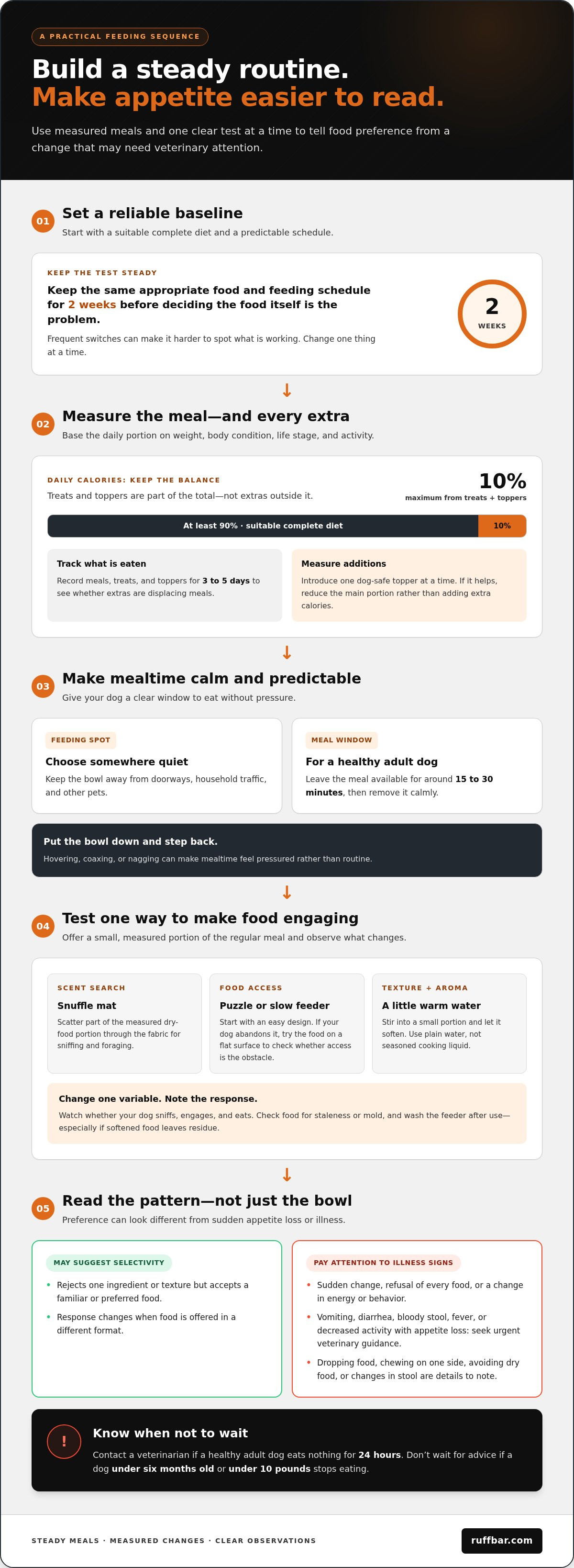
Count calories from meals, treats, and toppers together. Treats and toppers should provide no more than 10% of daily calories, leaving at least 90% from a suitable complete diet. Measure additions rather than pouring by eye. If a topper makes the meal more appealing, reduce the main portion instead of adding extra calories.
Active dogs need a nutritionally complete diet, not a pile of extras. For feeding an active dog who’s a picky eater, record everything eaten for 3 to 5 days; this can show whether treats or toppers are displacing meals. Ask a veterinarian about nutrition, calorie needs, or digestive supplements if appetite, activity, or weight changes.
Choose plain, dog-safe additions. Avoid seasoned table scraps and broth with ingredients that are unsafe for dogs. Measure a small amount, mix it into the regular portion, and see whether your dog eats. Change one ingredient at a time so you can tell which flavor or texture makes a difference.
2. Distinguishing selective eating from illness or appetite loss
A selective eater may reject one ingredient or texture but accept a familiar meal or a preferred food. Appetite loss is more concerning if the change is sudden, your dog refuses every food, or energy and behavior change as well. Note what your dog eats, when the change started, and any new food, activity, or stress. A sudden change calls for attention, not repeated flavor swaps.
Contact a veterinarian if a healthy adult dog eats nothing for 24 hours. Don’t wait for advice if a dog under six months old or under 10 pounds stops eating. Seek urgent veterinary guidance when appetite loss comes with vomiting, diarrhea, bloody stool, fever, or decreased activity. The Centers for Disease Control and Prevention lists these as possible Salmonella symptoms in pets.
Medical issues can make eating painful or uncomfortable. Dental disease may make chewing difficult; kidney disease, gastrointestinal upset, a swallowed foreign object, and arthritis can also affect appetite. Mouth pain, nausea, and stress-related digestive problems are other possibilities. Notice if your dog drops food, chews on one side, avoids dry food, vomits, or has changes in stool. These details can help the veterinary team assess the problem.
Activity can affect interest in food. Offering a meal after exercise may encourage some dogs to eat, but don’t assume a sudden loss of appetite after a hike or workout is simply due to exertion. Compare your dog’s appetite and energy with its usual pattern. If your dog seems unusually tired, uncomfortable, or unwilling to eat after activity, pay attention to those changes rather than adding toppers.
Once illness has been addressed, return to a steady feeding plan and monitor each meal. Explore nutrition options for active dogs as part of that routine, while keeping appetite changes separate from food preference.
3. Using sniffing activities, slow feeders, or food puzzles
A snuffle mat turns a meal into a scent-search game. Scatter part of your dog’s measured dry-food portion through the fabric and let it sniff and forage. A food puzzle or interactive feeder adds mental stimulation and can make mealtime more engaging. Start with an easy design so your dog can reach the food without getting frustrated.
Warm water can change the aroma and texture of dry dog food. Add a little to a small portion, stir, and let the food soften before serving. This may suit a dog that prefers softer food or a stronger scent. Use plain water, not seasoned cooking liquid, and prepare only what you intend to serve.
Texture and flavor preferences can affect how a dog responds to the same meal. One dog may eagerly eat crunchy kibble from a puzzle but ignore it in a bowl; another may prefer softened pieces. Test one change at a time, such as adding water or using a slow feeder, and note which version your dog finishes.
Repeated food changes can encourage selectivity, and a dog may also reject kibble that has gone stale or moldy. Check the package and smell the food before serving it. If your dog suddenly refuses familiar food, especially alongside changes in energy or digestion, consider illness rather than assuming a different texture will solve the problem.
Make the test easy to assess. Offer a small, measured portion of the regular meal in a snuffle mat, puzzle feeder, or slow feeder, and keep the rest available in the usual dish. Watch whether your dog sniffs, engages, and eats, then note the response. If your dog abandons the puzzle, put the food on a flat surface to see whether access or texture is the obstacle. Wash the feeder after use, especially if softened food leaves residue.
4. Establishing a calm, consistent feeding routine
Offer meals at predictable times and keep the same appropriate food and schedule for two weeks before judging whether the food itself is the problem. For a healthy adult dog, leave each meal available for around 15 to 30 minutes, then remove it calmly. This gives your dog a clear mealtime window without turning the bowl into an all-day option.
Choose a quiet feeding spot away from doorways, household traffic, and other pets. Put the bowl down and step back. Hovering, coaxing, or nagging can make mealtime feel pressured rather than routine. If nearby activity distracts your dog, move the bowl to a calmer spot and keep the setting consistent.
Set a schedule that works for your household, then stick to it. Some dogs do well with one meal a day instead of multiple smaller meals; the right pattern depends on the individual dog and its needs. A new routine may take several days or weeks to settle, so avoid changing the food, location, and schedule all at once.
Keep a simple record of mealtimes, uneaten portions, treats, and activity. Compare it with your dog’s weight and body condition over time. A senior dog or one whose weight is changing may need a feeding plan suited to its life stage and health. Discuss those changes with your veterinarian instead of making repeated, sudden shifts to the schedule.
For a practical reset, choose one meal schedule, one quiet location, and one suitable food. Follow that plan steadily for two weeks, noting what your dog eats and when. If you’re ready to match dependable mealtimes with nutrition for an active dog, explore options for active-dog nutrition.
Ruff Bar: Ruff Stix® Bison Pork
Ruff Stix® Bison Pork gives active dogs a high-protein, grain-free option made with USDA-graded grass-fed meats and whole organic ingredients, without fillers. It offers another way to provide food during an active day while keeping your dog’s regular meal plan and calorie needs in mind. Introduce any new food in a measured portion and observe your dog’s response. For trail outings, Ruff Food Freeze Dried Raw Backpacking Meals Beef is another option from Ruff Bar.
Food preferences vary, so neither a Stix nor a meal is a fix for appetite loss that may signal illness. Use the earlier signs and routine tips to decide whether food choice is the issue. Visit ruffbar.com to explore Ruff Bar’s options.
Build a Mealtime Plan That Moves With Your Dog
Feeding an active picky eater takes observation, not a new trick at every meal. Track what your dog accepts, what it leaves behind, and whether appetite changes with activity or routine. That record gives you a clearer basis for your next decision and helps prevent changing several things at once.
If you’re considering a different food option for active days, Ruff Bar offers Ruff Stix® Bison Pork, Ruff Stix® Beef, and Ruff Food Freeze Dried Raw Backpacking Meals Beef. Choose with your dog’s overall meal plan in mind, and introduce any option thoughtfully.
Ready to discuss feeding support and explore Ruff Bar’s options? Contact Ruff Bar for feeding support. Keep your approach steady, learn from your dog’s response, and keep moving forward together.
Frequently Asked Questions
Will switching to a different food fix a picky eater?
Not necessarily. A new flavor or texture may help if preference is the issue, but changing food won’t resolve discomfort, nausea, or dental pain. Before switching, note whether your dog refuses every meal or only a particular food. If appetite changes suddenly or other symptoms appear, treat it as a health concern rather than a food-shopping problem.
Are there any tips for managing picky eaters?
Yes. Make sure everyone in the household follows the same feeding plan. If someone offers snacks after a refused meal, it becomes harder to tell whether your dog is hungry or waiting for a favorite. Keep a shared note of meals and extras, and ask family members to avoid unplanned treats. This gives you a clearer picture of your dog’s appetite.
Can I mix something in to get them started?
Yes. A small amount of dog-safe wet food or plain broth may make a familiar meal more appealing. Use one addition at a time and avoid rich or seasoned table scraps. Keep the mix-in consistent while you observe your dog’s response. If your dog still refuses food, don’t keep adding new flavors to disguise a possible appetite problem.
Could the bowl be the problem?
Yes. Some dogs eat from the floor but hesitate at a bowl, which may mean the setup, not the food, is the issue. Try a flat plate in a quiet spot for a few meals. Notice whether your dog approaches more readily, eats comfortably, and finishes. If the plate makes no difference, consider other factors, such as stress, food freshness, or a sudden change in appetite.
How can I transition a picky dog to a new food safely?
Introduce new food gradually by mixing a small amount into the familiar food, then adjusting the balance as your dog accepts it. Keep other factors steady, including treats, mealtime location, and activity, so you can identify a reaction. Watch for changes in stool, appetite, or comfort. If your dog has a medical condition or a history of food reactions, seek veterinary guidance before changing its diet.
What healthy toppers can make dog food more appealing without unbalancing the diet?
Choose a plain, dog-safe topper, such as a small amount of cooked meat or wet food, and count it with treats. Treats and toppers should provide no more than 10% of daily calories; the rest should come from a suitable complete diet. Check ingredients for seasonings and avoid adding several extras together, which can make it harder to identify what your dog tolerates.