
Recognizing Signs of Exhaustion in Dogs: Heat or Illness
Low energy can be more than the aftermath of a hard run. Recognizing signs of exhaustion in dogs means noticing when tiredness doesn’t ease with rest, or when panting and weakness develop in the heat. Heat stress can become an emergency, while ongoing lethargy may point to an underlying illness.
Learn to distinguish normal fatigue from warning signs, recognize what heat exhaustion can look like, and reduce risks during outdoor activity. You’ll also learn when unusual behavior calls for prompt veterinary care, including urgent signs such as labored breathing, pale gums, or seizures. Notice the signals, know when to stop, and act.
Key Takeaways
- Learn how rising body temperature and changes in breathing or responsiveness can signal worsening heat illness, and when to seek urgent veterinary care.
- Spot the conditions that raise heat risk, including strenuous activity, poor acclimation, hot pavement, and a hot enclosed space.
- Plan outdoor exercise for cooler parts of the day, with shade, water, and time to slow down afterward.
- Use your dog’s usual behavior as a baseline: persistent low energy or changes in appetite and activity can point beyond normal post-exercise tiredness.
What are the Three Stages of Heat Exhaustion in Dogs?
Think in three practical severity bands: early warning, moderate heat illness, and severe heat illness. Rapid, shallow panting or unusual lethargy can signal trouble beyond normal post-exercise fatigue. Heat exhaustion can raise a dog’s body temperature, and worsening signs warrant prompt veterinary care. Above 106°F is a severe warning sign associated with heat stroke.
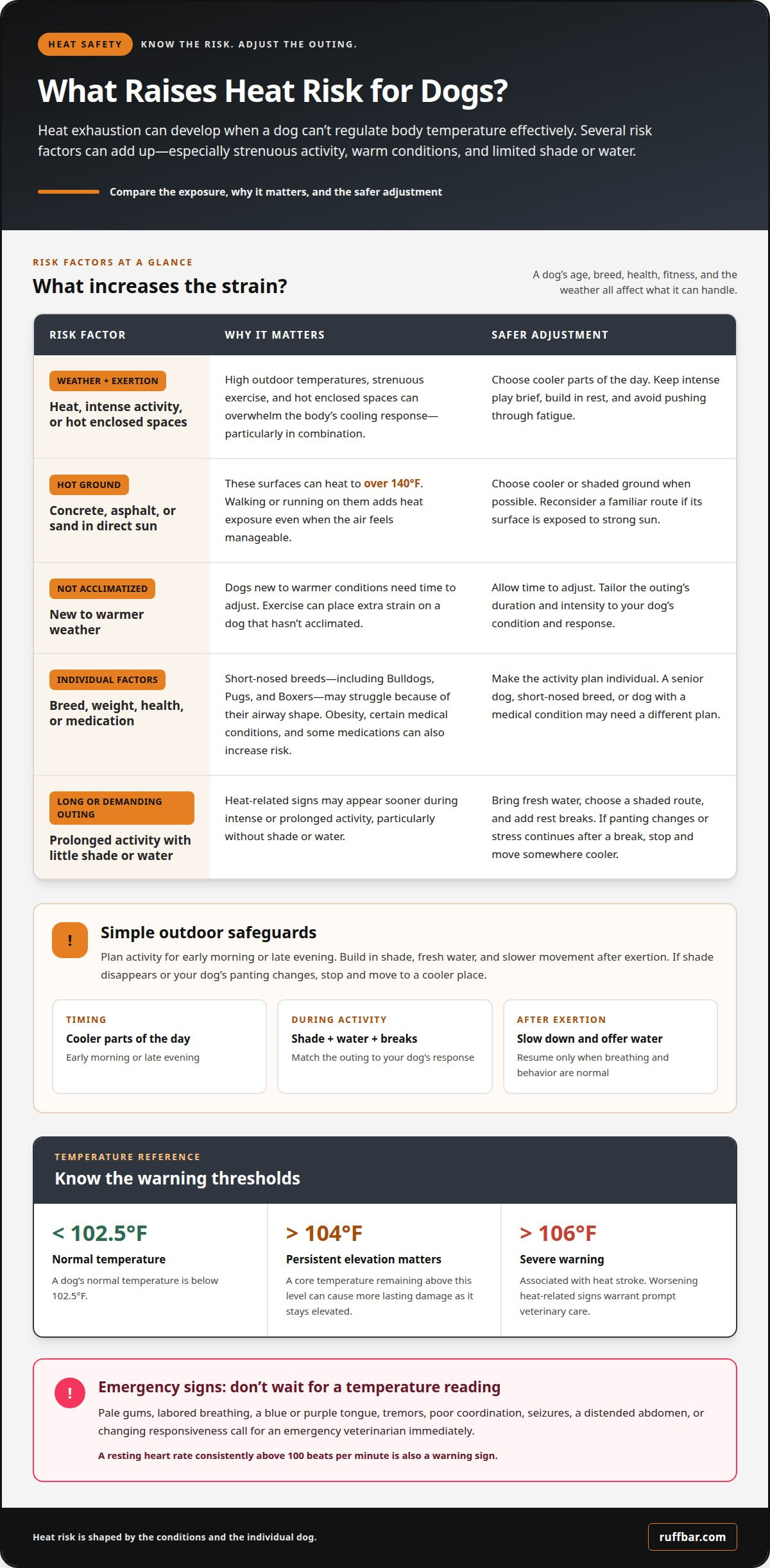
A dog’s normal temperature is below 102.5 degrees Fahrenheit. A core temperature remaining above 104 degrees Fahrenheit can cause more lasting damage as it stays elevated. A resting heart rate consistently above 100 beats per minute is another warning sign. Don’t wait for a temperature reading if your dog has pale gums, labored breathing, a blue or purple tongue, tremors, poor coordination, seizures, a distended abdomen, or changing responsiveness. Take the dog to an emergency veterinarian immediately.
Suspected heat exhaustion needs veterinary attention as soon as possible. A veterinarian can assess breathing, responsiveness, temperature, and other signs during an examination. For lethargy, tests such as blood work or X-rays may help investigate underlying problems. Treatment depends on the cause and findings. Veterinary care may include fluids for dehydration, pain medicine, antibiotics for infection, or anti-nausea medicine for vomiting.
After strenuous exercise, give your dog enough rest for muscle recovery. The right recovery period depends on the effort and your dog’s condition. Resume activity only when breathing and behavior have returned to normal. Persistent weakness or heat-related signs call for veterinary care, not more exercise.
There’s no single exercise allowance that suits every dog. Age, breed, health, fitness, and weather all affect what a dog can handle. A senior dog, a short-nosed breed such as a Bulldog, or a dog with a medical condition may need a different activity plan from a healthy, conditioned adult. Tailor the duration and intensity to the individual dog, and stop when warning signs appear.
Causes of heat exhaustion in dogs
Heat exhaustion develops when a dog can’t regulate its body temperature effectively, causing it to rise rapidly. High outdoor temperatures, strenuous exercise, and hot enclosed spaces can overwhelm the body’s cooling response, especially in combination. Symptoms may appear sooner during intense or prolonged activity, particularly without shade or water. Exercise can also place extra strain on dogs that haven’t adjusted to warmer weather.
The surface matters, too. Concrete, asphalt, and sand can heat to over 140 degrees Fahrenheit in direct sun. A dog walking or running on these surfaces faces added heat exposure, even when the air feels manageable. Hot pavement can add risk along a familiar route, so choose cooler or shaded ground when possible.
Dogs new to warmer weather need time to acclimate. A 90-degree day may feel manageable to someone accustomed to warm weather, but dogs also need time to adjust to warmer climates. Short-nosed breeds such as Bulldogs, Pugs, and Boxers face added difficulty because of their airway shape. Obesity, certain medical conditions, and some medications can increase risk.
Which dogs are most at risk of exhaustion? Dogs undertaking intense or prolonged activity, dogs not acclimatized to the weather, and dogs with obesity, certain health conditions, or relevant medications face added risk. Short-nosed breeds, including Pugs and Boxers, may also struggle in heat.
Exercise fatigue can have different causes. A dog may tire when activity intensity increases faster than its conditioning, or when a new exercise requires unfamiliar effort. A dog new to training can also become mentally fatigued while learning unfamiliar commands. Yawning, panting, avoidance, and difficulty maintaining posture or form can signal physical fatigue; forgetting commands or losing self-control may indicate mental strain.
Low energy can have serious causes beyond exercise or heat. Infections, pain, injury, medication side effects, and heart or kidney disease can all contribute to lethargy. Dehydration may also reduce energy. Vomiting, diarrhea, appetite changes, hiding, or unusually slow movement provide further context. Compare your dog’s behavior with its usual routine: a change after a normal walk differs from a pattern that continues indoors.
Shade, water, and timing outdoor activities
In hot weather, plan outdoor activities for early morning or late evening, when temperatures are cooler. Choose a shaded route and bring fresh water, since limited shade or water adds to heat risk. A sunny, exposed trail can become demanding even if the walk feels short. If shade disappears or your dog’s panting changes, stop and move to a cooler place.
Match the outing to conditions and your dog’s response. Keep intense play brief, add rest breaks, and avoid pushing through fatigue. After exercise, slow the pace so your dog’s heart rate can begin returning to normal, then offer water. A gradual warm-up of 5-10 minutes can ease the transition into activity. If a dog appears stressed, pause; if the signs continue after a break, end the outing early.
- Start outdoor exercise during the cooler part of the day.
- Build in shade, water, and slower movement after exertion.
- Leave the activity if your dog’s stress continues after a break.
Changes in appetite and activity matter, too. Dehydration can lower energy, so take reduced drinking or unusual weakness seriously. A tired dog may rest after a demanding walk, but should show interest in familiar activities after recovering. Note changes from your dog’s normal routine, such as skipping a usual meal or refusing a walk. A single change needs context; a pattern alongside lethargy deserves closer attention.
Watch for appetite changes that persist with low energy. Vomiting, diarrhea, or an appetite change lasting more than 48 hours alongside lethargy warrants immediate veterinary care. A dog refusing food for more than 24 hours may have a health concern. These signs aren’t a cue to resume exercise once the canine seems livelier. Keep activity low and seek veterinary advice when appetite or energy remains altered.
During outdoor activity, watch your dog’s overall condition, not just its pace. A dog that stops responding to familiar cues, struggles to keep moving, or seems unusually weak needs a break in the shade. If rest and water don’t lead to recovery, end the outing and seek veterinary care.
Signs that low energy may indicate illness
A demanding hike can leave a dog tired, but normal fatigue should ease within a few hours or after sleep. After adequate rest, a tired dog is usually easy to wake and interested in food, walks, or familiar activities. Recognizing signs of exhaustion in dogs starts with comparing recovery to your dog’s usual response to exercise, rather than judging energy in isolation.
Illness-related lethargy looks different. A dog may sleep more, hide, move slowly, react less, or lose interest in meals and walks without an obvious reason. The change can be subtle: a dog who normally greets you at the door may stay in bed. Lethargy is often a secondary symptom, but sometimes it’s the only sign an owner notices.
Infections, pain, injuries, medication side effects, and heart or kidney disease can all cause low energy. Watch for accompanying changes, such as vomiting, diarrhea, or reduced appetite. Vomiting, diarrhea, or appetite changes lasting more than 48 hours alongside lethargy warrant immediate veterinary care. Refusing food for more than 24 hours can also signal a health concern.
Recognizing signs of exhaustion in dogs also means knowing which changes need urgent action. Seek veterinary care when unusual inactivity persists, worsens, or disrupts normal routines. Lethargy lasting more than 24-48 hours is a reason to arrange an assessment. Pale gums, labored breathing, a distended abdomen, blue or purple tongue, tremors, poor coordination, seizures, or altered responsiveness require immediate care. Don’t wait for additional symptoms when these warning signs appear.
A veterinarian typically begins with a physical examination and may recommend blood work or X-rays. These tests help investigate possible underlying causes, and treatment depends on the findings. While arranging care, keep your dog supervised in a calm, quiet place. Offer fresh water and food if tolerated. Don’t give over-the-counter medication unless a veterinarian approves it, as the wrong medicine can add risk.
Ruff Bar: Ruff Supplements for Dogs
Ruff Bar offers Ruff Supplements for Dogs as part of a broader nutrition approach for active dogs. Nutrition can support everyday routines, but it doesn’t diagnose or treat heat exhaustion or unexplained lethargy. If your dog shows concerning symptoms, prioritize veterinary care before changing its diet or activity.
For outings and active days, Ruff Stix® Bison Pork and Ruff Food Freeze Dried Raw Backpacking Meals Beef offer portable food options. Choose nutrition that fits your dog’s regular feeding plan, not as a substitute for rest, water, shade, or medical attention. Keep the roles clear: food supports the routine, but doesn’t replace care when illness may be involved.
Contact Ruff Bar to discuss nutrition options for your active dog.
Keep Every Adventure Dog-Ready
Build a repeatable routine for every outing: observe your dog before activity, during exertion, and as it recovers. Knowing your dog’s normal behavior makes changes easier to spot and helps you decide what to do when its energy shifts.
Recognizing signs of exhaustion in dogs isn’t about pushing through or guessing. Notice what’s different for your dog, then choose rest, veterinary care, or routine nutrition as appropriate. Keep health decisions separate from feeding choices. Food can support an active routine, but it doesn’t diagnose or treat illness.
For outdoor routines, Ruff Bar offers Ruff Stix® Bison Pork, Ruff Food Freeze Dried Raw Backpacking Meals Beef, and Ruff Stix® Beef. Choose nutrition that fits your dog’s regular plan, while keeping observation and appropriate care central to every adventure.
Contact Ruff Bar to discuss nutrition options for your active dog. Stay alert, move with purpose, and keep building adventures around your dog’s needs.
Frequently Asked Questions
When Should You Be Concerned?
Pay attention when your dog’s energy drops without a clear reason, disrupts familiar routines, or comes with other changes. For example, a dog that skips a usual walk and turns away from food needs closer attention than one resting after a long outing. Note when the change began and what else you observe. Share those details with a veterinarian if symptoms persist or worsen.
What Is Lethargy in Dogs?
Lethargy is an unusual lack of energy or responsiveness compared with a dog’s normal behavior. It may appear as hiding, slow movement, less interest in interaction, or delayed reactions to familiar cues. A dog can be awake and still lethargic. The key distinction is a marked change from that individual dog’s baseline, rather than simply needing extra sleep after exercise.
What can I give my lethargic dog?
Offer fresh water and your dog’s usual food if tolerated, and keep the dog calm and supervised. Don’t give human or over-the-counter medication unless a veterinarian approves it; some medicines can be dangerous for dogs. Avoid using treats, supplements, or new food to address unexplained low energy. If your dog won’t drink, can’t keep food down, or seems worse, seek veterinary advice.
What should I do if I see signs of heat exhaustion or heat stroke in my dog?
Stop the activity and seek veterinary care immediately. Move your dog out of the heat, supervise them closely, and call the veterinary clinic while arranging care. Don’t wait for symptoms to pass or continue the walk to test your dog’s stamina. Labored breathing, changes in responsiveness, or seizures are emergencies.
What's the Difference Between a Tired Dog and a Lethargic Dog?
A tired dog usually rests after exertion, wakes readily, and returns to normal interests after recovery. A lethargic dog remains unusually inactive without a clear link to exercise. For example, a dog that sleeps after a long hike but later engages with family is different from one that ignores familiar cues and withdraws throughout the day. Compare your dog’s behavior with its usual routine.
When Is Dog Lethargy an Emergency?
Lethargy is an emergency when accompanied by pale gums, difficult breathing, a swollen abdomen, a blue or purple tongue, tremors, poor coordination, seizures, or altered responsiveness. Get immediate veterinary care for these signs. Persistent low energy without emergency symptoms still needs assessment, especially if accompanied by vomiting, diarrhea, or appetite changes. Keep your dog supervised while arranging care.