
Nutritional Support for Injured Active Dogs During Rehab
Recovery is no time to automatically cut a particular meat protein from your dog’s bowl. Nutritional support for injured active dogs is about supplying the energy and amino acids needed for tissue repair while adjusting food to changing activity levels.
It makes sense to ask whether beef, pork, poultry, or another protein could slow healing. Usually, the protein source alone isn’t the deciding factor. The overall diet, appetite, digestion, body condition, and recovery plan matter too. Restricting foods or adding supplements without a clear reason can make it harder to keep nutrition balanced.
This guide explains how protein supports muscle maintenance and tissue repair, how to think about supplements, and why digestive health matters during rehab. It also covers how reduced activity can change calorie needs and when eating or digestive changes warrant prompt veterinary attention. Practical nutrition can support recovery alongside the treatment and rehabilitation plan.
Key Takeaways
- Adjust food to match changing activity during rehab while protecting lean body condition.
- Choose protein as part of a balanced recovery diet, and monitor muscle condition as activity returns.
- Treat supplements as targeted support, not a substitute for complete nutrition; account for medications in the plan.
- Track appetite and digestion, since poor intake can undermine recovery and may need veterinary attention.
Can whole-food feeding replace joint supplements during rehab?
Whole-food meals can provide nutrients, but they don’t automatically replace targeted joint supplements. Recovery nutrition should reflect the injury, treatment, appetite, and rehabilitation workload.
Food and Supplement Interactions
Food and supplement interactions can occur when a nutrition change affects a medication plan or adds nutrients the dog already receives. This matters during recovery, particularly when prescription medication is involved. Discuss supplements with the treating veterinarian before adding them, and include the product and its ingredients in that conversation. A whole-food diet isn’t a reliable substitute for a prescribed plan. The veterinarian can consider the complete diet, supplements, and treatment together.
Nutrition for Performance and Healing
Performance nutrition fuels activity, while recovery nutrition supports tissue repair and muscle maintenance. As tissue repairs and muscle regrows during rehabilitation, an injured dog may need more than maintenance-level amino acids. Protein from meat, fish, or eggs can contribute to a balanced diet. EPA and DHA from marine sources can modulate inflammatory signaling, while antioxidants such as vitamin E may help limit oxidative stress. Food supports healing, but it doesn’t replace rehabilitation.
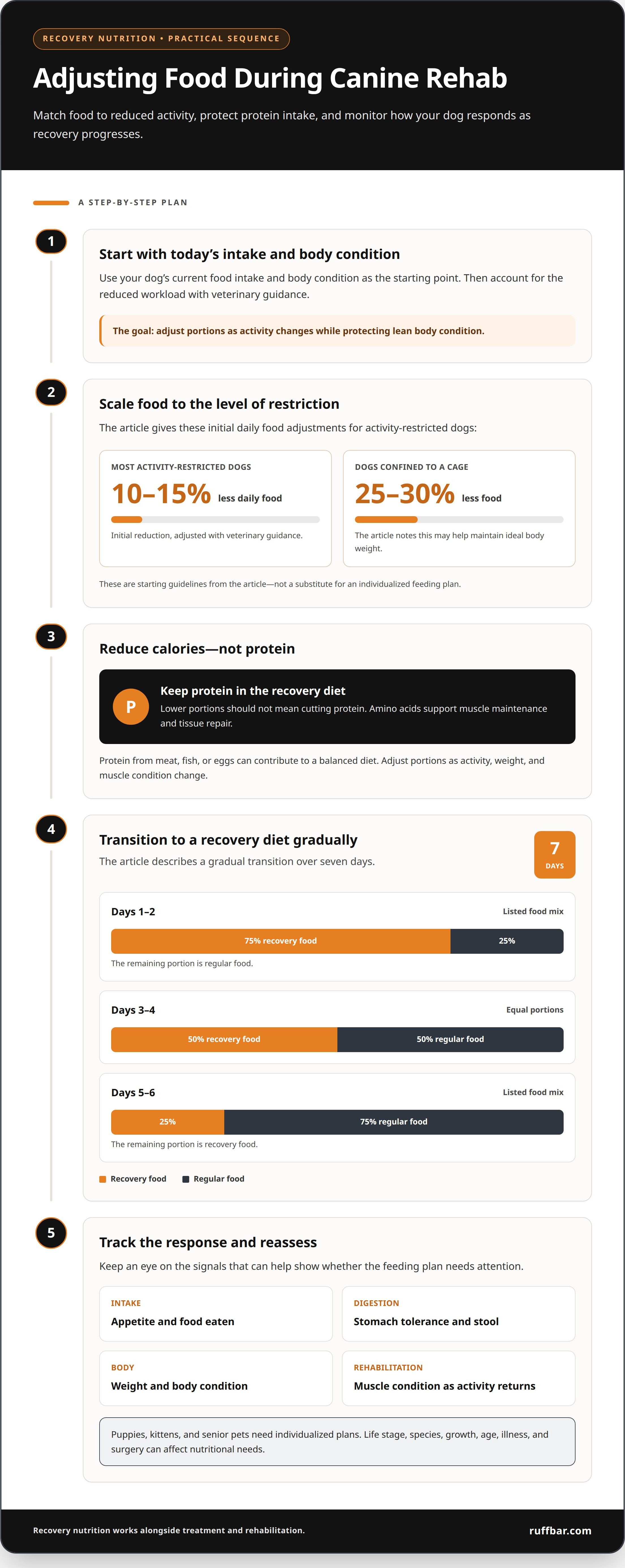
To estimate daily calories during restricted activity, start with the dog's current intake and body condition, then account for the reduced workload with veterinary guidance. For most activity-restricted dogs, initial daily food intake is reduced by 10% to 15%. Dogs confined to a cage may need 25% to 30% less food to maintain ideal body weight.
During crate rest, measure portions and track body condition to help prevent weight gain. Keep protein in the recovery diet: reducing calories shouldn’t mean cutting protein. Adjust portions as activity, weight, and muscle condition change.
Transition to a recovery diet gradually over seven days: use 75% recovery food and 25% regular food on days 1-2, equal portions on days 3-4, then 25% recovery food and 75% regular food on days 5-6. Track appetite, stomach tolerance, and weight throughout.
Recovery needs vary by life stage, too. Puppies, kittens, and senior pets need individualized plans because species, growth, age, illness, and surgery affect nutritional needs. Practices like Animal Hospital of Sullivan County emphasize that comprehensive veterinary guidance can help align calories, protein, and supplements with each animal’s recovery.
Combining performance and joint supplements
Performance supplements target muscle, energy, and recovery, while joint supplements focus on cartilage and connective tissue. Understanding the difference during canine rehabilitation can help prevent overlapping ingredients and unclear dosing.
Evidence for Joint Supplements
Evidence for joint supplements varies by ingredient and study, so response time matters. One glucosamine and chondroitin study found benefit after 70 days, while a 60-day trial found no improvement. Allow at least two months before evaluating whether these products help your dog. Track mobility and appetite during that period, and include the supplement in the veterinary review of any therapeutic plan.
Joint and Cartilage Nutrients
Joint and cartilage nutrients support structures that respond differently from muscle tissue. Glucosamine is a cartilage building block, while cartilage receives nutrients through diffusion from synovial fluid rather than a direct blood supply. Long-chain omega-3 fatty acids, including EPA and DHA, can help modulate inflammation and support mobility affected by osteoarthritis. These ingredients complement a complete diet; they don't replace rehabilitation after surgery.
Omega-3 Use During Injury Recovery
Omega-3 supplements supply EPA and DHA, fatty acids with anti-inflammatory activity that may support orthopedic recovery. For dogs eating diets low in fish oil, a suggested supplemental dose is 1 to 3 capsules per 10 pounds of body weight. Standard fish oil capsules contain about 300 mg of EPA and DHA combined, so capsule contents matter. Discuss the dose with the treating veterinarian if your dog takes prescription medication.
More isn't automatically better. In a canine arthritis dosing study, the greatest improvement in arthritis scores occurred above 7.5 g of EPA and DHA per 1,000 kcal. That study finding isn't a universal target for an injured dog. Diet, supplements, medication, and the recovery plan all shape the appropriate approach.
For a focused addition to a nutrition routine, Ruff Supplements for Dogs can be considered alongside veterinary guidance. Keep a simple record of the supplement, dose, mobility, and appetite to make changes easier to assess.
Digestive health and nutrient absorption
During recovery, digestive function affects how well a dog can use nutrients from food. Poor intake can contribute to digestive and organ dysfunction, weaker immunity, and poor wound healing. Track eating, stool quality, and body condition alongside weight. Changes in any of these can signal that the feeding plan needs attention.
Critical care diets are designed for illness and recovery, not long-term feeding. They’re generally calorie-, protein-, and fat-dense, with less carbohydrate than maintenance diets. Their high digestibility and palatability can support intake when a sick dog struggles to eat. If a dog refuses food for more than 24 hours, prompt veterinary evaluation is important. Fresh water should remain available; don’t add electrolytes to drinking water.
Keep the rest of the diet steady while monitoring stool and appetite, rather than adding several new foods at once. Changes in eating or digestion can affect total nutrient intake during recovery, so note when they start and how they develop.
Grain-free isn’t automatically better for heart health. Diets high in legumes or pea proteins and marketed as grain-free can result in cardiomyopathy. Review the full ingredient profile and nutritional plan, not just the front-label claim. Fatty acids and other nutrients should fit the overall diet, especially when food intake changes during restricted activity.
Glucosamine is a cartilage building block, but cartilage has no direct blood supply. It receives nutrients by diffusion from synovial fluid. Digestive absorption and delivery to a joint are separate steps, not interchangeable claims. A supplement can’t correct poor overall intake. During recovery, consider appetite, weight, and body condition as part of the veterinary plan, so nutrition supports healing without unnecessary additions.
Nutrition as support for tissue repair
Tissue repair draws on nutrients for rebuilding, immune function, and muscle maintenance. Injury can raise amino acid needs above normal maintenance levels, particularly as rehabilitation restores movement. Adequate dietary protein supplies building blocks for repair, while enough energy helps spare protein for that work. Effective nutritional support for injured active dogs considers the whole feeding plan, not protein alone.
For injured dogs, diets containing more than 75 g of protein per 1,000 kcal can help prevent relative protein deficiencies. That concentration gives a useful comparison point when reviewing food labels with a veterinary professional. The right intake still depends on the dog’s condition, appetite, and injury. Track body weight and muscle condition during recovery, because reduced movement can change both.
A study of dogs after cranial cruciate ligament repair found that a diet with increased EPA, DHA, protein, antioxidants, and glucosamine improved several lameness measures. The dogs also regained weight-bearing more rapidly. This finding highlights nutrition as one part of recovery, alongside surgery and rehabilitation, not a replacement for either.
Energy needs shift as healing progresses. A dog resting after surgery uses food differently from one rebuilding strength in rehabilitation. Match feeding to current activity and body condition, then reassess as movement changes. Maintaining lean condition matters: excess weight adds mechanical stress to the skeletal system, while inadequate intake can cost muscle needed for function. This is central to nutritional support for injured active dogs.
Choose a complete daily diet first. Add targeted nutrition only to fill a defined role, such as supporting intake or complementing the recovery plan. Explore functional nutrition toppers as an option for active dogs, while keeping the dog’s full diet and treatment plan in view. Strong recovery is built through consistent feeding, measured progress, and veterinary oversight.
Ruff Bar: Ruff Bar Functional Nutrition Toppers
Ruff Bar offers Functional Nutrition Toppers for active dogs whose meals need a practical nutritional addition. During rehab, a topper can be considered as part of the broader feeding plan, but it shouldn’t replace a complete diet or veterinary-directed treatment. Factor it into everyday nutrition in light of activity, appetite, and recovery needs.
Ruff Bar also offers Supplements for Dogs. Keep supplements purposeful, especially if your dog takes prescription medication, and discuss the plan with the treating veterinarian. Whole-food ingredients and targeted additions belong in a considered routine, not as a shortcut around rehabilitation or balanced feeding.
For guidance on Ruff Bar offerings, contact Ruff Bar.
Build a Steady Route Back to Activity
Recovery is a progression, not a single meal or supplement. Keep your dog’s feeding routine aligned with the rehabilitation plan, and make changes for a clear reason. For nutritional support for an injured active dog, choose additions that fit its regular diet and daily needs rather than treating one product as a fix.
Ruff Bar offers options for active dogs, including Ruff Stix® Bison Pork, Ruff Stix® Beef, and Ruff Food Freeze Dried Raw Backpacking Meals Beef. Consider them as part of a broader feeding routine, taking your dog’s full diet and veterinary plan into account.
As your dog rebuilds strength, stay attentive to appetite, body condition, and changing activity. Small, considered nutrition choices can help you support the work happening through rehabilitation. Contact Ruff Bar about your dog to explore suitable options. Keep moving forward, one sound recovery step at a time.
Frequently Asked Questions
Are there proteins I should avoid during recovery?
There’s no universal protein source every recovering dog must avoid. Restrict beef, poultry, fish, or another protein only for a relevant reason, such as a known sensitivity identified in the dog’s care plan. Avoid replacing a familiar food with several new proteins at once. A sudden diet change can make it harder to identify what affects appetite or digestion.
Does protein amount need to increase during rehabilitation?
It can, because tissue repair and muscle regrowth can raise amino acid needs above normal maintenance levels. The change depends on the injury, current diet, appetite, and rehabilitation workload. For example, a dog moving from crate rest to guided strengthening may need its feeding plan reassessed as activity advances. Track muscle condition, especially in the affected limb, and review changes with the veterinary team.
How Often Should You Feed a Recovering Pet?
Small, frequent meals can be easier for a recovering pet to manage than one large serving. Veterinarians commonly recommend meals every 3-4 hours after illness or surgery. Divide the prescribed daily amount across those meals rather than adding extra food each time. If your dog refuses meals or cannot keep food down, contact the veterinary team promptly to discuss the feeding plan.
How can the immune system be affected by nutrition?
Inadequate nutrition can weaken immune function and interfere with wound healing. A dog that eats poorly may also miss nutrients needed to maintain normal body function. Look for a pattern, such as leaving most of breakfast and dinner untouched, rather than judging by one meal. Record intake and changes in energy, then share those observations with the veterinarian.
How soon after an injury should I adjust my dog's diet?
Review the feeding plan as soon as the injury changes your dog’s activity or appetite, then reassess as recovery progresses. One practical framework separates acute injury or post-surgery care into weeks 1-3 and active rehabilitation into weeks 4-12. Those phases bring different workloads. Avoid making several diet changes at once; note each adjustment and your dog’s response.
What nutritional needs change when an active dog is injured and exercising less?
Lower activity usually means lower calorie needs, while tissue repair still requires adequate protein and balanced nutrition. A dog resting in a crate has a different workload from one starting short, supervised rehabilitation walks. Adjust portions to activity and body condition, not the dog’s former training routine. Monitor weight and muscle condition together, as either can change during restricted movement.