
Nutrition for Senior Active Dogs: How to Choose Their Diet
Age, not the label on a food bag, is only one signal that a dog may be entering its senior years. Small dogs are typically considered seniors around 10-12 years old, medium dogs around 8-10, large dogs around 7-8, and giant breeds as early as 5-7. Nutrition for senior active dogs should reflect the individual dog’s activity, weight, and muscle condition, not age alone.
An older dog that still covers trails and maintains a steady weight may not need smaller portions just because another year has passed. But changes in appetite, activity, or body condition can shift what belongs in the bowl. The goal is steady fuel that supports movement while accounting for the needs that come with aging.
Learn how senior dogs’ nutritional needs differ, when size and age can signal a diet change, and how to transition gradually over 7-10 days. We’ll also cover what to watch as your dog ages, so you can make informed choices that keep every walk, climb, and outing in stride.
Key Takeaways
- Use your dog’s size and life stage as guides: small breeds may reach their senior years around 10-12, while giant breeds may do so around 5-7.
- Adjust calories to activity and body condition, not age alone. A senior dog that stays active and maintains weight may not need smaller portions.
- Choose a diet with enough protein to help maintain lean muscle, and reserve protein restriction for cases where a veterinarian recommends it for a medical condition.
- Introduce a new food gradually over 7-10 days, watching how your dog responds as the balance shifts.
What Do Senior Dogs Need in Their Diet?
An active senior dog’s calorie needs depend on body weight, activity, and whether weight stays steady. There isn’t one daily calorie target for every dog, and age alone doesn’t mean portions should shrink.
Changing Calorie and Protein Needs
As older dogs become less active, they often need fewer calories, while maintaining adequate protein helps preserve lean muscle. Some senior dogs may need about 25% fewer calories than they did as adults, but an active dog that maintains a healthy weight may not need reduced portions. Protein should provide at least 25% of daily calories, unless a veterinarian recommends a different approach for a medical condition.
Calorie Intake and Healthy Weight
Managing calories means matching food intake to activity and body condition, then adjusting if weight changes. Extra weight can increase strain on joints and may worsen mobility problems such as arthritis. A dog that still hikes or trains may use more energy than a less active dog of similar size, so the same portion won’t suit every senior.
Track body weight and condition regularly. A gradual upward trend can mean daily portions or treats exceed current energy needs; weight loss or declining muscle may point to another concern. Treats count toward daily intake, so include them when assessing the whole diet. Alongside the scale, watch energy, appetite, and how your dog’s harness fits.
Don’t cut food simply because your dog has reached a certain age. If weight is stable and activity remains high, maintaining current portions may make sense. If activity drops or weight climbs, adjust intake carefully while keeping protein adequate. Sudden changes in appetite or body condition deserve attention. Discuss supplements with a veterinarian before adding them to your dog’s diet.
What Makes Senior Dog Food Different?
Choosing nutrition for senior active dogs means matching a food’s nutrient profile to the dog, not relying on a “senior” label. Manufacturers vary in protein, fat, calories, and other nutrient levels, so compare the full formula.
Protein for Muscle Maintenance
Protein supplies amino acids that help an aging dog maintain muscle mass and support normal body function. Preserving muscle can help an active dog stay strong for walks and outings. For healthy older dogs, one recommended range is 28 to 32 percent protein on a dry-matter basis.
Compare the protein level and named protein sources on each label. A higher-protein option may suit some older dogs, but health and activity matter. Ask a veterinarian whether a formula fits your dog, particularly if a medical condition affects diet choices.
Ingredients in Senior Dog Food
Ingredients shape a food’s nutrient balance and help you compare formulas. Look at the protein sources, carbohydrate ingredients, and any fruits or vegetables listed. The ingredient panel shows what the food contains; its nutrient information helps you assess how the formula fits your dog’s needs.
Fiber can support digestive health, regular bowel movements, and weight management for some older dogs. Check fiber alongside protein rather than judging a food by one ingredient alone. A nutrition for senior active dogs plan should account for digestion and your dog’s routine, too.
Fat and Carbohydrate Content
There’s no single fat or carbohydrate percentage that suits every senior dog. These nutrients contribute to a food’s energy profile, so activity and weight trends can guide comparisons. A dog maintaining weight on regular outings may need a different balance from one whose activity has dropped.
Compare calories, protein, fat, and carbohydrates across the complete formula. A sound approach to nutrition for senior active dogs considers these together rather than assuming every “senior” food is suitable. Price alone doesn’t show which food best matches an individual dog’s needs.
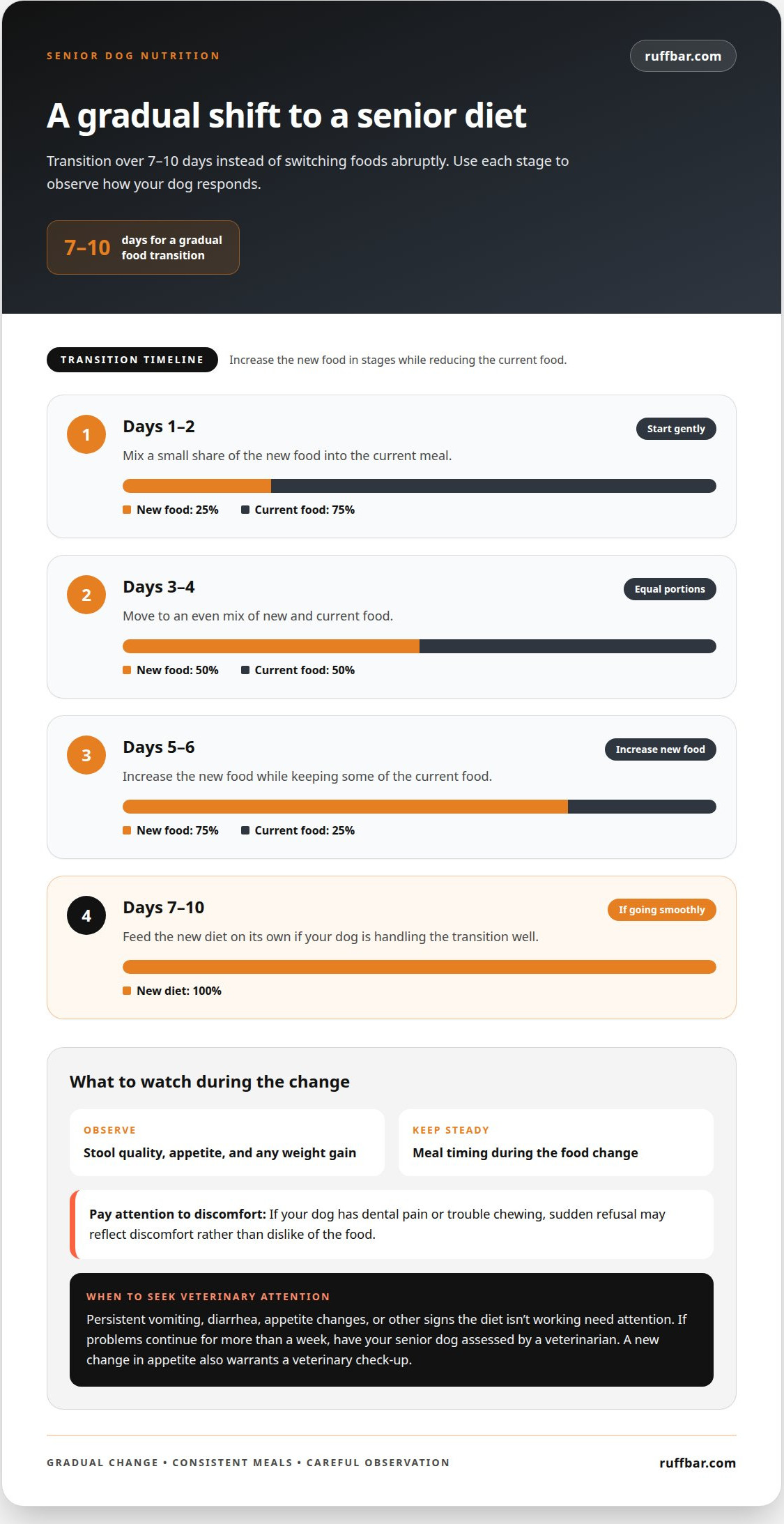
Gradual transition to a senior diet
Move an older dog onto a new food over 7-10 days, not in one abrupt switch. A gradual change gives you time to observe appetite, digestion, and feeding comfort during the senior years.
- Days 1-2: Mix 25% new food with 75% current food.
- Days 3-4: Serve an even mix of 50% new food and 50% current food.
- Days 5-6: Increase the new food to 75%, leaving 25% current food.
- Days 7-10: Feed 100% of the new diet if the transition is going smoothly.
Keep meal timing consistent during a food change. Note stool quality, appetite, and any weight gain; these details help show how the new feeding plan is working. If your dog has dental pain or trouble chewing, a sudden refusal may reflect discomfort rather than dislike of the food.
Persistent vomiting, diarrhea, appetite changes, or other signs that the diet isn’t working need attention. If problems continue for more than a week, have your senior dog assessed by a veterinarian. A new change in appetite also warrants a veterinary check-up, since illness can affect eating and weight.
Some health conditions call for a specialized plan rather than standard senior food. Kidney disease may require highly digestible protein, omega-3 and omega-6 fatty acids, potassium citrate, reduced sodium, and drastically reduced phosphorus. Dogs with cancer may benefit from a high-calorie, high-fat, low-carbohydrate diet with additional omega-3 fatty acids and antioxidants. These needs differ, so consult a veterinarian before starting a disease-specific diet or adding supplements.
There’s no single senior formula for every dog. A veterinarian can weigh activity, body condition, appetite, and diagnoses before recommending a plan. That guidance matters especially when arthritis, kidney disease, heart disease, or diabetes affects food choices.
Age and size when dogs become seniors
Dogs don’t all reach their senior years at the same age. Size and breed offer a useful starting point, but age alone doesn’t mean every dog needs a new food or smaller portions.
Typical age ranges vary by size:
- Small breeds: around 10-12 years old.
- Medium breeds: around 8-10 years old.
- Large breeds: around 7-8 years old.
- Giant breeds: as early as 5-7 years old.
These ranges are guides, not a universal switch date. A small dog may remain energetic into later years, while a giant breed can show age-related changes earlier. Breed, expected lifespan, appetite, activity, and body condition all help frame the decision.
Metabolism and routine matter, too. Small dogs often need more calories per pound than larger dogs because their metabolisms are faster. But an individual dog’s needs still depend on activity and weight trends. A senior diet may suit a dog whose energy needs or health have changed; one that remains active and maintains weight may not need a change just because it has reached an age marker.
Use a veterinary check-up to discuss dietary changes, especially if appetite shifts, weight changes, or muscle loss appears. These signs can reflect aging, but they may also point to a health concern. A veterinarian can consider breed, current food, activity, and health when assessing whether a senior formula fits.
The practical takeaway: use size to anticipate when to pay closer attention, then judge the diet by your dog’s condition and routine. Track appetite and weight as your dog ages, and revisit the feeding plan when either changes. For more active-dog nutrition ideas, explore nutrition options for active dogs.
Ruff Bar: Ruff Bar Functional Nutrition Toppers
Ruff Bar Functional Nutrition Toppers are an option to consider when you want to add a topper to your active dog’s routine. They can complement the broader diet, but they don’t replace choosing complete daily food that fits your senior dog’s needs.
For dogs with changing health needs or a prescribed diet, discuss additions with your veterinarian before introducing toppers or supplements. This matters for older dogs managing conditions such as kidney disease, diabetes, or heart disease. Any addition should fit the dog’s overall feeding plan.
Ruff Bar also offers Ruff Supplements for Dogs for owners considering supplement options. Review any addition in the context of your dog’s current food, activity, and health needs.
Contact Ruff Bar to explore its functional nutrition toppers and discuss which offering may fit your dog’s routine.
Keep Their Next Adventure in Focus
Build your next feeding decision around your dog’s current routine. Note what changes after a new food or topper, then bring those observations to your next veterinary conversation. Day-to-day details can help shape a clearer plan for the miles ahead.
A practical approach to nutrition for senior active dogs leaves room for dependable daily meals and products suited to an active routine. Ruff Bar offers Ruff Stix® Bison Pork, Ruff Stix® Beef, and Ruff Food Freeze Dried Raw Backpacking Meals Beef. Consider any addition within your dog’s overall diet, and discuss dietary changes with a veterinarian when health conditions affect food choices.
Keep the plan measured, observe your dog, and adjust with care. Contact Ruff Bar about senior dog nutrition to explore its offerings for your dog’s routine. Here’s to more strong strides together.
Frequently Asked Questions
Should I change my older dog’s diet?
Change your dog’s diet when health, appetite, activity, or body condition calls for a different nutritional approach, not simply because your dog has aged. For example, a dog that still exercises regularly and maintains a steady weight may do well on its current food. If you change foods, introduce the new one gradually and watch for changes in digestion, appetite, and energy.
When Is a Dog Considered a Senior?
A dog is often considered senior during the last 25% of its expected lifespan. That gives a useful perspective alongside age and size: a small breed and a giant breed may reach that life stage at different times. Treat the label as a prompt to pay closer attention to health and routine, not as an automatic signal to switch foods.
Can my old doggie have a snack?
Yes, an older dog can have snacks, but count them as part of its daily intake. Treats should make up no more than 10 to 15 percent of daily calories. For a practical example, if you give a snack during a walk, account for it when serving meals later. Smaller, measured portions help keep treats from quietly adding too much energy.
My older dog has a chronic disease: does she need special food?
She may need a diet tailored to her diagnosis rather than a general senior formula. Kidney disease, heart disease, arthritis, and diabetes can affect dietary needs in different ways. A veterinary professional can consider the condition, current food, appetite, and weight together. Don’t start a disease-specific feeding plan without discussing it first, since an unsuitable change may conflict with her care.
Should I give my older dog dietary supplements?
Discuss supplements with your veterinarian before adding them. A supplement can change the overall diet, and the right choice depends on your dog’s health and current food. Bring the product label and a list of anything your dog already receives. This helps review ingredients and avoid overlapping additions or an unsuitable combination.
What if my senior dog is eating less?
A noticeable appetite change deserves a veterinary check-up, because illness can affect how much an older dog eats. Track meal times and how much food remains, then share those details. If chewing seems uncomfortable, dental pain may be involved. Changes in smell can also affect interest in food; warming or moistening a meal may make its aroma more noticeable while you seek advice.