
Nutrition for police K9 dogs: Feeding for work and health
A working K9 shouldn’t eat by job title alone. The ration should match the work: dogs doing high-intensity, short-duration exercise should get 24-28% protein on a dry-matter basis, while energy sources need to reflect activity level and duration. That’s the starting point for nutrition for police K9 dogs: fuel the shift, not just the breed.
You already know demanding work calls for dependable energy. The challenge is matching that fuel to a dog’s workload, digestion and body condition as they change. This guide explains how to think about feeding for high-, moderate- and low-intensity work, what principles apply to police and other working dogs, and how to monitor stool, appetite and weight. Use those signals to keep the plan grounded in the dog in front of you, whether the day involves a short burst of effort or sustained work. Practical choices and clear monitoring help align the bowl with the job.
Key Takeaways
- Match protein and fat choices to the dog’s workload and the demands of each shift.
- Track stool quality, appetite and body condition to catch changes before they affect performance.
- Choose energy sources based on exercise intensity and duration, not a one-size-fits-all formula.
- Build a consistent feeding routine around training, recovery and the dog’s individual needs.
1. High-fat and high-protein diets for working dogs
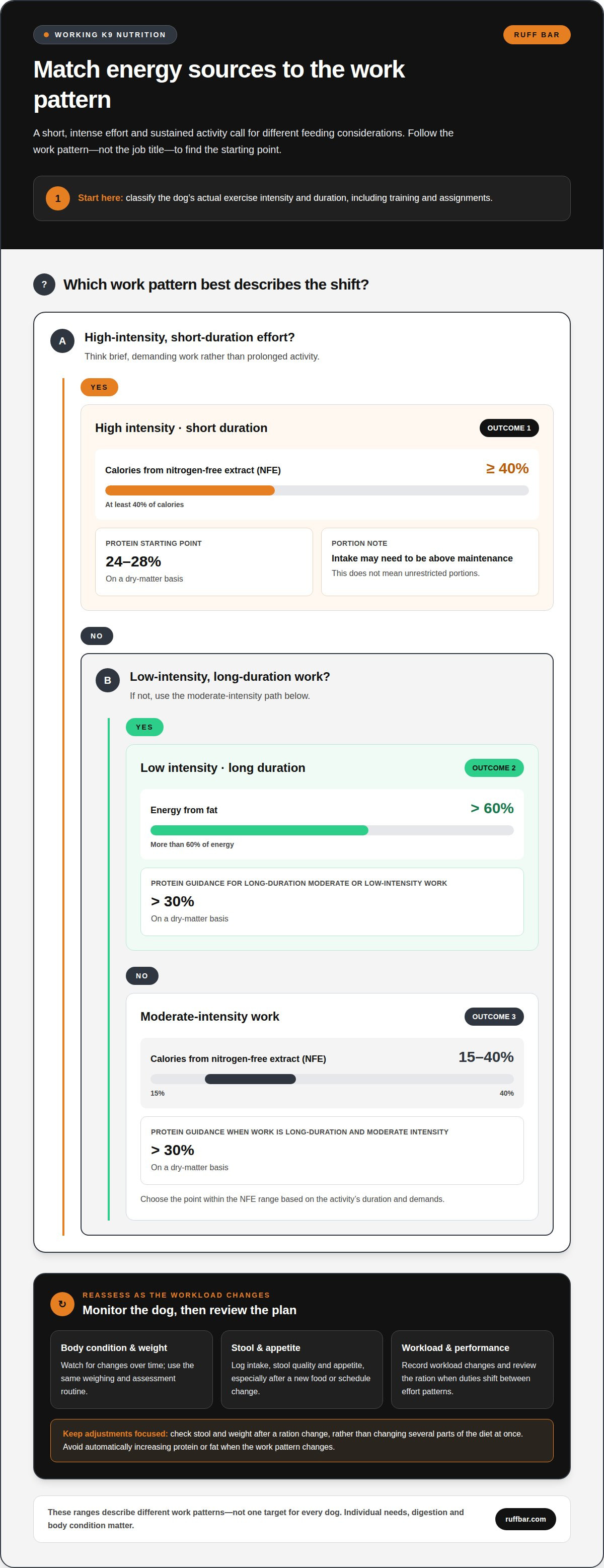
Police K9s need food matched to their workload, with enough energy and nutrients to support demanding work. For high-intensity, short-duration exercise, the recommended protein range is 24-28% on a dry-matter basis; for long-duration moderate or low-intensity work, it is more than 30%. Those figures describe different work patterns, not a single target for every dog.
Fat is a concentrated energy source, while protein supplies amino acids that help maintain and repair body tissues. The balance of fat, protein and carbohydrates in a working dog’s diet should be considered in light of its workload and individual needs. But adjusting the balance based on general ideas about active dogs can overlook the dog’s actual workload. Patrol intensity, duration, body condition and digestion all matter when assessing whether a diet is suitable. A brief, demanding search and sustained activity call for different feeding considerations.
Choose foods with clearly named protein sources on the ingredient list. Chicken, salmon, beef, turkey, venison, duck and lamb are identifiable sources. Heart and liver are named meat by-products that can be acceptable ingredients; the term “by-product” alone does not establish quality or nutritional value. In contrast, vague labels such as unspecified meat or bone meal do not identify the animal source. Look for named ingredients, then assess the full formula rather than judging a food by its first protein alone. Ingredients can appear in different forms, and the list is only one part of the feeding picture.
Use the dog’s work pattern to set a starting point, then monitor weight, stool and performance over time. Keep a record of food amounts and workload changes. If work shifts from short bursts to extended activity, review the feeding plan instead of automatically increasing protein or fat.
2. Monitoring for digestive issues and weight gain
For U.S. police K9s, dietary recommendations should reflect work intensity and the dog’s individual needs. A veterinarian can help assess those needs, including digestion, body condition and changes in workload. No single feeding target suits every patrol dog.
Track food intake, stool quality, appetite and body weight in a simple log. Record changes when training schedules shift or a new food is introduced. A loose stool, reduced appetite or steady weight increase can signal that the current ration or food isn’t working well. Dry-matter digestibility above 80% is advisable for working dogs; digestibility affects how much of the food’s nutrients the dog can absorb.
Body condition adds context to the scale. Dogs doing low- or moderate-intensity exercise should generally stay at a body condition score of 4 or 5 on the 9-point scale; high-intensity dogs are usually kept at 3 or 4. A K9 Buddy dog should generally remain within a few pounds of its partnership day weight throughout life. Use the same weighing routine and body-condition assessment each time, so gradual changes don’t disappear between busy shifts.
Carbohydrate and fat proportions influence energy delivery, but the right balance depends on exercise intensity and duration. Check stool and weight after a ration adjustment, rather than changing several parts of the diet at once. That makes it easier to connect a change with its likely cause. For practical feeding support, Ruff Bar Functional Nutrition Toppers can be considered as part of the dog’s overall ration.
How much does high-performance food cost in the United States? The total depends on the formula, package size and daily ration, since larger portions use food faster. Bloat, heatstroke and dehydration are common illnesses in patrol dogs, while excess calories can contribute to weight gain. Watch for changes in digestion or body condition, and treat heat-related concerns as urgent, not as routine feeding adjustments.
Bloat, heatstroke and dehydration are common illnesses in patrol dogs, and excess calories can contribute to weight gain. Monitor food intake, stool, appetite and body condition, and treat heat-related concerns as urgent.
3. Energy sources for different exercise intensities
Match energy sources to the work pattern, not just the K9’s job title. Short, intense efforts place different demands on a dog than sustained patrol activity. The nitrogen-free extract fraction, which includes digestible carbohydrates, is one way to describe energy from carbohydrates. Fat is another important source, especially during prolonged work. A healthy feeding plan starts with the expected activity, then adjusts portions to maintain body condition and performance.
For high-intensity work, at least 40% of calories should come from the nitrogen-free extract fraction. Food intake may need to be adjusted above maintenance to match high-intensity work. This isn’t a signal to add unrestricted portions. Consider the whole workload, including training and assignments, then watch how the dog responds. A repeated cycle of brief, explosive efforts differs from an inactive day, even for the same patrol dog.
Moderate-intensity work calls for a different balance: 15-40% of calories should come from the nitrogen-free extract fraction. The right point within that range depends on the duration and demands of the activity. For example, a K9 doing steady, moderate work for an extended period needs a plan built around that sustained effort, not the short-burst profile. Keep the daily ration consistent with the actual work schedule.
For low-intensity, long-duration work, more than 60% of energy should come from fat. Fat’s role becomes more prominent as activity continues, so the energy profile should reflect duration rather than a single sprint. Review the dog’s work calendar and feeding routine together. When duties shift between high-intensity training, moderate patrol and prolonged activity, adjust the plan to fit each phase. Keep tracking body condition and digestion as the workload changes; those signals help show whether the energy balance is holding steady.
4. Feeding guidance for police and other working dogs
For police K9s, choose a food formulated for increased energy and nutrient demands, then compare it against the dog’s actual duties. Check the named protein sources and ingredient order: manufacturers list ingredients by weight, so the first entries show which ingredients make up the largest share. A formula suited to sustained patrol may not fit a dog’s short, intense training sessions equally well. Good nutrition for police K9 dogs begins with matching the formula to the work.
Build the routine around the workday. For high-intensity, short-duration exercise, feed meals and snacks more than 4 hours before exertion. After performance, a high-carbohydrate snack within 30 minutes can support glycogen repletion. During breaks under 15 minutes before activity resumes, snacks may be appropriate. Keep training rewards within the dog’s total ration; alternative food rewards should not exceed 15% of it.
Access to water matters during work and recovery. Offer fresh water around activity, taking heat, duration and the dog’s individual needs into account. Electrolyte products are not a default addition to every working dog’s routine. Their use should reflect the dog’s condition and work demands, with a veterinarian assessing whether supplementation is appropriate.
Supplements should address a defined nutritional need, not replace a suitable diet. A veterinarian can weigh the dog’s food, workload, health and any existing supplements before recommending an addition. For instance, a dog already eating a balanced ration may have different needs from one whose demands or feeding plan have changed. Avoid stacking products without reviewing the total intake. Review nutrition for police K9 dogs whenever work demands or health needs shift.
Keep a written plan covering meals, work, rewards, water and any supplements. If the dog’s assignment changes, update the routine and monitor appetite, stool and body condition. These records help connect feeding decisions to the dog’s changing workload.
Choose a food formulated for increased energy and nutrient demands, then compare its protein sources and ingredient order with the dog’s duties. A formula suited to sustained patrol may not be equally suitable for short, intense training. The right choice depends on the work.
Ruff Bar: Ruff Bar Functional Nutrition Toppers
Ruff Bar’s Functional Nutrition Toppers offer an option for active dogs whose feeding routine needs added support alongside their regular food. Ruff Bar focuses on high-protein, grain-free nutrition for working and recreational dogs, using USDA-graded grass-fed meats and whole organic ingredients without fillers.
For handlers planning meals around training, travel or recovery, Ruff Stix® Bison Pork and Ruff Food Freeze Dried Raw Backpacking Meals Beef are additional options. Consider how each fits the dog’s routine and overall ration. Neither replaces a full diet tailored to the dog’s workload and individual needs. For health concerns or a specific feeding plan, consult a veterinarian.
If you’d like to explore Ruff Bar’s options for your dog, contact Ruff Bar.
Put the Next Feeding Decision to Work
Make the next step deliberate: identify what your dog’s current routine calls for, then choose food support that fits without disrupting the overall ration. A change in workload, travel or training can be a good prompt to review what goes into the bowl. Monitor the dog’s response as the routine evolves, and involve a veterinarian when health concerns or specific dietary needs call for expert input.
Ruff Bar offers options including Ruff Stix® Bison Pork, Ruff Food Freeze Dried Raw Backpacking Meals Beef and Ruff Stix® Beef. Consider each within the dog’s overall feeding plan, rather than treating any single product as a complete answer to nutrition for police K9 dogs. The aim is a practical routine that supports the work while staying attentive to the individual dog.
Ready to explore a feeding option for your working dog? Contact Ruff Bar about K9 nutrition, and keep building a stronger routine for the work ahead.
Frequently Asked Questions
How should a working dog be fed?
Feed a complete daily ration that matches the dog’s work, then account for training rewards within that total. For example, if a K9 receives food treats during a search session, reduce or adjust the remaining ration rather than adding rewards without tracking them. Keep meal timing predictable, provide fresh water, and note changes in appetite, stool or body condition. These observations help reveal whether the routine fits the dog.
What about other factors?
Workload is only one part of the feeding decision. Age, health, body condition, digestion, recovery and the training or patrol schedule can all shape a suitable plan. A dog working in heat may need closer attention to water access and signs of overheating than a dog doing indoor training. Include these daily conditions in the feeding record, and involve a veterinarian when health or dietary needs change.
How many calories should a working police dog eat per day?
There isn’t one calorie target for every working police dog. Daily energy needs depend on body size, body condition, workload, activity duration and individual metabolism. A K9 with a demanding training schedule may need a different ration from the same dog on a quiet recovery day. Start with the food’s feeding directions, then assess weight and condition over time to guide adjustments.
What protein and fat levels are recommended for police K9 food?
Protein needs depend on the work pattern: high-intensity, short-duration exercise differs from prolonged moderate- or low-intensity work. Fat needs also vary with activity, and long-duration, low-intensity work draws heavily on fat for energy. Compare food labels on a dry-matter basis when assessing protein, and consider fat alongside the full formula and the dog’s workload.
How should a police dog’s diet change on training days versus rest days?
Adjust the ration for meaningful differences in workload, not simply because it is a “training day.” A brief technical session may not require as much energy as repeated high-intensity work. Keep the formula steady where possible, and adjust portions based on activity, appetite and body condition. Record the session and feeding amount to spot patterns across training and rest days.
When and how often should police K9s be fed around strenuous work?
For high-intensity, short-duration exercise, schedule meals and snacks more than four hours before work. A high-carbohydrate snack within thirty minutes after performance can support glycogen replenishment. There isn’t a single meal frequency for every K9; consider the dog’s routine, workload and response. Avoid making large feeding changes immediately before strenuous activity, and keep water available during recovery.