
Nutrition for flyball dogs: calories, fuel and hydration
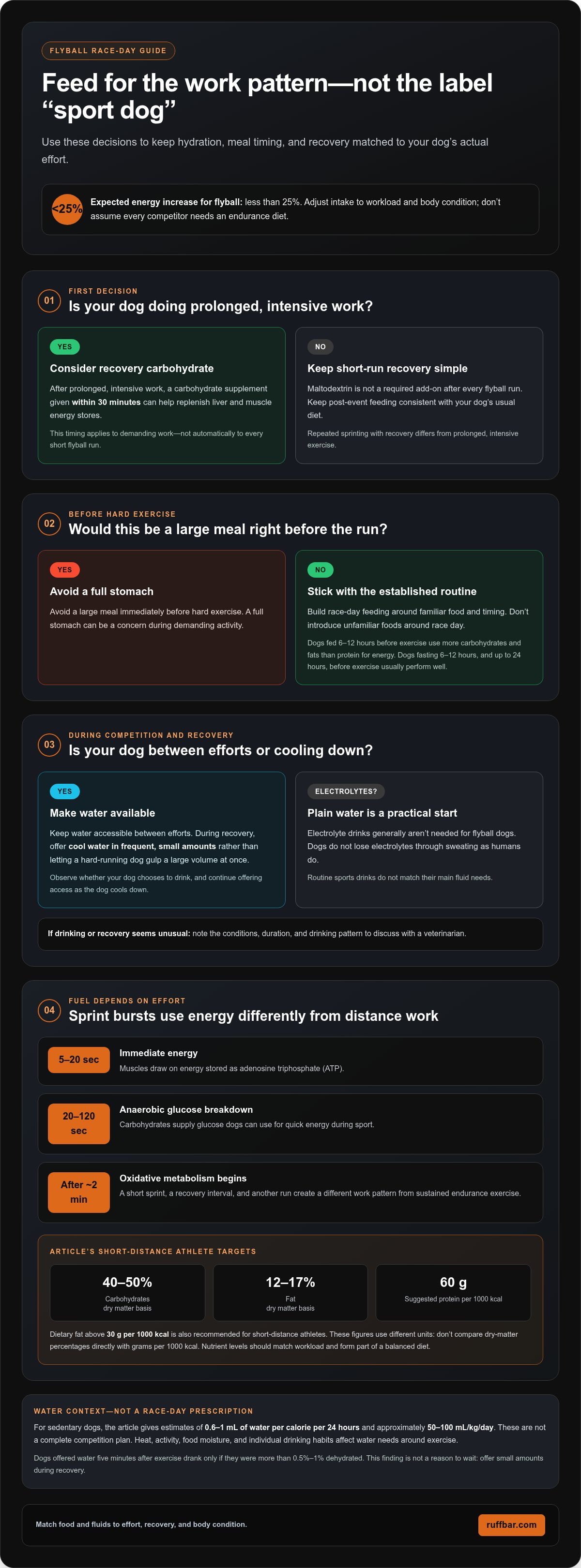
Flyball dogs don’t automatically need an endurance athlete’s calorie load: flyball is classified as a low-energy sport, with an expected energy requirement increase of less than 25%. Nutrition for flyball dogs means matching food intake to the dog’s workload and body condition, rather than feeding every competitor as if it ran distance races.
Flyball is explosive: dogs sprint, clear hurdles, retrieve a ball, and race back as part of a team relay. But fast bursts do not automatically mean a major increase in daily calories. Training, competition, recovery, and everyday activity all affect what a dog needs.
This guide explains how to assess a flyball dog’s calorie needs, what sprint fuel contributes, and how to manage hydration around exercise. It also explains why endurance-dog feeding advice may not suit flyball, and how a balanced everyday diet can support an active dog without overfeeding.
Key Takeaways
- Flyball’s expected energy increase is less than 25%, so adjust daily intake to your dog’s actual workload and body condition rather than assuming every sport dog needs an endurance diet.
- Offer frequent, small amounts of cool water during recovery. Dogs generally don’t need electrolyte drinks to replace sweat losses.
- Sprint nutrition differs from endurance fueling. Learn how carbohydrate and fat contribute to short bursts of work and recovery.
- Meal timing matters on race days. Understand why a full stomach before hard exercise can be a concern and how feeding routines can vary.
- Ruff Stix® Bison Pork is one option to consider as fuel alongside your dog’s balanced everyday diet.
Water and electrolyte needs during exercise
Flyball combines repeated sprints with waiting between runs, so make water available throughout competition. During recovery, offer cool water in frequent, small amounts rather than letting a hard-running dog gulp a large volume at once. Keep water accessible between efforts and observe whether your dog chooses to drink.
Two daily estimates give context, but they describe sedentary dogs, not a complete race-day plan. Sedentary dogs require 0.6 to 1 mL of water per calorie per 24 hours. Their water needs also approximate 50 to 100 mL/kg/day. Heat, activity, food moisture, and individual drinking habits affect what a dog needs around exercise.
Timing can affect whether a dog drinks after exertion. Dogs offered water five minutes after exercise drank only if they were more than 0.5% to 1% dehydrated. That finding doesn’t make waiting a goal. Offer small amounts during recovery, then continue providing access as the dog cools down.
Electrolyte drinks generally are not needed for flyball dogs. Dogs do not lose electrolytes through sweating as humans do, so routine sports drinks do not match their main fluid needs. Plain water is a practical starting point. If hydration or recovery seems unusual, note the conditions, duration, and drinking pattern to discuss with a veterinarian.
Distance helps explain why endurance feeding advice may not fit flyball. Running dogs require about 1.1 kcal per kg of body weight per kilometer traveled, but a flyball dog’s total workload includes sprinting, rest, training, and daily movement. Distance is one input, not a stand-alone calorie prescription. Dietary fat supplies concentrated energy and can support endurance work; a brief sprint-and-recovery pattern differs from sustained distance exercise.
Flyball also demands concentration. Dogs must focus on the handler, hurdles, ball, and return lane. Mental effort does not show up in distance totals, so consider training intensity and recovery between sessions when assessing the overall routine.
After prolonged, intensive work, a carbohydrate supplement given within 30 minutes can help replenish liver and muscle energy stores. That timing applies to prolonged intensive exercise, not automatically to every short flyball run. Offer water in small amounts, allow recovery, and keep post-event feeding consistent with the dog’s usual diet.
What foods should flyball dogs avoid before or after racing? Avoid a large meal immediately before hard exercise, and don’t introduce unfamiliar foods around race day. Dogs that fast for 6-12 hours and up to 24 hours before exercise usually perform well; after intense work, resume familiar food as recovery progresses.
Carbohydrate and fat ratios for sprinting dogs
A flyball dog uses different energy systems as effort changes, so sprint fueling differs from endurance feeding. High-protein or high-fat diets may suit a canine athlete when they match its workload and form part of a balanced diet. Neither nutrient needs to be increased automatically.
Carbohydrates for Quick Sport Energy
Carbohydrates supply glucose that dogs can use for quick energy during sport. In the first 5-20 seconds of exertion, muscles draw on immediate energy stored as adenosine triphosphate, or ATP. From 20-120 seconds, anaerobic glucose breakdown contributes energy. For flyball’s repeated bursts, carbohydrate availability can support those short efforts.
After about two minutes of exertion, dogs begin using oxidative metabolism. This helps explain why an athlete’s needs depend on the work pattern, not just the sport. A short sprint, a recovery interval, and another run place different demands on fuel use than sustained endurance exercise.
Post-Activity Carbohydrate Replacement
Carbohydrate replacement helps restore energy stores after prolonged, intensive work. A carbohydrate supplement given within 30 minutes after that kind of effort can help replenish liver and muscle energy stores. The timing is most relevant to demanding sessions, especially when a dog has repeated work and limited recovery.
Maltodextrin is not a required add-on after every flyball run. On competition days, it can be used for carbohydrate replacement. Keep the distinction clear: recovery after short runs is different from replenishment after prolonged, intensive work.
Carbohydrate and Fat Targets
For sprinting dogs, including flyball dogs, an appropriate diet contains 40-50% carbohydrates and 12-17% fat on a dry matter basis. Short-distance athletes may benefit from a diet tailored to their activity and individual needs. Dietary fat above 30 g per 1000 kcal is also recommended for short-distance athletes.
These figures describe different ways of expressing nutrients, so don’t compare a dry-matter percentage directly with grams per 1000 kcal. Protein matters too: the suggested target for short-distance canine athletes is 60 g per 1000 kcal. Moderate carbohydrate levels can provide quick energy while protein supports muscle function and repair.
Pre-Race Meals and Timing
Pre-race timing helps balance available fuel with comfort during hard work. Dogs fed 6-12 hours before exercise use more carbohydrates and fats than protein for energy, helping maintain muscle mass. Dogs that fast for 6-12 hours and up to 24 hours before exercise usually perform well, avoiding work on a full stomach while using stored energy.
Build race-day feeding around the dog’s established routine rather than introducing a new food at the event. For an event involving travel, Ruff Food Freeze Dried Raw Backpacking Meals Beef and Duck are meal options to consider as part of the dog’s broader feeding plan.
Flyball's expected energy requirement classification
Flyball is classified as a low-energy canine sport, with an expected energy requirement increase of less than 25%. Age, breed, body condition, and health still shape an individual dog’s needs, so use the dog’s ideal body weight and actual workload when planning daily food. A health condition or injury also changes the picture; discuss demanding exercise with a veterinarian before starting.
For most pet dogs, normal activity requires (90-110) × ideal body weight in kilograms raised to the 0.75 power kcal per 24 hours. This is a starting estimate, not a race-day allowance. Compare the dog’s body condition and weight trend over time, then account for changes in training, competition, and everyday movement.
Flyball’s four hurdles and return sprint create intense bursts, but they don’t make it an endurance event. Running dogs require about 1.1 kcal per kg of body weight per kilometer traveled. That figure can help frame distance-related exercise, but it doesn’t capture every factor in a flyball session, such as repeated efforts and recovery periods.
Age brings different nutritional priorities. Puppies need carefully balanced growth diets: the recommended calcium allowance is 3 g per 1000 kcal, with a minimum of 2 g per 1000 kcal. For giant-breed puppies, a suggested safe upper limit is 4.5 g per 1000 kcal. Healthy, active senior dogs are recommended diets containing more than 75 g of protein and 35 g of fat per 1000 kcal.
Breed alone doesn’t set a calorie target. Sprinting greyhounds require about 10% more calories on race day than nonracing active dogs, but that comparison shouldn’t be applied automatically to a flyball dog. Sled-pulling huskies working extended distances in cold weather can require up to eight times normal energy requirements. Different jobs demand different fuel.
Body condition can help show whether food intake matches a dog’s workload. If weight changes while training stays steady, review the full routine, including meal portions, treats, and activity outside the ring. Muscle, fitness, and body weight together give a clearer picture than competition intensity alone. Adjust the complete daily diet, not just one race-day meal.
The North American Flyball Association requires dogs to be at least 15 months old to compete in its events. That eligibility threshold isn’t a feeding formula. For a young dog, prioritize appropriate growth nutrition; for a healthy, active senior, consider the distinct protein and fat recommendations. Injury or illness calls for a different exercise and nutrition plan than routine competition.
Balanced nutrition for working dogs
A working dog’s diet should match its work pattern, not just its athletic label. Flyball and agility involve short bursts, while distance work requires sustained output. These differences affect energy and protein needs. A balanced daily ration must still provide essential nutrients, not just calories for training.
For short-distance canine athletes, the suggested target is 60 g of protein per 1000 kcal. Protein supports muscle function and repair, but more isn’t automatically better if the complete diet already supplies the needed amino acids. Dogs can meet protein requirements from plant or animal sources when their balanced diet provides all essential amino acids in the required amounts.
Endurance work changes the balance. Dogs participating in endurance exercise need more energy and protein than dogs doing sprint-type exercise. For long-distance canine athletes, the recommended minimum diet provides 90 g protein, 60 g fat, and 25 g carbohydrate per 1000 kcal. Those figures belong to long-distance work, not automatically to a flyball schedule.
Calorie density also separates sprint and endurance food. Food for sprinting dogs, including flyball dogs, should provide 300-400 calories per cup. Food for true endurance dogs may provide 500-600 calories per cup and up to 35% fat on a dry matter basis. A cup is a volume measure, so compare calorie content before using the same scoop size across different foods.
Fat carries more than twice as many calories as protein or carbohydrates, which can supply extra energy for endurance exercise. That concentration can help a dog sustain prolonged work, but it also means portion size matters. A high-fat working diet should be introduced over 4-6 weeks, allowing the dog’s routine to adjust gradually instead of making an abrupt switch before competition.
Use the food’s calorie information and the dog’s changing workload to guide portions. A flyball dog adding training sessions may need a different total intake from one having a lighter week. Track body condition and muscle as well as performance. Maintaining healthy muscle and an appropriate weight is a more useful signal than speed alone.
Choose a nutrition plan based on workload: sprint fuel for short, explosive efforts and a higher-energy approach for sustained endurance. Recommendations for sled dogs, distance runners, and agility competitors are not interchangeable. Match the diet to the actual work, keep the complete ration balanced, and adjust portions as activity changes.
What are the best pre-race meals and timing for flyball dogs?
Race-day feeding should support sprint work without a large meal immediately before hard exercise. Keep the dog’s established, balanced food at the center of the plan. Consider event timing, the number of runs, recovery periods, and how your dog handles its usual feeding routine.
Dogs that fast for 6-12 hours and up to 24 hours before exercise usually perform well. This approach allows stored energy to be used and avoids exercise on a full stomach. It isn’t a universal schedule for every dog. Consider the dog’s usual meal pattern and the demands of the event before changing meal timing.
Another approach is feeding 6-12 hours before hard work. Dogs fed within that window use more carbohydrates and fats than protein for energy, helping maintain muscle mass. The timing gives the meal time to move through digestion before intense exercise. Keep the meal familiar rather than testing a new formula on race day.
The day before an event, give sprinting dogs small meals. Portions spread across the day can suit a competition routine without relying on one large pre-race meal. Plan around travel, check-in, warm-up, and the dog’s expected runs. These practical factors matter more than a fixed clock time.
Multiple short events change the recovery picture. Carbohydrates after activity are especially relevant when a dog competes repeatedly in one day. A carbohydrate supplement given within 30 minutes after prolonged intensive work can help replenish liver and muscle energy stores. That guidance concerns prolonged, intensive work, not automatically every short flyball run.
Keep food choices steady on event day. A sudden change makes it harder to identify how your dog responds to meals, training, and competition stress. Record feeding times, amounts, and your dog’s responses across events. Use those observations to refine the routine while keeping the overall diet balanced.
For an outing involving travel, pack your dog’s usual food and keep meal timing consistent with its routine. Avoid testing unfamiliar ingredients or a new feeding strategy on race day. A dependable plan accounts for the pre-event meal, repeated runs, and post-activity recovery without confusing sprint fueling with endurance feeding.
Build a practical event-day meal plan around familiar food and your dog’s schedule. Explore race-day meal options for active dogs.
Ruff Bar: Ruff Stix® Bison Pork
Ruff Stix® Bison Pork is an energy bar option for active dogs that can fit alongside an established feeding routine. Ruff Bar makes its formulas with USDA-graded grass-fed meats and whole organic ingredients, without fillers. Keep your dog’s complete daily diet and workload at the center of its nutrition plan, and fit any added food into that broader routine.
For a convenient option during an active day, consider Ruff Stix® Bison Pork. Ruff Food Freeze Dried Raw Backpacking Meals Beef is another meal option for outdoor routines. Account for any addition in your dog’s overall food intake, training demands, and body condition rather than assuming a product alone determines performance.
Explore Ruff Bar’s active-dog nutrition options online or contact Ruff Bar with questions about its offerings.
Build a Routine That Moves With Your Dog
Make your next step practical: keep a simple record of meals, training, and your dog’s responses. Use the pattern to shape a consistent routine for practice and competition days. A steady approach makes changes easier to assess and keeps feeding decisions grounded in your dog’s actual needs.
Ruff Bar offers Ruff Stix® Bison Pork, Ruff Stix® Beef, and Ruff Food Freeze Dried Raw Backpacking Meals Beef for active dogs. Consider how an addition fits your dog’s complete diet and established routine. Thoughtful nutrition for flyball dogs is tailored to the individual, not based on a one-size-fits-all race-day formula.
Explore the offerings or get in touch with Ruff Bar to discuss dog nutrition. Contact Ruff Bar about dog nutrition. Keep refining the routine, stay focused on your dog, and enjoy the next run together.
Frequently Asked Questions
Does every canine “athlete” need more calories?
No. Flyball is classified as a low-energy sport, with an expected energy requirement increase of less than 25%. A dog’s actual needs depend on its workload, body condition, and everyday activity. For example, a dog attending a light training session may not need the same intake as one competing and training regularly. Adjust portions according to the dog’s overall routine, not the “athlete” label alone.
What should flyball dogs eat for daily energy and health?
Nutrition for flyball dogs starts with a complete, balanced diet that supplies energy and essential nutrients for the dog’s life stage and activity. Protein supports muscle function, while carbohydrates and fat contribute energy in different ways. Count training rewards as part of daily intake, not as extras outside the plan. If treats increase during a practice week, account for them when portioning regular meals.
How many calories does a flyball dog need based on weight and activity?
A starting estimate for most pet dogs’ normal activity is (90-110) × ideal body weight in kilograms raised to the 0.75 power kcal per 24 hours. For nutrition for flyball dogs, use ideal body weight, not automatically the number on the scale. This estimate doesn’t account for every training schedule. Compare weight and body condition over time, then adjust intake as activity changes.
How soon after flyball can dogs eat, and what recovery nutrition helps?
Let a dog recover from hard exertion before offering its usual meal, rather than feeding a large portion immediately after a run. After prolonged, intensive work, a carbohydrate supplement given within 30 minutes can help replenish liver and muscle energy stores. That’s different from a brief flyball effort. Keep post-event food familiar, especially when the dog has several competition runs.
How much water and electrolytes should flyball dogs get during competitions?
Offer cool water in frequent, small amounts during recovery, and keep it available between runs. Do not force a fixed volume: needs vary with activity, weather, and food moisture. Dogs do not need electrolyte drinks to replace sweat losses as humans do. Water estimates for sedentary dogs are context, not race-day prescriptions.
Which treats and supplements are safe and useful for flyball performance?
Choose familiar treats your dog tolerates well, and include their calories in the daily food total. Small rewards can reinforce handling and focus without replacing balanced meals. Supplements are not automatically needed for performance. Use one only for a clear dietary purpose, and ask a veterinarian to assess whether it suits your dog’s health and existing diet.
How can nutrition prevent dehydration, overheating, and gastrointestinal upset in flyball dogs?
Food alone cannot prevent overheating, but a sound event routine can reduce avoidable strain. Offer water during recovery, provide rest between runs, and avoid large meals close to hard exercise. Keep race-day foods familiar instead of introducing new treats or supplements. In warm conditions, plan access to shade and cooling breaks. Hydration and feeding are only part of heat management.