
No-mess dog food for car travel: treats for long drives
A tidy drive starts with a treat that stays manageable in the car. For no-mess dog food for car travel, look for a firm, low-crumb option that’s easy to portion and serve without a bowl of loose food. Air-dried chews can suit longer trips when you want a simple, portable reward between stops.
It makes sense to prioritize less mess: crumbs, greasy fingers, and food that needs extra handling can distract from the miles ahead. The best choice depends on your dog’s chewing style and how you plan to offer treats on the road. Here, you’ll learn how air-dried chews fit longer drives and what to look for in a tidy travel treat, from texture and portioning to storage. A few practical comparisons will help you match the option to your route, your dog, and the kind of cleanup you want to avoid.
Key Takeaways
- Choose treats that are easy to portion and handle, and consider how their texture may affect crumbs and cleanup.
- Compare chews, dry food, and wet pouches by how you’ll serve them during the drive, not just by convenience in the bag.
- Keep treats in proportion: they should make up no more than about 10% of your dog’s daily calories.
- For trips without refrigeration, understand how shelf-stable options differ from fresh pet foods, which the Centers for Disease Control and Prevention says need refrigeration.
Car-friendly treat characteristics
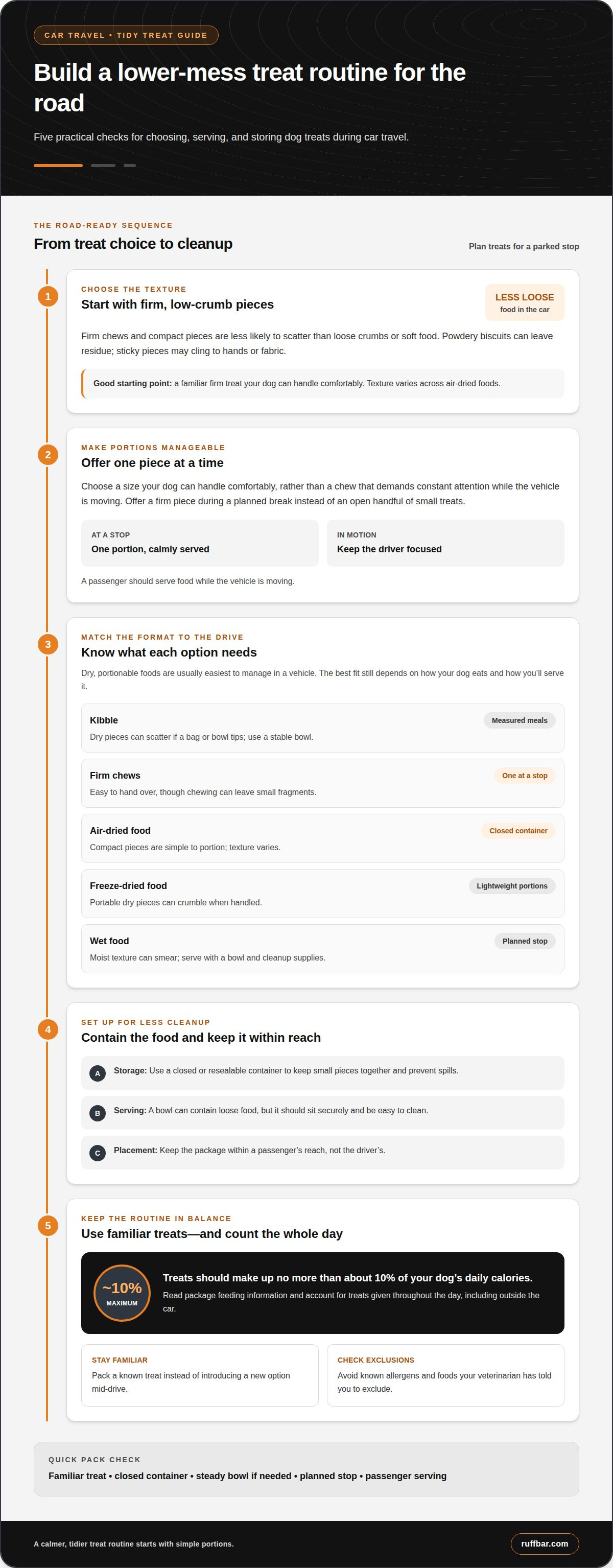
A practical no-mess dog food for car travel should be easy to portion, carry, and serve. Start with texture. Firm chews and compact pieces are less likely to scatter than loose crumbs or soft food smeared across fingers. A resealable container can keep small pieces together between stops. Choose a size your dog can handle comfortably, rather than a chew that demands constant attention while the vehicle is moving.
Next, consider how the food behaves in your setup. Powdery biscuits can leave residue on seats, while sticky pieces may cling to hands or fabric. Offer one firm piece during a planned break instead of an open handful of small treats. Keep the package within a passenger’s reach, not the driver’s. A bowl can contain loose food, but it should sit securely and be easy to clean.
Treats should make up no more than about 10% of a dog’s daily calories. Keep that limit in mind when adding rewards alongside regular meals. Read the package feeding information and account for treats given during the whole day, including stops outside the car.
- Texture: Prefer firm, low-crumb pieces over crumbly biscuits.
- Portioning: Choose treats that can be offered one at a time.
- Handling: Avoid oily or sticky pieces if clean hands matter.
- Storage: Use a closed container to prevent food spilling in transit.
- Routine: Pack a familiar treat instead of introducing a new option mid-drive.
For US travelers, treat-friendly choices include compact chews and dry bite-sized snacks from various brands. Prices vary by formula and package size, so compare the amount and feeding directions on each product rather than relying on a single typical price.
Avoid known allergens and foods your veterinarian has told you to exclude. For a tidier ride, also skip loose, saucy, or crumbly foods that are difficult to serve neatly in a moving car. Offer treats during a planned stop, and keep your dog’s regular food routine in view.
What types of dog food are least messy for car travel?
Dry, portionable foods are usually easiest to manage in a vehicle. Kibble stays loose, while packaged bars and snack sticks can be offered individually. Freeze-dried pieces are lightweight, though crumbs can collect in their bag. Wet food is softer and needs a controlled serving spot. The least-messy choice depends on how calmly your dog eats and how you’ll serve each option.
Use this comparison to match the food format to the drive:
| Food type | Mess considerations | Useful for |
|---|---|---|
| Kibble | Dry pieces can scatter if a bag or bowl tips. | Measured meals in a stable bowl. |
| Firm chews | Easy to hand over, but chewing can leave small fragments. | One-at-a-time rewards during a stop. |
| Air-dried food | Compact pieces are simple to portion; texture varies. | Travel snacks stored in a closed container. |
| Freeze-dried food | Dry pieces are portable, but can crumble when handled. | Lightweight portions packed for the route. |
| Wet food | Moist texture can smear and needs careful serving. | A planned stop with a bowl and cleanup supplies. |
For a longer drive, shelf-stable bars or snack sticks can be practical when you want a compact option without opening a meal pouch. Try the format at home first. If your dog tends to break food into crumbs, pack it securely and serve it during a rest stop. Keep wet food for a stop where you can open, portion, and clean up without rushing.
Choose based on your dog’s eating habits, not the package alone. A dog that gulps kibble may do better with measured portions at stops. A careful chewer may manage a firm treat more neatly. Pack a small towel, a secure food container, and a bowl that sits steadily. For any format, keep the driver focused: a passenger should serve food while the vehicle is moving.
Are single-serve wet dog food pouches good for road trips?
Yes, single-serve wet food pouches can work well at planned stops. Each pouch gives you a contained portion, without carrying an open can or large tub. The trade-off is texture: wet food can smear on fingers, bowls, and seat fabric. Pack a spoon, a small bowl, and a sealable bag for used packaging. Serve while parked, not while the driver is focused on the road.
Check the pouch format before packing. A tear-open top is convenient, but a clean tear may still leave food around the opening. Keep the pouch upright in a washable container, and bring wipes for hands and the bowl. If your dog eats slowly, portion a small amount into the bowl instead of letting the dog lick the package. That keeps the pouch cleaner for storage.
Use this quick checklist at a rest stop:
- Before opening: Set out the bowl, wipes, and a waste bag.
- While serving: Keep the pouch and bowl on a stable surface.
- After eating: Seal the empty pouch in the waste bag.
- For leftovers: Follow the package storage directions.
Storage matters. Fresh pet foods need refrigeration and don’t keep as long as kibble or canned pet foods. That guidance applies specifically to fresh pet foods. For a wet pouch, follow its label directions for storage after opening; don’t assume every formula is handled the same way.
Wet pouches suit trips with accessible rest stops and room for cleanup supplies. They’re less convenient if you need to feed quickly beside the car or have nowhere to wash a bowl. Pack a dry, portionable option for a stretch without a suitable stopping point, and reserve the pouch for a proper break. Match the format to your route, your dog’s pace, and the cleanup you can manage.
What shelf-stable dog food options work without refrigeration?
For a drive without a cooler, consider kibble, air-dried food, freeze-dried food, or unopened shelf-stable cans. Each travels differently. Kibble is easy to portion, while compact dry foods fit into a pack. Canned food can work before opening, but serving it requires a bowl and a plan for leftovers.
Kibble suits dogs already eating it at home. Measure a meal into a sealed container before departure, then pour a small serving into a stable bowl at a stop. Loose pieces can scatter if the container tips, so keep it closed between feedings. This option works best when your dog eats calmly from a bowl.
Air-dried and freeze-dried foods are other dry formats to consider. Air-dried pieces can be portioned into a small travel container. Freeze-dried pieces are light to pack, but can crumble during handling. Try your dog’s usual serving method before leaving, and pack a bowl if the food needs one.
- Kibble: Familiar meals, portioned into a sealed container.
- Air-dried food: Compact pieces for measured servings.
- Freeze-dried food: Lightweight portions, handled gently to limit crumbs.
- Unopened canned food: A meal option that needs a bowl after opening.
Choose the format around your route and your dog’s routine. Kibble may be straightforward for a dog that eats dry meals daily. A dog accustomed to moist food may prefer a familiar canned option at a stop. Keep packaging directions available, especially for serving and storing food after opening. Don’t assume an opened package can remain in the car for later.
The Centers for Disease Control and Prevention says fresh pet foods need refrigeration and don’t keep as long as kibble or canned pet foods. That makes fresh food a poor fit for a trip without reliable cold storage. Pack shelf-stable food in a clean, closed container, keep it accessible to a passenger, and serve it while parked. For a longer drive, plan meals around stops and your dog’s usual food, rather than switching formats mid-route.
Keep food in a clean, closed container and follow its packaging directions. Don’t leave opened food in the car for later; serve it while parked and plan meals around stops.
Ruff Bar
Ruff Bar offers portable nutrition products for active days and travel. For a drive, Ruff Stix® Bison Pork provides a snack-stick option, while Ruff Food Freeze Dried Raw Backpacking Meals Beef and Duck are meal formats to pack. Match the format to your dog’s routine and how you’ll serve food during stops. Familiar food can make travel feeding simpler than introducing a new option on the road.
Ruff Bar’s products are high-protein and grain-free, made with USDA-graded grass-fed meats and whole organic ingredients without fillers. Review each product’s feeding and storage directions as you plan what to bring. If you’re deciding which option fits your dog’s travel routine, contact Ruff Bar to discuss it.
Make the Next Drive Easier
Build a travel routine before your next long drive. Try your planned feeding setup during a short outing, then notice how your dog eats and settles afterward. That gives you a chance to adjust the routine at home rather than working it out on the road. Keep food, cleanup supplies, and serving items together so packing feels straightforward when departure day arrives.
Choosing no-mess dog food for car travel is only one part of preparation. Your dog’s familiar habits matter too. A calm, consistent approach can make stops more predictable for both of you, whether you’re taking a short drive or a longer trip. Keep the plan simple, adapt it to your dog, and use each trip to learn what works.
For help choosing a travel-friendly option for your dog, contact Ruff Bar for travel treat advice. Pack with purpose, hit the road, and enjoy the miles together.
Frequently Asked Questions
How can I feed a dog in the car without making a mess?
Feed your dog while the car is parked, and keep serving supplies together in a washable kit. Before a trip, practice the routine at home: use the same travel bowl and familiar food, then try again in the parked car. On travel day, have a passenger prepare the serving and handle cleanup. This keeps food preparation separate from driving and helps your dog recognize the routine.
Are there travel-friendly dog food brands and prices in the US?
US travelers can consider compact chews and dry bite-sized snacks from various brands, including Ruff Bar options. Prices vary by formula and package size, so compare the amount and feeding directions on each product.
How much dog food should I pack for a car trip?
Pack measured portions based on your dog’s usual meals and plan feeding around stops. Keep treats to no more than about 10% of your dog’s daily calories.