
Meal Toppers for Picky Dogs: Fresh, Wet, and Dried Choices
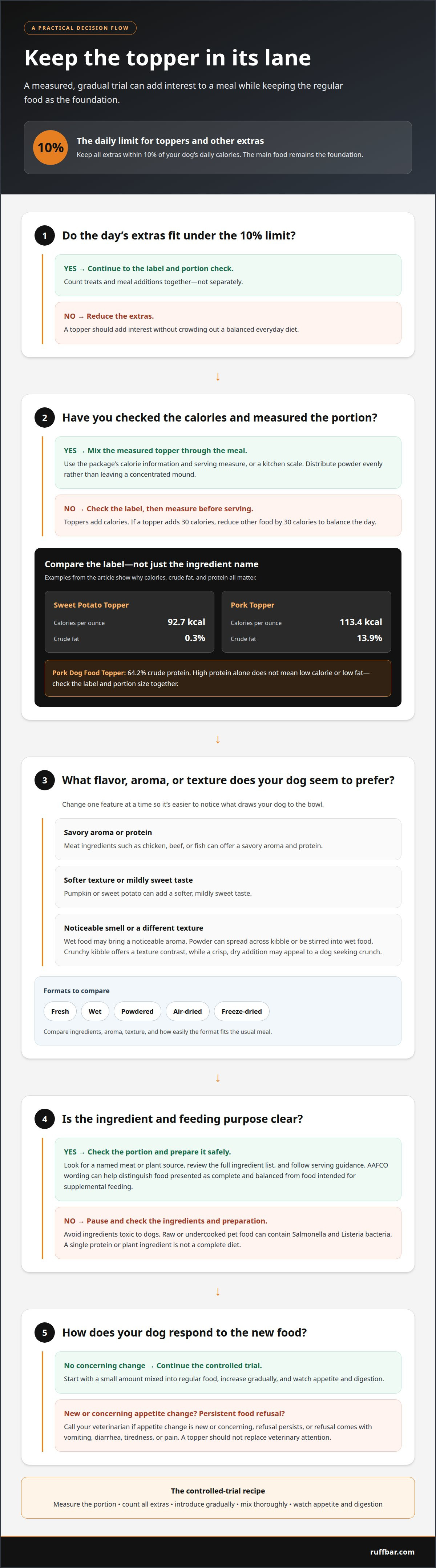
A full bowl overhaul isn’t always the first move. Meal toppers for picky dogs are add-ins that bring new flavors, aromas, or textures to a regular meal. Keep them to no more than 10% of your dog’s daily calories so the main food remains the foundation.
If your dog turns away from the bowl, it makes sense to try a little variety. The right meal topper can make food more appealing, but meat and plant ingredients offer different flavors and textures, and dogs respond to them differently.
This guide explains what toppers are and how to introduce them thoughtfully. You’ll compare fresh, wet, powdered, air-dried, and freeze-dried options, see what sets meat and plant ingredients apart, and learn how to choose a format that suits your dog’s preferences. Clear portions matter, too: a topper should add interest without crowding out a balanced everyday diet.
Key Takeaways
- Compare meat- and plant-based ingredients by the flavors and textures your dog prefers, then choose a topper that complements the regular meal.
- Introduce new foods gradually and mix the topper thoroughly through your dog’s food.
- Explore fresh, wet, powdered, air-dried, and freeze-dried formats to find an appealing fit for your dog’s bowl or your next outing.
- For a meat-based option, Ruff Stix® Bison Pork offers another way to add variety to your dog’s routine.
What Are Dog Food Toppers?
Dog food toppers are add-ins served with a dog’s regular food. They can add flavor, aroma, texture, or nutrition, but they also add calories. With meal toppers for picky dogs, the aim is to make the bowl appealing without letting extras displace a balanced main diet.
Keep toppers and other extras within 10% of your dog’s daily calorie intake. That limit helps preserve calorie balance, since a small addition repeated at each feeding can contribute to weight gain. If a topper adds 30 calories, reduce other food by 30 calories to balance the day. Count treats and meal additions together, not separately.
Read the package’s calorie information and measure each portion before serving. A kitchen scale or the product’s stated serving measure can help keep portions consistent. Mix the topper through the meal instead of leaving a concentrated mound on top. For powder, measure first, then distribute it evenly through the food.
Compare both calories and crude fat when choosing an ingredient. Sweet Potato Topper lists 92.7 kilocalories per ounce and 0.3% crude fat. Pork Topper lists 113.4 kilocalories per ounce and 13.9% crude fat. The Pork Dog Food Topper lists 64.2% crude protein. Those figures show why high protein alone doesn’t mean low calorie or low fat. Check the label and portion size together.
Introduce a new topper gradually by mixing a small amount into your dog’s regular food, then increasing it over time. Watch for changes in appetite or digestion. A new or concerning appetite change, persistent food refusal, or refusal alongside vomiting, diarrhea, tiredness, or pain warrants a call to your veterinarian. A measured serving, gradual change, and daily calorie count help keep the trial controlled.
Comparing meat and plant-based topper ingredients
Meat and plant ingredients bring different flavors, aromas, and textures to a dog’s bowl. Chicken, beef, or fish can offer a savory aroma and protein, while pumpkin or sweet potato can add a softer, mildly sweet taste. The better match depends on what your dog already enjoys and how the ingredient fits the regular food. A “superfood” label alone won’t tell you whether the flavor or texture will appeal.
Single-ingredient protein powders make it easier to identify the main ingredient. Check the label for the named protein, serving guidance, and calorie information, then measure it into your dog’s food. Powder can mix through kibble more evenly than a large piece. A fish topper with a short ingredient list may also help narrow down flavor choices. Compare the full ingredient list, not just the prominent words on the package front.
Ingredient sourcing offers another point of comparison. Look for a named meat or plant source rather than a vague description, and check how the ingredient is prepared. Raw or undercooked pet food can contain Salmonella and Listeria bacteria, so preparation and handling matter. For a homemade topper, use dog-safe ingredients, prepare them safely, and keep the portion small. Avoid ingredients toxic to dogs; a familiar human recipe isn’t necessarily suitable.
Are homemade dog food toppers safe, and which ingredients should I avoid? A small amount can be used if it contains no ingredients toxic to dogs and is prepared safely. Check every ingredient before adding it, and avoid raw or undercooked ingredients that may carry pathogens.
Read the nutrition label alongside the ingredient list. AAFCO wording can help distinguish food presented as complete and balanced from food intended for supplemental feeding. Don’t treat a single protein or plant ingredient as a complete diet. Compare the label’s purpose, named ingredients, and feeding directions before choosing a treat or topper. This keeps flavor exploration focused and the meal’s nutritional role clear.
How toppers can appeal to picky eaters
A picky eater may respond to a different smell, texture, or temperature at dinner. Wet food with a noticeable aroma may make the bowl more enticing, while crunchy kibble offers a clear texture contrast. Change one feature at a time, such as adding a savory smell without changing the base food. That makes it easier to see what draws your dog to the bowl.
A veterinarian can help assess a new appetite change or persistent food refusal. A topper may add interest to dog food, but it shouldn’t replace veterinary attention when those signs appear.
For powdered meal toppers, follow the package’s feeding directions and choose a flavor that complements your dog’s regular food. Powder can spread across kibble and add aroma without introducing large pieces or a different chew. Watch your dog approach, sniff, and eat. These observations offer a practical way to judge whether the format appeals.
There’s no single “top” dog food topper for every dog. Compare the ingredient list, texture, aroma, and how easily the topper fits into the usual meal. A wet topper may suit a dog drawn to strong smells; a crisp, dry addition may appeal to one that seeks crunch. Start with one option instead of presenting several new foods at dinner.
Build a predictable feeding routine. Serve dinner in the same calm spot, keep meal times consistent, and limit treats between meals. Frequent extras can teach a dog to wait for a preferred option instead of eating regular food. Offer the meal, give your dog a settled opportunity to eat, then remove leftovers rather than adding a new treat whenever they pause.
Homemade food can also work as a small topper if it contains no toxic ingredients and is prepared safely. Plain cooked pumpkin, for example, changes the meal’s texture. Avoid seasoning and mixed human recipes with ingredients you haven’t checked for dog safety. Keep the experiment simple: one recognizable addition gives picky eaters a clear new flavor without turning every dinner into a different menu.
Fresh, powdered, wet, air-dried, and freeze-dried toppers
Format changes how a topper smells, feels, and mixes into food. Match it to what your dog notices at mealtime, then compare ingredients and feeding directions.
Powdered Toppers
Powders spread across kibble or can be stirred into wet food, making them useful for dogs that prefer a consistent texture. Check the ingredient list, calorie information, and serving directions before adding powder. A chicken-based powder, for example, has a different flavor from a plant-based blend. Measure it, mix it through the meal, and observe whether your dog keeps eating.
Freeze-Dried Toppers
Freeze-dried formats offer a dry, lightweight option that can be served as pieces or crumbled over food. The pieces can create a noticeable texture contrast against kibble. Read the package directions to see whether the food should be served dry or prepared with water. Check the ingredients and calories per serving, too. Raw or undercooked pet food can contain Salmonella and Listeria bacteria, so handling matters.
Fresh and wet toppers add moisture and may have a stronger aroma, which can attract dogs guided by scent. Stirring a spoonful into kibble changes both smell and texture. Choose food with ingredients that suit your dog, and follow its storage and feeding directions after opening. Fresh additions need careful preparation and handling, especially if they include meat such as turkey or chicken.
Air-dried toppers offer another dry format. Their pieces may be chewier than powder and more substantial than a fine sprinkle. Compare piece size, ingredients, and calorie content, then break or crumble a piece if your dog prefers smaller bites. Dry formats don’t all have the same texture or serving directions.
For a clear trial, pick one format and one flavor, then watch your dog’s response over several meals. Compare aroma, texture, ease of mixing, and acceptance before switching again. Explore freeze-dried dog food options for a portable format to consider alongside bowl toppers.
Ruff Bar: Ruff Stix® Bison Pork
Ruff Stix® Bison Pork gives dog owners a meat-based option to explore as they build a feeding routine that suits their dog. Ruff Bar’s nutrition products use USDA-graded grass-fed meats and whole organic ingredients, without fillers. Review the product’s feeding directions and count any added food within your dog’s daily intake.
For a freeze-dried option, Ruff Food Freeze Dried Raw Backpacking Meals Beef is another Ruff Bar product. Choose between these distinct formats based on your dog’s preferences and how you plan to serve food at home or on the trail.
Visit ruffbar.com to explore Ruff Stix® Bison Pork and other dog nutrition options.
Choose a First Step for the Bowl
A picky dog’s preferences are easier to understand when you make one change at a time. Choose a format, keep the regular meal familiar, and notice whether your dog approaches, sniffs, and eats. This simple trial gives you a clearer direction than rotating several new ingredients at once.
As you explore meal toppers for picky dogs, let your dog’s response guide your next choice. A new aroma may catch their attention; a different texture may be a better fit. Keep the routine steady and choose ingredients that suit your dog’s usual food and feeding needs.
Ruff Bar offers options including Ruff Stix® Bison Pork, Ruff Stix® Beef, and Ruff Food Freeze Dried Raw Backpacking Meals Beef. Explore the available choices, then decide which format fits your dog’s routine. Contact Ruff Bar for topper help and take the next step toward a bowl your dog is ready to investigate.
Frequently Asked Questions
What Else Can You Add to Dog Kibble?
You can mix kibble with a small amount of wet food labeled complete and balanced, or add a dog-safe ingredient such as plain cooked pumpkin. Match the addition to your dog’s existing diet and sensitivities. For a simple trial, keep the kibble unchanged and introduce one new ingredient at dinner. That makes it easier to notice whether your dog accepts the flavor and texture.
What are the best meal toppers for picky dogs?
The best choice is one your dog enjoys that also fits their regular food and feeding needs. Start with a flavor or texture your dog already prefers, such as a familiar meat aroma or a soft addition. Try one option at a time and note whether your dog eats consistently. A topper should add variety, not replace nutritionally suitable main food.
Which dog food toppers have the highest ratings and reviews?
There isn’t one top-rated topper that suits every dog. Ratings can help you spot recurring comments about flavor, texture, or ease of serving, but your dog’s response is the practical test. Look for patterns in reviews rather than relying on a single score. For example, repeated comments that a powder mixes smoothly may matter if your dog rejects chunky additions.
What ingredients should I look for in a dog meal topper?
Look for clearly named ingredients that fit your dog’s usual diet, such as a specific meat protein or a recognizable plant ingredient. Check the full ingredient panel and feeding directions, not just front-label claims. If your dog has a known sensitivity, avoid that ingredient. Raw or undercooked pet food can contain Salmonella and Listeria, so consider preparation and handling, too.
Are freeze-dried, wet, broth, or fresh toppers best for picky dogs?
Wet toppers can offer a noticeable aroma, while freeze-dried pieces add a different texture and are easy to take along. Fresh additions let you adjust the texture but require safe preparation and handling. For broth, choose a dog-safe product and review its ingredient label before serving. Try one format at a time, then judge by your dog’s willingness to eat and how easily it fits into meals.
How much meal topper should I add to my dog's food?
Keep all toppers and other extras within 10% of your dog’s daily calorie intake. Use the package’s calorie information and serving directions to measure a portion, then include treats in the same daily total. If you add a topper containing 30 calories, reduce other food by 30 calories. Reassess portions if your dog’s weight changes, and keep serving amounts consistent from meal to meal.