
Limited Ingredient Diets for Active Dogs With Allergies
A limited ingredient diet for active dogs with allergies typically features one identifiable protein, a simplified carbohydrate base, and few additional ingredients. This can make it easier to track what your dog eats, but it cannot confirm a food allergy on its own. A veterinary-guided elimination trial generally lasts eight to twelve weeks and requires strict consistency.
When itching, ear trouble, or digestive upset disrupts your dog’s routine, it’s natural to look for a food trigger. But food isn’t the only possible cause, and changing food alone may not resolve every symptom.
Learn what limited-ingredient formulas can and can’t tell you, which ingredients are commonly associated with food allergies, and how an elimination trial helps assess a suspected reaction. You’ll also see why protein source, the full ingredient list, and every treat or extra matter when you’re keeping an active dog fueled while narrowing down a possible trigger.
Key Takeaways
- Assess the full ingredient list: a limited-ingredient formula usually features one identifiable protein, a simplified carbohydrate base, and few extras.
- Beef, dairy, chicken, and wheat are among the commonly reported food allergens, but skin or digestive symptoms can have other causes.
- A veterinary-guided elimination trial typically lasts eight to twelve weeks; treats and food extras can muddy the results.
- Digestive signs and skin or ear changes can follow different timelines, so track symptoms consistently rather than judging a diet too soon.
Limited-Ingredient Dog Food: Is It Right for Your Dog?
A limited-ingredient formula narrows a dog’s menu, often to one animal protein and one or two carbohydrates. For active dogs, a limited ingredient diet for active dogs with allergies must also suit their energy needs and provide complete nutrition. A shorter ingredient list can clarify what’s in the bowl, but it doesn’t diagnose an allergy.
Food isn’t the only possible cause of itching or digestive trouble. Environmental allergies and other health issues can produce similar signs, so symptoms alone can’t identify the trigger.
Limited-Ingredient Food and Common Allergens
Limited-ingredient dog food reduces the number of ingredients, which can make potential food triggers easier to track. Beef, dairy, chicken, and wheat are among the commonly reported allergens in dogs. Grain allergies are less common than many owners assume.
Food allergies involve the immune system, while food intolerance more often causes digestive upset. Itchy skin, sore ears, vomiting, or diarrhea can also have other causes. A veterinarian can assess the symptoms rather than treating an ingredient list as a diagnosis.
Protein Options and Food Costs
A novel-protein diet uses a protein the dog probably hasn’t eaten before, paired with a carbohydrate. A hydrolyzed diet breaks proteins into smaller molecules to reduce the chance of an allergic reaction. Neither option is automatically more effective for every dog; eating history and suspected triggers help guide the choice.
Prescription and over-the-counter food costs vary by formula, package size, and feeding amount, so there’s no single price that applies to every dog. A limited ingredient diet for active dogs with allergies should provide suitable energy and protein, but daily needs depend on body size, workload, health, and condition. Follow feeding guidance and veterinary advice rather than estimating needs from activity alone.
Diet Risks, Allergen Control, and Veterinary Guidance
Homemade limited-ingredient diets can lack essential nutrients if they aren’t properly formulated. Puppies need nutrition that supports growth and bone development, so a veterinary nutritionist can tailor a homemade recipe to the dog’s age and weight.
During a trial, read labels on food and treats, avoid table scraps, and keep feeding consistent. Manufacturing cross-contamination can expose a dog to another protein, so a short ingredient list alone doesn’t guarantee allergen control. Seek veterinary guidance for persistent itching, ear problems, vomiting, or diarrhea.
Check that dog food is complete and balanced for your dog’s life stage. “Limited ingredient” isn’t an AAFCO-defined category, and a simpler recipe doesn’t automatically meet nutritional needs.
Elimination diet trials
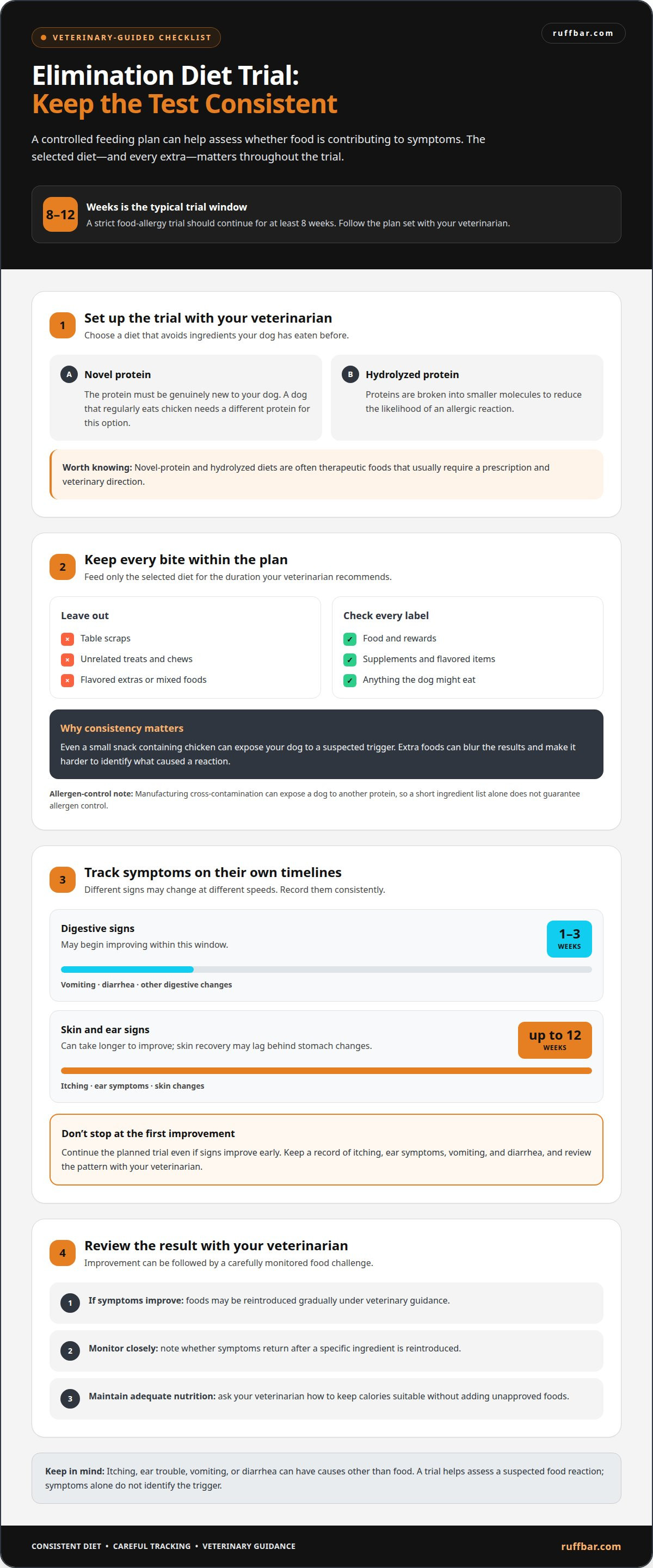
An elimination diet trial tests whether food is contributing to a dog’s symptoms by using a controlled diet. Veterinary guidance helps select food that avoids ingredients the dog has eaten before. A trial generally lasts eight to twelve weeks; a strict food-allergy trial should continue for at least eight weeks. Changing foods or adding extras can blur the results.
A limited-ingredient diet may simplify feeding, but for a novel-protein trial, the protein must be genuinely new to the dog. For example, a dog that regularly eats chicken needs a different protein. A hydrolyzed-protein diet uses proteins broken into smaller molecules to reduce the likelihood of an allergic reaction. Novel-protein and hydrolyzed diets are often therapeutic foods that usually require a prescription and veterinary direction.
Keep feeding consistent throughout the trial. Feed only the selected diet, and avoid table scraps, unrelated treats, chews, and flavored extras. Even a small snack containing chicken can expose the dog to a suspected trigger. Check every ingredient label, including labels on supplements and rewards. Mixing foods can make it harder to identify what caused a reaction.
How quickly signs improve varies by symptom. Digestive signs may begin improving within one to three weeks, while skin signs can take up to twelve weeks. Continue the planned trial even if you see early progress, since skin recovery can lag behind stomach changes. A veterinarian can help track itching, ear symptoms, vomiting, or diarrhea and decide what to do next.
If symptoms improve, a food challenge can test whether the original food caused the change. Foods are reintroduced gradually under veterinary guidance, with symptoms monitored closely. If signs return after a specific ingredient is reintroduced, that offers useful evidence. Keep your active dog’s diet nutritionally adequate throughout the trial, and ask the veterinarian how to maintain suitable calories without adding unapproved foods.
What Are The Most Common Food Allergens for Dogs?
Beef, dairy, chicken, and wheat are frequently reported food allergens in dogs. A reaction may appear as itchy skin, recurring ear trouble, or digestive upset, rather than an immediate response after eating. Itching around the paws, face, ears, or rear end can occur alongside vomiting, diarrhea, or more frequent bowel movements. Track each sign and the foods your dog eats.
The timing of changes varies by symptom. Digestive signs may shift within a couple of weeks after a diet change, but improvement can take up to four weeks. Skin and ear changes often take longer; assess a new diet for at least six to eight weeks before judging skin changes. Early improvement is useful to note, but it doesn’t confirm that a specific ingredient caused the reaction.
Pay attention to carbohydrate sources, but grain-free food isn’t automatically the answer. Grain allergies are less common than many owners believe, and dogs without a grain allergy don’t need grain-free food. Fatty acids support normal skin function, but adding a supplement or changing several ingredients can complicate an elimination trial. Keep the prescribed feeding plan consistent and record any changes.
Skin symptoms can have causes beyond food, including environmental factors and parasites. Note where your dog itches, whether the ears become inflamed, and whether symptoms change with the seasons or outdoor activity. For digestive signs, record vomiting, stool changes, and how often they occur. Share your log with the veterinarian, who can consider skin care, parasite control, and diet together rather than treating every flare as a food reaction.
During a controlled food trial, use only the selected diet and treats that fit the plan. A treat containing chicken, for example, can introduce a suspected trigger and cloud the results. Don’t judge the trial after a brief improvement or setback; follow the planned assessment period. Persistent itching, ear problems, vomiting, or diarrhea warrant veterinary attention, since food is only one possible cause.
Limited ingredient diet features
A limited-ingredient formula narrows the recipe to one identifiable protein, a simplified carbohydrate base, and few additional ingredients. This focused design makes each food source easier to recognize. For dogs with suspected reactions, that clarity helps owners compare the bowl with the dog’s eating history and symptom log, rather than sorting through a long ingredient list.
Start with the protein source. A dog that regularly eats chicken may need a genuinely novel protein for a structured food trial. “Novel” depends on the individual dog’s past diet, not on whether the protein’s name is unfamiliar to the owner. Hydrolyzed diets take another approach, using proteins broken into smaller molecules. Both options address immune-system reactions, but a limited-ingredient label alone doesn’t make a food therapeutic.
Read the entire ingredient statement, not just the claim on the front of the package. A food promoted around one animal protein may contain other protein sources, flavorings, or added ingredients. Treats, chews, and toppers also affect what the dog consumes. During a trial, match extras to the plan; otherwise, a hidden ingredient can muddy the symptom picture. Manufacturing cross-contamination can also introduce another protein.
For an active dog, simplicity must not replace nutritional adequacy. Check that the food is complete and balanced for the dog’s life stage, then assess calories against body condition, workload, and feeding amount. A complete and balanced dog diet includes 23 essential vitamins and minerals. Puppies need nutrition that supports growth, so a restricted recipe requires particular care for development and bone health.
The practical takeaway: judge ingredient diets by the recipe, nutritional statement, and fit with the dog’s history, not by “limited” on the package. Keep suspected triggers and tolerated ingredients clearly recorded. If you’re comparing everyday fuel for an active dog, explore active-dog nutrition while keeping any allergy trial’s food plan consistent.
Ruff Bar: Ruff Stix® Bison Pork
Ruff Bar’s Ruff Stix® Bison Pork provides active dogs with a high-protein nutrition option for outings and everyday fueling. If you’re managing suspected food allergies, compare its ingredients with your dog’s known triggers before adding it to the bowl. It isn’t a substitute for a veterinary-directed elimination diet, where unapproved foods can interfere with results.
That distinction matters: a food or topper may suit an active routine without being appropriate during a strict allergy trial. Keep trial feeding consistent, then consider other nutrition options when your veterinarian advises that the trial is complete. Ruff Bar also offers freeze-dried backpacking meals in beef and duck for outdoor adventures.
For product details, visit ruffbar.com.
Keep Your Dog Moving With a Clear Plan
Choosing a limited ingredient diet for active dogs with allergies starts with a clear distinction: managing allergies and choosing everyday adventure fuel are different needs. Keep your veterinarian involved in decisions about suspected triggers, and follow the feeding plan they set. Outside a strict trial, choose nutrition that fits your dog’s routine and supports the miles ahead.
For active days, Ruff Bar offers Ruff Stix® Bison Pork, Ruff Stix® Beef, and Ruff Food Freeze Dried Raw Backpacking Meals Beef. Compare each option with your dog’s dietary needs before adding it to their routine. These products are not a substitute for a veterinary-directed allergy diet.
Have questions about which Ruff Bar option may fit your dog’s routine? Contact Ruff Bar about your dog’s diet. Then build the next outing around a plan that puts your dog’s health first.
Frequently Asked Questions
What Foods Cause the Most Allergies in Dogs?
Beef, dairy, chicken, and wheat are common food allergens in dogs. Your dog’s eating history helps make that list useful: a protein they’ve eaten often may be more relevant than an unfamiliar ingredient. Record the main protein sources in meals, chews, and treats, then share that history with your veterinarian. Grain-free food isn’t automatically needed unless a grain allergy is suspected.
How Do I Know If My Dog Has Food Sensitivities?
Recurring itching, ear trouble, vomiting, or diarrhea can point to a food-related problem, but symptoms alone can’t confirm it. Note what your dog eats, when signs appear, and which areas of the body are affected. For example, record whether paw chewing continues after a change in season. A veterinarian can assess the pattern and consider environmental causes or intolerance alongside food allergy.
How Long Does a Dog Need To Remain on a Tailored Diet?
A veterinary-guided elimination diet generally lasts eight to twelve weeks, with at least eight weeks needed for an effective food-allergy trial. Follow the feeding plan consistently for its full duration, even if signs improve sooner. Afterward, a veterinarian may guide gradual food reintroduction to identify a trigger. The length of any long-term diet depends on the trial results and your dog’s nutritional needs.
How can a dog’s food trigger certain allergies?
A food allergy occurs when a dog’s immune system reacts to an ingredient as a threat. Proteins are common triggers, and repeated exposure to an ingredient can precede a sensitivity. This differs from food intolerance, which more often causes digestive upset without the same immune response. Exposure depends on whether the ingredient is in the food, not on its reputation as “natural.”
What Is Hypoallergenic Dog Food?
Hypoallergenic dog food is designed to reduce the chance of triggering a food-allergy response, often by using hydrolyzed or novel protein. Hydrolyzed protein is broken into smaller molecules; a novel protein is one the dog probably hasn’t eaten before. These therapeutic diets aren’t interchangeable with every limited-ingredient food, so a veterinarian should help match the formula to the dog’s history.
What Is an Elimination Diet Trial?
An elimination diet trial is a controlled feeding period used to assess whether food contributes to a dog’s symptoms. The dog eats a selected diet, while other foods are excluded so they don’t obscure the results. A veterinarian helps choose the trial formula and assess progress. If signs improve, a guided food challenge can test whether reintroducing an ingredient brings symptoms back.