
Is Pork a Good Protein for Dogs? Safety and Digestion
A less familiar meat can still be a useful protein for dogs. If you’re wondering whether pork is a good protein for dogs, plain, lean, thoroughly cooked pork can be a nutritious, digestible option in small amounts. It shouldn’t replace a complete, balanced diet, and raw, fatty, seasoned, or processed pork carries risks.
It makes sense to be cautious: pork needs careful preparation, and dogs can tolerate it differently. Puppies can eat pork when it’s part of food formulated for growth, but plain pork treats aren’t a complete meal for a growing dog.
Here, you’ll learn how pork contributes protein and nutrients, what digestibility means for your dog, and how to introduce a new pork-based food while watching for digestive changes. You’ll also see why bones, rich cuts, seasoning, bacon, and ham should stay off the menu. Clear choices. Better fuel for the trail and everyday life.
Key Takeaways
- Consider pork as a different protein option when your dog has trouble with familiar meats, while keeping food sensitivities in view.
- Spot the seasonings and processing choices that can turn pork from a simple treat into a risky one.
- Choose puppy food based on growth-stage nutrition, not just the meat listed as its main protein.
- Learn what makes pork digestible and how to fit it into nutrition that supports an active dog.
Can Dogs Eat Pork?
Yes. Plain, lean, thoroughly cooked pork can be an occasional small treat, but raw meat, bones, and fatty cuts carry risks. Pork may also offer a different protein source for dogs sensitive to familiar meats.
Pork for Dogs With Food Sensitivities
Pork can be a novel protein if a dog hasn’t eaten it regularly, which may be useful when familiar meats trigger sensitivity. But “novel” doesn’t mean allergy-proof: dogs can react to pork, too.
For a dog with suspected food sensitivities, pork in a dog food matters only as part of the full ingredient picture. A veterinarian can help assess a pork-based diet and whether it fits the dog’s needs.
Choosing Pork Cuts for Dogs
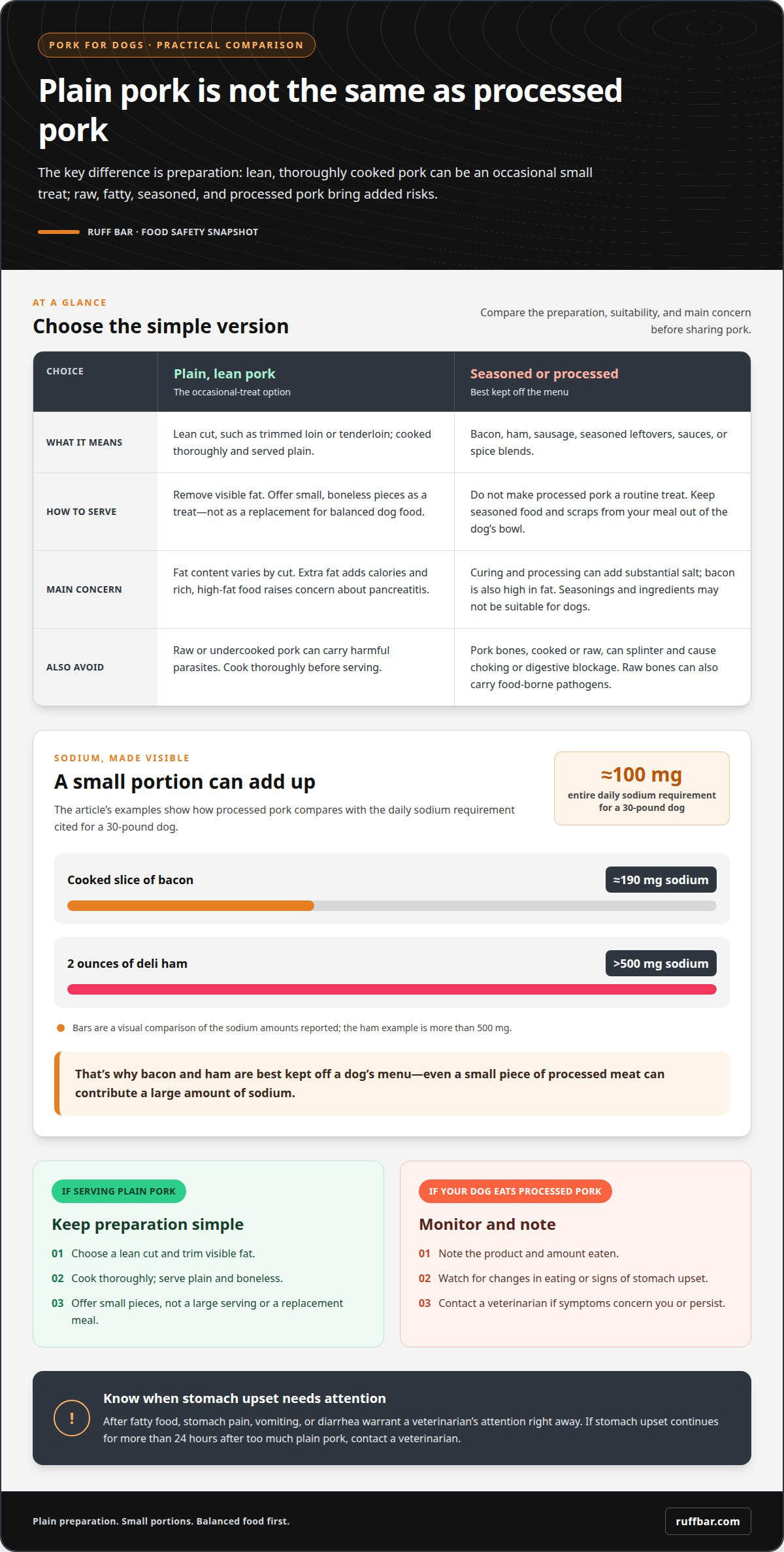
Lean cuts, such as trimmed pork loin or tenderloin, are better choices than fatty cuts. Fat content varies by cut, so remove visible fat before serving to limit extra calories that can affect weight.
Serve pork plain, without seasoning, sauces, or added ingredients. Cook it thoroughly before serving. Offer small pieces, not a large serving, and don’t use pork treats as a replacement for balanced dog food.
Raw Pork and Pork Bones
Don’t feed dogs raw or undercooked pork. It can carry parasites that are harmful to dogs, so cook pork thoroughly before serving.
Avoid pork bones, cooked or raw. They can splinter and cause choking or digestive blockage, while raw bones can also carry food-borne pathogens. Choose boneless pieces instead, especially for puppies still learning to chew safely.
Pork Fat and Pancreatitis Risks
Pork fat and fatty cuts can pose health risks for dogs. Rich, high-fat food can also raise concern about pancreatitis, so trim visible fat and don’t let a dog eat fatty leftovers.
Watch for stomach pain, vomiting, or diarrhea after fatty food; take your dog to a veterinarian right away if these symptoms appear. If stomach upset continues for more than 24 hours after your dog eats too much plain pork, contact a veterinarian. Avoid extra portions that can add calories and affect weight.
Risks from seasoned or processed pork
Plain pork and seasoned pork are not the same. Salt, sauces, and spice blends can make a human meal unsuitable for a dog. Serve pork plain; don’t share seasoned leftovers or use sausage as a routine treat.
The sodium adds up quickly. A cooked slice of bacon contains roughly 190 milligrams of sodium, while two ounces of deli ham can contain more than 500 milligrams. A 30-pound dog’s entire daily sodium requirement is near 100 milligrams. Those examples show why even a small piece of processed meat can contribute a large amount.
Ham and bacon are heavily processed pork products, so they’re best kept off a dog’s menu. Curing and processing can add substantial salt, and bacon is also high in fat. A small piece probably won’t harm an otherwise healthy dog, but some dogs may react to even a small increase in dietary fat. That possibility is no reason to offer processed pork regularly.
Sausage deserves the same caution. Its seasoning and processing make it different from plain pork, and its ingredient list can include additions that don’t belong in a dog’s food. Pork’s nutrients don’t make cured or seasoned products balanced meals. Dogs need complete, balanced food for daily feeding, not scraps chosen for their meat content.
If your dog eats bacon, ham, or sausage, note the product and amount. Watch for changes in eating or signs of stomach upset, especially after a fatty portion. Contact a veterinarian if symptoms concern you or persist. For future treats, choose plain, unseasoned pork instead of processed slices, seasoned leftovers, or cured meat. Keep the ingredients simple and serve it separately from your own meal.
Can puppies have pork?
Puppies can eat pork when it’s included in a recipe formulated for growth and meeting AAFCO nutrient profiles for that life stage. Plain cooked pork alone doesn’t provide the balanced nutrition a growing dog needs.
Nutritional Benefits of Pork Protein
Pork supplies protein and amino acids, along with fats and B vitamins that support a dog’s nutritional needs. Its thiamine content is higher than that of most other proteins, making pork one way to add variety to a puppy’s protein sources.
That doesn’t make pork automatically better than chicken or another animal protein. The recipe matters: puppy food needs to meet growth-stage nutrient profiles, not simply feature an appealing meat ingredient.
Nutrients in Pork
Cooked lean pork provides nutrients beyond protein, including thiamine and selenium. Three ounces typically contain 0.7 to 0.9 milligrams of thiamine and roughly 35 micrograms of selenium.
Fat and calories depend on the cut. A three-ounce serving of cooked lean pork can contain 3 to 13 grams of fat, while trimmed pork loin contains about 5 grams. Pork has a little over one-third the fat content of beef, yet more calories per pound than the other protein sources in the comparison.
Those differences matter when feeding puppies because portions and overall recipe composition affect daily nutrition. A leaner cut can have a different fat profile than a richer one, but home-cooked pork still isn’t a complete puppy diet on its own.
Keep the distinction clear: pork can be an ingredient in balanced food or an occasional plain treat. Pork bones aren’t a safe way to add nutrients. For a growing puppy, choose a recipe formulated for growth and check that it meets AAFCO nutrient profiles for that life stage.
Pork as a digestible animal protein for dogs
Pork is a highly digestible animal protein and an excellent source of amino acids for dogs. It provides all 10 amino acids dogs need in their diet. That makes it a useful protein source, but it doesn’t make pork alone a complete meal.
Three ounces of cooked lean pork typically provide about 22 grams of protein. That figure describes the protein in a serving, not the full nutritional value of a meal. Pork also contains nutrients such as fats and B vitamins, while a dog’s complete diet needs a balance of nutrients beyond meat.
Digestibility describes how readily the body can break down and use food. For a dog, the overall recipe matters as much as its pork protein: other ingredients, fat content, and serving size all shape the meal. A digestible protein can’t offset an unbalanced diet or make every pork recipe suitable for every dog.
Consider the whole feeding plan, not just the meat named on the label. Balanced dog food supplies more than protein, while plain pork can serve as a treat or recipe ingredient. Changes in stool, appetite, or energy can help you see how your dog responds to a food change.
Keep the distinction clear: digestible pork meat isn’t the same as pork bones. Bones can splinter and create a choking or digestive-blockage hazard; the fact that humans eat pork doesn’t make every pork product appropriate for dogs. Choose food made for canine nutrition rather than assuming a human meal offers the right balance.
For an active dog’s nutrition routine, explore pork protein options for dogs as one part of a balanced feeding plan.
Ruff Bar: Ruff Supplements for Dogs
Ruff Bar offers Ruff Supplements for Dogs for owners building a purposeful nutrition routine around active days. For a pork-based option, Ruff Stix® Bison Pork can complement your dog’s feeding plan. Keep toppers and supplements in their proper role: they don’t replace complete, balanced food or veterinary guidance for suspected allergies.
Choose based on your dog’s needs, sensitivities, and activity. A dog with a possible food allergy needs a careful diet plan, while an active dog may benefit from a convenient nutrition option on outings. Introduce new foods gradually and watch for changes in digestion.
For help choosing an option for your dog, contact Ruff Bar.
Build a Thoughtful Nutrition Routine
Deciding whether pork is a good protein for dogs is a starting point, not the whole feeding plan. Your dog’s food choices should suit their day-to-day needs, preferences, and activity. Keep the routine consistent, pay attention to how your dog responds to new additions, and consider the full diet with every choice.
For a pork-focused option, Ruff Bar offers Ruff Stix® Bison Pork. Other offerings include Ruff Food Freeze Dried Raw Backpacking Meals Beef and Ruff Stix® Beef. These distinct options can help you shape a nutrition routine for life at home or on the move.
When you’re ready to explore those options or discuss what may fit your dog’s routine, contact Ruff Bar. Take the next step with care, and keep your dog moving strong.
Frequently Asked Questions
Can dogs eat bacon?
Dogs shouldn’t have bacon as a regular treat. Its salt and fat make it a poor substitute for plain pork. If your dog steals a piece, don’t add more processed food or rich scraps to the meal. Watch for stomach upset, and contact a veterinarian if symptoms persist or your dog seems unwell.
How Much Pork Can I Give My Dog?
Keep pork treats within 10% of your dog’s daily calories, and make the amount fit their size and normal diet. Suggested occasional servings range from 0.5 ounce or less for an extra-small dog to 3 ounces for a large dog. For extra-large dogs, the suggested amount is 1/2-1 plain pork chop. Treats shouldn’t displace balanced food.
How do you introduce pork without an upset stomach?
Introduce a new pork-based food gradually over seven to ten days. A sample transition begins with 25% new food and 75% current food on days one through three, then an even split on days four through six. Increase the new food to 75% on days seven through nine, then switch fully on day ten. Slow the change if digestive problems appear.
How does pork compare to chicken, beef, and turkey?
Pork can be a good protein for dogs, but no single meat is automatically the best fit. Compare how each recipe suits your dog’s history and daily nutrition instead of judging by the meat name alone. Cuts can differ in fat and calories, so compare the specific recipes. Your dog’s previous reactions to chicken, beef, or turkey also matter.
How much pork can I feed as a topper?
There isn’t one topper amount that fits every dog. Use the specific product’s feeding directions and account for your dog’s size, activity, and complete daily food intake. Keep the main diet balanced; a topper should add to the meal, not replace the nutrition of complete food. If pork is a treat rather than a formulated topper, keep treats within 10% of daily calories.
Is Pork the Right Choice for Your Dog?
Pork may suit a dog that tolerates it and needs another protein option, but it isn’t right for every dog. Consider prior food reactions, the recipe’s overall nutrition, and whether pork fits your dog’s regular diet. For suspected food sensitivities or a planned pork-based diet, involve your veterinarian. Choose based on your dog’s needs, not novelty alone.