
How to Transition a Dog to a New Food and Ease Stomach Upset
A familiar brand name doesn’t mean a familiar formula. When you’re figuring out how to transition a dog to a new food, a gradual switch over 5-7 days can help reduce the chance of digestive upset, even when the food comes from the same brand. Gas, loose stool, or a change in appetite can make a routine food change feel like a rough stretch.
It’s reasonable to wonder whether your dog needs a transition when only the formula is changing. Different ingredients and nutrient profiles can affect how your dog responds, so changing foods gradually gives you time to notice any changes and adjust if needed.
Here’s how to introduce the new food, what to do if gas or other digestive upset occurs, and when symptoms warrant veterinary care. You’ll also learn how to decide how long to take and what to consider when switching between formulas from the same brand.
Key Takeaways
- Switching formulas within the same brand can still affect your dog’s digestion, so blend the old and new foods gradually.
- Plan for a gradual transition, and slow the pace if your dog develops loose stool or other stomach upset.
- Track gas alongside changes in stool, appetite, and energy to spot how your dog is responding to the new food.
- Contact a veterinarian for persistent or severe symptoms, including vomiting, diarrhea, or refusal to eat.
Do I need to transition if I’m switching to the same brand but a different formula?
Yes, transition gradually even when switching within the same brand, since a formula change can upset digestion. To work out portions, compare calories per cup and divide your dog’s daily calorie target by the new food’s calories per cup.
-
Check Calorie Content and Daily Portions
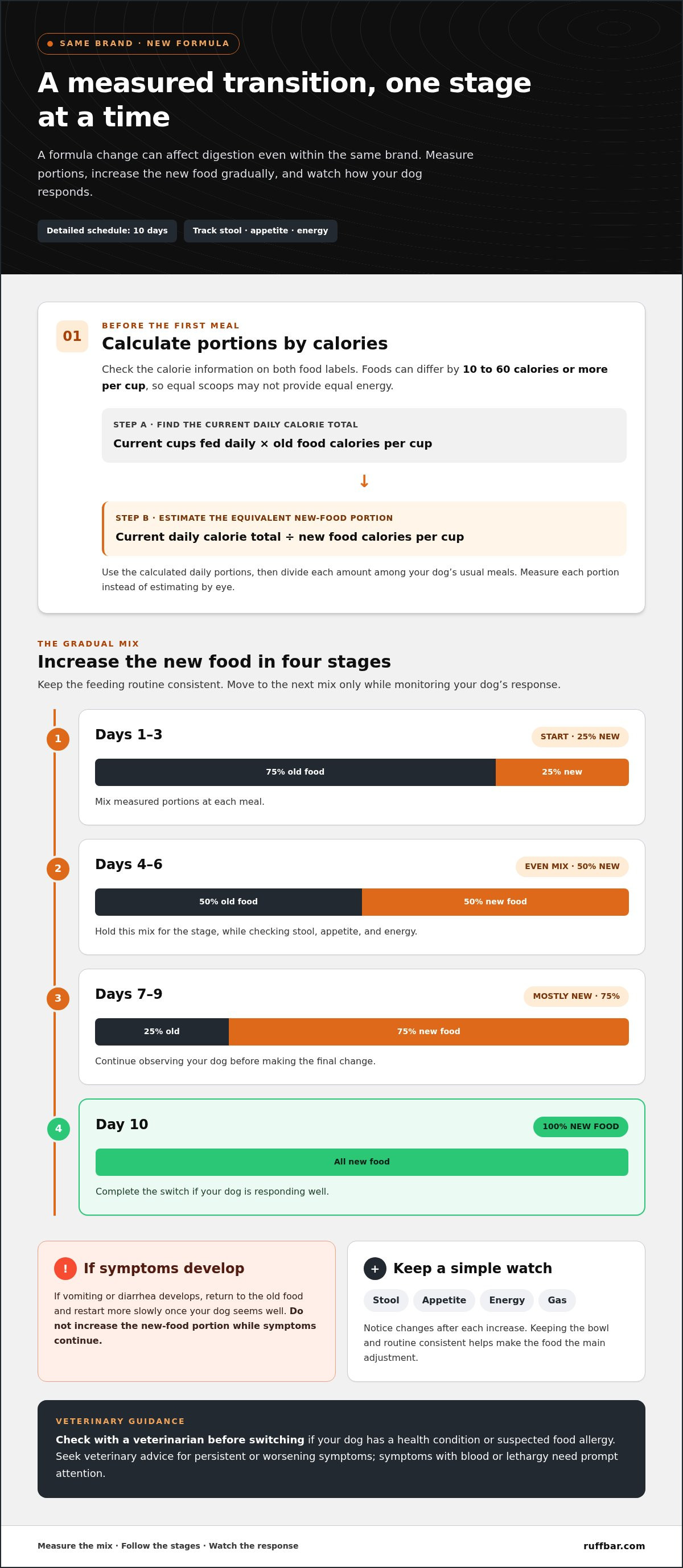
Read the calorie information on both labels before setting the bowl. Dog foods can differ by 10 to 60 calories or more per cup, so equal scoops may not provide equal energy. Multiply the current cups fed daily by the old food’s calories per cup. Then divide that calorie total by the new food’s calories per cup to estimate an equivalent daily portion.
-
Mix the Old and New Foods
Mix measured amounts of the old and new foods at each meal. Use the daily portions calculated from their calorie content, then divide each amount among your dog’s usual meals. For example, if the plan calls for one-quarter new food, mix it with three-quarters of the current food. Measure each portion rather than estimating by eye.
-
Increase the New Food Gradually
Increase the new food’s share in stages, watching your dog’s stool, appetite, and energy after each change. Keep the bowl and feeding routine consistent so the food is the main adjustment. If vomiting or diarrhea develops, return to the old food and restart more slowly once your dog seems well. Don’t increase the new portion while symptoms continue.
-
Follow a Gradual Transition Schedule
Use a 10-day schedule: days 1-3, mix 25% new food with 75% old food; days 4-6, use 50% of each; days 7-9, use 75% new food and 25% old. On day 10, serve 100% new food. A gradual change gives your dog’s digestive system time to adjust and helps you spot a reaction before the next step.
When to contact a veterinarian
Consult a veterinarian before changing food if your dog has a health condition or a suspected food allergy. Digestive upset can include vomiting, diarrhea, and reduced appetite. Symptoms that persist or worsen, or occur with blood or lethargy, need prompt veterinary attention.
-
Consult a Veterinarian Before Changing Food
Talk with your veterinarian before switching foods if your dog has a health condition, a sensitive stomach, or suspected food allergies. Share the current and proposed foods, your dog’s symptoms, and any changes you’ve noticed. For a sensitive stomach, ask how slowly to transition and which signs to track. This can help distinguish a response to the food change from a concern that needs a different plan.
-
Discuss Concerns and Warning Symptoms
Contact a veterinarian if vomiting, diarrhea, or food refusal continues beyond a day after the diet change. Seek advice sooner if diarrhea is severe, contains blood, or occurs with vomiting or lethargy. For milder symptoms, get veterinary guidance if they haven’t cleared within a couple of days. Note when symptoms began, how often they occur, and what your dog ate.
- Follow veterinary guidance for suspected food reactions. Adverse food reactions can cause gastrointestinal symptoms, skin symptoms, or both. A veterinarian may recommend an elimination diet trial using only a prescription hypoallergenic diet for at least 8 weeks. Don’t add treats, toppers, or other foods during the trial unless the veterinarian directs you to. Afterward, a challenge trial may reintroduce foods to see whether they trigger a reaction. Keep a record of each food and symptom, and follow the veterinarian’s instructions for any changes.
How long should it take to switch a pet to a new food?
Plan a gradual transition over 5-7 days, and allow at least one week when possible. Puppies, seniors, and dogs with health problems should transition gradually; a quick switch may suit healthy adult dogs only.
-
Choose a Transition Schedule
Set a transition period that gives your dog time to adjust, then hold each mix for two to three days. A typical sequence starts with about 25% new food and 75% current food, moves to an even mix, then about 75% new food. Monitor stool, appetite, and energy before increasing the new food. If diarrhea or another reaction develops, slow the change.
-
Consider the Dog’s Life Stage
Choose food suited to your dog’s life stage, and transition gradually between formulas. Puppies shouldn’t make a quick switch, and dogs with health problems also need a gradual plan. Healthy adult dogs may tolerate a faster change. For senior dogs, use a measured transition and account for any health conditions or veterinarian-directed diet needs before changing food.
- Identify why the food needs to change. A new life stage, a veterinarian’s recommendation, or changing needs can prompt a diet switch. Keep the reason in mind, especially if your dog has digestive symptoms. Changing several foods in quick succession can make it harder to identify what is affecting your dog’s response.
- Use supplements only as directed. If using prebiotics, the suggested timing is to start one week before the switch and continue one week after it ends. Digestive enzymes may be given during the transition and for approximately one week afterward. After mixing enzymes into food, wait five to 10 minutes before serving.
- Handle an urgent switch carefully. A quick change may be used for a healthy adult dog, but not a puppy or a dog with health problems. Offer about a quarter of the usual meal first, and pick up uneaten food after 30 minutes. If your dog still refuses food after two days, contact a veterinarian.
Gas during a food transition
Gas can occur alongside other digestive changes during a food switch. Track what your dog eats and how symptoms develop, then consider the full picture.
- Record when gas, meals, and other symptoms occur. Note each portion of new food and whether your dog also has loose stool, vomiting, reduced appetite, or changes in energy. A simple daily log can show whether symptoms follow a larger serving of the new food or continue regardless of the mix. Keep fresh water available throughout the transition.
- Pause the new food if digestive symptoms develop, and return to the original diet. For digestive symptoms after a food change, the guidance is to stop the new food and fast your dog for 24 hours while keeping water available. Don’t use that approach without considering your dog’s overall condition; seek veterinary advice for health concerns or worsening symptoms.
- After a 24-hour fast, offer small meals of the original food if your dog seems okay. Keep portions small rather than serving one large meal, and watch for further gas, vomiting, or diarrhea. If symptoms return after eating, stop experimenting with new foods and contact a veterinarian for direction.
- Restart the transition more slowly only after your dog is back on the original food and seems well. Begin with less new food than before, then increase the amount in measured stages. Change one thing at a time, including treats, so you can identify what coincides with renewed gas or stomach upset.
- Contact a veterinarian if vomiting, diarrhea, or refusal to eat lasts longer than a day after the diet change. Severe diarrhea, blood, lethargy, or multiple symptoms together also need veterinary attention. For milder symptoms that don’t clear within a couple of days, seek advice rather than pushing through the transition. Explore nutrition options for active dogs when planning everyday fuel, not as a treatment for digestive symptoms.
Ruff Bar: Ruff Stix® Bison Pork
Ruff Bar’s Ruff Stix® Bison Pork is an option to explore after your dog has completed the food transition and their stomach has settled. Keep the transition separate from choosing a treat or another food. Introducing a new item at the same time can make digestive changes harder to interpret.
Ruff Bar makes high-protein, grain-free nutrition products for active dogs, including energy bars, chewable Stix, and freeze-dried backpacking meals. Its formulas use USDA-graded grass-fed meats and whole organic ingredients without fillers. If you’re considering a change, compare the product’s role with your dog’s regular diet and follow the gradual transition approach outlined above. If stomach upset continues, speak with your veterinarian before introducing new foods.
Visit ruffbar.com to explore Ruff Stix® Bison Pork and other nutrition options for active dogs.
Build a Steady Routine for the Next Adventure
Make your next food decision with your dog’s routine, activity, and response in mind. A simple feeding log can help you spot patterns over time and give your veterinarian useful context if digestive concerns return. This steady approach makes it easier to decide how to transition a dog to a new food when your dog’s needs change again.
When you’re ready to explore nutrition for an active dog, Ruff Bar offers Ruff Stix® Bison Pork, Ruff Food Freeze Dried Raw Backpacking Meals Beef, and Ruff Stix® Beef. Keep new foods separate from a veterinarian-directed plan, and choose an option that fits your dog’s needs and routine.
Contact Ruff Bar for help exploring its offerings. Keep moving forward with a thoughtful plan and a clear read on your dog’s response.
Frequently Asked Questions
What happens if I change my pet’s food too quickly?
A sudden food change can cause digestive upset, including vomiting, diarrhea, or reduced appetite. These reactions can make it hard to tell whether your dog dislikes the new food or is struggling with the rapid change. If you need to switch quickly, watch your dog closely at meals and note changes in stool, appetite, and energy. Contact a veterinarian if symptoms persist or worsen.
What if my pet refuses to eat the new food?
Don’t force the new food. Offer the familiar diet and keep fresh water available. If your dog refuses the new formula, try mixing a smaller amount into the usual meal. If your dog continues to refuse food after two days during a quick switch, contact a veterinarian. Food refusal lasting beyond a day after a diet change also warrants veterinary advice.
How long should it take to transition a dog to a new food?
A gradual transition generally takes 5-7 days, and taking a week or more gives your dog’s digestive system time to adjust. A 10-day schedule is another option, especially if you want to make smaller changes between stages. Keep each meal’s portions measured, and don’t move to the next mix while your dog is showing digestive problems.
What is the recommended old-food-to-new-food ratio for each day of a dog food transition?
One gradual seven-day schedule increases the new food daily: day 1 is 90% old and 10% new; day 2, 80% old and 20% new; day 3, 70% old and 30% new; day 4, 60% old and 40% new. Use 40% old and 60% new on day 5, 20% old and 80% new on day 6, then all new food on day 7.
What should you do if your dog develops diarrhea or vomiting after switching food?
Stop increasing the new food, return to the previous diet, and monitor your dog’s symptoms. Contact a veterinarian if vomiting, diarrhea, or refusal to eat lasts longer than a day after the change. Seek advice sooner for severe diarrhea, blood, lethargy, or vomiting alongside diarrhea. If vomiting continues after 24 hours off the new food, contact your veterinarian.
How can you transition a picky dog to a new food?
Keep the feeding routine consistent and introduce the new food in a small, measured amount mixed thoroughly with the familiar food. If your dog has a negative reaction, return to the original diet for one week before trying again. For the retry, start with 10% or 15% new food in the mix. Don’t disguise several new foods at once, since that makes reactions harder to track.