
How to Feed Active Dogs on the Trail for Energy and Recovery
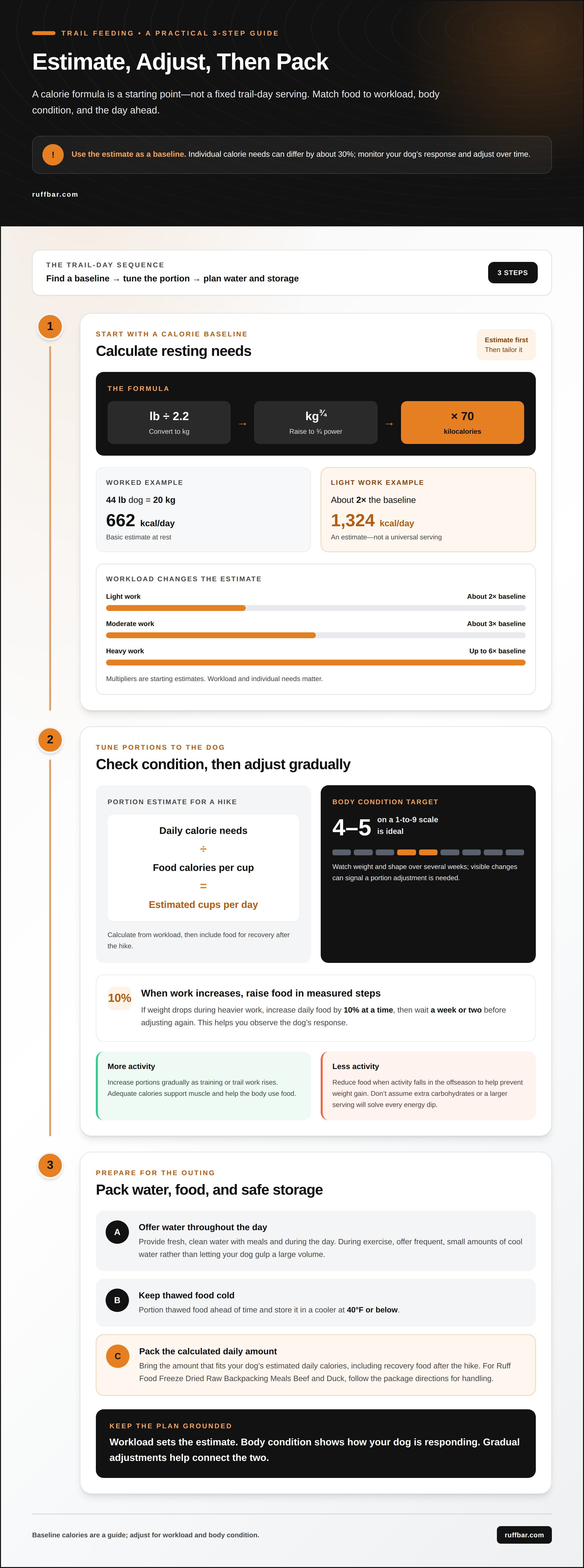
A calorie formula is a starting line, not a trail-day prescription. For feeding active dogs on the trail, estimate resting needs by converting weight to kilograms, raising that number to the ¾ power, then multiplying by 70 kilocalories. A 44-pound dog’s basic estimate is 662 kilocalories a day, while light work may bring the estimate to 1,324 calories per day.
That gives you a baseline, not a fixed serving size. A dog’s workload, body condition, and response to its current food all matter, so the right fuel depends on the miles and effort ahead. You’ll learn how to estimate calorie needs, adjust food to match exercise, and time meals for energy and recovery. You’ll also see how sprinting differs from endurance work, what to watch as activity changes, and when a working-dog diet may make sense. Practical, trail-ready choices help you fuel the outing without treating every active dog like a full-time athlete.
Key Takeaways
- Use your dog’s weight as a starting point, then adjust portions to workload and body condition rather than relying on a fixed trail-day serving.
- Match the nutrition approach to the effort: sustained outings and short bursts place different demands on a dog’s energy supply.
- Plan meals around strenuous activity and build in recovery time, so feeding supports the outing instead of disrupting it.
- Look at the demands of your dog’s regular work before choosing working-dog nutrition; portable options such as Ruff Bar’s backpacking meals and Stix can fit trail routines.
How many calories does an active dog need?
Estimate a calorie baseline, then adjust for workload and body condition. Use changes in weight and shape to guide portions, not mileage alone.
-
Assess activity and body condition
Start with resting needs: convert weight from pounds to kilograms by dividing by 2.2, raise that weight to the ¾ power, then multiply by 70 kilocalories. A 44-pound dog weighs 20 kilograms and has a basic estimate of 662 kilocalories daily. Light, moderate, and heavy work may call for about 2, 3, or up to 6 times that baseline. These are starting estimates; individual needs can differ by about 30 percent.
For a long hike, calculate the dog’s daily calories from its workload, then divide by the food’s calories per cup to estimate portions. Check body condition over several weeks. A score of 4 or 5 on the 1-to-9 scale is ideal; visible changes can signal that portions need adjustment. Adequate calories support muscle and help the body digest and use food.
-
Adjust portions for seasonal activity
Raise portions gradually when training or trail work increases. If weight drops during heavier work, increase daily food in 10 percent steps, then allow a week or two before adjusting again. This measured approach helps you see how the dog responds instead of making a large change after one demanding outing.
Reduce food when activity drops in the offseason to help prevent weight gain. Use the current food as a baseline and assess body condition over several weeks. Don’t assume carbohydrates or a larger serving will solve every energy dip. Workload, calorie density, and changes in body condition all matter.
-
Plan trail water and food storage
Offer fresh, clean water with meals and throughout the day. During exercise, give frequent, small amounts of cool water rather than letting your dog gulp a large volume. Ruff Food Freeze Dried Raw Backpacking Meals Beef and Duck are trail-oriented options; follow the package directions for handling.
For thawed food on a field day, portion it ahead and keep it in a cooler at 40 F or below. Pack the amount that fits the dog’s calculated daily calories, including food for recovery after the hike.
Matching dietary energy sources to exercise
Match food composition to the effort, not just the trail distance. Sprinting and sustained endurance draw on different energy sources.
-
Compare exercise energy demands
Classify the outing as short-burst work or sustained exercise before choosing a feeding strategy. Sprinting relies more on carbohydrates for rapid energy, while longer aerobic efforts draw more heavily on fat. For endurance dogs, diets may contain up to 35% fat on a dry matter basis and provide 500-600 calories per cup. These figures describe working-dog diets, not a default for every hiker.
For sprinting, a diet with 40-50% carbohydrates and 12-17% fat on a dry matter basis may fit better. Sprinter food may provide 300-400 calories per cup. A balanced approach to feeding active dogs on the trail starts by matching the food’s energy profile to the dog’s actual exercise pattern.
-
Use canine energy systems
Match fuel to how long the effort lasts. Dogs use immediate energy for exertion lasting 5-20 seconds, then glycolytic energy during efforts of 20-120 seconds. Oxidative metabolism begins after about two minutes. As distance and duration rise, fat becomes an important aerobic fuel source.
That shift helps explain why endurance nutrition differs from sprint nutrition. In one Beagle endurance study, dogs fed a high-fat diet were not exhausted until after 20 miles, while dogs on a lower-fat diet were exhausted at 15 miles. Treat the study as an example, not a distance promise for your dog.
-
Choose high-calorie trail foods
Choose a complete food that suits the dog’s workload, and check its calorie density and ingredient list. Real animal protein should appear first. Fat supplies about 9 kcal per gram, compared with about 4 kcal per gram for protein or carbohydrates, making fat energy-dense. That doesn’t make a high-fat diet right for every canine athlete.
For trail treats, count calories toward the daily total and keep them at no more than 10%. Avoid relying on snacks to replace balanced meals. A high-fat working diet may take 4-6 weeks to transition to, so introduce changes gradually rather than on the eve of a long outing. Planning meals is central to feeding active dogs on the trail; explore trail nutrition options when choosing portable fuel.
Timing meals around strenuous activity
Build feeding around the work period, not just the clock. A planned schedule can help an athletic dog manage agility, hunting, and long trail days.
-
Set feeding frequency while hiking
Divide a highly active dog’s daily food into two meals. For a dog with demanding, long workdays, two or three meals can spread intake across the day. One practical schedule gives one-third of the daily food in the morning, at least 3 hours before running or similar activity. Feed the remaining two-thirds in the afternoon or evening, at least 2 hours after the last run.
On a long hike, don’t make one large meal your dog’s only chance to eat. Plan portions around the day’s exertion and its usual routine. Dogs that need a large volume of food may do better with three smaller meals rather than two large ones. This can help an endurance athlete maintain a regular feeding rhythm, whether the day involves trail miles or sustained hunting work.
-
Avoid feeding risks during exercise
Keep a full meal away from strenuous activity. For many dogs, feeding at least one to two hours beforehand is a sensible starting point, but highly active dogs may perform better on a half-full or empty stomach. After hard work, let the dog cool down for 30-60 minutes before feeding. Avoid offering a large meal immediately after a run.
During activity, offer frequent, small amounts of cool water. Don’t let your dog gulp a large volume, which may cause bloating. Keep clean water available throughout long work periods. For example, pause a trail run for small drinks, then wait until your dog has cooled down before serving its recovery meal. This gives your dog a steadier transition from exertion to rest, without rushing food or water.
Identifying dogs that need working-dog nutrition
Working-dog nutrition is for sustained workloads, not simply an energetic personality. Consider your dog’s routine, calorie needs, and body condition together.
- Track the work your dog performs across a typical week. A dog herding livestock, hunting for long periods, or training through sustained endurance sessions may need more energy than a companion taking occasional trail walks. A moderately active neutered adult dog needs roughly 1.6 times its resting energy requirement for maintenance. Active dogs can need roughly 1.5 to 2 times maintenance calories on busy days, but that range isn’t a default for every dog.
- Use body condition to decide whether the current ration supports the workload. A score of 4 or 5 on the 1-to-9 scale indicates ideal condition. If heavier work coincides with weight loss, increase portions in 10 percent steps and watch the dog’s response. Reassess over several weeks, since individual calorie needs can vary around the calculated amount. Reduce food when activity drops in the offseason.
- Keep trail feeding focused on dog-formulated food rather than routinely sharing human snacks. Your dog’s response depends on the food and its ingredients, so choose a suitable ration and keep portions consistent with daily needs. Pack food scraps and packaging out, and follow posted directions at the trail or park you’re using. Local rules may vary.
- Choose working-dog nutrition when a dog’s regular workload demands sustained energy, then adjust portions as training or seasonal work changes. A weekend walk alone doesn’t establish that need; repeated herding, hunting, or endurance work is a stronger signal. For a nutrition option designed for active-dog routines, explore functional nutrition toppers and fit them into the dog’s existing feeding plan.
Ruff Bar: Ruff Supplements for Dogs
Ruff Bar offers nutrition options for active dogs, from trail meals to portable food. Ruff Supplements for Dogs can complement a feeding routine, while Ruff Stix® Bison Pork is another option to pack for an outing.
For backpacking, Ruff Food Freeze Dried Raw Backpacking Meals Beef offers a trail-focused meal option. Match the product to your dog’s daily calorie needs and feeding schedule, and introduce food changes gradually rather than on the day of a strenuous hike. Keep treats within your dog’s daily calorie allowance.
Choose the format that fits your route, packing plan, and dog’s routine. For questions about Ruff Bar’s options, contact Ruff Bar.
Make Your Next Trail Plan Count
Use your dog’s next outing to build a feeding routine that fits the work ahead. Keep a simple record of meals, activity, and changes in body condition. Over time, that trail log can help you make more informed adjustments for each season and route.
For portable options, consider Ruff Stix® Bison Pork, Ruff Stix® Beef, or Ruff Food Freeze Dried Raw Backpacking Meals Beef. Choose a format that fits your packing plan and your dog’s established routine. Introduce new food gradually rather than making the first serving part of a demanding hike. With a little preparation, feeding active dogs on the trail becomes part of a stronger plan for shared miles.
Ready to plan your dog’s trail nutrition? Contact Ruff Bar about trail nutrition, then head out prepared for the next stretch.
Frequently Asked Questions
How many extra calories do dogs need on strenuous trail days?
There’s no single extra-calorie allowance for every strenuous trail day; estimate total needs from workload and compare them with your dog’s usual intake. Busy days may call for 1.5 to 2 times maintenance calories. If weight trends down during a demanding stretch, increase the portion in 10 percent steps, then give your dog time to adjust before making another change.
Should dogs eat before, during, or after a hike?
Offer a meal before and after a hike, but avoid feeding a full meal during strenuous exercise. A full meal one to two hours before activity is a sensible starting point. After exertion, let your dog cool down for 30-60 minutes before feeding. On a long outing, plan portions around the activity and offer frequent, small amounts of water while moving.