
How to Decide Whether to Mix Freeze-Dried Food with Kibble
A mixed bowl can add variety without giving up kibble’s convenience. Yes, you can mix freeze-dried food with kibble when both foods carry nutritional adequacy statements from AAFCO or FEDIAF. Start with a small amount of freeze-dried food, adjust portions to your dog’s needs, and keep fresh water available.
Kibble offers a familiar routine; freeze-dried food can bring a different texture and flavor to the bowl. The right mix depends on your dog’s overall diet, activity, digestion, and health needs, so a bigger portion isn’t automatically a better one. This guide explains why dog owners combine the two, how to introduce the mix gradually, and what signs may mean the change isn’t agreeing with your dog. You’ll also learn how to think about portions and when a health concern calls for extra care. Build the bowl with purpose, then watch how your dog responds.
Key Takeaways
- Pair foods with nutritional adequacy statements, then choose a mix that fits your dog’s overall diet and needs.
- Rehydrate freeze-dried food with warm water for 2-3 minutes before combining it with kibble.
- Introduce the new food gradually over 7 to 10 days, and watch for signs of digestive upset.
- Use your dog’s weight, activity level, and dietary needs to guide portions rather than relying on volume alone.
Can Mixing Foods Cause Digestive Upset?
Mixing freeze-dried food with kibble changes the meal’s ingredients and texture. Introduce the new food gradually and monitor your dog’s response.
-
Consider Digestive Responses
Watch your dog after each meal as you begin mixing food types. Vomiting, diarrhea, or lethargy can signal an adverse reaction, so don’t increase the new food when these signs appear. Dogs with pancreatitis, allergies, or other health concerns may need to avoid specific ingredients. Review the ingredients in both foods and consider your dog’s known sensitivities before serving them together.
-
Introduce Mixed Foods Gradually
Start with a small amount of freeze-dried food alongside your dog’s usual kibble. Increase the portion gradually over 7 to 10 days, rather than changing the whole bowl at once. For a dog with a sensitive stomach, take a week or two to increase the new food and keep it to no more than 10% of the diet. Slow the transition if digestive signs appear.
- Portion both foods according to your dog’s weight, activity, and dietary needs. A highly active dog and a less active dog may need different amounts, even when eating the same combination. Count freeze-dried food as part of the meal, rather than adding it while leaving the kibble portion unchanged. This keeps the overall diet aligned with your dog’s needs.
- Keep clean, fresh water available during the transition. Check your dog’s appetite, stool, and energy each day, noting any changes after introducing the new food. If your dog has a health concern, consult a veterinarian before making a significant diet change. A consistent routine and close observation make it easier to assess the combination.
Why Mix Freeze-Dried with Kibble?
Yes, freeze-dried raw dog food and kibble can be fed together when both formulas carry nutritional adequacy statements from AAFCO or FEDIAF. After opening, store freeze-dried food in a cool, dry place, preferably in an airtight container.
-
Rehydrate Freeze-Dried Food
Add warm water to the freeze-dried portion and let it rehydrate for 2-3 minutes before mixing it with kibble. This softens the pieces and lets you combine them more evenly through the bowl. Follow the food’s package directions for preparation and serving. Prepare only the portion you plan to serve, and keep the opened food sealed between uses to protect it from moisture.
-
Consider Nutritional Balance and Safety
Read the nutritional adequacy statement on both packages before combining them. AAFCO or FEDIAF statements help you determine whether each formula is designed to provide complete nutrition for its intended use. Mixing foods doesn’t make an incomplete formula balanced. Raw food and kibble can go in the same bowl or in separate meals, but each food still needs to suit your dog’s dietary needs.
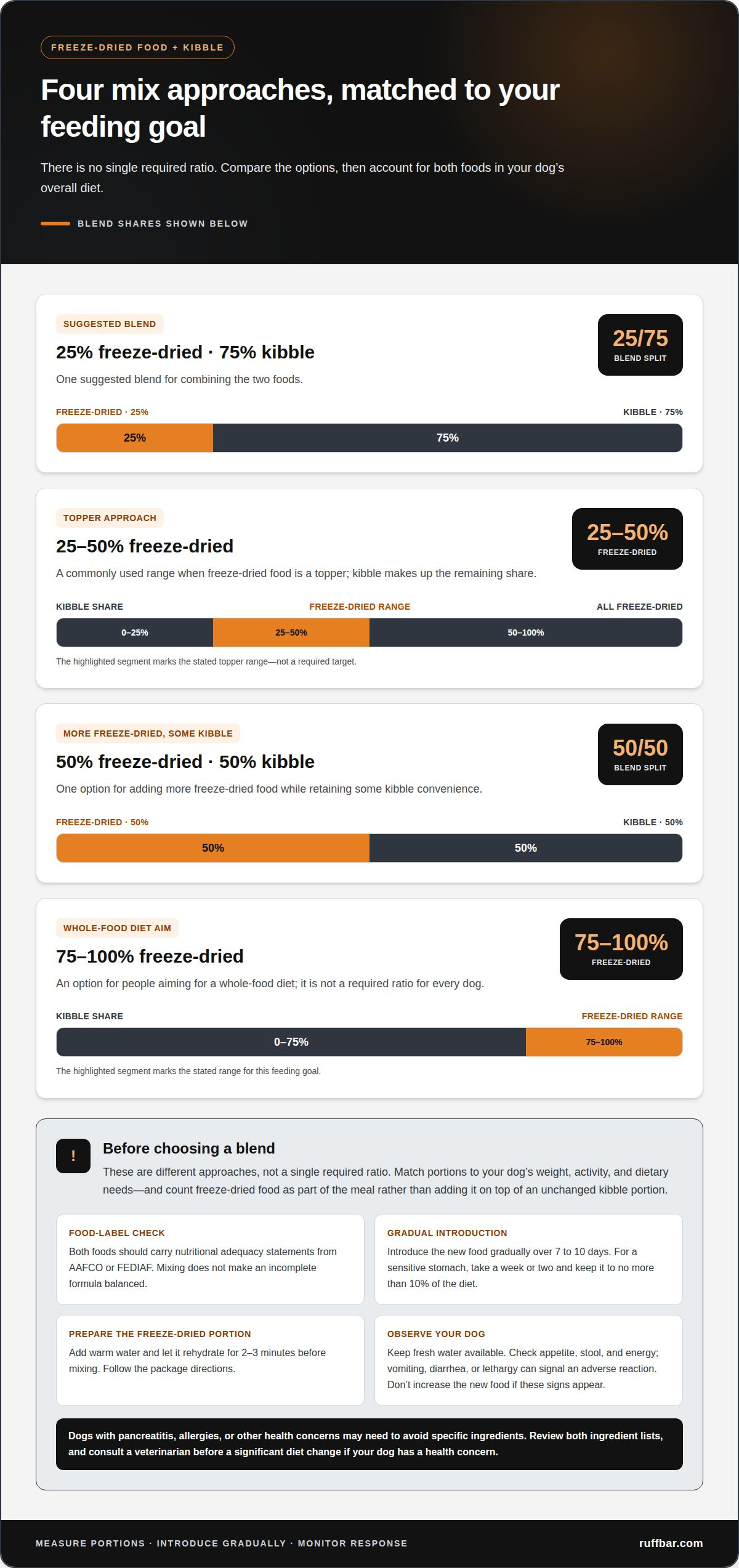
- Choose a proportion based on whether freeze-dried food is a topper or a larger part of the diet. One suggested blend is 25% freeze-dried food and 75% kibble. A 25-50% freeze-dried portion is another commonly used topper range, while 75-100% is an option for people aiming for a whole-food diet. These are different approaches, not a single required ratio.
- Handle the rehydrated portion carefully. Use clean utensils, serve it promptly, and avoid leaving moist food sitting out. Freeze-dried meals, such as Ruff Food Freeze Dried Raw Backpacking Meals Beef, can suit owners considering this format. Explore freeze-dried meal options as you decide what fits your feeding routine.
Benefits of combining freeze-dried food and kibble
A measured blend can add different textures and flavors to a familiar feeding routine. Use these steps to assess what the combination brings to your dog’s bowl.
- Choose a portion that matches your feeding goal. A 50% freeze-dried and 50% kibble mix is one option for adding more freeze-dried food while retaining some kibble convenience. It isn’t a required ratio or a promise of better results. Consider your dog’s complete daily diet, then adjust both portions so adding one food doesn’t simply increase the total meal.
- Use the blend to introduce a different texture or flavor. Freeze-dried pieces can make a kibble meal more varied, which may appeal to dogs that lose interest in familiar food. Keep the measured portion consistent before making another change. This helps you see whether your dog readily eats the combination without confusing the result with several new foods.
- Consider nutrition, not just the appeal of adding freeze-dried food. Both it and the kibble contribute to the meal, so their ingredients and feeding directions matter. Read both labels and account for each portion in the full diet. For active dogs, kibble’s convenience can complement a freeze-dried component, but activity alone doesn’t determine the right ratio.
- Compare ingredient lists, nutritional adequacy statements, and intended uses before making the mix part of your routine. Different protein sources can add variety, but may not suit every dog, especially one with a known food sensitivity. Keep the blend consistent while observing appetite, stool, and energy, and make one change at a time.
Can All Dogs Eat Mixed Meals?
Many dogs can transition to mixed meals, but health, age, and ingredient sensitivities matter. Make measured changes and monitor your dog’s response at each stage.
-
Begin a Gradual Diet Transition
Start with a small portion of freeze-dried food alongside your dog’s usual kibble. One approach is to begin with 10-15% freeze-dried food and increase it over 2-3 weeks. Another suggested transition takes 7 to 10 days. Choose a pace that allows close observation, and don’t increase the new food if your dog develops digestive signs.
-
Continue Introducing Mixed Meals
Keep each change measured and consistent as you transition. For a dog with a sensitive stomach, increase new food over a week or two and limit it to no more than 10% of the diet. Watch for vomiting, diarrhea, or lethargy. If any appear, stop increasing the portion and consult a veterinarian about the next step.
- Account for health needs before changing ingredients. A dog with pancreatitis, allergies, or another health concern may need to avoid certain foods. Review both ingredient lists for known triggers, and consult a veterinarian before making a significant diet change. Puppies also need a suitable feeding plan; a consistent 50/50 split or customized plan is one suggested approach for mixing raw food and kibble.
- Keep fresh, clean water available during transitioning, and track appetite, stool, and energy as the mixed diet changes. If you’re preparing for outings, explore freeze-dried meal options and use the same gradual introduction at home before relying on a new food during activity.
Ruff Bar: Ruff Stix® Bison Pork
Ruff Stix® Bison Pork is a chewable, high-protein snack stick for active dogs. It can be part of a thoughtfully planned routine, but it doesn’t replace checking that your dog’s main foods provide balanced nutrition. Consider it as a portable option for active days and account for it within the overall diet.
If you’re choosing freeze-dried food to combine with kibble, Ruff Food Freeze Dried Raw Backpacking Meals Beef is one option from Ruff Bar. Compare its ingredients and feeding directions with your dog’s needs to decide how it fits. Visit ruffbar.com to explore Ruff Bar’s options.
Make Your Next Feeding Choice With Purpose
If you’re asking whether you can mix freeze-dried food with kibble, let your dog’s needs guide your decision. Consider your dog’s routine and food preferences, and how the feeding plan fits active days at home or on the trail. A deliberate choice is more useful than adding ingredients without a clear reason.
Ruff Bar offers Ruff Stix® Bison Pork, Ruff Food Freeze Dried Raw Backpacking Meals Beef, and Ruff Stix® Beef. These products offer options for an active dog’s routine, but each should fit into the overall feeding plan. Keep your dog’s individual needs at the center when deciding what belongs in the bowl.
Want to discuss how Ruff Bar offerings could fit your dog’s routine? Contact Ruff Bar for feeding advice, and take your next step with a clear plan.
Frequently Asked Questions
Mixing Different Types of Pet Food: Is it Safe?
Mixing foods can work when both suit your dog and the overall diet remains balanced. Compare ingredient lists side by side, checking, for example, whether either food contains a protein your dog is sensitive to. Combining foods won’t make an incomplete formula complete, so consider each food’s role in the full daily diet.
Can You Combine Raw and Kibble in Your Pet's Diet?
Yes. Raw food and kibble can be served in one bowl or as separate meals. Separate servings can make it easier to see which food your dog accepts or reacts to. One bowl may work well for dogs that readily eat both. Handle and store raw food carefully, since it can spoil more easily than dry kibble.
Does mixing raw with kibble cause the food to rot in the stomach?
No. Combining raw food and kibble doesn’t automatically make food spoil in a dog’s stomach. Spoilage is a handling and storage concern before feeding, not an automatic result of mixing food types. Prepare rehydrated food hygienically, don’t leave it out, and keep opened freeze-dried food sealed in a cool, dry place.
How Do Dogs Digest Raw and Kibble Together?
Dogs digest mixed meals through their normal digestive process; combining food types doesn’t mean either food sits and spoils. A dog’s response can vary with ingredients, portion size, and individual tolerance. If your dog’s stool changes after you add a new protein, pause that ingredient rather than changing both foods at once. This makes it easier to identify what may be affecting your dog.
How Do You Calculate the Correct Portions When Mixing?
Base portions on your dog’s weight, activity, and dietary needs, and count both foods toward the daily total. Use the feeding directions on each package as a starting point. If freeze-dried food replaces some kibble, reduce the kibble portion instead of simply adding more food. Weigh the freeze-dried portion rather than estimating it by volume.
Can dogs eat freeze-dried food mixed with kibble?
Yes, you can mix freeze-dried food with kibble when both foods are appropriate for your dog. Look for nutritional adequacy statements from AAFCO or FEDIAF, and review each ingredient list. If you rotate between beef and duck recipes, introduce one recipe at a time. Changing protein sources and portions together can make it harder to tell what your dog tolerates.