
How to Choose Dog Food That Fits Your Budget and Lifestyle
Good dog food fits the dog in front of you, not just the label on the bag. If you’re wondering how to choose the right dog food for my lifestyle, match a complete-and-balanced food to your dog’s life stage, health, activity, and daily routine. Growing bodies, active days, and quieter routines all have different needs.
It’s easy to focus only on ingredients or the price of a bag. A better choice considers nutritional adequacy, food type, protein, and how much your dog needs to eat. That’s how to choose the right dog food for my lifestyle while weighing value against your dog’s needs.
This guide explains how to choose the right dog food for my lifestyle by comparing adequacy statements, nutrition information, proteins, food forms, and serving sizes. You’ll also learn how activity affects portions, so you can make a practical choice for your dog and routine.
Key Takeaways
- Match food to your dog’s life stage, size, health, and activity, rather than choosing by breed label alone.
- Use the nutritional adequacy statement to see whether a food is intended for your dog’s life stage.
- Compare serving sizes, ingredients, and food forms to judge everyday value beyond the package price.
- Adjust feeding to your dog’s real routine: active days and quiet days may call for different amounts.
1. What are the nutritional needs of dogs?
A dog’s nutritional needs depend on age, size, weight, health, and activity. Breed can offer clues, but dogs of the same breed may still need different portions. Start with life stage and body condition, then consider your dog’s daily activity. A hiking companion may need more food than a dog with a quieter routine.
Puppy food supports growth and has different nutrient levels from adult food. Large-breed puppies need carefully balanced nutrition because excess calories or calcium can drive rapid bone growth and may raise later joint risks. Large-breed puppies are those expected to weigh about 50 pounds when fully grown. Small dogs usually finish growing at 10–12 months; medium dogs at about 12 months; large dogs at 12–18 months; and giant dogs at 18–24 months. Use those ranges as a transition guide, while considering your dog’s growth and health.
Breed-specific foods may include kibble shaped for a breed’s jaw or nutrients aimed at common health concerns. They may also cost more while differing little from a suitable size-based formula. Compare the ingredient list, nutritional adequacy statement, and life-stage fit instead of assuming a breed label means better food.
Compare brands using the same checklist: nutritional adequacy statement, ingredient list, guaranteed analysis, and feeding directions. For recall information, review official U.S. notices and look for details about affected products and corrective actions.
Start estimating portions with the package guide for your dog’s weight, then factor in activity and body condition. More active dogs may need more food, while less-active dogs may do better with fewer calories. Track your dog’s weight and body shape, adjust portions as needed, and consult a veterinarian about health-related feeding needs.
2. AAFCO nutritional adequacy statements
In the United States, the nutritional adequacy statement indicates whether dog food meets standards set by the Association of American Feed Control Officials (AAFCO). Look for wording that says the food is formulated to meet the nutritional levels established by the AAFCO Dog Food Nutrient Profiles. Use this as a first screen, then check that the food suits your dog’s life stage.
AAFCO life-stage standards cover growth and reproduction, adult maintenance, and all life stages. Match the statement to the dog eating the food: a puppy needs food intended for growth, while an adult generally needs adult maintenance. Food labeled for all life stages is intended to cover those stages, but portions still depend on your dog’s size, weight, and activity.
Read the full nutritional adequacy statement on the package, not just the front label. “Complete and balanced” indicates that the food is designed to meet dogs’ nutritional requirements. Confirm the named life stage, too. For example, a large-breed puppy needs food appropriate for growth and large-breed needs. An adult formula isn’t automatically suitable.
AAFCO has no separate nutritional standards for senior dogs, so a “senior” label alone doesn’t replace the adequacy statement. Check whether the food is intended for adult maintenance or all life stages, then consider its calories and nutrients alongside your older dog’s needs. When comparing marketing claims, prioritize the adequacy statement, life-stage fit, and feeding directions.
Finally, distinguish complete food from supplemental products. A product labeled “supplemental” is intended as a treat or addition, not as the dog’s sole diet. If your dog’s complete-and-balanced food is already chosen, functional nutrition toppers can be considered as an add-on, while keeping the main food responsible for meeting daily nutritional needs.
3. Choosing food forms, proteins, and price points
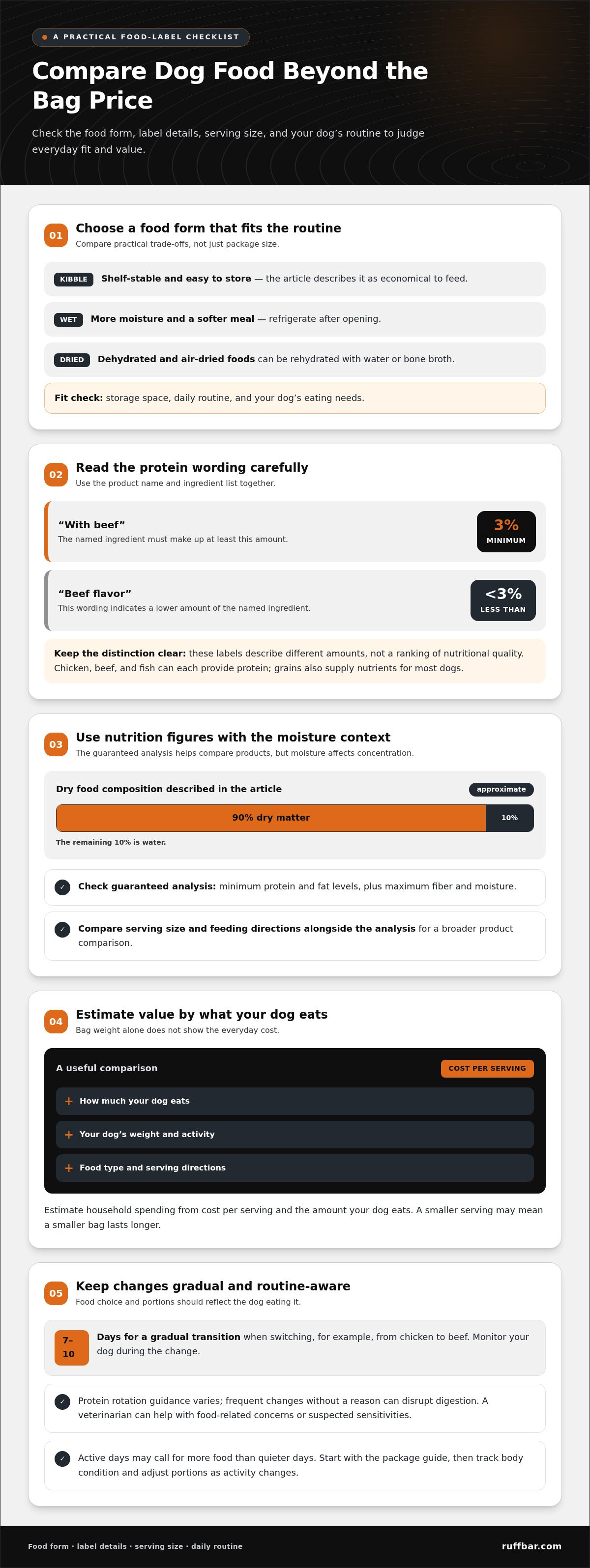
Compare how much food your dog eats, not just package weight. Kibble is shelf-stable, easy to store, and economical to feed. Wet food has more moisture and may suit dogs that prefer softer meals, but refrigerate it after opening. Dehydrated and air-dried foods can be rehydrated with water or bone broth. Choose a form that fits your storage space, routine, and dog’s eating needs.
To compare proteins, read the ingredient list and the product name together. Product names can indicate different amounts of a named ingredient, so check the label for details. “With beef” requires at least 3%, while “beef flavor” contains less than 3%. These labels describe different amounts, not a ranking of nutritional quality. Chicken, beef, and fish can each provide protein, while grains also supply nutrients for most dogs.
Check guaranteed analysis for minimum protein and fat levels, plus maximum fiber and moisture. The figures help compare products, but moisture affects how concentrated nutrients appear. Dry food is approximately 90% dry matter and 10% water. For a broader comparison, use the feeding directions and serving size alongside the analysis. A smaller serving may mean a smaller bag lasts longer.
There’s no single monthly food cost that works for every dog. Estimate your household’s spending using the cost per serving and the amount your dog eats. Weight, activity, and food type all affect the total. Compare serving sizes across packages rather than relying on bag weight alone.
Protein rotation calls for balance. Some guidance recommends changing protein sources regularly for healthy dogs, while frequent changes without a reason can disrupt digestion. If you switch from chicken to beef, transition gradually over 7 to 10 days and monitor your dog. For a food-related concern or suspected sensitivity, a veterinarian can help guide the choice.
4. Matching food to activity level and lifestyle
Your dog’s routine should guide portions and food format. A dog running trails or working outdoors may use more energy than one taking short walks, so active dogs may need more food. Start with the package feeding guide, then track body condition and adjust portions as activity changes. A quiet week and a demanding hiking schedule are different workloads.
Choose ingredients and format to suit the day ahead. Kibble is easy to store and serve at home, while dehydrated food can be rehydrated for a backpacking trip. A dog that has difficulty chewing may need a softer form. Flavor matters, too: choose food your active dog will reliably eat, not just a formula that sounds performance-focused.
Life stage still sets the nutritional foundation. Puppies need food formulated for growth, while senior dogs may benefit from fewer calories, more fiber, antioxidants, and joint-supporting nutrients. Activity doesn’t replace those needs. For adult food, AAFCO recommends a minimum protein level of 18%; compare the adequacy statement and full nutrition information rather than choosing by protein alone.
Does your lifestyle affect whether you should choose convenient, subscription, or specialty food? Yes. Kibble can simplify regular feeding at home, while portable, rehydratable food may suit frequent trips. A subscription can help organize repeat purchases around your household’s routine. Specialty food makes sense when it addresses a particular need, not simply because you have an active schedule. To answer “how to choose the right dog food for my lifestyle,” start with the routine you actually follow.
Build a simple routine: note daily activity, measure meals, and watch weight and body condition as the schedule shifts. More active animals need more food, but portions should reflect the individual dog, not a single “active” label. If you’re considering how to choose the right dog food for my lifestyle, focus on what fits your dog’s needs and your next outing. For adventure-focused feeding options, explore nutrition for active dogs.
Ruff Bar: Ruff Stix® Bison Pork
Ruff Bar’s Ruff Stix® Bison Pork is a portable option for active dogs to consider alongside their regular food. Ruff Bar makes high-protein, grain-free nutrition products using USDA-graded grass-fed meats and whole organic ingredients. Choose products based on your dog’s routine and the role they’ll play in the feeding plan. Keep complete-and-balanced food as the foundation of daily nutrition, and account for extras in your dog’s overall intake.
For trail-focused routines, Ruff Food Freeze Dried Raw Backpacking Meals Beef and Ruff Food Freeze Dried Raw Backpacking Meals Duck offer backpacking meal options. Treat them as distinct from a complete everyday diet unless the product’s own adequacy statement says otherwise. Choose based on your plans, your dog’s needs, and the package directions.
Visit Ruff Bar online to explore its options.
Make Your Next Feeding Choice Count
Your dog’s routine may change with the season, your schedule, or a new trail to explore. Let those everyday demands guide your food choices, and revisit portions as activity changes. Learning how to choose the right dog food for my lifestyle means making a feeding plan that works for both your dog and the person filling the bowl.
For active dogs, Ruff Bar offers Ruff Stix® Bison Pork, Ruff Food Freeze Dried Raw Backpacking Meals Beef, and Ruff Stix® Beef. Consider how each fits your dog’s existing nutrition plan and the outings you’re preparing for. These products aren’t substitutes for complete-and-balanced daily food unless their adequacy statement says otherwise.
Explore the offerings and decide what suits your next outing. Contact Ruff Bar for help as you plan your dog’s nutrition. Keep moving forward with a routine built around your dog.
Frequently Asked Questions
What Makes a Dog Food “Good”?
A good candidate is labeled complete and balanced for your dog’s life stage, with feeding directions that fit your routine. Look beyond front-label claims and compare the daily portions required. When changing foods, keep a simple record of meals, portions, and your dog’s response. This can help you spot patterns and discuss them with your veterinarian.
Breed-Specific Formulas: Are They Worth It?
Breed-specific foods are worth considering when a feature meets a real need, such as kibble shaped for a particular jaw. A breed name alone doesn’t establish better nutrition. Compare the formula’s adequacy statement and nutrient profile with a suitable size-based option. If both fit your dog’s life stage, consider which food your dog can comfortably pick up and eat.
What are the nutritional needs of dogs?
Dogs need nutrition suited to their life stage, size, weight, activity, and health. A growing puppy and a less-active adult have different needs. Portions may also need adjusting as exercise or body condition changes. For ongoing digestive symptoms, allergies, or a diagnosed condition, discuss your dog’s food and feeding routine with a veterinarian to develop a suitable nutrition plan.
What if my dog needs a special diet?
First identify the concern, such as a confirmed grain allergy, ingredient sensitivity, sensitive stomach, or joint problem. Grain-free food isn’t automatically better for most dogs, though it may be appropriate for a grain allergy under veterinary guidance. Before making targeted changes, discuss your dog’s symptoms, current food, treats, and health history with a veterinarian.
What should you pay attention to on the ingredient list?
Ingredients are listed in descending order by weight, so read the first entries closely. Chicken, beef, or fish can identify a protein source. Quality animal byproducts, such as organ meats and entrails, can also be nutritious. Ingredient order alone doesn’t show whether a food is complete and balanced, so read its nutritional adequacy statement, too.
How do I choose dog food based on my dog’s age, size, and activity level?
Start with life stage, then factor in size, weight, and daily movement. Puppies need food intended for growth. Small dogs usually finish growing at 10–12 months, while giant dogs usually finish at 18–24 months. AAFCO has no separate nutritional standards for senior dogs, so don’t rely on a “senior” label alone. Reassess portions as your dog’s routine changes.