
How Much Protein Does Your Dog Need, and How Can You Add It?
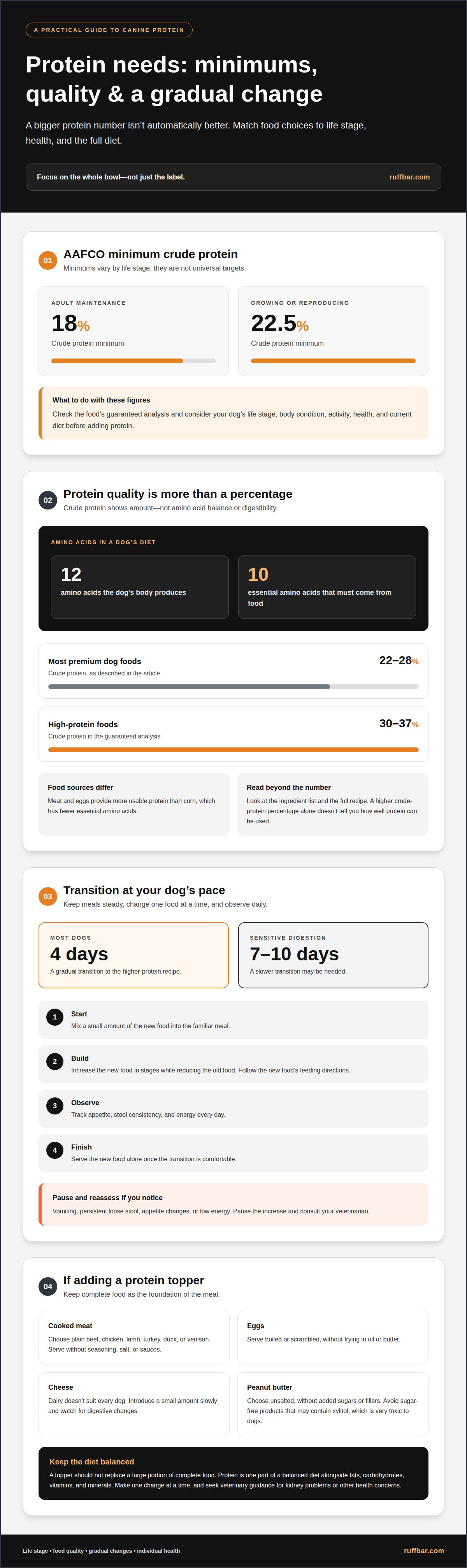
More protein isn’t automatically better; the right target depends on your dog’s age, weight, health, lifestyle, and medical needs. The AAFCO minimum is 18% crude protein for adult maintenance and 22.5% for dogs that are growing or reproducing. Before adding protein to your dog’s diet, match the change to your dog’s life stage, health, and current food rather than chasing a bigger number.
Protein helps build and maintain body tissues, but a topper or extra serving also changes the balance of the whole bowl. This guide explains what those minimums do and don’t tell you, how to move to higher-protein food without rushing, and why essential amino acids matter. Most dogs can transition over a 4-day period, while sensitive dogs may need 7–10 days; watch digestion, energy, and stool as the food changes. You’ll also find practical ways to use cooked meat, eggs, and fish as additions, and when extra protein may call for caution.
Key Takeaways
- Choose protein additions with care: preparation and simple ingredients matter, especially when considering eggs, cheese, or peanut butter.
- Ease food changes in gradually, then watch your dog’s digestion, energy, and stool for signs the transition needs adjusting.
- Protein quality matters alongside quantity. Learn how amino acids help explain why different protein sources aren’t interchangeable.
- Use cooked meat, eggs, or fish as measured additions, not a substitute for a balanced diet, and keep seasonings and sauces out of the bowl.
1. How Much Protein Do Dogs Need?
Start with your dog’s life stage, body condition, activity, and health. The AAFCO minimum is 18% crude protein for adult maintenance and 22.5% for dogs that are growing or reproducing. These figures describe minimums, not a universal target for every dog. Check the food’s guaranteed analysis and consider the full diet before adding extra protein.
Meat-based foods provide protein along with other nutrients. Common whole-food options include beef, chicken, lamb, turkey, duck, and venison. If using meat as a topper, choose plain, cooked meat without seasoning, salt, or sauces. Introduce any new protein gradually, especially if your dog has reacted to foods before.
Eggs are another protein option with high biological value. Serve them boiled or scrambled, without frying them in oil or butter. Cheese contains protein, but dairy doesn’t suit every dog, so introduce a small amount slowly and watch for digestive changes. For peanut butter, choose an unsalted variety without added sugars or fillers, ideally with peanuts as the only ingredient. Avoid sugar-free products, which may contain xylitol, a substance very toxic to dogs.
Can too much protein harm dogs, especially those with kidney or liver disease? Extra protein isn’t automatically harmful for every dog, but dogs with kidney problems or other health concerns may need a different approach. Excess protein is generally excreted in urine, used for calories, or converted to fat, so adding more doesn’t guarantee a benefit.
What are signs of food allergies or intolerance to new protein sources in dogs? Watch for new itching or skin changes, vomiting, or loose stool after introducing an ingredient. Stop offering the new food and discuss the reaction with a veterinarian.
Are protein supplements or powders safe for dogs? They aren’t automatically suitable: ingredients and your dog’s overall diet matter. Discuss supplementation with a veterinarian, and consider Ruff Supplements for Dogs if a supplement fits that plan.
2. Gradually transitioning to higher-protein food
A higher-protein recipe changes more than the protein figure on the label. A gradual plan for adding protein to my dog's diet can help avoid an abrupt change that disrupts digestion. Transition most dogs over 4 days; dogs with sensitive digestion may need 7–10 days. Keep meal times steady, change one food at a time, and avoid introducing new treats during the same transition. That makes changes in stool or appetite easier to connect with the food.
Begin with mostly your dog’s current food and a smaller portion of the new recipe. Increase the new food in stages while reducing the old food at each meal. Follow the new food’s feeding directions, since portions can differ between recipes. Don’t add extra meat or supplements at the same time. When adding protein to my dog's diet, make one change at a time so you can notice what may be affecting your dog.
- Start: Mix a small amount of the higher-protein food into the familiar meal.
- Build: Increase its share at each step, keeping the old food in the bowl during the transition.
- Observe: Track appetite, stool consistency, and energy every day.
- Finish: Serve the new food alone once your dog has completed the transition comfortably.
How do you add protein without unbalancing your dog’s diet? Keep a complete food as the meal’s foundation, and avoid replacing a large portion with meat or another topper. Protein is one part of a balanced diet, alongside fats, carbohydrates, vitamins, and minerals. These nutrients support the body, including functions connected to the immune system.
If vomiting, persistent loose stool, appetite changes, or low energy appear during the transition, pause the increase and consult your veterinarian. Dogs with kidney problems or other health concerns need an individualized diet plan before their protein intake changes. A slower schedule helps you observe your dog carefully, but it doesn’t replace advice based on your dog’s medical history.
3. Protein and amino acids in a dog's diet
Protein is built from amino acids, which help form and maintain tissues. A dog’s body produces 12 amino acids, while 10 essential amino acids must come from food. A balanced diet needs to supply those essentials, not simply a high crude-protein percentage. That distinction helps explain why two foods with similar label figures can differ in nutritional value.
Crude protein describes the amount of protein in food, not how much a dog can use. Most premium dog foods contain around 22–28% crude protein, while high-protein foods list 30–37% in their guaranteed analysis. Those figures don’t show amino acid balance or digestibility by themselves. Net protein utilization is biological value multiplied by protein digestibility, linking protein quality with how well the body can use it.
Meat and eggs provide more usable protein than corn, which has fewer essential amino acids. Meat meals can also vary in quality, depending on the meat used to make them. Read the ingredient list alongside the guaranteed analysis, rather than choosing food based on the largest percentage alone. A well-formulated recipe needs to provide the right amino acids as part of the full diet.
Research summarized in the available topic facts reports no adverse kidney effects from higher protein intake in numerous studies. Still, high-protein diets aren’t recommended for dogs with kidney problems or other health concerns. A dog with a diagnosed condition needs an appropriate nutrition plan before dietary protein changes.
Protein can also matter during weight management. Dogs fed higher-protein, lower-carbohydrate diets lost more weight and maintained lean muscle mass compared with dogs fed high-carbohydrate, low-protein diets. That finding doesn’t make a high-protein plan right for every dog: calorie intake and your dog’s health still shape the choice. Focus on amino acid quality, the complete recipe, and your dog’s needs, not a protein number in isolation.
4. How much cooked meat, eggs, or fish can I add to dog food?
There isn’t one serving size that fits every dog. The amount depends on your dog’s size, daily energy needs, current food, and how often you add a topper. Keep regular complete food as the meal’s foundation and use additions in small amounts. A large scoop of meat, egg, or fish can add calories and shift the balance of the bowl.
Cooked lean chicken, turkey, or lean beef can add protein. Serve the meat plain, without salt, seasoning, or sauces. Boiled or scrambled eggs are another option. Cook them without oil or butter, then mix a modest portion into the usual meal. Introduce new ingredients one at a time so you can track changes in appetite, digestion, or stool.
Fish brings another choice. Bake or broil a leaner fish, and avoid fish packed in oil. Cooked salmon provides protein and omega-3 fatty acids. Keep the portion measured, and don’t treat fish as a replacement for the complete food. A richer addition can change the meal’s calorie load, even if it seems like a small topper.
Start with a little, observe your dog after the meal, and adjust based on body condition and tolerance. If you serve an addition regularly, include it in the overall feeding plan rather than adding it on top of unchanged portions. Dogs with health conditions or dietary restrictions need a plan suited to those needs before their meals change.
For active outings, explore protein options for dogs on the trail as another way to plan food for the journey.
Ruff Bar
Ruff Bar offers high-protein nutrition options for active dogs, including Ruff Stix® Bison Pork and Ruff Food Freeze Dried Raw Backpacking Meals Beef. These products suit owners looking for protein-focused options to pack for outdoor days or active routines. Include them in your dog’s overall feeding plan, not as a substitute for veterinary guidance when a health condition affects dietary needs.
For a chewable option, Ruff Stix® Beef and Ruff Stix® Pork offer additional meat-based choices. For trail use, Ruff Food Freeze Dried Raw Backpacking Meals Duck is another option. Keep your dog’s regular diet, activity, and health needs in view as you decide where these foods fit. Contact Ruff Bar to discuss which option may suit your dog’s routine.
Build a feeding plan that moves with your dog
Your dog’s needs can shift with age, activity, and changes in health. Make every food adjustment purposeful: choose an option that fits the routine, introduce it thoughtfully, and keep the overall diet in view. If you’re considering adding protein to your dog’s diet, use your dog’s individual needs as your guide, not a trend or a bigger number on a label.
For dogs hitting the trails or keeping pace through active days, convenient nutrition can make planning easier. Ruff Bar offers options designed for active dogs, including Ruff Stix® Bison Pork, Ruff Stix® Beef, and Ruff Food Freeze Dried Raw Backpacking Meals Beef. Choose an option that fits your dog’s routine and feeding plan.
Ready to explore a practical option for your next outing? Contact Ruff Bar about dog nutrition options. Keep the plan steady, make changes with care, and enjoy the miles ahead with your dog.
Frequently Asked Questions
How Much Protein Do Dogs Need?
Adult dogs need food meeting at least 18% crude protein for adult maintenance; growing or reproducing dogs have a 22.5% minimum. These AAFCO minimums aren’t personalized targets. A dog’s age, weight, activity, health, and medical conditions shape its nutritional needs. Check the guaranteed analysis, then consider the complete food and your dog’s circumstances rather than using protein percentage alone.
How Much Protein Does a Senior Dog Need?
A senior dog’s protein needs depend on its health, weight, activity, and overall diet. Older dogs may absorb nutrients less easily and develop nutritional deficits, so changes in appetite or body condition deserve attention. Don’t assume every senior needs more protein. A veterinarian can consider your dog’s health and current food when assessing whether a dietary adjustment or supplementation makes sense.
Why has My Veterinarian Recommended that I Add Certain Nutrients to My Pet’s Diet?
Your veterinarian may recommend nutrients to address a specific health or dietary need. For example, glucosamine and chondroitin are often recommended for dogs with arthritis to help alleviate pain and joint wear. The right addition depends on your dog’s condition and existing food. Discuss any supplement with your veterinarian, especially before combining products or making several diet changes.
How much protein does a dog need per day by age, size, and activity level?
Daily protein needs vary with age, body weight, physical health, activity, and medical conditions. A food’s crude-protein percentage alone doesn’t show how much protein your dog consumes each day; the amount fed matters too. Use the feeding amount and guaranteed analysis together to understand the meal, then consider whether the full diet suits your dog’s life stage and routine.
How can I tell if my dog's food has enough protein?
Start with the guaranteed analysis on the food label. It reports crude protein as a percentage, which you can compare with the minimum for your dog’s life stage. Then look beyond that figure: protein quality and essential amino acid supply matter too. Consider the whole recipe and your dog’s health rather than choosing food solely because its protein percentage is higher.
What are safe high-protein foods to add to a dog's diet?
Plain cooked lean chicken, turkey, or lean beef can be added in small amounts. Boiled or scrambled eggs and cooked fish, such as salmon, are other options. Bake or broil lean fish, avoid fish packed in oil, and serve meat without seasoning, salt, or sauces. Introduce one new ingredient at a time and watch for digestive or skin changes.