
How much dog food to carry and how to plan resupply
Carry your dog’s usual daily ration for each day between resupplies, plus an extra 1–2 days of food for remote backcountry stretches. One rider’s dog eats two to three cups per day while bikepacking, but your dog’s portion depends on its normal needs and the demands of the ride. The best food ideas for bikepacking with a dog start with that daily amount, not a guess.
It’s easy to focus on your own meals and leave dog food until the bags are nearly full. But a bulky food load can limit what else fits, affect how your bike handles, and shorten the distance you can travel before resupply. Plan your dog’s meals alongside your route, water, and restocking stops.
This guide explains how to calculate a practical food carry, choose packable trail meals, and plan resupply for short rides and longer trips. You’ll also learn how small, well-sealed portions can make food easier to carry and serve on the trail. Pack with a clear plan and ride with more confidence.
Key Takeaways
- Calculate your dog’s daily ration, then pack enough for each stretch between resupply points. Add 1–2 extra days of food for remote backcountry sections.
- Plan your meals and your dog’s food around the same route stops, and account for the space and weight each food option takes up.
- Choose packable trail meals and add ingredients that make them more satisfying without making your load harder to carry.
- For longer trips, carry a few dependable staples and replenish in towns rather than loading every meal onto the bike at the start.
- Portion food into compact, sealed packages so it’s easier to organize, protect, and serve on the trail.
1. Planning meals around resupply options
Plan food around the distance between reliable resupply stops. For bikepacking with a dog, useful food ideas start with the next place you can restock, not the route’s total length. Mark each stop on your map, count the days between stops, and note which meals must last that long. On remote routes, plan meals and snacks for every day instead of assuming a store will have what you need.
For a day trip, pack the meals and snacks you expect to eat, along with your dog’s usual food for the outing. Consider the ride’s effort, weather, and water access when deciding what to carry. For a multi-day adventure, portion food by day. A four-day breakfast plan might include separate bags of granola or porridge with powdered milk. Add couscous for a simple dinner, then group each day’s food for quick access.
Estimate your own calorie needs for the riding demands, then choose food that’s practical to carry and eat. One recommendation is to budget at least 3,000 to 4,000 calories per day, depending on the rider and trip demands. Pack daily snacks and meals for remote sections. For your dog, calculate its usual daily ration and multiply it by the days until resupply. Keep the dog’s food separate so portions are easy to find.
Water can change the whole packing plan. A general cycling recommendation is at least 3.5 liters every five hours, while hot conditions may require more. One bikepacker carried 15 liters for a multi-day dry stretch and estimated about 30% was for the dog. That’s one rider’s experience, not a set ratio. Plan water sources alongside food stops, and filter or purify water from natural sources before drinking.
Use a route-by-route checklist before departure: count the days to the next stop, portion meals, and mark water access. For a four-day stretch, pack four breakfasts, four dinners, and daily ride food for you and your dog. Add an extra meal and emergency snacks when backcountry conditions could delay your plans. Revisit the plan if a stop is seasonal or requires a detour.
Leave room for flexibility. If a town has only basic staples, combine them with ingredients you’ve carried. Powdered milk, granola, and couscous can make simple meals without bulky packaging. Bikepacking with a dog calls for food ideas that suit the route, your dog’s usual ration, and the space in your bags. For a day ride, pack only what you need; for longer stretches, use a full resupply plan.
2. Adding ingredients to trail meals
Can dogs eat homemade or dehydrated meals on a bikepacking trip? Yes, if the meal is complete for your dog and already familiar. Don’t use a ride to test a new recipe for the first time. For your own trail meals, choose ingredients that pack easily and suit your cooking setup. A small portion of hard cheese can enrich noodles or couscous, and hard cheeses such as cheddar or gouda hold up for a couple of days.
Freeze-dried meals are light to pack and need water for preparation. Carry add-ins in separate sealed portions, then combine them at camp so they don’t affect rehydration. For example, powdered milk can enrich porridge, while herbs or a little cheese can lift a savory meal. Keep dog food separate from ingredients for your meals. Ruff Food Freeze Dried Raw Backpacking Meals Beef and Ruff Food Freeze Dried Raw Backpacking Meals Duck are dog meal options for riders planning to pack freeze-dried food.
Cooking gives you hot meals, but a stove, fuel, and cleanup add equipment to the load. Instant noodles offer a no-stove option: they can soften in cold water in about 20 minutes. Use a sealed container, add water, and let them stand before eating. For a simple hot meal, heat water for noodles or couscous, then mix in a portion of cheese. Keep coffee and cooking supplies packed away from dog meals.
No-cook food works best when you portion it before departure. Pack snacks in small plastic bags or reusable containers, and keep each meal’s ingredients together. During a short break, open one portion instead of unpacking the whole food bag. Choose sturdy ingredients that tolerate travel, and avoid glass containers that could break inside a loaded bike bag.
What treats and snacks are safe for dogs during long rides? Offer familiar dog treats or pieces of your dog’s usual food, and keep fresh water available. Pack them separately from human snacks so trail mix, seasonings, and meal add-ins don’t end up in your dog’s portion.
What foods are dangerous for dogs on the trail? Ingredients toxic to dogs can cause serious harm, so don’t share human meals, snacks, or leftovers unless you know every ingredient is safe for your dog. Store your food securely, and use dog-specific treats for ride breaks. Before departure, portion human meals, dog food, and snacks into separate containers. This simple step keeps ingredients distinct and makes camp cooking quicker.
3. How much dog food do you carry?
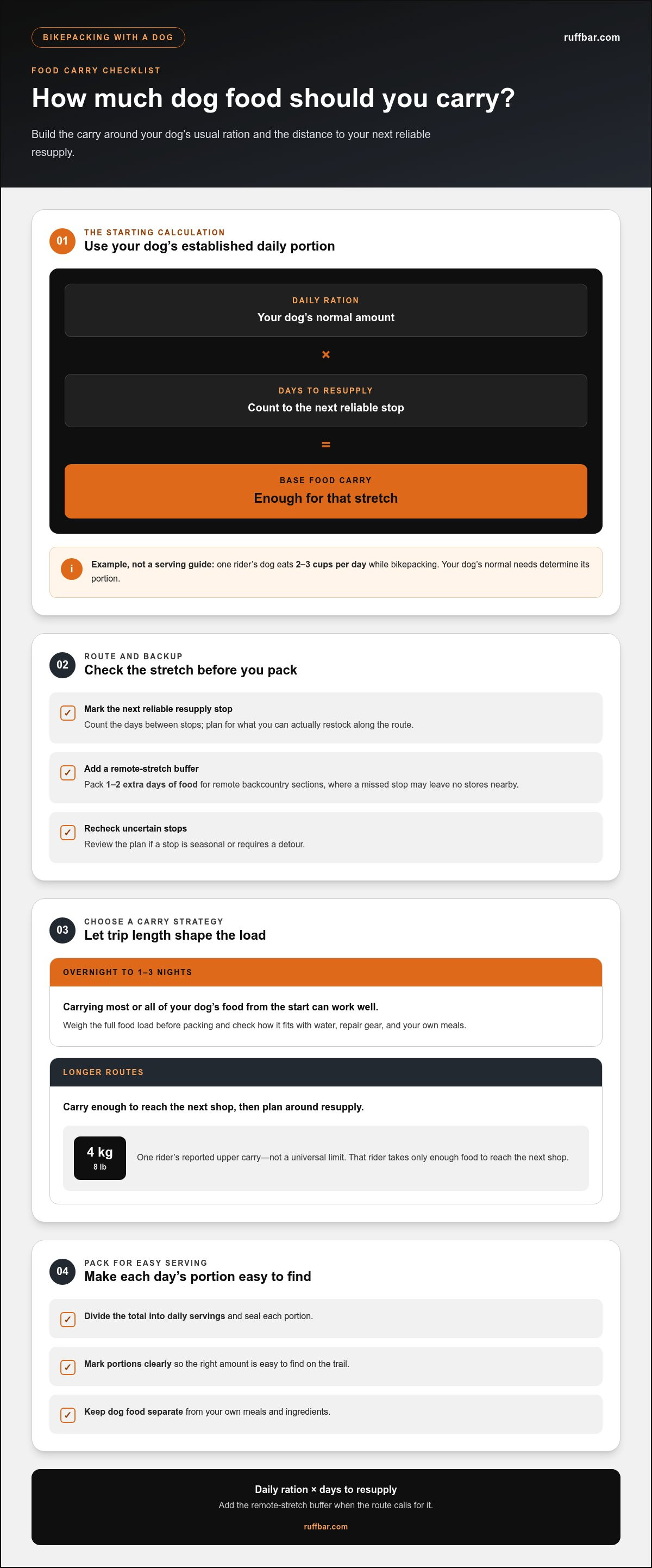
Start with your dog’s normal daily portion, then multiply it by the days until the next reliable resupply stop. One bikepacking dog averages two to three cups per day, but that example isn’t a universal serving guide. Use your dog’s established ration as the baseline, and pack it in clearly marked daily portions. Add food for one to two extra days before remote backcountry stretches, where a missed stop could leave no stores nearby.
For an overnight trip or a ride lasting one to three nights, carrying most or all dog food from the start can work well. Weigh the full food load before packing, then see how it fits alongside water, repair gear, and your own meals. On longer routes, one rider carries no more than 4 kg, or 8 lb, and takes only enough to reach the next shop. That strategy limits bulk while keeping the next resupply point central to the plan.
Before departure, divide the total into daily servings and seal each portion. A small dog may need less food and water to carry than a larger dog, so plan for your own dog rather than copying another rider’s load. Keep drinking water separate, and distinguish food weight from the space its packaging takes up. Bulky bags can use valuable room even when their contents are light.
Changing food during an extended trip takes care. If resupply means switching brands, blend the new food with the familiar food rather than changing abruptly. Use the remaining old food to make the transition, and reserve the new portion for the next meal. This approach reduces the chance of stomach upset. Avoid making an unfamiliar dehydrated formula your first choice on a remote stretch, especially when stores are far apart.
Keep snacks separate from complete meals. They can help with planned breaks, but shouldn’t replace your dog’s regular ration. Choose familiar dog food or treats, and store them within easy reach without opening every packed meal. Track how much your dog actually eats each day. If it regularly differs from your plan, adjust the amount you carry for the next resupply leg.
Are there local rules for storing dog food in bear country or campgrounds? Storage requirements can vary by campground and land-management area. Follow posted instructions, and secure dog food with your other food rather than keeping it beside the tent.
For a backcountry leg, count the days to the next shop, pack that many daily portions, then add a reserve. For a short trip, carry the full planned amount and keep it sealed. These strategies make food quantity a route decision, not a guess.
4. Food and resupply for long bikepacking trips
On a long bikepacking trip, plan each food carry around the next resupply point. Many bikepackers struggle to fit more than three or four days of food into their bags. That makes town stops part of the route, not an afterthought. Mark each stop, count the days between them, then pack food for that stretch. On trips lasting weeks or months, the distance between resupply points determines how much food travels on the bike.
Build a repeatable system: carry several days of food, replenish in towns, and keep an emergency snack and an extra meal for each stretch. These reserves can cover delays without loading every planned meal at the start. In remote areas, work out the food carry before leaving the last town, especially if missing a stop would mean a longer gap. For a three- or four-day stretch, list breakfast, snacks, and dinner for every day.
Include your dog’s daily ration in that count. Multiply its usual daily amount by the days until the next reliable stop, then separate the portions by day. Consider both your dog’s food needs and the space it takes: compare the packed volume with your water, repair kit, and rider food. At an overnight stop, keep the next day’s portion easy to reach. Don’t rely on a store carrying your dog’s usual food; pack enough familiar food to bridge the gap.
For your own meals, choose lightweight, calorie-dense food that’s easy to eat while riding and enjoyable after a hard day. One recommendation is to budget at least 3,000 to 4,000 calories per day, depending on the rider and trip demands. Dehydrated meal packets marked as two servings can help meet bigger appetites. Pack snacks for the trail, then reserve a proper dinner for camp. Nut butter is one portable option to include in a snack plan.
Keep food portions easy to count. Group each day’s breakfast, snacks, and dinner, then mark the final portion before resupply. Hard cheddar or gouda can hold up for a couple of days, while quickly perishable food adds packing risk. Repack bulky items in sealed bags and leave glass behind. A planned overnight menu also makes it easier to spot a missing meal before departure.
At every town stop, compare your remaining food with the next route segment. Refill dog food and rider staples first, then add fresh options for shorter stretches. If the next remote leg requires more food than your bags can comfortably carry, change the route or resupply plan instead of overloading the bike. A clear count, compact menu, and reserve meal make long-distance food planning practical.
5. Dog food bag sizes and packability
Food packaging can occupy more bike-bag space than its weight suggests. Small dog-food bags weighing 2–4 kg (4.4–8.8 lb) are a convenient size in many places around the globe. Treat that as a package-size option, not a fixed amount for every ride. Your dog’s daily portions and the distance between resupply stops determine how much food to carry.
How do you pack and store dog food safely while bikepacking? Divide it into daily portions, seal each portion in a durable, leak-resistant bag, and place the portions inside a larger food sack. Keep the sack away from water bottles, repair tools, and anything that could puncture it. Label portions by day so morning feeding doesn’t require unpacking the whole load.
How do you carry dog food without attracting wildlife? Keep it sealed, contain crumbs, and store it with your other food rather than beside your tent. In bear country or campgrounds, follow the posted storage rules. A closed outer sack helps organize the load, but it doesn’t replace the storage method required at your campsite.
For longer trips, match package size to your resupply plan. If the next stop is close, carry only the portions needed to reach it. If stores are far away, calculate the full food carry before leaving town. Repacking a large bag into smaller daily portions helps you track what remains and avoid carrying empty packaging for the whole route.
Test your packed food in the setup you’ll use before departure. Put the portions in your bike bag or backpack, then check whether they fit alongside water and essential gear. A lightweight package can still be awkward if its shape is rigid or wastes space. Flatten flexible packaging as it empties, and keep the next meal accessible without opening every bag.
Keep food separate from your dog’s favorite snacks. This keeps the full meal ration distinct and makes rewards easier to find during a break. Don’t leave loose food in a handlebar bag or open pocket, where vibration can scatter crumbs along the route. At camp, close the food sack after serving each meal and keep your dog’s bowl clean.
Before each ride, use a simple packing check: confirm the number of daily portions, inspect every seal, and place food where it will stay dry and accessible. For an overnight trip, that may mean one compact food bundle. For longer trips, repeat the same system for each resupply leg. The key is to choose packaging based on route length, portion size, and available bag space, not the package label alone.
Ruff Bar: Ruff Stix® Bison Pork
Ruff Stix® Bison Pork is a compact chewable option to pack alongside your dog’s planned meals. Use it as a snack or topper, not as a substitute for the measured daily ration in your bikepacking food plan. On longer routes, portion your dog’s regular food first, then decide whether there’s room for an extra option.
For camp meals, Ruff Food Freeze Dried Raw Backpacking Meals Beef is another dog-food format to consider alongside your resupply plan. Choose familiar food for the ride, and pack portions so serving is simple at camp or during a break. The right setup depends on your dog’s routine and the space in your bags.
Visit ruffbar.com to explore Ruff Bar’s dog food options.
Set up your next ride with purpose
Make your next outing a practical test of your packing system. Notice what stays easy to reach, what takes up too much room, and which foods your dog eats comfortably on the move. Use those observations to refine your food ideas for bikepacking with a dog, whether your next route is a quick overnight or a longer backcountry ride.
Ruff Bar offers Ruff Stix® Bison Pork, Ruff Food Freeze Dried Raw Backpacking Meals Beef, and Ruff Stix® Beef for planning your dog’s trail food. Choose an option that fits your dog’s familiar routine and your packing setup. Keep your route, food, and resupply plan working together.
For questions about Ruff Bar’s offerings, contact Ruff Bar with your questions. Then get your gear ready, set a route that suits your team, and head out prepared for the miles ahead.
Frequently Asked Questions
How much dog food do you carry?
Carry your dog’s normal daily ration for every day before the next dependable resupply, with an extra reserve for remote sections. A rider reported carrying no more than 4 kg (8 lb), taking only enough to reach the next shop. Treat that as one packing approach, not a universal target. Before loading the bike, weigh the portions and check that the food fits without crowding essential gear.
To cook or not to cook?
Choose whether to cook based on your route, water access, and willingness to carry a stove. No-cook meals save cooking gear, while hot meals may suit a cold or wet camp. For your dog, stick with familiar food and follow its preparation directions. Don’t assume a human meal is suitable to share. Test your cooking setup at home so you know what equipment and cleanup it requires.
What food is best for dogs on a bikepacking trip?
The best choice is food your dog already eats reliably and that fits your packing plan. Avoid making an unfamiliar diet the centerpiece of a remote trip. When comparing formats, consider how much space each portion takes and how you’ll serve it at camp. Ruff Food Freeze Dried Raw Backpacking Meals Beef and Ruff Food Freeze Dried Raw Backpacking Meals Duck are options designed for backpacking meals.
How much food should a dog eat per day while bikepacking?
Start with your dog’s usual daily portion, not a generic amount based on another dog. One rider’s dog, Mira, eats an average of two to three cups per day while bikepacking, but that example won’t suit every dog. Activity, body size, food type, and your dog’s established feeding routine all affect the portion. Measure its regular serving before departure and track what it actually eats on the ride.
How to calculate dog food portions for distance and activity level?
Count the days between resupply points, then multiply that span by your dog’s usual daily ration. Use the route to identify demanding stretches, long days, and remote areas where resupply could be delayed. Pack portions separately so you can compare the planned amount with what your dog eats. Add a reserve for backcountry travel, then review the quantity whenever a route change shifts the next stop.
What lightweight, calorie-dense dog food options are available for bikepacking?
Compare food by packed weight, volume, serving directions, and how well your dog tolerates it. Freeze-dried meals are one format to consider for a compact load; Ruff Food Freeze Dried Raw Backpacking Meals Beef is one option. Ruff Stix® Bison Pork can also serve as a separate snack or topper. Keep either choice aligned with your dog’s regular meal plan rather than assuming it replaces the full ration.
How to transition a dog to travel food before a bikepacking trip?
Introduce travel food before departure by blending it with familiar food rather than switching abruptly. Gradually increase the new food while reducing the old portion, and observe your dog’s appetite and stools during the change. Make the transition at home, where the usual food is available if needed. Pack enough familiar food for the journey so a delayed resupply won’t force a sudden diet change.
What foods are dangerous for dogs on the trail?
Human trail meals, snacks, and leftovers may contain ingredients toxic to dogs. Don’t share them unless you know every ingredient is safe for your dog.