
Functional Dog Food Toppers for Joint Support in Dogs
A joint-focused topper should support the bowl, not take it over. Dog food toppers are additions to a dog’s regular food that can bring extra moisture, aroma, or variety; functional dog food toppers for joint support may include ingredients such as omega-3s that can help support joint health. They complement a balanced diet rather than replace it.
If your dog’s movement is changing, it makes sense to look closely at what goes into each meal. A topper can be a practical addition, but its ingredients, form, and portion matter. Introduce new food gradually and watch how your dog responds.
Learn how toppers may fit into a joint-conscious feeding plan, what to consider when choosing a form, and how to add one without disrupting your dog’s routine. Start with a clear purpose and a measured change.
Key Takeaways
- Match the topper’s ingredients to your dog’s needs, and compare options such as broth, fish, or freeze-dried blends.
- Green-lipped mussels provide omega-3 fatty acids and glucosamine, which may support joint health and mobility.
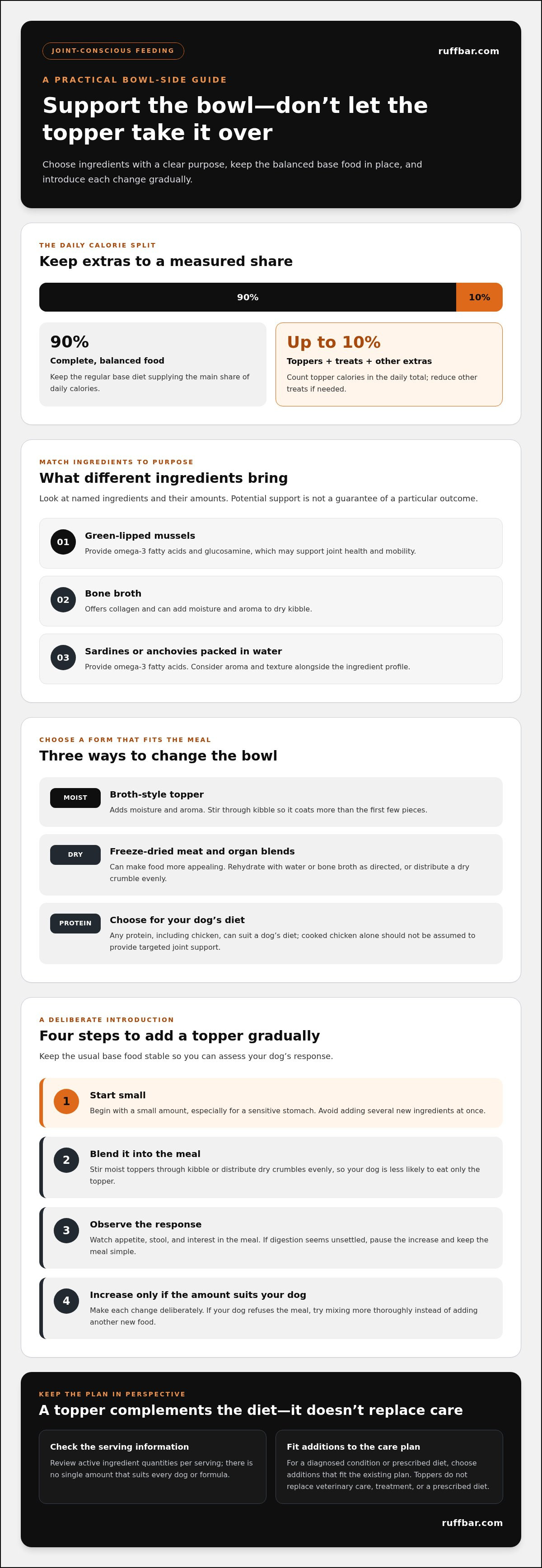
- Count topper calories as part of the daily total; treats and toppers together should not exceed 10% of daily intake.
- Start with a small amount, especially for a dog with a sensitive stomach, then watch appetite and stool as you introduce it.
Choosing toppers for individual health priorities
Start with your dog’s main priority, then match it to ingredients and form. For joint support, bone broth offers collagen, while sardines or anchovies packed in water provide omega-3 fatty acids. If your dog also needs a more appealing meal, consider aroma and texture alongside the ingredient profile.
For kibble, a moist topper can add variety and moisture. Freeze-dried meat and organ blends can make food more appealing; rehydrate them with water or bone broth as directed. Choose any protein, including chicken, to suit your dog’s diet, and don’t assume cooked chicken alone provides targeted joint support.
Are dog food toppers for joint support safe for puppies, senior dogs, or dogs with health conditions? Age alone doesn’t determine suitability. Match ingredients to your dog’s life stage, current diet, and health needs. If your dog has a diagnosed condition or prescribed diet, choose additions that fit the existing care plan.
What are the risks or side effects of joint-support supplements for dogs? A new topper may upset digestion, particularly if introduced quickly, and your dog may reject an unfamiliar taste or texture. Begin with a small amount and monitor appetite and stool as you introduce it.
Can joint-support toppers replace veterinary treatment or prescription diets? No. Toppers complement a complete and balanced diet; they don’t replace veterinary care, treatment, or a prescribed diet.
Keep portions in view. A complete and balanced food should supply 90% of a dog’s calories, with toppers, treats, and other extras providing the remaining 10%. Count topper calories in the daily total, and reduce other treats if needed. Mix the addition thoroughly into kibble so your dog doesn’t eat only the topper and leave the meal.
How food toppers may support joint health
Ingredients matter, but so do the topper’s purpose and your dog’s overall nutrition. Check which nutrients it contains, follow the serving information, and consider how it fits with your dog’s regular food and weight-management plan.
Ingredients for Joint Support
Green-lipped mussels contain omega-3 fatty acids and glucosamine, which can help reduce inflammation and support joint health and mobility. Bone broth contains collagen and can support joint, skin, and coat health. Look at the named ingredients and their amounts, rather than relying on broad claims about a topper’s benefits.
Evidence for Glucosamine and Chondroitin
Green-lipped mussels provide a food-based source of glucosamine alongside omega-3s, with potential support for joint health and mobility. That information doesn’t show that every glucosamine-and-chondroitin combination has the same effect. Compare the ingredient list and amounts, and avoid treating a supplement label as proof of a particular outcome.
Glucosamine and Omega-3 Amounts
There is no single amount that suits every dog or formula. Read the product’s serving directions and check the quantity of each active ingredient per serving. Your dog’s size, current diet, and health needs all affect how an addition fits. Don’t estimate a serving based on an ingredient’s name alone, and include the topper in the overall nutrition plan.
Nutrition and Joint Health
A topper complements a complete and balanced base food; it shouldn’t displace the protein and other nutrients in that daily diet. Bone broth can add moisture, while a topper’s calories can affect weight if they’re added without adjusting other extras. For quality, review ingredient quantities, sourcing details, and information about independent testing. Compare those specifics in functional nutrition toppers as you assess topper formats.
Introducing toppers gradually
Change one part of your dog’s feeding routine at a time. A new topper can alter a meal’s taste, texture, or moisture, so introducing it gradually makes your dog’s response easier to assess. Keep the usual base food consistent while the new ingredient becomes familiar.
- Start small. Add a small amount of topper to your dog’s regular meal. For a sensitive stomach, begin especially cautiously. Don’t introduce several new ingredients together, since that makes it harder to identify what caused a change.
- Blend it into the food. Stir a moist topper through kibble, or distribute a dry crumble across the meal. A picky eater may target a tasty piece and leave the rest, so an even mix helps keep each mouthful familiar.
- Observe the response. Watch stool, appetite, and interest in the meal after feeding. Note changes alongside the topper and amount used. If your dog’s digestion seems unsettled, pause the increase and keep the meal simple until things return to normal.
- Increase only when the current amount suits your dog. Keep each change deliberate, rather than adding more at every meal automatically. If your dog refuses the meal, try mixing the topper more thoroughly instead of adding a second new food.
Moisture changes kibble’s texture and smell, which some dogs enjoy and others don’t. Try mixing bone broth into a small portion first; if your dog accepts it, add it to the rest of the meal. Prepare dry toppers according to their directions and mix evenly. Aim for a gradual transition, not a sudden change to the whole bowl.
Keep the base diet and feeding routine stable while introducing a topper. This makes it easier to compare appetite and stool from meal to meal. Once the topper is part of the routine, count its calories toward your dog’s daily intake and adjust other treats if needed.
Benefits and forms of dog food toppers
A topper can change a meal’s aroma, texture, and moisture without replacing its balanced base food. Choose a form that suits the recipe, your dog’s preferences, and the ingredients you want to add. Broth, a dry crumble, and a whole-food addition each affect the bowl differently.
- Broth-style toppers: Bone broth adds moisture and aroma to dry kibble. Stir it through the meal so the liquid coats more than the first few pieces.
- Freeze-dried toppers: Meat and organ blends can add protein and make food more appealing. Rehydrate them with water or bone broth, then mix evenly into the meal.
- Whole-food additions: Plain carrots can add crunch and variety. Keep the portion modest and account for the extra food as part of the day’s intake.
For joint-focused choices, look at the ingredient itself, not just the word “functional” on a package. Omega-3 fatty acids may help reduce inflammation, which can benefit dogs with arthritis. A topper’s form affects how easily it mixes into kibble, how much moisture it brings, and whether your dog accepts its texture.
Read the feeding directions to distinguish a topper from a complete meal. Some air-dried complete recipes and gently cooked meals can serve as full meals when prepared according to package directions. Broth-style cups are generally toppers or partial meal enhancers. Most toppers add to a balanced diet rather than providing complete nutrition on their own.
Match the choice to your dog’s routine. A picky eater may respond to aroma, while a dog that resists wet food may prefer a dry crumble. If you’re adding a new form, mix it thoroughly and observe whether your dog eats the whole meal. Explore dog food topper options to compare formats for your dog’s bowl.
Ruff Bar: Ruff Stix® Bison Pork
Ruff Stix® Bison Pork is a chewable nutrition option for active dogs. Ruff Bar’s products are high-protein and grain-free, made with USDA-graded grass-fed meats and whole organic ingredients without fillers. Stix can be part of a practical feeding routine, but they are not a targeted joint-support topper or a replacement for veterinary care.
Keep the distinction clear: choose a topper for its ingredients and intended role, and choose a chewable Stix as part of your dog’s broader nutrition routine. Fit any addition into your dog’s complete diet and count its calories alongside other treats. That keeps the plan balanced and practical at home or on the trail.
Visit ruffbar.com to explore Ruff Stix® Bison Pork and other Ruff Bar offerings.
Choose a Routine That Fits Your Dog
Choose a feeding approach you can maintain. Set one priority, keep the rest of your dog’s routine steady, and consider whether the format works for everyday use. A consistent plan is easier to follow at home, on the trail, and during active days.
Functional dog food toppers for joint support can be one part of a feeding plan, alongside a balanced base diet and attention to your dog’s needs. Ruff Bar offers Ruff Stix® Bison Pork, Ruff Stix® Beef, and Ruff Food Freeze Dried Raw Backpacking Meals Beef. These are distinct nutrition options; don’t assume each is a joint-support topper.
To discuss topper options for your dog’s routine, contact Ruff Bar about toppers. Keep the goal practical, the routine steady, and your dog ready for the next outing.
Frequently Asked Questions
What are dog food toppers?
Dog food toppers are served alongside a dog’s regular food and aren’t automatically complete diets. Bone broth, for example, can moisten a meal, while rehydrated freeze-dried meat changes its texture and aroma. Choose a format that suits your dog’s eating habits and diet plan, and count its calories toward daily feeding.
Can toppers replace a full meal?
A topper shouldn’t replace a full meal unless its directions identify it as a complete food. Some air-dried complete recipes and gently cooked meals can serve as full meals when prepared according to package directions. Broth-style cups usually enhance a meal instead. Read the feeding instructions before replacing your dog’s usual base food with a different format.
Do omega-3 fatty acids in dog toppers help with joint mobility?
Omega-3 fatty acids may help reduce inflammation, which can benefit dogs with arthritis. Sardines or anchovies packed in water are food-based sources of these fats. Check the ingredient list to identify the source, and track your dog’s movement as part of the feeding routine. A topper is a dietary addition, not a substitute for veterinary care.
Which functional dog food toppers are best for joint support in the United States?
No single topper is best for every dog. For functional dog food toppers for joint support, focus on clearly named ingredients, such as green-lipped mussels or omega-3 sources, and how they fit your dog’s overall diet. Ruff Bar offers Functional Nutrition Toppers and Pure Blend Toppers; assess each product’s ingredients rather than assuming either is a specific joint formula.
How can you tell whether a dog food topper is high quality and independently tested?
Review ingredient quantities, sourcing details, and any information about independent testing.
How do joint-support dog food toppers compare by ingredients and price?
Green-lipped mussels provide omega-3 fatty acids and glucosamine; bone broth provides collagen, while sardines or anchovies packed in water provide omega-3 fatty acids.