
Dog's First Camping Trip: Packing and Style Guide
A dog’s first camping trip starts with preparation. Dogs can camp where campground rules allow them, and planning what to pack for a dog's first camping trip means covering the essentials: food, fresh water, bowls, a leash, identification, waste bags, bedding, and a first-aid kit.
It’s easy to focus on gear, but a successful first outing also depends on keeping your dog secure and choosing a trip that suits their experience, fitness, and comfort outdoors.
This guide explains how to prepare, what to bring, and how to keep your dog safe at camp. It also compares car camping with backpacking so you can choose a practical setup for your first trip together. Pack with purpose, then head out ready to explore.
Key Takeaways
- Confirm campground dog rules before you go, and store food securely to reduce wildlife risks.
- Use a leash, current ID, and safe campsite confinement to keep your dog close in unfamiliar surroundings.
- Pack fresh water, familiar food, paw and sleep gear, and first-aid supplies suited to the trip.
- Choose car camping for a simpler first setup or backpacking when your dog is fit and ready to carry a light load.
1. CAN DOGS GO CAMPING?
Yes, dogs can camp where the campground allows them. Before booking, check its dog restrictions and leash rules. If you’re planning a national park trip, review the National Park Service information for that specific park. Rules can vary between campgrounds and park areas, so confirm that dogs are permitted at your intended site and on your planned activities. For a first outing, choose a nearby campsite or try a day trip first. This lets your dog experience new surroundings without committing to an overnight stay.
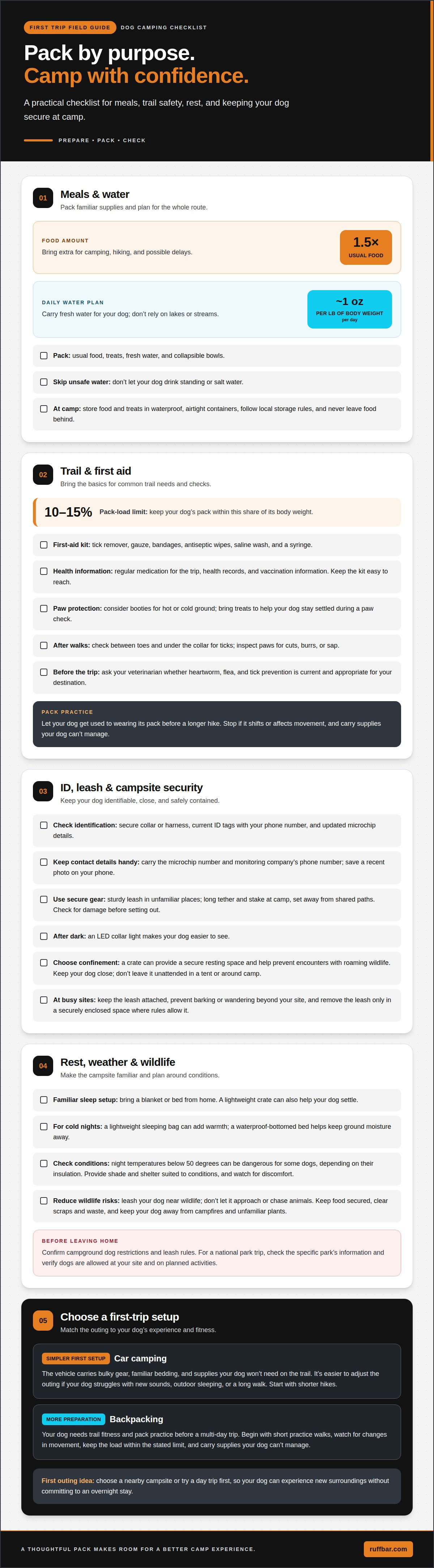
Pack your dog’s usual food, treats, fresh water, and collapsible bowls. Bring 1.5 times your dog’s normal food amount for camping and hiking, plus extra for delays. A dog should drink about 1 ounce of water per pound of body weight per day. Carry water rather than relying on lakes or streams, and don’t let your dog drink standing or salt water. Bring waste bags, remove waste promptly, and clear away uneaten food.
How much food and water should you bring for a dog camping? Pack 1.5 times the usual food amount and plan about 1 ounce of water per pound of body weight daily. Carry enough fresh water for the route and conditions, with food and treats portioned for each day.
In bear country, keeping your dog leashed and food secured is especially important. Store dog food and treats in waterproof, airtight containers, follow local food-storage rules, and never leave food at the campsite. Don’t let your dog approach or chase wildlife. Check the collar and leash before walking near wildlife, and clear away waste and food scraps so they don’t linger around camp.
Heat, cold, fire, and plants also shape the plan. The Centers for Disease Control and Prevention warns that heat-related illness, including heat stroke, can be deadly. Night temperatures below 50 degrees can be dangerous for some dogs, depending on their insulation. Keep your dog away from campfires and stop it from chewing unfamiliar plants. Choose shade and shelter suited to the conditions, and watch your dog for signs of discomfort.
2. Leashes, identification, and campsite confinement
Prepare identification before you leave. Check that your dog’s collar or harness fits securely, then attach current ID tags with your phone number. Update the microchip details and carry the microchip number and monitoring company’s phone number while traveling. If your dog slips away, current contact details can help someone reunite you. Save a recent photo on your phone so you can describe your dog clearly if you become separated.
Use a sturdy leash in unfamiliar surroundings, even if your dog usually responds reliably off leash. New smells, wildlife, and campground activity can distract even a trained dog. At camp, a long tether and stake can help keep your dog within your assigned site, positioned away from shared paths. An LED collar light makes your dog easier to see after dark. Before setting out, check the leash, collar, and tether for damage.
Choose a confinement option that suits your dog and campsite. A crate offers a secure resting space and can help prevent encounters with roaming wildlife. Keep your dog close, and don’t leave it unattended in a tent or around camp. Training that works at home may not hold in unfamiliar surroundings. Keep the leash attached in busy areas, and prevent barking or wandering beyond your site.
Make the sleeping area familiar with a blanket or bed from home. Familiar bedding or a lightweight crate can help your dog settle after a day on the trails. Remove the leash only in a securely enclosed space where campground rules allow it. Before bed, check that ID tags are attached and the campsite setup is secure. These steps help keep your dog visible, contained, and comfortable while you prepare for the next day.
3. What should I pack for camping with my dog?
Build a first-aid kit for common trail needs. Include a tick remover, gauze, bandages, antiseptic wipes, saline wash, and a syringe. Pack enough of your dog’s regular medication for the trip, along with health records and vaccination information. Keep a current photo on your phone in case you need help describing your dog. Store the kit where it’s easy to reach, not buried beneath sleeping gear.
A practical way to plan what to pack for a dog's first camping trip is to sort supplies by purpose: first aid, meals, trail needs, and rest. Add collapsible dishes, treats, and paw protection suited to your route. There’s no single useful cost total because gear prices vary by item and design. Choose functional equipment that fits your dog and the outing.
After walking through tall grass, woods, or brush, check your dog for ticks. Look between the toes and under the collar, and use the tick remover if needed. After hikes, inspect paws for cuts, burrs, or sap. Booties can protect paws from hot or cold ground, and treats can help your dog stay settled while you check a sore paw.
When deciding what to pack for a dog's first camping trip, focus on gear that supports your planned activities and your dog’s needs. Ask your veterinarian whether heartworm, flea, and tick prevention is current and appropriate for your destination. Keep your dog leashed near wildlife, and don’t let it approach or chase animals.
For trail days, keep the pack load within 10-15% of your dog’s body weight. Let your dog get used to wearing its pack before a longer hike, and stop if it shifts or affects movement. For cold nights, a lightweight sleeping bag can add warmth. A waterproof-bottomed bed helps keep ground moisture away, giving your dog a more comfortable place to rest outdoors.
4. Choosing between backpacking and car camping
For a first overnight, car camping keeps the learning curve manageable. Your vehicle can carry bulky gear, familiar bedding, and supplies your dog won’t need on the trail. It’s also easier to adjust the outing if your dog struggles with unfamiliar sounds, sleeping outdoors, or a long walk. Choose a dog-friendly campground, settle in, and start with shorter hikes before attempting a longer route.
Backpacking asks more of both partners. Your dog needs trail fitness and practice wearing a pack before a multi-day trip. Make sure your dog is fit and accustomed to wearing a pack before asking it to carry camping gear. Start with short practice walks, watch for changes in movement, and carry supplies your dog can’t manage. Lightweight equipment matters because every added item travels on someone’s back.
Plan your camp setup, too. Car camping makes it easier to bring a bed with a waterproof bottom or a dog sleeping bag for familiar warmth when nights turn cold. Backpacking calls for compact sleep gear and only the supplies your route requires. Either way, keep leashes accessible and secure your dog while setting up camp or spending time around other campers.
Travel safety depends on how you’re camping. In a car, use an appropriate restraint or containment method. Don’t let your dog ride loose inside a travel trailer being towed. For backpacking, choose a route that matches your dog’s current conditioning, and allow time to rest instead of pushing for distance.
Choose car camping if your dog is new to overnight trips, still learning campsite routines, or not conditioned to carry gear. Choose backpacking when your dog is fit, accustomed to a pack, and comfortable covering the planned terrain. For trail meals, pack Ruff Food Freeze Dried Raw Backpacking Meals Beef or Duck as options designed for backpacking. Let your dog’s readiness, not ambition, set the first trip’s scale.
Ruff Bar
Ruff Bar offers practical nutrition options for active dogs heading outdoors. For backpacking, Ruff Food Freeze Dried Raw Backpacking Meals Beef and Ruff Food Freeze Dried Raw Backpacking Meals Duck provide meal options designed for the trail. Ruff Stix® Bison Pork can also fit into a planned food kit for time on the move. Choose what suits your dog’s routine and trip, then pack it securely with water, bowls, and other essentials. Food is one part of preparation; route, weather, fitness, and a safe campsite setup matter, too.
For a closer look at trail-friendly options, explore Ruff Bar’s dog nutrition offerings. Contact Ruff Bar to discuss nutrition for your dog’s next adventure.
Make the First Trip a Launchpad
Your first outing doesn’t need to cover big miles. Let your dog’s comfort guide the pace, and use each trip to learn what works for both of you. That experience makes the next outing easier to plan, from camp setup to meals that suit your dog’s routine. The right choice for what to pack for a dog's first camping trip is the gear and food your dog can use comfortably in the conditions you’ve planned for.
For active days outdoors, Ruff Bar offers options such as Ruff Stix® Beef and Ruff Food Freeze Dried Raw Backpacking Meals Beef. Choose food that suits your trip and your dog, while keeping the rest of your preparation focused on safety and comfort. Start with a manageable adventure, then take on more as your dog gets familiar with camping.
Contact Ruff Bar about nutrition for your next camping trip, and get ready to head out together.
Frequently Asked Questions
Can dogs go camping?
Yes, dogs can camp at campgrounds that allow them, but permission may not extend to every trail or facility. Check the rules for your exact campground and destination before setting out. For national park trips, review the National Park Service information for that park. A dog-friendly campsite may still restrict where dogs can go, so plan activities around the areas where dogs are permitted.
Does my dog need a sleeping bag?
Not always. A sleeping bag can help when nighttime temperatures drop significantly, especially for dogs with less natural insulation. Familiar bedding may be enough on a mild night. In colder conditions, choose a warm setup that keeps your dog off damp ground. Consider your dog’s coat, the forecast, and the sleeping shelter when deciding what to bring.
What’s the best way to keep my dog warm while camping?
Give your dog a dry, insulated place to rest, such as familiar bedding with a lightweight dog sleeping bag when nights are cold. A bed with a waterproof bottom helps block moisture from the ground. For short-haired dogs, a rain jacket can help during wet outdoor outings. Watch for signs of discomfort and adjust the sleeping setup rather than expecting your dog to tolerate the cold.
What should I pack for camping with my dog?
Pack what your dog needs each day, with a small reserve in case of delays. Portion meals so they’re easy to reach, and keep medication with health records in case you need them. Add a familiar toy for downtime and a separate pouch for cleanup supplies. Before leaving, match the kit to your destination, planned activities, and your dog’s individual needs.
Can I leave my dog in a tent?
No. Don’t leave your dog unattended in a tent, even briefly. A tent doesn’t replace supervision, and conditions around camp can change while you’re away. Take your dog with you when practical, or make sure a responsible person stays with it. A crate can provide secure confinement at camp, but it doesn’t make leaving your dog alone appropriate.
What essential gear should you pack for a dog’s first camping trip?
Start with equipment that protects your dog, supports rest, and covers daily needs: a secure walking setup, identification, food and water supplies, bedding, waste bags, and first-aid items. Add paw protection or a rain layer if the terrain and weather call for them. Keep frequently used items accessible so a water break or quick paw check doesn’t require unpacking everything.