
Dog Joint Support Supplements for Informed Nutrition Choices
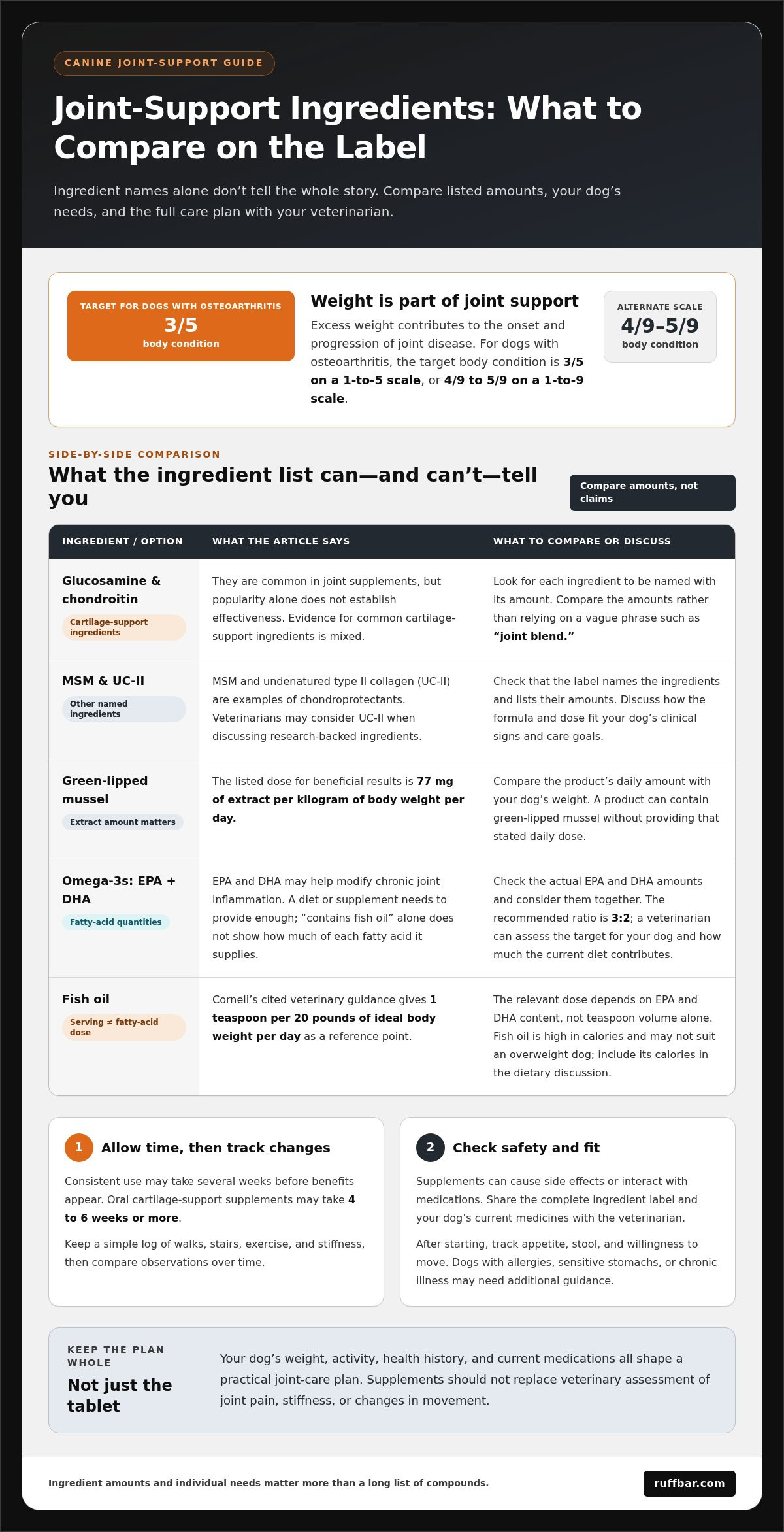
Weight is part of joint support, not a side issue. Excess weight contributes to the onset and progression of joint disease, so a dog nutrition supplement for joint support should be considered alongside weight management and an overall care plan. For dogs with osteoarthritis, the target body condition is 3/5 on a 1-to-5 scale, or 4/9 to 5/9 on a 1-to-9 scale.
It makes sense to look for a chewable tablet that can support your dog’s movement, especially when daily walks, work, or trail time matter. But the ingredient list, your dog’s weight, and their health history all shape whether a supplement is a sensible fit. This guide explains how weight affects joint strain, what evidence-backed ingredients to understand, and how omega-3s and lifestyle choices factor into the decision.
You’ll also learn why chewable joint supplements aren’t interchangeable, what to discuss with your veterinarian, and how to build a practical plan around your dog’s needs. Clear criteria can help you make informed choices and move forward with confidence.
Key Takeaways
- Compare supplement ingredients and amounts instead of choosing by label claims alone. Evidence for common cartilage-support ingredients is mixed.
- Look beyond the tablet: a dog’s body condition, activity, health history, and current medications all shape a practical joint-care plan.
- EPA and DHA may support management of chronic joint inflammation, but the effective amount depends on your dog and their diet.
- Chewable supplements can take consistent use over several weeks before effects appear. Review the serving guidance and ingredient details as part of your choice.
- Use veterinary guidance to match supplement choices to your dog’s needs, especially if they have allergies, a sensitive stomach, or a chronic illness.
What is the best vet-recommended joint supplement for dogs?
There’s no single best formula for every dog. The right veterinary recommendation depends on your dog’s signs and health history, as well as the ingredients and amounts in each supplement.
Cartilage-Building Supplements and Chondroprotectants
Chondroprotectants are ingredients used to support cartilage and joint function. Common examples include glucosamine, chondroitin, methylsulfonylmethane (MSM), and undenatured type II collagen, also called UC-II. Look for a label that names each ingredient and lists its amount. Compare those amounts rather than relying on phrases such as “joint blend,” and discuss the formula with your veterinarian before adding it to your dog’s routine.
Glucosamine and Chondroitin Evidence
Glucosamine and chondroitin are common cartilage-support ingredients, but popularity alone doesn’t establish effectiveness. Distinguish the ingredients on a label from evidence that they improve a specific condition.
Ask your veterinarian how a supplement fits your dog’s clinical signs and care goals. A mobility plan may also include appropriate exercise and other measures, rather than relying on glucosamine and chondroitin alone.
Green-Lipped Mussel Inclusion
Green-lipped mussel is another ingredient used in dog joint supplements. The listed dose for beneficial results is 77 milligrams of green-lipped mussel extract per kilogram of a dog’s body weight per day. Compare that amount with the product’s label and your dog’s weight. A product containing the ingredient may not provide that daily dose.
Veterinarians may also consider omega-3s and UC-II collagen when discussing research-backed ingredients. Ingredient choice and amount matter more than a long list of compounds. Ask how the formula’s dose matches your dog’s needs.
Side Effects and Medication Interactions
Joint supplements can cause side effects or interact with medications. Share the full ingredient label and a list of your dog’s current medicines with your veterinarian. Dogs with allergies, sensitive stomachs, or chronic illnesses may need additional guidance. After starting a supplement, track changes in appetite, stool, and willingness to move.
Human joint supplements aren’t automatically safe for dogs. While human-grade supplements—such as PEA products available through relievetherapeutics.com.au—are formulated to support human inflammation management, their ingredients and concentrations differ from pet-specific formulas. Don’t give your dog a human formula or any ingredient your veterinarian hasn’t cleared for their health and medication profile.
See a veterinarian if joint pain, stiffness, or changes in movement need assessment. Don’t use supplements as a substitute for identifying the cause. A veterinary evaluation can connect your dog’s clinical signs and medical history to an appropriate care plan.
Joint supplements may take several weeks of consistent use before benefits appear. Oral cartilage-support supplements may take 4 to 6 weeks or more. Keep a simple log of walks, stairs, exercise, and signs of stiffness, then compare those observations over time.
Omega-3 fatty acids EPA and DHA for joint inflammation
EPA and DHA are omega-3 fatty acids that can help modify chronic joint inflammation in dogs. Their usefulness depends on providing enough through food or a supplement.
Omega-3 Fatty Acids and Inflammatory Response
EPA and DHA are the omega-3 fatty acids considered for canine joint inflammation. A diet rich in these fats can help modify chronic inflammation, but the amount must be high enough to make a difference. This is why the words “contains fish oil” alone don’t tell you whether a food or supplement provides a useful amount.
Look for the actual EPA and DHA quantities, then consider both together. The recommended EPA-to-DHA ratio is 3:2. That ratio is one comparison point, not a complete dosing plan: a veterinarian can calculate a target based on your dog’s body weight and assess how much their current diet contributes.
Food matters, too. An over-the-counter diet may not supply enough EPA and DHA to affect joint inflammation. Flaxseed oil may not be an equivalent source of omega-3 fatty acids for dogs and cats. Check the specific fatty acids listed, rather than treating all omega-3 sources as interchangeable.
Fish Oil for Joint Support
Fish oil can supply EPA and DHA, but its total oil content doesn’t show how much of each fatty acid a dog receives. Cornell’s cited veterinary guidance gives a daily fish-oil dose of 1 teaspoon per 20 pounds of a dog’s ideal weight. That guidance is a reference point; the relevant dose depends on EPA and DHA content, not teaspoon volume alone.
For an individual plan, share your dog’s food label and fish-oil supplement label with the veterinarian. They can compare dietary EPA and DHA with your dog’s target dose. This helps prevent assumptions that a standard serving provides enough, or adding oil without accounting for the full diet.
Pay attention to calories. Fish oil may not suit an overweight dog because it is high in calories, and excess weight adds strain to joints. If weight loss is part of the care plan, include oil calories in the dietary discussion rather than treating the supplement as calorie-free.
Use a label-based approach: identify EPA and DHA amounts, compare their ratio, and review total calories. For broader canine nutrition options, explore Ruff Supplements for Dogs as part of your dog’s overall feeding routine.
Choosing supplements based on a dog’s health and lifestyle
Choose a supplement to suit your dog, not just the arthritis label on a package. A veterinarian can consider clinical signs, medical history, current diet, activity, and long-term goals. Cornell advises owners to consult a veterinarian before starting supplementary treatment so the health problem can be identified. This matters because stiffness after a long walk, reluctance to climb stairs, and persistent limping can point to different concerns.
Age alone doesn’t settle the decision. Some veterinary experts advise starting joint supplements around 1 year old, when dogs generally stop growing. Yet approximately 40% of dogs up to four years of age have X-ray evidence of osteoarthritis in at least one joint. Those facts show why a dog’s signs and veterinary assessment matter more than choosing a supplement based only on age.
Weight Management and Joint Health
Body weight is a practical part of joint care. Excess weight contributes to the onset and progression of joint disease, while keeping a dog lean throughout life helps limit joint stress. For a dog with osteoarthritis, the target body condition is 3/5 on a 1-to-5 scale, or 4/9 or 5/9 on a 1-to-9 scale.
Use a body-condition score as a clear topic for veterinary visits. If your dog needs to lose weight, supplements don’t replace a plan for food portions and activity. Structured physical rehabilitation is described as the most effective way to help a dog burn fat and preserve or build lean muscle. The routine should be gradual and reflect your dog’s comfort and health.
Spine and Disc Health
Spinal or disc concerns need assessment before you choose a joint supplement. A product marketed for hips or limbs can’t identify the cause of back pain or changed movement. Note when signs appear, such as after rest or during exercise, and share those observations with the veterinarian. The location and pattern of discomfort help guide the next step.
Dogs with osteoarthritis and other chronic diseases may benefit from diets with disease-specific therapeutic nutrient profiles, chosen with veterinary guidance. A review of your dog’s full health history is important: allergies, a sensitive stomach, chronic illness, and current medications can all affect supplement choice and potential interactions.
Make your approach repeatable: record your dog’s movement, review body condition, and compare the supplement label with veterinary goals. Dogs with joint issues should receive routine veterinary care annually. Mention changes in walking, play, or stair use at the visit. A canine joint supplement is only one part of an overall plan that also addresses weight and daily activity.
Evidence-backed joint supplement ingredients
Ingredient names matter, but so do concentration and evidence. Choosing a dog nutrition supplement for joint support means comparing the label with your dog’s weight, health needs, and veterinary plan.
Ingredient Selection and Concentrations
Veterinarians may consider glucosamine, chondroitin, MSM, omega-3s, green-lipped mussel, and UC-II collagen. These ingredients aren’t interchangeable, and a longer formula isn’t automatically better. Check the amount of each active ingredient and whether the label states a serving or daily amount.
For green-lipped mussel, the stated dose for beneficial results is 77 milligrams of extract per kilogram of body weight per day. Compare that figure with the actual extract amount on the label. For UC-II, undenatured type II collagen is described as most effective when given separately, at a different mealtime.
There’s no single daily dose that applies to every ingredient and dog. Weight-based dosing depends on the specific ingredient and its concentration. A veterinarian can match the serving to your dog’s weight and clinical needs.
Active Ingredients per Soft Chew
Soft chews can make daily administration straightforward, but the number of chews doesn’t tell you the active dose. Read the serving directions and the amount of each ingredient per chew. If a label lists a blend without breaking down its components, you can’t compare each ingredient’s concentration with a veterinary plan. A dog nutrition supplement for joint support should make those amounts easy to assess.
Check whether each quantity applies to one chew or a full serving. Calculate the amount in the instructed daily serving instead of assuming every chew has the same strength. Bring the label to a veterinary appointment, especially if your dog takes medication or has a chronic condition.
For label quality, Cornell advises choosing a supplement recommended by a veterinarian or bearing the National Animal Supplement Council (NASC) Quality Seal. NASC monitors its members to check that approved products contain the ingredients listed on their labels. The seal indicates that a company follows strict testing and manufacturing guidelines.
Independent evaluation can help assess a pet supplement’s purity and ingredient strength. Look for transparent ingredient amounts and clear serving directions, then discuss the formulation with your veterinarian. A study of avocado and soybean unsaponifiables for canine anterior cruciate injuries involved 16 dogs, a reminder to consider the scale and focus of evidence behind an ingredient.
Choose by purpose, concentration, and label transparency. A carefully formulated dog nutrition supplement for joint support should clearly list its active ingredients and serving amounts, helping your veterinarian assess how it fits your dog’s care plan.
Chewable joint supplement tablets
Chewable tablets and soft chews can make supplements easier to give, but convenience doesn’t measure quality. Compare the active ingredients, amounts per serving, and directions before choosing a format. For example, a tablet listing glucosamine, chondroitin, and MSM still needs to show the quantity of each. A combined ingredient name doesn’t tell you how much of each compound your dog receives.
Start with the serving instructions. Check whether the label gives amounts per tablet, per chew, or per full daily serving. Then compare that daily amount with your dog’s weight-based plan and your veterinarian’s recommendation. This helps you avoid mistaking a large tablet count or long ingredient list for a stronger formula.
Evidence matters as much as format. Controlled studies have failed to show that glucosamine benefits dogs or cats, and glucosamine and chondroitin are not effective for treating osteoarthritis. Don’t choose a chew just because it lists both ingredients. Ask what purpose each ingredient serves and how the veterinarian will assess your dog’s mobility over time.
Time your assessment realistically. Dog joint supplements may take several weeks of consistent use before benefits appear. Oral cartilage-support supplements may take 4 to 6 weeks or more. Track concrete markers, such as willingness to climb stairs, ease rising after rest, and pace during a familiar walk. Record observations consistently, rather than relying on memory after a busy week.
A chewable format doesn’t remove the need to check suitability. Compare the label with your dog’s allergies, current medicines, and health history. Cornell advises choosing a dog joint supplement recommended by a veterinarian or bearing the National Animal Supplement Council Quality Seal. The seal indicates that the company follows strict testing and manufacturing guidelines, while NASC monitors members to check that approved products contain their listed ingredients.
For context, the anonymous market range for advanced hip and joint supplement chews is between 38 and 60 USD, with a median about 44. That range is not a measure of evidence, ingredient strength, or suitability. Use it only as market context, then compare the actual label and serving details. The clearest takeaway: select a chew for its transparent formula and practical fit, not its format or price alone.
For a separate look at canine supplement offerings, explore Ruff Supplements for Dogs. Keep joint-specific ingredient and dose decisions tied to your dog’s care plan.
Ruff Bar: Ruff Stix® Bison Pork
Ruff Stix® Bison Pork offers active dogs a high-protein nutrition option for days filled with movement and adventure. It isn’t a joint supplement, so use it as food-based fuel, not as a substitute for veterinary care or a joint-care plan.
Ruff Bar’s nutrition products are grain-free and made with USDA-graded grass-fed meats and whole organic ingredients, without fillers. For dogs with long outings or demanding work in their routine, Ruff Stix® Bison Pork can be part of the broader nutrition picture. Keep portions and feeding choices aligned with your dog’s needs, especially when managing weight to reduce joint strain.
For decisions about joint-specific ingredients and amounts, follow the veterinary guidance above. Explore Ruff Stix® Bison Pork at Ruff Bar for a food-based option to fit your dog’s active routine.
Build a Stronger Routine From Here
Your dog’s next step can be simple. Note a change in movement, prepare questions for your veterinarian, or review how everyday nutrition fits your dog’s routine. Any one of these gives your next conversation a clear starting point.
Choosing a dog nutrition supplement for joint support works best as part of a thoughtful plan, not as a substitute for veterinary care. Ruff Bar’s active-dog nutrition options include Ruff Stix® Bison Pork, Ruff Stix® Beef, and Ruff Food Freeze Dried Raw Backpacking Meals Beef. Consider them in the context of your dog’s feeding needs and activity, while keeping joint-specific decisions grounded in your veterinarian’s guidance.
Ready to explore Ruff Bar’s offerings or discuss your nutrition questions? Contact Ruff Bar about joint support. Keep moving forward with a plan grounded in your dog’s needs, one purposeful choice at a time.
Frequently Asked Questions
Once my dog is leaner, how can I use nutrition to help manage my dog’s osteoarthritis?
Keep your dog at a lean body condition and choose food that supports overall health. For dogs with osteoarthritis and other chronic diseases, disease-specific therapeutic diets may provide tailored nutrient profiles under veterinary guidance. Long-term veterinary therapeutic diets discussed for this purpose meet adult-dog nutritional guidelines from the Association of American Feed Control Officials (AAFCO). Track body condition and discuss portions, treats, and diet changes during veterinary visits.
Which ingredients have evidence for supporting joint health in dogs, such as omega-3s, glucosamine, and chondroitin?
Omega-3 fatty acids EPA and DHA can help modify chronic joint inflammation when the amounts are high enough. Evidence for glucosamine and chondroitin is less supportive: controlled studies have failed to show glucosamine benefits in dogs or cats, and these ingredients are not effective for treating osteoarthritis. Veterinarians may also consider MSM, green-lipped mussel, and UC-II collagen. Evaluate each ingredient by its purpose and amount, rather than the length of the label.
How effective are dog joint supplements for arthritis and mobility, according to clinical studies?
Clinical evidence varies by ingredient, so joint supplements aren’t a uniform treatment. Controlled studies have failed to show glucosamine benefits for dogs or cats, while sufficient dietary EPA and DHA can help modify chronic joint inflammation. Supplements may take several weeks of consistent use before benefits appear. To assess mobility, track a practical measure, such as whether your dog rises comfortably after resting, and compare observations over time.
How do popular dog joint supplements compare by ingredients, quality testing, and price?
No product-specific testing details are provided, so compare labels and look for the NASC Quality Seal or independent evaluation of purity and ingredient strength.
Are human joint supplements safe for dogs, and which ingredients should dogs avoid?
Human joint supplements aren’t automatically safe for dogs because their ingredients and amounts may differ from dog-specific products. Don’t give your dog a human formula or any ingredient your veterinarian hasn’t cleared, especially if your dog has allergies, a sensitive stomach, a chronic illness, or takes medication.