
Dog Energy Snacks for Outdoor Adventures: Field Guide
What makes a good trail snack depends on the outing, not on promises of a quick burst of energy. Planning dog energy snacks outdoor use starts with the route, duration, and your dog’s usual routine. A short walk and a long backcountry day don’t call for the same food plan.
Choose food that travels well and suits its purpose. A small reward, a between-meal snack, and a planned meal are different things. Knowing which one you need helps you pack sensibly and make room for water and rest.
This field guide compares portable formats, explains how to pack food for a hike, and offers practical ways to plan around regular meals. We’ll look at Ruff Bar snacks, Ruff Stix® trail sticks, and Ruff Food freeze-dried meals. Pack with purpose, then focus on the trail.
Key Takeaways
- Match snacks to the outing’s activity level, duration, and your dog’s usual routine rather than expecting a quick energy boost.
- Use the dog energy snacks outdoor guide to compare portable formats and choose what fits your adventure.
- Check ingredients, feeding directions, package size, and available calorie information before packing.
- Decide whether bars, Minis, or Stix® suit your trail plan, or whether the outing calls for a backpacking meal.
- Plan food around your dog’s regular meals, follow product directions, and make room for water and breaks.
Dog Energy Snacks Outdoors: When Does Your Dog Need a Trail Snack?
Outdoor snacks are portable food or treats offered during an outing. Whether to bring them, and how they fit into the day, depends on your dog’s activity level, outing length, usual feeding routine, and individual needs. A dog energy snacks outdoor plan isn’t a universal calorie formula. It helps you decide what to pack and how it fits the day.
Start with your dog’s normal routine. Consider the route, pace, terrain, weather, and access to water and rest. A dog accustomed to regular walks may experience a familiar stroll differently from a steep, sustained hike. Age, body condition, health, and your dog’s response to activity also matter. If your dog has specific dietary needs, follow your veterinarian’s guidance rather than assuming a trail snack is appropriate.
Snacks complement a suitable regular diet. They don’t automatically replace meals or mean every active dog needs extra calories. The dog food nutritional requirements overview provides context on how dietary needs can vary with factors such as life stage and activity. For an outing, plan around your dog’s established feeding schedule and the demands of the day, not just the number of miles.
Short walks, day hikes, and long outings call for different plans
A familiar short walk may fit comfortably between your dog’s usual meals, with no extra food needed. A longer, more active day calls for more planning. Consider when your dog normally eats, how strenuous the route is, and whether you’ll be out through a regular mealtime. If the schedule overlaps with a meal, pack food intended for that purpose. Don’t assume exercise alone means your dog needs an extra snack.
For a first hike or a change in routine, keep the food plan simple and observe how your dog responds. Avoid making an unfamiliar snack the centerpiece of a demanding day. Plan for water and breaks, too. If your dog seems unwell or unusually tired, stop and assess rather than relying on food to push through.
Snack, treat, or meal: know what you are packing
An occasional trail treat rewards a moment; a planned outdoor meal is part of your dog’s feeding schedule. If your outing overlaps with mealtime or extends into a longer trip, plan for food accordingly instead of relying on quick bites alone. A backpacking meal serves that meal-focused role; it isn’t simply a larger treat. For more detail, see this guide to freeze-dried raw dog food for backpacking and its meal-planning considerations.
How to Choose Dog Energy Snacks for Outdoor Use
Choose by purpose, ingredients, feeding guidance, and how the food will travel. A useful dog energy snacks outdoor checklist starts with one question: do you need a quick reward, a between-meal snack, or food for a planned meal? Match the format to the outing, then read the product information before packing.
- Intended use: Decide whether you need a small reward, a snack, or a meal. Don’t expect a treat to fill the role of your dog’s regular food.
- Ingredients: Read the full ingredient list and compare it with foods your dog already eats comfortably. Account for known sensitivities.
- Feeding directions: Follow the product’s instructions and account for snacks alongside your dog’s usual meals.
- Package size: Choose an amount that suits the outing and is practical to carry, without packing more than you expect to use.
- Storage: Review package guidance and plan how to store the food appropriately during the trip.
Check the guaranteed analysis and calorie information when the product provides them. These details help you compare what a food contains and make informed portion choices, but they aren’t a universal serving plan. Your dog’s size, daily diet, activity, and individual needs all matter. For additional context on the nutrition behind energy bars, explore the science of high-protein dog energy bars.
Read the ingredient list and feeding information
Look for the ingredient list, guaranteed analysis, and feeding directions on the product packaging. Ruff Bar Beef, for example, is 95% beef with carrots, dates, chia seeds, and celery. That ingredient list helps you compare foods, but it doesn’t determine whether a product suits a dog with an allergy, sensitivity, or medical condition. Introduce new food thoughtfully, especially before a demanding outing.
Your dog’s familiar diet matters. A hike is a poor time to discover that an unfamiliar food doesn’t agree with them. If your dog has a diagnosed condition or a history of food reactions, use veterinary guidance when deciding whether a new ingredient is appropriate. Follow product-specific directions rather than guessing at portions based on activity alone.
Match size and format to the way you travel
Consider how you’ll carry and offer the food. A Ruff Bar can suit a planned snack; Ruff Bar Minis offer small bites when you prefer smaller pieces; Ruff Stix® provide a trail-stick format. If the outing spans a regular mealtime, plan for a meal instead. These formats support different packing and portioning preferences, not guaranteed changes in energy or performance.
Before leaving, check the package size and how its directions fit your plan. Ruff Bars are 1 oz each and are sold in two-bar packages, four-packs, ten-packs, and variety packs. Minis come in four 1.1 oz resealable pouches. Consider how many portions you expect to use and how you’ll keep the package secure. For adventure-minded owners, Ruff Bar snack and meal options include bars, Minis, Stix®, and freeze-dried backpacking meals.
Dog Trail Snacks Compared: Bars, Stix, Minis, and Backpacking Meals
This dog energy snacks outdoor comparison focuses on three practical questions: what the format is for, how you’ll portion it, and whether it fits a snack or meal role. The best choice depends on the outing and your dog’s established routine. A compact bite for a pause on the trail and food planned around mealtime serve different purposes.
| Format | Potential use | Portioning | Role |
|---|---|---|---|
| Bars | A portable snack or reward during an outing | Use the product’s feeding directions to guide portions | Snack or treat, not automatically a meal replacement |
| Minis | Small bites for rewards or between-meal moments | Offer according to package directions | Treat or snack |
| Ruff Stix® | A trail-stick format for outdoor use | Follow the specific product’s feeding guidance | Snack or treat, depending on use and directions |
| Freeze-dried backpacking meals | Food for an outing planned around mealtime | Follow the meal’s preparation and feeding directions | Meal option, not just a small treat |
Bars and small-bite snacks for portable portions
Ruff Bars are adventure protein bars, while Ruff Bar Minis are small-bite bars. Minis can suit a plan that calls for smaller pieces; a bar may be easier to pack as a more substantial snack. Check the product’s own guidance before deciding how much to offer. Don’t assume either format provides a complete meal unless its directions say so.
For a specific example, Salmon Ruff Bar Minis contain 95% wild-caught Alaskan salmon and provide omega-3 EPA/DHA. Ingredient and nutrition details help you compare products, but they don’t establish suitability for every dog. Keep known dietary needs in view, and choose a familiar option when planning a demanding day outdoors.
Packaging can also affect how easily you organize food in a pack. A resealable pouch keeps small bites together, while individually packaged bars are easy to separate from other supplies. These are packing conveniences, not evidence of a particular nutritional effect. Follow the storage directions for the item you bring.
Trail sticks and freeze-dried meals serve different roles
Ruff Stix® are high-protein trail sticks that can fit a snack plan. Freeze-dried backpacking meals have a distinct meal-planning role, particularly when an outing overlaps with your dog’s normal mealtime. Ruff Food freeze-dried meals are not simply larger treats. Use their product directions to decide how they fit into your dog’s routine.
Keep the distinction clear: a convenient format helps you pack and portion, but it doesn’t promise extra endurance or suit every dog. For a closer look at treat formats, explore this freeze-dried dog treat guide.
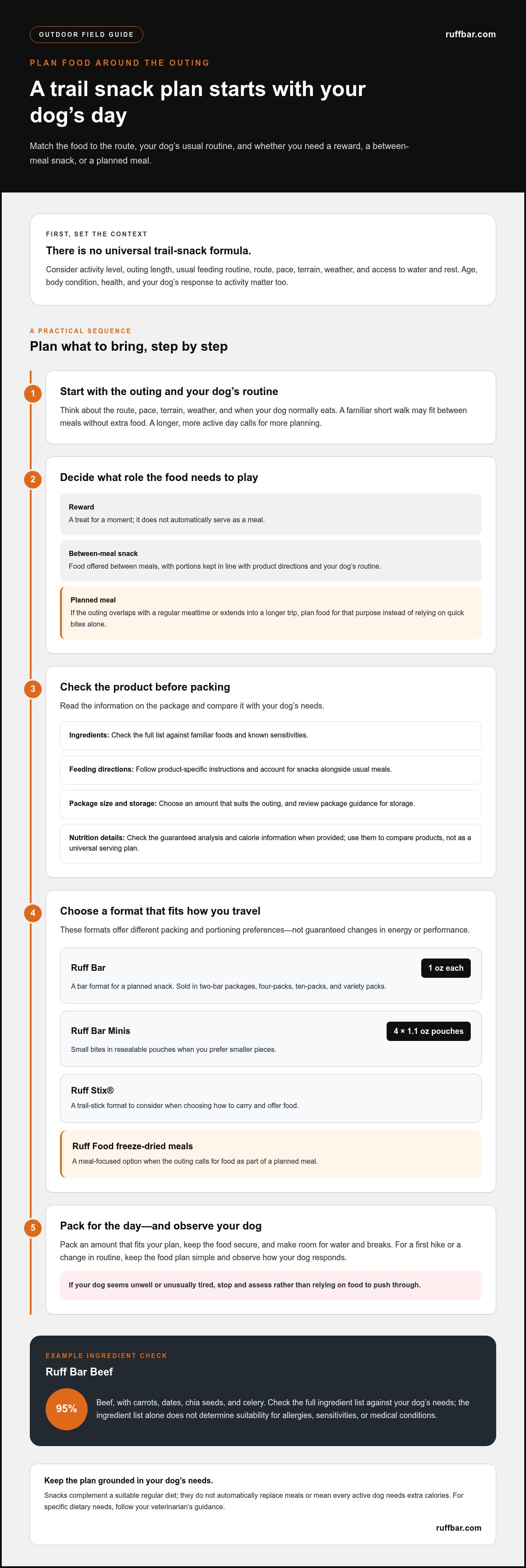
How to Pack and Offer Dog Snacks on the Trail
A solid trail plan is simple: prepare food before departure, offer it thoughtfully during the outing, then return to your dog’s regular routine afterward. The right amount depends on the activity, the product’s feeding directions, and your dog’s established meals. There’s no single portion formula for every dog energy snacks outdoor plan.
Before departure: portion, pack, and keep food secure
Decide what role the food will serve. Pack a snack for a planned pause, or bring your dog’s usual food if the trip overlaps with a regular meal. Use the product’s directions to guide portions rather than estimating from distance or activity alone. Keep packaging instructions handy, especially if the product needs particular storage conditions.
If you’re trying an unfamiliar snack or format, introduce it gradually before a demanding outing. That gives you a chance to see how your dog responds without making a long day on the trail the first test. Bring familiar food as a fallback, and pack water and a way to offer it. Secure food against moisture, heat, and damage as directed on the package.
During and after activity: offer food thoughtfully
Use a steady routine rather than offering food at every stop. At a planned break, offer a portion in line with the product directions and your dog’s usual feeding pattern. Pause for water and rest, then observe your dog before continuing. Changes in comfort or behavior matter more than sticking rigidly to a route or snack schedule.
Snacks don’t replace water, rest, or close observation. Keep water accessible and allow breaks that suit the conditions and your dog. If your dog seems uncomfortable, unusually tired, or unwilling to continue, stop and reassess. Don’t use another snack as a reason to push onward.
After the outing, return to your dog’s established meal routine and account for any snacks already offered. Follow the product’s directions for remaining food and storage. Keep a simple note of what you packed, when you offered it, and how your dog responded. That record can help you refine future outings without assuming the same plan will suit every route or day.
- Before: Check feeding and storage directions, plan around regular meals, and pack a sensible amount.
- During: Offer food as directed, provide water and rest, and watch your dog’s comfort.
- After: Resume the normal routine and consider how the plan worked for your dog.
If concerning symptoms occur, stop the outing and seek veterinary guidance. For your next trip, explore Ruff Bar snacks and meals for outdoor adventures as options to consider alongside your dog’s routine.
Ruff Bar Dog Energy Snacks for Your Next Outdoor Adventure
Once you’ve matched the food plan to the route and your dog’s routine, the format becomes easier to choose. Ruff Bar offers adventure-focused options across snack and meal categories: bars for portable snacks, Minis for small bites, Stix® in a trail-stick format, and freeze-dried backpacking meals for meal planning. Each has a different role. Follow the specific product’s feeding directions and use its ingredient and nutrition information to decide how it fits your dog’s day.
Choose a Ruff Bar format for the way your dog adventures
For a snack or reward during an outing, consider Ruff Bars or Ruff Bar Minis. The Minis are small-bite bars, and Salmon Ruff Bar Minis contain 95% wild-caught Alaskan salmon and provide omega-3 EPA/DHA. That detail applies to this specific product, not every bar or snack. For another example, Ruff Bar Beef is 95% beef with carrots, dates, chia seeds, and celery. Read each product’s ingredient list rather than assuming recipes are interchangeable.
Ruff Stix® are high-protein trail sticks. They may suit owners who prefer a stick-style snack to a bar or small bite. The format can help you organize what you carry, but it doesn’t promise a particular effect on stamina, recovery, or health. Use the product’s directions to guide how it fits with your dog’s regular food and other snacks you plan to bring.
Freeze-dried backpacking meals serve a different purpose. They’re a meal option, not simply a small treat, and can be considered when your outing overlaps with a regular mealtime. Ruff Food freeze-dried meals are available in Beef, Duck, Salmon, and Venison. Check the specific meal’s feeding directions and plan it around your dog’s established routine. Don’t assume a snack-format product can replace a meal.
Build an outdoor food plan that fits your dog
Think through the outing before choosing a format. A shorter trip may call for a snack or reward, while a longer adventure that spans mealtime may call for meal planning. Consider your dog’s familiar foods, the product’s directions, and how you’ll carry and store it. Keep the plan flexible enough to include water and rest, and avoid introducing an unfamiliar food for the first time on a demanding day.
For dog energy snacks outdoor adventures, choose based on use, not a promise of instant fuel. Compare Ruff Bar’s bars, Minis, Stix®, and freeze-dried meals to find a format that fits your plan. Explore Ruff Bar adventure nutrition for your next outing. Fuel the fun, stay prepared, and keep moving.
Plan Your Next Trail Day with Confidence
Make the next outing a chance to learn what works for your dog. Notice which familiar foods are easy to pack and offer, and how your dog responds to the day’s pace. That experience can help you fine-tune your dog energy snacks outdoor plan for future walks, hikes, and longer adventures.
Ruff Bar adventure nutrition is made in the USA. Explore bars, Minis, Stix®, and freeze-dried backpacking meals, then choose a format that fits your dog’s routine and the kind of outing ahead. Keep the plan practical and your dog’s needs at the center.
Explore Ruff Bar adventure nutrition and get ready for the next trail day. Pack with purpose, make room for breaks, and head out together.
Frequently Asked Questions
Do dogs need energy snacks for a hike?
No, a snack isn’t automatically necessary for every dog or hike. Consider how long you’ll be out, how active the route is, and whether the trip overlaps with your dog’s usual mealtime. Follow the food’s directions, and plan regular meals, water, and breaks. If your dog has a health condition or special diet, ask your veterinarian before changing their feeding routine.
Can I give my dog a snack during exercise?
Yes, if a snack fits your dog’s routine and the product’s feeding directions, but exercise doesn’t mean every dog needs food. Don’t count on a snack to improve performance. For example, on a familiar walk that falls between meals, you may not need to offer one at all. Keep water available, pause for rest, and stop if your dog seems unwell. Ask your veterinarian for advice specific to your dog.
How much food should I pack for my dog on a day hike?
There’s no single amount that suits every dog or route. Start with your dog’s regular feeding needs, then account for how long you’ll be out and the package directions. For a hike that overlaps with mealtime, plan familiar food rather than trying to make treats do the job of a meal. This practical approach to dog energy snacks outdoor planning keeps the food choice tied to your dog’s routine.
Are dog energy bars the same as complete dog food?
Not necessarily. A bar may be intended as a treat or snack, while a meal product serves a different purpose. Read the label and feeding directions to see how that specific food is meant to be used. Don’t assume a snack provides complete daily nutrition unless its packaging explicitly says so. If you’re planning a longer trip, distinguish food for rewards from food intended for your dog’s meal.
Can I bring a new dog snack on a long trip?
Introduce an unfamiliar snack before a demanding or remote trip, not for the first time on the trail. Offer it according to its directions and observe your dog’s response during an ordinary day. Keep familiar food available, and avoid testing several new foods at once. If your dog has dietary restrictions or a medical concern, ask your veterinarian whether the new food fits their needs.
What should I do if my dog refuses a trail snack?
Don’t force your dog to eat. Pause, offer water, and consider whether the timing, conditions, or food itself could explain their lack of interest. Watch your dog’s behavior and comfort rather than offering more treats to persuade them. If refusal occurs alongside concerning symptoms, or continues after the outing, contact your veterinarian for guidance.
How should I store dog snacks in a backpack?
Follow the storage instructions for the specific product. Keep food secure and protected from moisture, direct heat, and damage while you travel. Reseal a pouch if its packaging allows, and don’t leave food exposed around wildlife. Freeze-dried meals may have different preparation and storage instructions from snack bars, so use the meal’s own guidance rather than applying one product’s directions to another.