
Can Dogs Eat Greek Yogurt? Performance Fuel vs. Digestive Risks (2026 Guide)
Most dog owners treat Greek yogurt like a kitchen scrap. For the high-performance canine, it is a precision-engineered probiotic engine. You push your dog to the limit on the trail. The last thing you want is unpredictable diarrhea or a sudden energy crash. It is frustrating to watch a working dog lose weight because they cannot maintain calorie density during high-intensity weeks. You have likely wondered, can dogs eat greek yogurt without risking a digestive meltdown?
The answer is yes. You need a strategic tool, not a random snack. We understand the need for gut stability during peak exertion. This guide shows you how to safely use Greek yogurt to fuel gut health and speed up recovery. We will outline a clear feeding protocol that avoids GI distress. You will learn practical ways to combine this dairy powerhouse with performance nutrition, like rehydrating Ruff Food Freeze Dried Raw meals for maximum impact. It is time to turn a human staple into a functional advantage for your partner. Get the facts on probiotic strains and serving sizes to keep your dog moving forward.
Key Takeaways
- Identify why the high protein-to-calorie ratio of Greek yogurt makes it a superior fuel source for active dogs compared to standard dairy.
- Learn the definitive answer to can dogs eat greek yogurt and how the straining process removes the lactose that triggers digestive distress.
- Discover how to use live probiotic cultures as a strategic tool to stabilize your dog's gut during high-stress training or remote travel.
- Establish a safe loading protocol and "test run" method to integrate new nutrients without risking performance-killing GI issues.
- Find out how to combine Greek yogurt with Ruff Food Freeze Dried Raw meals to create a high-density recovery bowl for your partner.
Is Greek Yogurt Safe for Dogs? The High-Performance Verdict
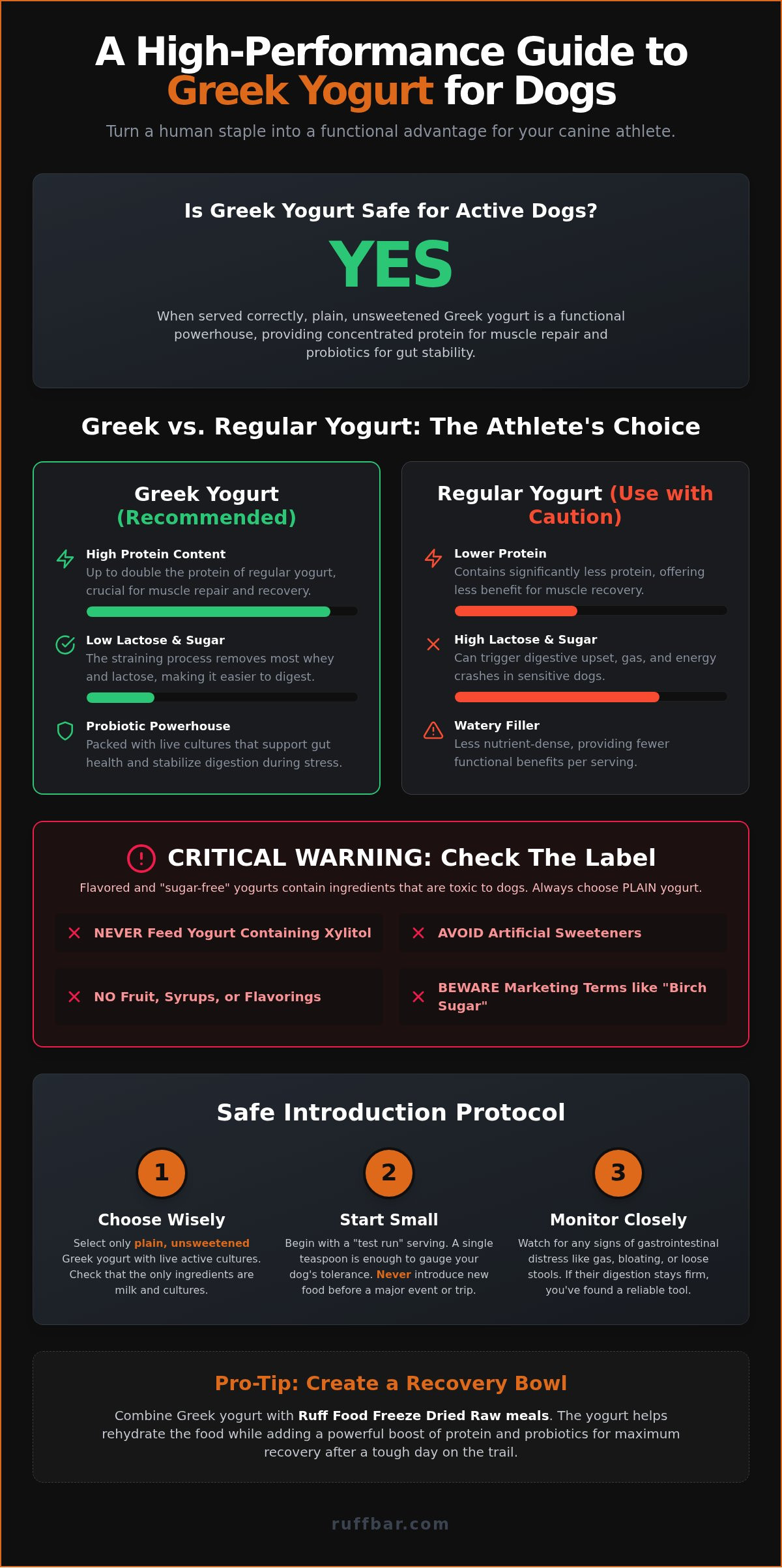
Plain, unsweetened Greek yogurt is safe for most dogs. It's a functional powerhouse. Most guides treat dairy as a risky indulgence; we view it through the lens of performance. When you're deep in the backcountry, every gram of nutrition counts. The question isn't just can dogs eat greek yogurt, but how they can use it to sustain high output. Active dogs need a superior protein-to-calorie ratio. Greek yogurt delivers this by concentrating nutrients while removing excess moisture and sugar.
The "Ruff" standard demands more than basic safety. We look for ingredients that serve a purpose. Greek yogurt provides concentrated protein for muscle repair and probiotics for gut stability. It's an ideal DIY topper to complement your Ruff Bar Pure Blend Toppers. If your dog has a high-energy lifestyle, this dairy tool can help maintain weight and vitality when standard kibble falls short.
The Biology of Canine Dairy Digestion
The straining process is what separates Greek yogurt from the rest of the dairy aisle. During production, the liquid whey is removed. This process significantly reduces the amount of lactose, making it much easier on the canine GI tract. Yogurt that has been fermented longer often contains even fewer sugars, as the live cultures consume the lactose during the process. This makes it a strategic choice for dogs that struggle with standard milk products.
Lactose intolerance in dogs stems from a deficiency in lactase, the specific enzyme required to break down milk sugars into absorbable nutrients. Even with the reduced lactose in Greek varieties, you must monitor your dog. Watch for gas, bloating, or loose stools during your first test feeding. If their digestion stays firm, you've found a reliable recovery tool. It's an excellent way to rehydrate Ruff Food Freeze Dried Raw meals, adding a creamy texture and a probiotic boost to their trail-side dinner.
Xylitol and Additives: The Hidden Killers
Plain is the only acceptable label for a performance dog. No fruit. No syrups. No shortcuts. Many commercial yogurts are loaded with "fruit-on-the-bottom" mixtures that are essentially sugar bombs. These cause insulin spikes and digestive crashes. Even worse are the "light" or "sugar-free" versions. These often contain artificial sweeteners that are lethal to dogs.
You must identify "Birch Sugar" on the label. This is a common marketing name for Xylitol. It is a potent neurotoxin for canines. Even small amounts can cause rapid liver failure and seizures. Always check the ingredient list for anything other than milk and live cultures. If the tub mentions flavoring or "natural sweeteners," leave it on the shelf. Your dog's health depends on the purity of their fuel.
Greek vs. Regular Yogurt: Why Active Dogs Need the Strain
Not all dairy is created equal. Standard yogurt is often a watery, sugar-heavy filler. Greek yogurt is a concentrated nutrient delivery system. The difference lies in the strain. By removing the liquid whey, producers create a product that is denser, creamier, and packed with double the protein of its regular counterpart. When asking can dogs eat greek yogurt, the answer is rooted in this nutritional efficiency. You want maximum recovery with minimum digestive baggage. Standard yogurt can't compete with the functional density of a well-strained Greek tub.
Regular yogurt contains higher levels of lactose and natural sugars. These are energy killers. They lead to insulin spikes followed by the dreaded trail-side crash. Greek yogurt minimizes these risks. It provides a stable, slow-burn energy source that keeps your dog focused and fueled. You should consult with a veterinarian to confirm if your dog's specific health profile allows for dairy, but for the majority of active partners, the Greek strain is the gold standard. It offers the consistency and satiety required for dogs with high caloric demands.
Macro-Nutrient Breakdown for K9 Athletes
Protein is the primary driver here. It provides the essential amino acids required for muscle repair after a grueling trek. Active dogs also need a balanced ratio of calcium and phosphorus to support bone density during high-impact activities. You can tailor the fat content to your dog's specific output. Use non-fat varieties for weight management or full-fat options to increase caloric density during winter expeditions. This flexibility allows you to customize their bowl based on the terrain and the temperature.
The Straining Process Explained
The secret is in the repetition. Multiple strainings remove the bulk of the moisture and carbohydrates. This creates a functional food that sits heavier in the stomach, providing better satiety for working dogs. This concentration mirrors the logic behind The Science of High-Protein Dog Energy Bars. You're looking for high-density fuel that doesn't weigh the system down. By removing the excess, you focus the nutrition on what actually drives performance.
Consistency matters in the field. The thick texture of Greek yogurt makes it the perfect vehicle for supplements or rehydrating meals. It sticks to food and coats every bite, ensuring every bit of nutrition is consumed rather than left at the bottom of the bowl. It’s a natural partner for Ruff Bar Pure Blend Toppers, adding a probiotic punch to an already powerful meal. This combination ensures your dog stays fueled, focused, and ready for the next mile.
Probiotic Power: Supporting the K9 Athlete’s Gut Health
Intense activity demands more than strong limbs. It requires a resilient internal engine. When you push your partner through miles of rugged terrain, their microbiome feels the pressure. Physical exertion, environmental travel, and high-stress training sessions can disrupt the delicate balance of a dog's gut. This is where the question of can dogs eat greek yogurt moves from curiosity to strategy. You aren't just looking for a snack. You're deploying a probiotic tool to keep their gut operational under fire.
A dog's immune system is anchored in their digestive tract. In fact, approximately 70% of their total immune function resides in the gut. If the microbiome fails, performance follows. Live and active cultures found in Greek yogurt, specifically strains like Lactobacillus, act as a defensive line. They crowd out harmful bacteria and maintain the integrity of the intestinal wall. According to Purina, these beneficial bacteria contribute to a healthy intestinal environment, which is vital for any dog facing the rigors of the trail.
Managing Training Stress through Nutrition
High-intensity training triggers the release of cortisol. In a performance setting, elevated cortisol can lead to a "digestive shutdown," where blood flow is diverted from the gut to the muscles. This often results in "trail diarrhea" or poor nutrient absorption. Probiotics combat this by stabilizing the intestinal flora during these spikes. The efficiency with which an active dog extracts fuel from their diet is directly dictated by the health and balance of their intestinal flora. Keeping the gut calm means keeping the energy high.
Yogurt as a Digestive Aid for Sensitive Stomachs
Switching between protein sources can be a gamble for sensitive stomachs. If you're moving from a beef-based meal to a duck-based fuel, the transition can be rocky. Greek yogurt acts as a buffer. It provides the microbial support needed to process new ingredients without the messy side effects. It’s an easy, cost-effective way to manage transitions between DIY Dog Food Toppers for Energy and your standard base diet.
While professional supplements offer high-potency concentrations, Greek yogurt provides a whole-food approach to daily maintenance. Use it as a consistent baseline for gut health. If your dog faces chronic GI issues, a specialized K9 probiotic may be necessary. For the healthy athlete, a dollop of plain Greek yogurt is often the only tool required to prevent performance-killing digestive stalls. It’s about maintaining a rugged, reliable system that can handle whatever the adventure throws at it.
How to Feed Greek Yogurt to Your Dog: A Trailside Guide
Precision feeding is the difference between a peak performance and a trail-side emergency. You've confirmed that can dogs eat greek yogurt, but the execution is what matters. In a high-stakes environment, you cannot afford a digestive shutdown. You must calculate the load based on energy expenditure. Follow the 10% rule: toppers and treats should never exceed a tenth of your dog's daily caloric intake. For a working dog burning thousands of calories on a mountain pass, a few well-timed dollops provide essential recovery blocks without overtaxing their system.
Logistics are the second hurdle. Fresh dairy is a liability in the backcountry if handled poorly. Use small, double-sealed containers for day trips. Keep them buried deep in your pack, insulated by other gear, to maintain a stable temperature. If you're on a multi-day mission, prioritize using yogurt within the first 24 hours. This ensures the live cultures remain active and the fats don't turn. It's about maintaining the integrity of the fuel from the fridge to the trailhead.
Step-by-Step: The Safe Introduction Protocol
Never introduce new fuel on the day of a big mission. Start the "test run" at home during a rest period. Follow the teaspoon rule: one single teaspoon for the first 48 hours. This window allows you to monitor the biological response without risking a blowout. You're looking for firm, consistent output. If you see loose stools or excessive gas, their system isn't ready for this specific dairy load. If they pass the test, gradually scale the dose over five days until you reach your target serving size.
Trail Hacks for Active Handlers
Maximize the impact of your nutrition with strategic combinations. During summer heat, use the Frozen Kong Hack. Stuff a toy with Greek yogurt and freeze it overnight. It provides cooling relief and a slow-release protein boost during mid-day breaks. For dinner, use yogurt as a high-density rehydration agent. Mixing it with Ruff Food Freeze Dried Raw meals creates a calorie-dense slurry that dogs can't resist.
You can also combine yogurt with Apples for Dogs to create a fiber-and-probiotic powerhouse. The pectin in the apples works with the yogurt's cultures to sweep the digestive tract and firm up stools. This rugged approach to nutrition ensures your partner stays fueled and focused. Elevate your dog's bowl today with Ruff Bar Functional Nutrition Toppers for uncompromising trail performance.
Beyond the Bowl: Integrating Probiotics with Ruff Bar Nutrition
A performance diet is an ecosystem. No single ingredient carries the load. Greek yogurt is a strategic component that thrives within a grain-free, high-protein framework. It provides the microbial foundation your dog needs to process complex animal proteins efficiently. When you ask can dogs eat greek yogurt, you are really asking how to optimize their internal machinery. We believe in the 'Pure Blend' philosophy. This means keeping human-grade, whole ingredients at the center of the bowl. No fillers. No shortcuts. Just clean fuel for high-output partners.
The Ruff Bar commitment is built on integrity. We use USDA-graded grass-fed meats and organic ingredients because your dog’s vitality depends on the quality of their source. Greek yogurt mirrors this standard. It is a minimally processed dairy tool that provides functional excellence. It isn't just a topper; it is a catalyst for better nutrient absorption. By stabilizing the gut, you ensure every gram of protein in their main meal goes toward muscle repair and endurance.
The Ultimate Recovery Bowl
Maximize your dog's post-trail window with a precision-engineered recovery bowl. Start with a base of Ruff Food Freeze Dried Raw. Add a generous dollop of plain Greek yogurt. Finish with a splash of warm bone broth. This combination accelerates muscle repair after a high-mileage day by providing immediate hydration, concentrated amino acids, and a probiotic surge. The thick consistency of the yogurt also makes it a perfect binder for Functional Nutrition Toppers, ensuring that supplements don't sift to the bottom of the bowl.
This slurry is easy to digest when your dog is exhausted. It bypasses the energy-intensive process of breaking down hard kibble, allowing the body to focus entirely on recovery. It is the gold standard for backcountry fueling. If your dog is a high-stakes athlete facing extreme environments, yogurt alone might not meet their needs. In those cases, transitioning to specialized Performance Dog Food Supplements is the next logical step to maintain their competitive edge.
The Verdict on Human Foods for Athletes
Greek yogurt is a top-tier safe human food for dogs. It passes the test for protein density, probiotic value, and digestive safety. However, you must guard against 'lifestyle creep.' Do not let a variety of human snacks replace the specialized nutrition of a canine-specific diet. Use yogurt as a tool, not a replacement. Stick to the protocols. Monitor the results. Keep the focus on what drives your dog forward. Your role as a handler is simple: Prepare. Fuel. Explore. The trail is waiting, and your dog is ready to conquer it.
Fuel the Gut. Dominate the Trail.
Peak performance is built on a foundation of gut stability and muscle recovery. You now know that can dogs eat greek yogurt as a strategic addition to their high-output lifestyle. This concentrated dairy tool provides the probiotic engine needed to navigate high-stress environments. It offers double the protein of standard yogurt while stripping away the lactose that causes digestive failure. By integrating plain Greek yogurt with specialized nutrition, you create a resilient partner capable of tackling any terrain. Stability leads to endurance.
Don't settle for average fuel. We prioritize uncompromising standards with USDA-graded grass-fed meats and grain-free, filler-free formulas. Every bar and topper is hand-crafted in the USA to ensure your dog receives the highest quality energy available. Excellence isn't an accident; it's a result of preparation. Fuel your dog's next adventure with Ruff Bar's high-protein nutrition. Your partner deserves nutrition that works as hard as they do. Prepare the bowl. Load the pack. Conquer the next mile together.
Performance Nutrition FAQs
Can Greek yogurt help with my dog's diarrhea?
Greek yogurt can stabilize a dog's gut during mild digestive upset by introducing beneficial bacteria. These live cultures crowd out harmful pathogens and help firm up loose stools. However, if the diarrhea is caused by a dairy sensitivity, adding yogurt will worsen the condition. Use it as a recovery tool only after you've confirmed your dog's tolerance during rest periods.
How much Greek yogurt can I give my 50lb dog?
A 50lb dog can safely consume one to two tablespoons of plain Greek yogurt per day. This quantity fits within the standard 10% treat rule for a dog with moderate energy expenditure. If your dog is working high-intensity miles, you can scale this slightly to increase caloric density. Always start with a single teaspoon to verify their biological response before reaching a full serving.
Is Greek yogurt better than regular yogurt for dogs?
Greek yogurt is superior to regular yogurt because it contains double the protein and significantly less lactose. The straining process removes the liquid whey, concentrating the nutrients while lowering the sugar content. This makes it a more efficient fuel source for active partners. When asking can dogs eat greek yogurt, prioritize the Greek variety to avoid the energy crashes associated with standard dairy products.
Can puppies eat Greek yogurt for growth?
Puppies can eat small amounts of plain Greek yogurt to support bone development and gut health. The calcium and phosphorus provide essential building blocks for their growing frames. Introduce it slowly, starting with a half-teaspoon, to ensure their developing systems can process the protein load. It serves as a high-value training reward that builds a resilient microbiome from a young age.
What should I do if my dog eats flavored yogurt with Xylitol?
Contact an emergency veterinarian immediately if your dog consumes yogurt containing Xylitol or "birch sugar." This substance is highly toxic and causes rapid insulin release, leading to liver failure and seizures. Do not wait for symptoms to appear. Purity is non-negotiable. Always verify that can dogs eat greek yogurt safely only applies to plain, unsweetened varieties with zero artificial additives.
Can I use Greek yogurt to hide medication or supplements?
The thick, creamy consistency of Greek yogurt makes it an ideal vehicle for masking pills or powdered supplements. It coats the medication, making it difficult for the dog to separate and spit out the dose. This ensures full compliance with recovery protocols. It is a rugged, practical solution for handlers who need to administer supplements in the field without the struggle of dry tablets.
Does Greek yogurt help with dog yeast infections?
Greek yogurt supports the overall microbiome, which can help manage the systemic balance of yeast in the body. Active cultures compete with yeast for resources in the gut, maintaining a healthy equilibrium. While it is a helpful preventative tool, it is not a primary medical cure for active infections. Use it to maintain a rugged internal defense system rather than treating a localized fungal breakout.