
Can Dogs Eat Apples? High-Octane Fuel vs. Trailside Risks (2026 Guide)
Your dog is more than a pet. They're a partner in exploration. An athlete on the trail. You need fuel that matches their drive. You've likely asked, can dogs eat apples without risking a digestive meltdown miles from the trailhead? The answer is a definitive yes. But safety requires precision. Apples are high-performance equipment for the gut. They provide the hydration, the fiber, and the energy K9 athletes need to sustain propulsion.
We understand the hesitation. You want peak vitality. You fear the toxicity of seeds. You worry about the sugar crash from overfeeding. This 2026 guide eliminates that uncertainty. Discover how to safely use apples as performance-boosting fuel while avoiding critical toxic pitfalls. We'll break down the benefits of malic acid for energy, the 10% caloric rule for treats, and essential trail-ready preparation tips. Learn to identify the risks of cyanide in seeds and the danger of core blockages. It's time to turn a simple fruit into a strategic nutritional asset for your dog's endurance.
Key Takeaways
- Discover the definitive answer to can dogs eat apples and how to utilize them as high-octane fuel for active dogs.
- Learn how pectin and Vitamin C stabilize digestive function and support rapid recovery during grueling outdoor expeditions.
- Eliminate safety risks by mastering core removal and understanding the cumulative toxicity of cyanide found in apple seeds.
- Simplify trail logistics with field-ready preparation techniques that prevent oxidation and ensure efficient delivery of nutrients.
- Bridge the nutritional gap by pairing fruit with high-protein anchors to sustain muscle repair and prevent energy depletion.
Can Dogs Eat Apples? The Performance Verdict
Stop settling for "safe." Demand "effective." When you're navigating a steep ascent or tracking through dense brush, your dog needs fuel that matches their drive. You need to know: can dogs eat apples without compromising their performance? The short answer is a definitive yes. But safety requires precision. You don't just feed an apple; you deploy it as a functional carbohydrate source designed for the K9 athlete.
Apples are more than a low-calorie snack. They are nutrient-dense tools. They provide a strategic blend of hydration, vitamins, and essential dietary fiber. For a sedentary dog, an apple is a treat. For an active dog, it is a metabolic asset. It provides the quick-burn energy needed for sprints and the hydration required to maintain stamina. However, preparation is non-negotiable. You must remove the stem, the core, and every single seed before the fruit ever hits their bowl.
Safe Preparation Basics
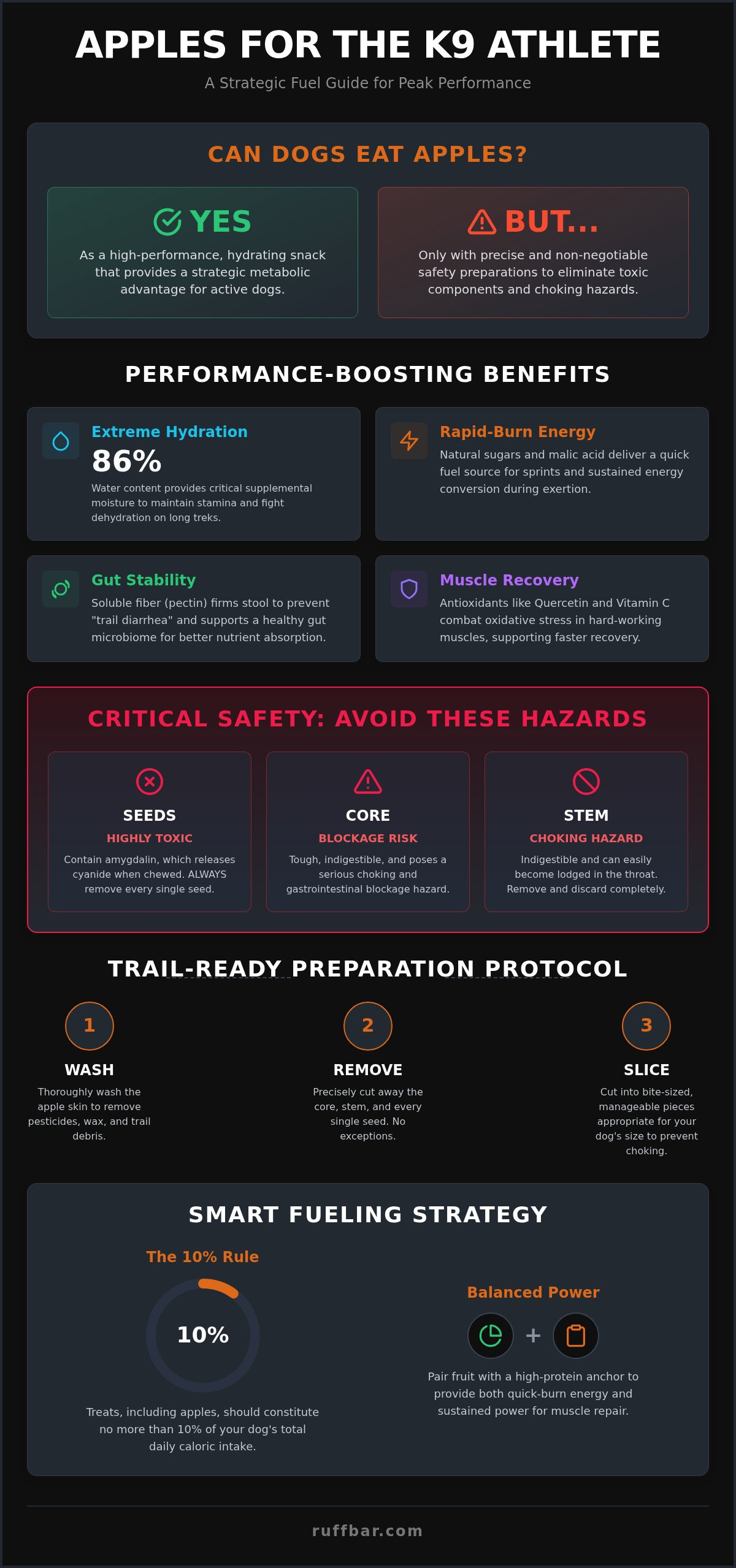
Integrity starts with preparation. Wash the fruit thoroughly. You must remove the synthetic wax and pesticide residues that cling to the skin. Sourcing organic is the high-standard choice, but cleaning is always mandatory. Slice the apple into manageable, bite-sized pieces. This prevents choking during high-energy play or rapid consumption on the trail. Discard the core entirely. It is a tough, indigestible mass that presents a significant gastrointestinal blockage risk. Finally, eliminate the seeds. They contain amygdalin, which can lead to the release of cyanide in apple seeds when chewed. Precision in prep ensures only the benefits reach your dog's system.
Why Active Dogs Benefit Most
The K9 athlete operates on a different level. They require efficiency. Apples deliver a massive hydration boost because they are approximately 86% water. This supplemental moisture is critical when miles of trail lie ahead. The natural sugars, including fructose and glucose, provide a rapid fuel source for explosive propulsion and quick recovery. When you're asking, can dogs eat apples, you're really asking about their ability to sustain power. Malic acid acts as a foundational catalyst in the Krebs cycle, helping your dog convert nutrients into usable cellular energy during sustained exertion. This isn't just food. It's equipment for endurance.
The Nutritional Profile: Fueling the K9 Athlete
High-intensity movement demands high-standard nutrition. You don't just feed. You fuel. When asking can dogs eat apples, don't just look at calories. Look at the micronutrients. The nutritional profile of an apple is a blueprint for endurance. It offers a low-fat, high-reward crunch without the heavy caloric load of processed junk treats. This is functional nutrition for the dog that never quits.
Quercetin is the athlete's edge. This potent antioxidant helps combat oxidative stress in hard-working muscles. When your dog is pushing through difficult terrain, their body generates free radicals. Quercetin neutralizes them. This supports faster recovery and sustained propulsion. It's the difference between a dog that's done by noon and one that's ready for the second half of the climb.
Fiber and Digestive Health
Pectin is the MVP of canine gut health. It is a soluble fiber that regulates transitions. For the active dog, "trail diarrhea" is a performance killer. Pectin firms up stools and keeps the digestive tract stable during stressful environmental shifts. It provides a sense of fullness without the bloat of grain-heavy fillers.
When you're asking can dogs eat apples, you must look at the microbiome. A medium apple contains approximately 4.5 grams of fiber. This provides prebiotic effects that support healthy bacteria. Better gut health leads to better nutrient absorption. This is essential for dogs switching between home meals and rugged backpacking fuel. A stable gut means a focused dog.
Vitamins and Micronutrients
Vitamin C is a powerhouse for recovery. It supports immune function after grueling trail miles. Vitamin A is critical for vision and skin health during outdoor exploration. Potassium aids in muscle contraction and nerve signaling. These aren't just details. They are the building blocks of vitality. They keep the heart pumping and the legs moving.
These micronutrients complement a high-protein diet. They work best when paired with a meat-based anchor like Ruff Stix® Beef. Meat provides the amino acids required for muscle repair. The apple provides the metabolic support. This combination creates a balanced, high-performance engine. You need the protein for the build and the fruit for the burn.
Experts often discuss the Benefits and Risks of Apples for Dogs in the context of these micronutrients. Understanding this balance is key to safe feeding protocols. You provide the protein anchor. You use the fruit for the micronutrient boost. If you're looking to optimize your dog's trail performance, consider upgrading their functional nutrition toppers today. This is the no-compromise way to fuel adventure.
Avoiding the Pitfalls: Seeds, Cores, and Cyanide
Performance is about precision. You don't leave your gear to chance. You shouldn't leave your dog's safety to chance either. While the fruit provides the hydration and energy discussed earlier, the architecture of the apple contains specific hazards. You must navigate the seeds, the core, and the chemical load to keep your partner in the lead. When asking can dogs eat apples, the answer is only "yes" if you control every variable.
The seeds are the primary threat. They contain amygdalin. When chewed, this compound releases cyanide into the system. It is a potent toxin. A single seed likely won't trigger a crisis for a large dog. But toxicity is cumulative. Frequent ingestion leads to systemic failure over time. This is especially critical for smaller breeds or frequent hikers who use apples as a consistent trail snack. Every seed must be removed.
The core is a physical barrier. It is tough. It is fibrous. It is a leading cause of emergency gastrointestinal obstructions. A dog in a high-energy state might gulp a core whole. This leads to a blockage that requires surgical intervention. Don't risk it. Preparation is your best defense against an unscheduled trip to the emergency vet.
The Cyanide Myth vs. Reality
Some argue that seed counts are too low to matter. We reject that shortcut. Why introduce a known toxin into a high-performance system? Understanding how to safely feed apples means eliminating every seed before the first bite. Watch for the warning signs of cyanide poisoning: bright red gums, dilated pupils, and labored breathing. This type of vigilance is just as important as knowing is garlic bad for dogs or identifying other common pantry hazards. If you see these symptoms on the trail, move fast.
Organic vs. Conventional Sourcing
Purity matters. Conventional apples consistently rank high on the "Dirty Dozen" list. They carry significant pesticide residues. These chemicals are designed to kill. They have no place in your dog's endurance plan. Active dogs need clean fuel. They need ingredients that support, not hinder, their biological functions. Pesticide exposure can cause subtle, long-term damage to an athlete's vitality.
Prioritize organic apples. This isn't about being "fancy." It's about integrity. If an ingredient isn't pure enough for human consumption, it isn't fit for your partner. At Ruff Bar, we build our products on this "no-compromise" attitude. We use USDA-graded meats and organic ingredients because the mission requires excellence. Your trail snacks should meet that same standard. When you ask can dogs eat apples, the answer depends on the quality of the source. Choose clean. Prep right. Stay moving.
Trail-Ready: How to Serve Apples on the Move
Logistics matter. Preparation is equipment maintenance. When you're packing your gear, the delivery of nutrition must be as efficient as the fuel itself. You've already confirmed that can dogs eat apples safely; now you must execute the delivery. Efficiency on the trail starts in your kitchen. Don't just toss a whole fruit into your pack. Prep it for rapid deployment.
Slice and core at home. This reduces weight. This eliminates waste. It ensures your dog isn't tempted to gulp down a hazardous core during a high-energy break. To maintain integrity, use a splash of lemon juice. This oxidation control keeps slices fresh and crisp in your pack for hours. It prevents the fruit from turning into a bruised, unappealing mess by the time you reach the summit.
Avoid processed shortcuts. Never substitute fresh fruit with human-grade applesauce. These products often contain added sugars, corn syrup, or dangerous sweeteners like xylitol. Xylitol is a lethal toxin for dogs. Stick to the raw, organic source. Pure fruit provides the clean energy your partner needs. Anything else is just filler that slows them down.
Fresh Slices vs. Dehydrated Options
Choose your format based on the mission. Fresh apples deliver critical hydration because they are 86% water. This is your go-to for day hikes and high-heat environments. For long-distance backpacking, weight is the enemy. Dehydrated apples provide concentrated energy in a lightweight package. However, you must verify the source. Ensure they are free from sulfur dioxide and artificial preservatives. Purity is non-negotiable for endurance.
Portion Control for Training
Discipline defines the athlete. Apples are a high-value reward, but they are not a meal replacement. Adhere to the 10% rule. Treats should never exceed 10% of your dog's total daily caloric intake. Use small cubes as tactical rewards for trail commands or as a "cool down" snack to help lower body temperature after a sprint. The natural sugars provide the spark, but protein provides the power.
Balance these fruit sugars with a high-density protein anchor. Pair your apple slices with freeze dried treats for dogs to ensure muscle repair keeps pace with energy expenditure. This combination sustains propulsion over long distances. If you're ready to optimize your dog's trail performance with the highest standard of nutrition, shop our high-performance K9 fuel today. Don't compromise on their vitality.
Beyond the Fruit: Clean Protein for Sustained Power
Apples are the spark. Protein is the combustion. You've confirmed the verdict: can dogs eat apples safely as a tactical fuel source. But a spark without a fuel load won't sustain a fire. Apples provide the hydration and the quick-burn fructose needed for immediate energy. They do not provide the structural integrity required for endurance. For the K9 athlete, fruit is the accessory. Meat is the engine. You must anchor their diet in high-density protein to ensure they don't just start the journey, but finish it with power.
The protein gap is a biological reality. Apples lack the essential amino acids required for muscle repair. When your dog is navigating rugged terrain, their muscles undergo constant micro-trauma. Without a steady supply of animal-based protein, the body cannot rebuild. It begins to deplete its own stores. This leads to fatigue, slower recovery times, and decreased propulsion. Sustained endurance relies on the synergy between functional carbohydrates and clean, grass-fed protein. This is the no-compromise standard for the modern adventurer.
Why Protein is the Primary Fuel
Dogs are metabolic specialists. They are biologically designed to thrive on animal fats and proteins. While an apple provides a strategic hydration boost, products like Ruff Stix® Bison Pork provide the caloric density needed for high-stakes movement. Protein prevents muscle catabolism during long treks by supplying the nitrogen and amino acids necessary to maintain lean tissue under stress. You provide the fruit for the micronutrients. You provide the meat for the mission. This balance ensures your dog remains an active partner rather than a lagging companion.
The Ruff Bar Performance Edge
Integrity is found in the ingredients. We use USDA-graded meats to provide the biological foundation for every adventure. We reject the shortcuts. We reject the synthetic binders. Cheap fillers and grains cause energy spikes followed by devastating crashes. Our grain-free formulas ensure steady blood sugar levels for consistent output on the trail. When you're asking can dogs eat apples, remember that the fruit is only one part of the kit. It works best when paired with the highest standard of animal nutrition.
Peak performance requires a tiered approach to fueling. You need the fiber for the gut. You need the water for hydration. Most importantly, you need the protein for the build. Check out our high protein dog energy bars for peak performance on your next expedition. Real meat. Real ingredients. Real adventure. Don't just feed your dog. Fuel the athlete within them.
Master the Trail with Precision Nutrition
You've moved beyond the basic question of can dogs eat apples. You're now deploying fruit as a tactical asset. Safety is the foundation. Performance is the goal. By removing seeds and cores, you eliminate the risks. You capture the hydration benefits of pectin and malic acid. This isn't just a snack. It's equipment for the gut.
Integrity doesn't stop at the fruit. True endurance requires a protein anchor that won't fail under pressure. Pair your trail prep with a nutritional system designed specifically for K9 athletes. Your dog deserves fuel as rugged as the terrain you conquer together. Don't settle for grocery store shortcuts when the mission demands excellence. Purity. Strength. Natural origin.
Fuel your dog's next adventure with Ruff Bar high-protein nutrition. Our formulas rely on USDA-graded grass-fed meats. We use no synthetic fillers or binders. This is adventure-tested performance for the partner who never quits. Keep exploring. The wilderness is your arena. Stay moving.
Frequently Asked Questions
Can dogs eat apple skin or is it dangerous?
Apple skin is safe and serves as a concentrated source of fiber and antioxidants for those wondering can dogs eat apples with the peel intact. The skin contains the majority of the fruit's quercetin. This flavonoid helps combat oxidative stress during intense trail runs. Always wash the skin thoroughly to remove synthetic waxes and pesticide residues. Prioritize organic fruit to ensure the fuel you provide is clean and high-standard.
How many apple slices can I give my dog per day?
Adhere to the 10% rule for daily treats to prevent metabolic imbalance when considering can dogs eat apples as a frequent snack. For a medium-sized dog, one or two slices is the performance standard. A single apple contains between 19 and 25 grams of sugar. Excessive fructose leads to energy crashes and unnecessary digestive fermentation. Keep portions small to maintain steady propulsion and avoid caloric overload.
What should I do if my dog eats an apple core?
Monitor your dog closely for signs of gastrointestinal obstruction if they swallow an apple core. Watch for acute vomiting. Watch for abdominal pain. Watch for sudden lethargy. The core is a dense, indigestible mass that can become lodged in the small intestine or esophagus. If your dog doesn't pass the core or shows signs of distress, contact a veterinarian immediately. Professional intervention is safer than waiting for a blockage to clear.
Are green apples better for dogs than red apples?
Green apples typically offer a lower sugar profile and higher acidity compared to red varieties. This makes them an excellent choice for dogs that need quick energy without a massive fructose spike. Red apples provide a sweeter taste but contain more sugar per gram. Both are effective functional carbohydrates for the K9 athlete. Choose the variety that best fits your dog's current activity level and individual digestive tolerance.
Can puppies eat apples or is it too much fiber?
Puppies can eat apples safely in micro-portions once they have fully transitioned to solid food. Their developing digestive tracts are sensitive to high fiber loads. Start with a single, thin slice to test their reaction. Monitor their stool consistency for 24 hours. If they tolerate the fiber well, apples can become a healthy training reward. Always remove the seeds and core to prevent choking and potential toxicity.
Is apple seeds' cyanide content really that dangerous for large dogs?
Cumulative toxicity is the primary danger associated with the cyanide content in apple seeds. A large dog would need to chew and ingest a significant number of seeds to suffer acute poisoning in one sitting. However, cyanide can build up in the system over time with frequent exposure. Amygdalin releases the toxin only when the seed is crushed. Remove every seed to maintain a no-compromise safety standard for your partner.
Can dogs eat applesauce if it is unsweetened?
Unsweetened applesauce is acceptable if it is completely free from additives, spices, and xylitol. Xylitol is a common sugar substitute that is highly lethal to dogs. Always read the ingredient list before serving any processed product. While sauce is convenient, whole apple slices are superior for active dogs. They provide the mechanical crunch and structural fiber that support dental health and digestive stability during long outdoor treks.
Why does my dog get diarrhea after eating apples?
Diarrhea usually stems from an overload of fiber or a rapid influx of sugar into the digestive tract. Pectin is a powerful soluble fiber found in apples. In large quantities, it ferments quickly in the colon and pulls water into the gut. This causes loose stools, gas, and abdominal discomfort. If this occurs, reduce the portion size immediately. Balance the fruit with a high-protein anchor to stabilize digestion and slow fermentation.