
Benefits of Duck Meat for Dogs, From Nutrients to Allergies
Duck can be an alternative protein for some dogs with food sensitivities, but it isn’t automatically allergy-safe. The benefits of duck meat for dogs include complete protein, omega-3 and omega-6 fatty acids, B vitamins, and iron. Whether it suits your dog depends on their individual food history and needs.
If chicken or beef seems to trigger an upset stomach or rash, looking at another protein source may seem like a sensible next step. Duck is one option to discuss with your veterinarian, but switching proteins alone won’t identify the cause of a reaction.
Here’s what duck contributes nutritionally, how its fats and amino acids fit into a dog’s diet, and what to consider when allergies or digestive problems are part of the picture. You’ll see where duck may fit, when caution matters, and how to make the next decision with your dog’s health in focus.
Key Takeaways
- See how duck’s complete protein, including lysine and leucine, contributes to its nutritional profile.
- Learn which fats, B vitamins, and iron duck provides, and what roles they play in a dog’s diet.
- If chicken or beef seems to trigger a reaction, discuss whether duck is an appropriate alternative with your veterinarian.
- Explore Ruff Food Freeze Dried Raw Backpacking Meals Duck as a duck-based option for adventures with your dog.
Amino acids and fatty acids in duck
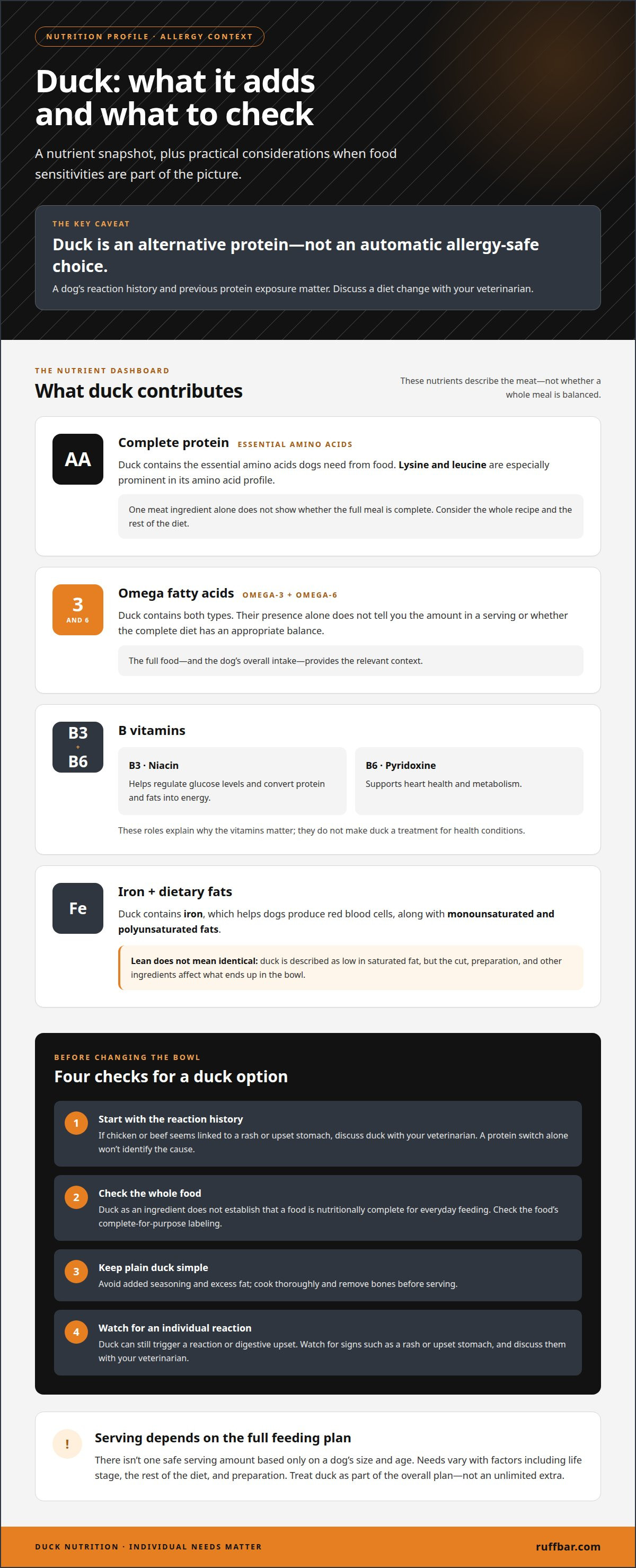
Duck supplies complete protein and contains omega-3 and omega-6 fatty acids. These nutrients help explain its profile, but a dog’s overall diet matters too.
Amino Acids in Duck Meat
Duck meat provides complete protein, meaning it contains the essential amino acids dogs need from food. Lysine and leucine are especially prominent in duck’s amino acid profile. Protein quality depends on the range of essential amino acids supplied, not simply on labeling a meat as a protein source. Duck can contribute amino acids, while the rest of the diet determines how it fits into a dog’s overall nutrition.
Adding duck as one ingredient is different from feeding duck meat alone. A dog’s daily food needs an appropriate overall balance, so the presence of lysine and leucine doesn’t by itself show that a meal is complete. Consider the whole recipe and its ingredients rather than judging nutrition by one meat or nutrient.
Omega-3 and Omega-6 Fatty Acids
Duck contains both omega-3 and omega-6 fatty acids, two types of fats found in food. Their presence adds to duck’s nutritional profile, but the names alone don’t show how much a serving provides or whether a full diet has an appropriate balance. Those details depend on the complete food, not just the duck ingredient.
Duck in a complete food contributes to that recipe’s overall mix of ingredients. Duck served separately should be considered alongside the dog’s regular food, not treated as a stand-alone source of balanced fats. This distinction matters when assessing what a dog eats throughout the day.
There isn’t one safe serving amount based only on a dog’s size and age. A small adult and a growing puppy have different needs, and the appropriate amount also depends on the rest of the diet and how the duck is prepared. Treat duck as part of the full feeding plan, not an unlimited extra.
B vitamins, iron, and fats
Duck provides B vitamins, iron, and several types of dietary fat. Its nutrients include niacin, pyridoxine, iron, and monounsaturated and polyunsaturated fats.
B Vitamins in Duck
Duck contains vitamin B3, also called niacin, and vitamin B6, also called pyridoxine. Niacin helps regulate a dog’s glucose levels and convert protein and fats into energy. Pyridoxine supports heart health and metabolism. These roles explain why B vitamins matter, but they don’t make duck a treatment for health conditions.
A dog eating duck in a complete food gets it alongside the recipe’s other ingredients. The meat’s B vitamins contribute to the overall nutrient profile, while the full diet determines how those nutrients fit together. One ingredient can’t show whether the whole meal meets a dog’s needs. Assess the food as a whole, not just its meat source.
Iron and Fats in Duck Meat
Duck contains iron, which helps dogs produce red blood cells, along with monounsaturated and polyunsaturated fats. Iron is a relevant part of duck’s nutrient profile, and the two fat types contribute to its overall composition. Their presence alone, however, doesn’t show how much a dog consumes or how duck fits into the rest of the diet.
That distinction matters when comparing duck as an ingredient with a complete meal. Duck served as an extra adds to the dog’s overall intake, while duck in a formulated food is part of that recipe’s combined ingredients. Consider the entire feeding plan, including other foods and treats, rather than relying on one nutrient to judge balance.
Duck’s B vitamins, iron, and fats describe what the meat can contribute, not a guaranteed health outcome. A dog’s needs depend on its full diet and individual circumstances. For a clearer picture of how a duck-based food fits your dog’s routine, explore duck-focused nutrition options alongside the ingredient and feeding information.
Duck as an alternative protein for dogs with food allergies
Duck may be an alternative to common proteins such as chicken and beef. A dog’s reaction history matters more than choosing an ingredient simply because it sounds novel.
Duck Compared with Other Protein Sources
Duck is a different meat protein from chicken or beef, which may matter when a dog reacts after eating those foods. It isn’t automatically suitable for every dog with food allergies or sensitivities. If chicken or beef has been followed by a rash or upset stomach, discuss duck with your veterinarian before changing the diet.
A veterinarian can consider the dog’s reaction history and previous protein exposure when discussing duck. That context can help distinguish a possible food reaction from other causes. Duck is a protein option, not a diagnosis or guaranteed solution.
Duck as a Lean Protein
Duck is described as a lean protein source that is low in saturated fat. That may make it an option to discuss when choosing a protein, but it doesn’t mean every duck product has the same fat content. The cut, preparation, and other ingredients all affect what ends up in the bowl.
For plain duck meat, avoid added seasoning and excess fat, and cook it thoroughly. Remove bones before serving. Seasoned duck or rich drippings add ingredients beyond the meat, so keep the dog’s portion plain and simple.
Duck-Based Food and Possible Reactions
Duck as an ingredient alone doesn’t establish that a food is nutritionally complete for everyday feeding. Check whether the food is labeled as complete for that purpose, rather than relying on duck as its main ingredient. A veterinarian can help assess a diet change if your dog has reacted to other proteins.
Duck can still trigger an individual reaction or digestive upset. Watch for a rash or upset stomach after your dog eats it, especially when trying a new duck food. Don’t treat duck as a proven solution; discuss any signs with your veterinarian. A change in protein should be guided by your dog’s symptoms and food history.
Duck as an option for dogs with food allergies
Duck gives dogs another meat protein to consider when chicken or beef seems linked to symptoms. It is not automatically hypoallergenic. A dog can react to duck, too, so the ingredient alone can’t establish whether a food is suitable.
Start with the pattern. If your dog develops an upset stomach or rash after eating chicken or beef, record which food came before the reaction and discuss duck with your veterinarian. That history can guide the decision. A reaction after one meal doesn’t prove an allergy, and an intolerance can also affect digestion. Similar signs can have different causes, so replacing chicken with duck without considering the full history may leave the problem unresolved.
Duck is also described as a lean protein low in saturated fat. That describes the meat, not every duck-based recipe or prepared dish. Skin, added fats, and other ingredients can change what a dog eats. Plain duck and seasoned duck leftovers, for example, aren’t interchangeable choices. Keep a food change focused on the protein being considered, rather than adding several new ingredients at once.
When a veterinarian considers duck, the dog’s exposure to proteins such as chicken, beef, and duck matters. The next step is a deliberate diet decision, not simply switching labels. Follow your veterinarian’s guidance on food and keep track of meals and symptoms. A rash or digestive upset after eating duck is a reason to revisit the choice, not to assume your dog automatically needs a different meat. In addition to dietary adjustments, pet owners supporting dogs through allergy flare-ups often focus on coat care; for curly-coated dogs, Royal Oodle provides dedicated grooming solutions to help keep skin and fur clean and comfortable.
The practical takeaway: duck is an alternative to discuss when reactions follow common meats, not a universal fix. Its suitability depends on the dog’s symptoms, food history, and the complete recipe. Reviewing these with a veterinarian can help distinguish a useful protein change from a guess that delays identifying the cause.
Ruff Bar: Ruff Food Freeze Dried Raw Backpacking Meals Duck
Ruff Food Freeze Dried Raw Backpacking Meals Duck gives dog owners a duck-based option to consider for outdoor trips. If duck is part of your dog’s food plan, this meal connects that protein choice with backpacking.
A duck ingredient alone doesn’t establish that a food is appropriate for an allergy trial or nutritionally complete for everyday feeding. If your dog has reacted to chicken, beef, or another protein, discuss duck with your veterinarian before changing foods. Their guidance can help you assess whether this meal fits your dog’s needs and feeding routine.
For dogs without a known concern related to duck, it may suit owners looking to include a duck-based meal on the trail. Keep the distinction clear: choosing a food can support your plans, but it doesn’t diagnose or resolve an allergy.
Contact Ruff Bar to discuss Ruff Food Freeze Dried Raw Backpacking Meals Duck.
Choose the Next Step With Your Dog in Mind
Turn nutrition research into a decision grounded in your dog’s food history. Note which foods came before symptoms, then discuss that pattern with your veterinarian before changing proteins. A clear record keeps the conversation focused on your dog rather than assumptions about a particular meat. The benefits of duck meat for dogs provide useful context, not proof that duck suits every dog.
For active dogs, Ruff Bar offers Ruff Stix® Bison Pork, Ruff Stix® Beef, and Ruff Food Freeze Dried Raw Backpacking Meals Beef. These are distinct protein options to consider in light of your dog’s needs and feeding plan. Keep any allergy-related decision grounded in veterinary guidance and the complete diet.
Ready to discuss a nutrition option for your dog? Talk with Ruff Bar about your dog. Keep moving with a thoughtful plan, one that puts your dog’s health first.
Frequently Asked Questions
Can My Dog Eat Duck?
Many dogs can eat duck as a protein ingredient when it suits their individual diet and tolerance. If your dog has reacted to food before, use their food history to guide the decision rather than introducing duck alongside several new ingredients. For example, avoid changing the main food and adding new treats at the same time, so you can better track any response.
What are the potential benefits of duck meat for dogs?
Duck offers complete protein and nutrients including amino acids, fatty acids, B vitamins, and iron. These are components of its nutritional profile, not a promise of a particular health result. The useful question is how duck fits into the whole food: a duck ingredient alone can’t tell you whether a meal provides balanced nutrition for your dog’s everyday needs.
Is duck a good protein for dogs with food allergies?
Duck may be an alternative for a dog that has problems with chicken or beef, but it isn’t automatically allergy-safe. Before switching, note which foods your dog has eaten and what symptoms followed. Share that history with your veterinarian, who can help determine whether duck is a reasonable protein to consider.
Can dogs eat cooked duck meat, skin, bones, or organs?
Plain cooked duck meat is a more straightforward choice than seasoned table scraps, but individual suitability still matters. Skin, bones, and organs are distinct parts, and the information here doesn’t establish whether each is appropriate for your dog or how much to serve. Don’t assume they’re interchangeable with plain meat; ask your veterinarian about these specific parts before offering them.
Can puppies or dogs with health conditions eat duck?
A puppy or a dog with a health condition may have different needs from a healthy adult. Duck alone doesn’t show whether a food suits a growing puppy or fits a health-related diet. Before making it a regular part of your dog’s meals, discuss their age, condition, current food, and previous reactions with your veterinarian.