
Benefits of a Rotational Diet for Dogs and How It Works
Variety can add options to a dog’s bowl, but it isn’t a cure-all. The benefits of a rotational diet for dogs may include trying different protein sources and making meals more appealing to dogs that tire of familiar flavors. Rotation means changing foods or proteins on a planned schedule, such as switching to a new protein or meal mixer every three months.
It’s reasonable to want a feeding routine that supports your dog’s health and keeps mealtimes interesting. But variety alone doesn’t prevent food allergies or intolerances, and a steady diet can still be a sound choice. The key is choosing complete foods and monitoring how your dog responds.
Learn how food rotation works, what it can and can’t tell you about sensitivities, and how to transition between complete foods while monitoring digestion. A measured approach helps you spot changes in stool, energy, or comfort without turning every meal into guesswork.
Key Takeaways
- Rotate protein sources within complete foods, while keeping nutrition balanced across the feeding plan.
- Food variety doesn’t guarantee protection from allergies or intolerances; recognize sensitivities and approach new ingredients carefully.
- Ease into a new food over 7-10 days, adjusting the pace to your dog’s digestive response.
- Track stool, energy, and comfort during changes so you can spot patterns and respond early.
What is Rotation Feeding?
Rotational feeding changes a dog’s food on a planned schedule. For example, an owner might alternate beef and chicken recipes while keeping each food complete and balanced.
Rotation can vary protein sources, flavors, macronutrients, or food formats. What changes matters: a new format can affect digestion differently from a new protein.
Rotating Protein Sources
Rotating protein sources means changing the main protein in a dog’s food, such as switching from chicken to beef. This gives the feeding plan variety without requiring a change in every ingredient. Dogs get 20 different amino acids from proteins, and different recipes can provide different amino acid profiles. For owners, recording each recipe makes it easier to connect a food change with a response.
Changing Food Formats and Macronutrients
Food rotation can change protein, fat, carbohydrates, or format, such as moving between dry, wet, and frozen food. These are separate choices: a beef recipe may have a different fat or carbohydrate profile from another beef recipe. Changing one feature at a time makes the effects easier to interpret. A veterinarian can help assess a rotation when a dog has specific nutritional needs.
Potential Variety and Health Benefits
Different flavors and textures may make meals more appealing to dogs that lose interest in familiar food. Rotating proteins can also broaden the amino acid variety in a dog’s diet. It may support a more diverse gut microbiome, which is associated with digestive health and immune function. These are potential benefits, not a reason to assume every dog needs frequent changes. A consistent diet can also be appropriate.
Environmental sustainability depends on how proteins are sourced and produced, not simply on rotation. For example, changing from beef to poultry does not by itself establish that a feeding plan has a smaller environmental footprint. Consider each recipe’s ingredients and sourcing alongside your dog’s nutritional needs. Variety is useful only when the foods remain suitable for your dog.
Food allergies and intolerances
Changing recipes adds variety, but it doesn’t establish that a dog has an allergy or intolerance. Rotational feeding isn’t a proven way to prevent either condition. A reaction after switching foods can also make the cause harder to identify if several ingredients change together. If your dog has a history of allergies or dietary sensitivities, consult a veterinarian before introducing another recipe. Record the current food and each new ingredient.
Watch for patterns, not one isolated meal. Note the recipe, serving, stool, skin signs, and appetite after each change. If symptoms recur, a planned rotation may make it harder to identify the ingredient involved. Keep feeding consistent while discussing the pattern with a veterinarian. Variety isn’t a substitute for a veterinary plan for a sensitive dog.
Some dogs lose interest in familiar flavors, and a different recipe can make mealtime more appealing. Rotating with each new bag or batch creates a clear point to record the change. But changing several ingredients at once blurs cause and effect. Choose complete and balanced foods that meet your dog’s nutritional needs, rather than selecting by protein name or flavor alone. A balanced rotation depends on the foods themselves, not just their variety.
Opened-food freshness also affects the schedule. Use opened bags of kibble within 6-8 weeks, and refrigerate opened pâté for up to 2 days. Rehydrated freeze-dried food also keeps for up to 2 days in the refrigerator. Follow the food’s storage directions and note when each bag or container was opened. For an add-on option, consider Ruff Bar Functional Nutrition Toppers within an otherwise balanced feeding plan.
Gradual food transitions and digestive monitoring
Rotational feeding works best when each change gives a dog’s digestive system time to adjust. Compared with a single-food routine, costs depend on the selected foods, ingredients, formats, and portion needs. Sticking with one food can make purchases more predictable.
Transitioning Between Foods Gradually
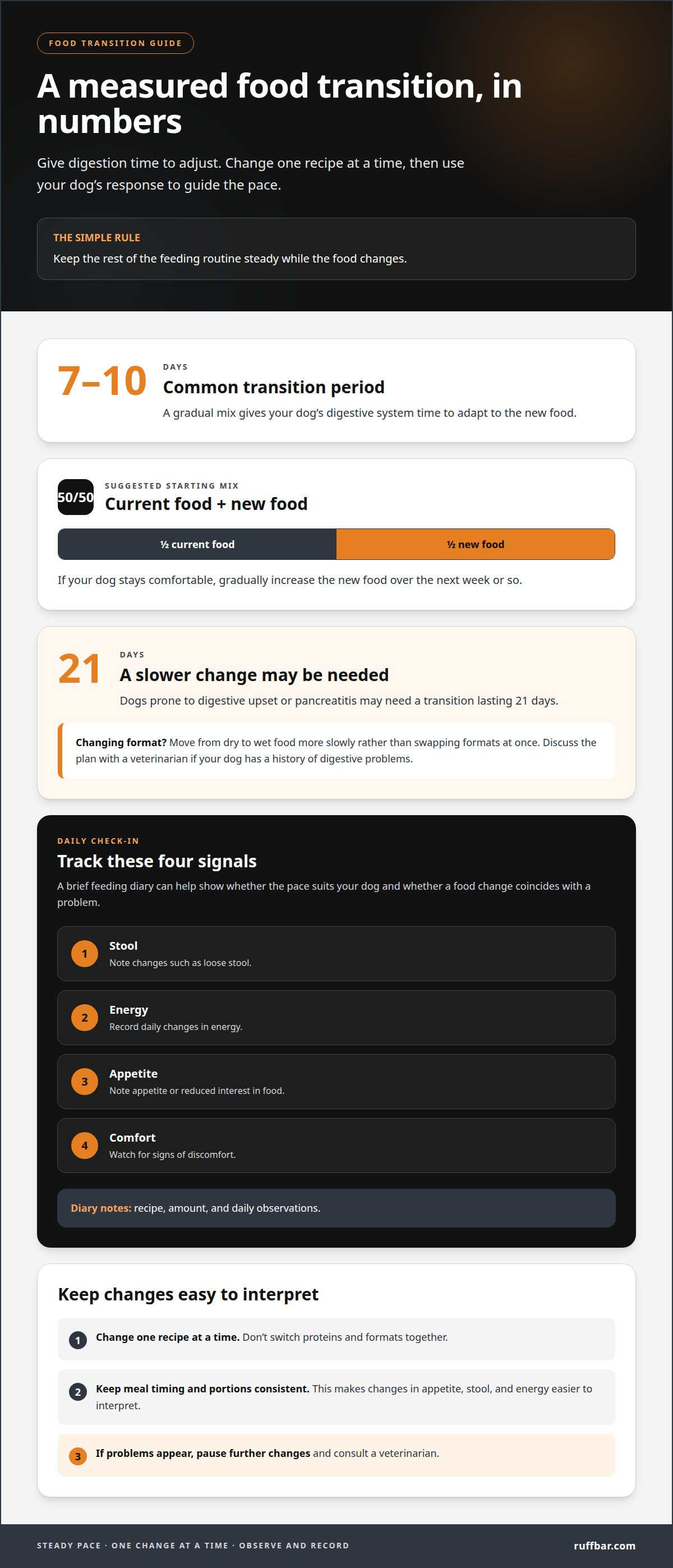
A gradual transition mixes new pet food with the current recipe, giving digestion time to adapt. A common transition period is 7-10 days. One suggested starting mix is 50/50; if your dog stays comfortable, increase the new food over the next week or so. Change one recipe at a time, rather than switching proteins and formats together, so you can identify what affects appetite or digestion.
Dogs prone to digestive upset or pancreatitis may need a transition lasting 21 days. For a change from dry food to wet food, use a slower transition instead of swapping formats at once. If your dog has a history of digestive problems, discuss the plan with a veterinarian before starting.
Monitoring Digestion During Transitions
Digestive monitoring means tracking your dog’s stool, energy, appetite, and signs of discomfort as the new recipe becomes part of feeding. These observations help show whether the transition pace suits your dog and whether a particular food change coincides with a problem.
Keep a brief feeding diary with the recipe, amount, and daily observations. For example, note loose stool or reduced interest after introducing a new protein. If problems appear, pause further changes and consult a veterinarian. The record can clarify the sequence of foods and symptoms, helping you make a more informed decision about the next transition.
Keep other parts of the routine steady while the food changes. Consistent meal timing and portions make it easier to interpret shifts in appetite, stool, and energy. Once digestion remains settled on a recipe, decide whether another change serves your dog’s overall health and feeding needs. A planned pace is better than constant switching.
Choosing complete foods for rotation
A sound rotation starts with foods that are each complete and balanced, not a collection of ingredients that seem nutritious. The goal is to vary recipes while keeping each food suitable as part of a dog’s diet. A veterinarian or veterinary nutritionist can help match choices to your dog’s age, health, and dietary needs.
Start with one food type, such as kibble, then rotate protein sources within that format. For example, compare two complete recipes built around chicken and beef. Read the ingredient list and nutrition statement for each food. A different named protein doesn’t automatically mean the recipes have similar nutrient profiles.
Complete foods can differ in amino acids, vitamins, minerals, and fatty acids. Switching between recipes may therefore change more than the protein source. Compare the full nutritional profile, including protein and fat levels, rather than choosing by flavor alone. If the new recipe also changes carbohydrates or food format, note those differences before making the switch.
Keep portions in view as recipes change. Different foods can have different calorie densities, so the same scoop may not deliver the same amount of energy. Follow each food’s feeding directions and adjust portions to support a healthy weight. The National Research Council’s 2006 publication is cited for nutrient requirements of dogs and cats, underscoring why a rotation needs nutritional balance, not just variety.
A practical rule: rotate complete foods, not separate proteins or ingredients added without considering the whole diet. If your dog has a medical condition or eats a prescription diet, have a veterinarian or veterinary nutritionist guide your choices. That support can help identify suitable recipes and preserve balance across the feeding plan.
Build your rotation around complete nutrition first, then add variety that fits your dog’s needs. Explore dog nutrition options for active routines.
Ruff Bar: Ruff Supplements for Dogs
Ruff Bar offers Ruff Supplements for Dogs as an option alongside a dog’s regular feeding plan. Supplements and toppers are add-ons, not a replacement for choosing nutritionally complete foods as the foundation of a rotation. Keep any addition in proportion: toppers, mixers, and supplements should provide no more than 10% of a dog’s total daily calories.
For active days, Ruff Stix® Bison Pork offers an option from Ruff Bar. Ruff Food Freeze Dried Raw Backpacking Meals Beef is also part of the range for backpacking. Choose products according to how they fit your dog’s routine, and account for extras when managing portions.
For questions about Ruff Bar offerings, contact Ruff Bar.
Build a Feeding Plan That Fits Your Dog
The benefits of a rotational diet for dogs are most useful when variety supports a clear feeding goal, not change for its own sake. Choose a practical next step: decide whether you want to explore different proteins, add a suitable topper, or pack nutrition for a trail day. Then keep your dog’s routine and response in view as you make choices.
Ruff Bar offers options including Ruff Stix® Bison Pork, Ruff Stix® Beef, and Ruff Food Freeze Dried Raw Backpacking Meals Beef. Consider how each offering fits your dog’s activity and overall feeding plan, rather than treating it as a substitute for a complete diet.
Ready to discuss a feeding option? Contact Ruff Bar for feeding help. Take the next step with a plan built around your dog.
Frequently Asked Questions
Why Try a Rotational Diet?
Consider rotation if your dog loses interest in familiar meals or you want planned variety among complete recipes. The benefits of a rotational diet for dogs can include exposure to different protein and nutrient profiles, plus new flavors and textures. A steady diet can still be appropriate. Puppies and dogs on prescription diets need extra caution: frequent changes may upset puppies’ stomachs, and changes to prescribed food require veterinary approval.
What is a rotational diet for dogs?
A rotational diet is a feeding plan that changes a dog’s food on a schedule, often by changing its protein source or recipe. It can also involve different food formats. For example, a dog might eat complete beef and chicken recipes in the same food format. Simply adding a treat or topper to an unchanged meal isn’t the same as rotating the main food.
What are the potential benefits of rotating dog foods?
Rotating complete recipes can expose a dog to different amounts of amino acids, vitamins, minerals, and fatty acids. A new flavor or texture can also bring fresh interest to mealtime for a dog that tires of familiar food. Benefits depend on the recipes chosen: each food should meet the dog’s nutritional needs, and portions should suit the dog’s activity and body condition.
Does a rotational diet improve dogs' gut health or prevent food allergies?
Diet changes may affect a dog’s digestion, but rotation shouldn’t be treated as a way to prevent food allergies. A dog with a history of reactions or dietary sensitivity needs a more careful plan. Keep a record of the food and any changes you observe, and consult a veterinarian before adding a new recipe, especially if your dog eats a prescription diet.
How often should you rotate dog food proteins or brands?
One suggested approach is switching proteins or meal mixers every three months, which means choosing a new one four times a year. The schedule matters less than choosing complete foods and keeping changes manageable for your dog. Rotating brands isn’t necessary by itself; assess each recipe’s nutritional balance and ingredients rather than relying on the brand name.
What signs of digestive upset can occur when rotating dog food?
Changes in stool, energy, appetite, or signs of discomfort can appear during a food change. Note the date, recipe, and observations in a feeding diary so patterns are easier to identify. If problems arise, stop advancing the transition and consult a veterinarian. A diary can also help distinguish a one-time change from a response that follows a particular recipe.