
Antioxidant-rich dog food: nutrients and calorie needs
More antioxidants don’t automatically make a dog’s diet better. Antioxidants help protect cells from free-radical damage and support immune function. Antioxidant-rich dog food can provide them through nutrients such as vitamins C and E, but the goal is balanced nutrition, not simply adding more.
When choosing food for an active dog, look beyond the ingredient list to what your dog actually needs. Antioxidants matter, but so do life stage, activity level, portion size, and daily calories.
This guide explains what antioxidants are, how they relate to oxidative stress, which nutrients can contribute antioxidant activity, and how to think about calorie needs. It also covers why supplements and major diet changes call for veterinary guidance, helping you support your dog’s adventures without losing sight of the whole diet.
Key Takeaways
- Match daily feeding amounts to your dog’s life stage, size, and activity level, not just the food’s ingredient list.
- Learn why antioxidant supplements call for veterinary guidance, especially during chemotherapy or radiation.
- Recognize common antioxidant ingredients and label terms, including mixed tocopherols.
- Understand how free radicals and antioxidants relate, and why balance matters for your dog’s overall diet.
Life stage, size, activity, and calorie needs
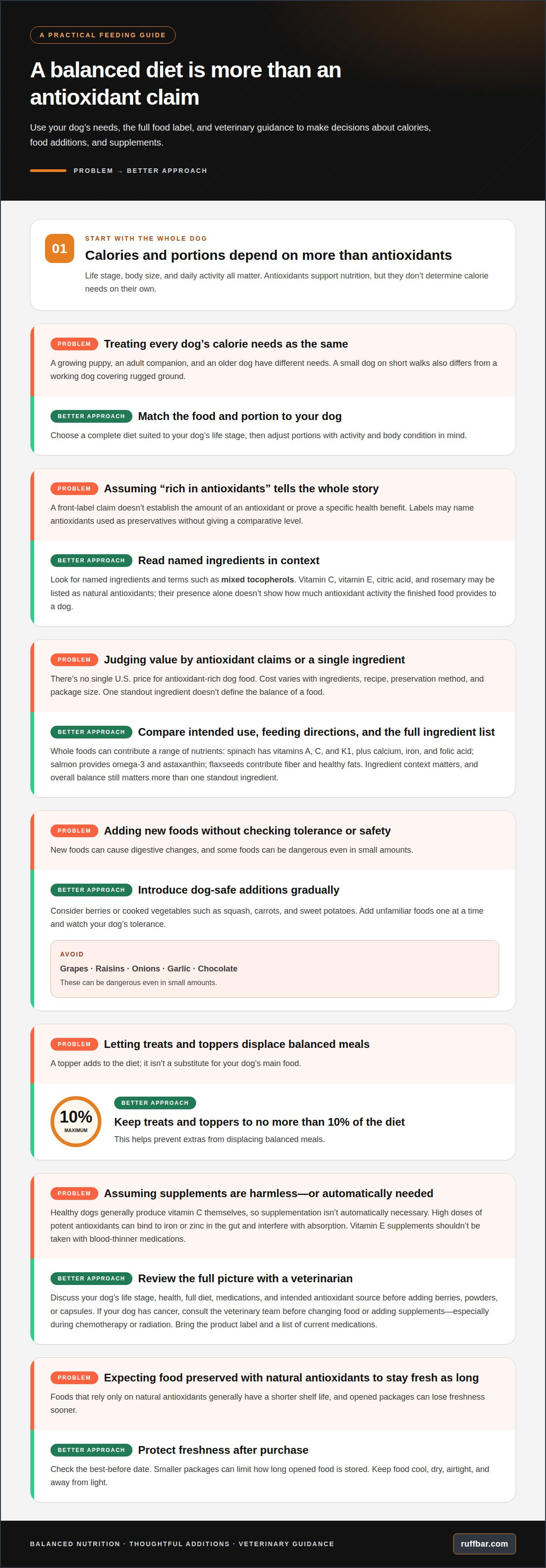
Match calories to your dog’s life stage, body size, and daily activity. A growing puppy, an adult companion, and an older dog have different needs, as do a small dog on short walks and a working dog covering rugged ground. Choose a complete diet suited to your dog’s life stage, then adjust portions with activity and body condition in mind. Antioxidants support nutrition, but they don’t determine calorie needs on their own.
Dogs commonly get antioxidants and other nutrients from fruits and vegetables, including blueberries, blackberries, raspberries, strawberries, and broccoli. Healthy dogs generally produce vitamin C themselves, so supplementation isn’t automatically necessary. When comparing labels, look for named ingredients and terms such as mixed tocopherols instead of assuming a “rich” claim tells you the amount. Labels may identify antioxidants used as preservatives without stating a comparative level.
There’s no single U.S. price for antioxidant-rich dog food. Cost varies with ingredients, recipe, preservation method, and package size. Compare the food’s intended use and feeding directions with its ingredient list, rather than judging value by antioxidant claims alone.
For food sources, consider dog-safe berries or cooked vegetables such as squash, carrots, and sweet potatoes. Introduce new fruits and vegetables gradually, one at a time, so you can observe your dog’s tolerance. Avoid grapes, raisins, onions, garlic, and chocolate, which can be dangerous even in small amounts.
Keep treats and food toppers to no more than 10% of a dog’s diet, so they don’t displace balanced meals. A topper is not a substitute for the dog’s main food. Ask your veterinarian about supplements, especially if your dog has a health condition or takes medication.
Preservation affects freshness. Foods that rely only on natural antioxidants generally have a shorter shelf life, and opened packages can lose freshness sooner. Smaller packages can limit how long opened food is stored. Check the best-before date, and keep food cool, dry, airtight, and away from light.
Veterinary advice about antioxidants in pet diets
Before adding berries, powders, or capsules, consider your dog’s life stage and health. Puppies, senior dogs, and dogs with ongoing conditions may need different formulas. Ask a veterinarian to review the full diet, medications, and intended antioxidant sources, such as blueberries. That context matters more than a front-label claim.
Antioxidant ingredients alone don’t prove that a food delivers a specific health benefit. Blueberries and cranberries contain phytonutrients that may help protect against disease, but their presence doesn’t show that a formula prevents cancer or treats illness. Consider the whole diet and your dog’s needs, not one ingredient in isolation.
For a dog with cancer, involve the veterinary team before changing food or adding supplements. Discuss antioxidant products in particular if your dog receives chemotherapy or radiation. Treatment plans and other medications matter when assessing whether a supplement is appropriate. Bring the product label and a list of current medications to the conversation.
More isn’t always better. High doses of potent antioxidants can bind to nutrients such as iron or zinc in the gut and interfere with absorption. Vitamin E supplements also shouldn’t be taken with blood-thinner medications. A veterinarian can consider your dog’s diet, health history, and medications before recommending a supplement or dose.
Grain-free or boutique wording alone can’t tell you whether a food suits your dog. Focus on whether its formula fits your dog’s life stage, health needs, and overall diet. If a veterinarian recommends supplementation, explore dog supplements as one option to discuss alongside the food your dog already eats.
Ask a veterinarian to consider your dog’s life stage, health, full diet, and medications before deciding how much to add. Introduce unfamiliar foods gradually and watch for digestive changes. If a supplement is recommended, follow the veterinarian’s guidance on dosage.
Antioxidant vitamins and minerals
Dog-food labels may name vitamin C, vitamin E, citric acid, or rosemary as natural antioxidants. These ingredients can help protect food from oxidation during storage, but their presence doesn’t show how much antioxidant activity the finished food provides to a dog. Read the full ingredient list and note whether an antioxidant is identified as a preservative.
Natural vitamin E may appear on a pet-food label as “mixed tocopherols.” The term names a form of vitamin E, not a separate mineral or a complete measure of the food’s nutrient content. A formula may combine several antioxidant ingredients, but their names alone don’t establish the amounts or how they work together.
Whole foods offer other nutrients alongside antioxidant compounds. Spinach contains vitamins A, C, and K1, plus calcium, iron, and folic acid. Those nutrients have distinct roles; calcium and iron are minerals, not antioxidants. Kelp contains vitamins and minerals that support the immune system, making it another example of a varied ingredient rather than a stand-alone solution.
Salmon provides omega-3 and astaxanthin. Flaxseeds contribute fiber and healthy fats. These examples show why ingredient context matters: a food can provide several kinds of nutrients, not just antioxidants. A food’s overall balance still matters more than one standout ingredient.
Fresh foods tend to retain higher antioxidant levels because cooking and preservation can break down these compounds. That doesn’t make every fresh ingredient a complete diet. Blueberries, cooked squash, carrots, and sweet potatoes can add variety, but additions should fit your dog’s overall feeding plan. Introduce unfamiliar foods gradually and watch for digestive changes.
Large doses of vitamin A can turn a dog’s skin orange. Don’t treat vitamins as harmless extras or combine supplements without veterinary guidance. Compare named ingredients, their role in the formula, and the rest of the diet for a clearer picture than a single “antioxidant” claim provides.
The section names blueberries, cooked squash, carrots, and sweet potatoes as fresh-food additions, and notes that salmon provides astaxanthin. Spinach also supplies vitamins A and C. Consider these ingredients as part of a varied, balanced diet.
Antioxidants and oxidative stress
Antioxidants help protect cells from free-radical damage. Understanding this balance helps you assess ingredients without assuming that higher amounts always mean better nutrition.
The Role of Antioxidants
Antioxidants are compounds that help protect cells from damage caused by free radicals. They also support immune-system function. For dog owners, the key is to consider antioxidant sources as part of the complete diet, not as isolated promises. Blueberries and cranberries, for example, contain antioxidants and have anti-inflammatory properties.
Oxidative Stress
Oxidative stress occurs when excess free radicals damage cells and enzymes, affect the immune system, and negatively affect health. The imbalance, rather than the mere presence of free radicals, is what makes the process relevant to a dog’s overall wellbeing. A single ingredient or food label can’t describe that balance on its own.
Different ingredients contain different compounds. Kelp has carotenoids, flavonoids, and alkaloids that help fight free radicals. Soybeans naturally contain isoflavones, which are antioxidants. These examples help explain why food formulas may combine ingredients rather than rely on one source. Their presence alone doesn’t establish how much a dog receives.
Assess the whole formula alongside your dog’s full diet. An ingredient’s antioxidant level doesn’t show how much remains after processing or how the finished food fits your dog’s nutritional needs. Keep bold label claims in perspective by focusing on named ingredients, the food’s role in daily feeding, and veterinary advice for individual health concerns.
Want to connect nutrition choices with practical feeding? Explore nutrition options for active dogs and consider how they fit your dog’s overall diet.
Ruff Bar
Ruff Bar offers practical nutrition options for active dogs, including Ruff Stix® Bison Pork and Ruff Food Freeze-Dried Raw Backpacking Meals in beef and duck. These products can fit an adventure-focused feeding routine, but they aren’t substitutes for a complete diet or veterinary guidance about antioxidant needs.
Use these nutrition principles to assess how any food or topper fits your dog’s full diet, activity, and health needs. If your dog has a medical condition, ask your veterinarian before making a significant change or adding supplements. Explore Ruff Bar’s nutrition options for active dogs, including bars, Stix®, toppers, and freeze-dried backpacking meals.
Build a feeding plan that fits your dog
Make your next food choice part of a wider plan, not a reaction to one ingredient claim. Consider how the food fits your dog’s routine, preferences, and health needs. For an active dog, a practical plan should work from everyday meals to long days outdoors while keeping balanced nutrition in view.
Before changing the menu, note what you want to improve, such as meal convenience or ingredient variety. If your dog has a health condition or takes medication, discuss that goal with your veterinarian. Their advice can help you decide whether antioxidant-rich dog food fits your dog’s overall diet or whether another adjustment makes more sense.
For questions about Ruff Bar’s dog nutrition offerings, start a conversation with Ruff Bar. Take the next step with a clear goal and a plan built around your dog. Keep moving forward, one thoughtful choice at a time.
Frequently Asked Questions
What Are Antioxidants?
Antioxidants are nutrients and other compounds that help limit damage associated with free radicals in the body. They come from varied sources, including food ingredients, and play a part in normal cellular and immune function. Their presence isn’t a stand-alone measure of food quality, so consider them alongside the complete formula and your dog’s individual nutritional needs.
How Can I Be Sure My Dog is Getting Enough Antioxidants?
Start with a complete diet suited to your dog rather than adding supplements to chase a particular antioxidant level. There isn’t one amount that applies to every dog in the information covered here. A veterinarian can review your dog’s food, health history, and supplements together to help determine whether a change is appropriate for that individual diet.
Why Does My Dog Need Them?
Antioxidants help the body manage free radicals, which can harm cells and enzymes when present in excess. This matters because such damage can affect immune function and health. Antioxidants aren’t a treatment for illness, and a food claim can’t promise a specific outcome. For a dog with a health condition or undergoing treatment, discuss diet changes with a veterinarian.
What antioxidants are beneficial in dog food, and what do they do?
Vitamins C and E are examples of antioxidants used in dog foods. Natural vitamin E may appear on labels as mixed tocopherols. Citric acid and rosemary are also used as natural antioxidants, including to help preserve food. Their purpose and amount can vary by formula, so distinguish ingredients included as preservatives from nutrients intended to contribute to your dog’s diet.
What ingredients in dog food provide antioxidants, such as berries, vegetables, and vitamins?
Examples include tomatoes and mangoes, along with blueberries, cranberries, and cooked vegetables. Soybeans contain isoflavones, while kelp has carotenoids, flavonoids, and alkaloids. Ingredients provide different compounds and nutrients, so variety alone doesn’t make a diet complete. Keep additions appropriate for your dog, and introduce new foods gradually rather than changing several ingredients at once.
How much antioxidant-rich food can dogs safely eat?
Match daily portions to your dog’s life stage, size, and activity level. Keep treats and food toppers to no more than 10% of the diet.