
Working Dog Nutrition: The Handler’s Guide to High-Performance Fueling
Your dog is high-performance hardware. In the field, every ounce of weight and every calorie of energy dictates the mission's success. If you treat their fuel like a grocery store commodity, you're planning for a mid-day crash. Mastering working dog nutrition is about more than filling a bowl. It's about fueling an engine built for endurance, power, and rapid recovery.
You've felt the burden of a heavy pack. You've seen the cost of a dog slowing down when the work gets tough. Digestive upset at mile ten doesn't just stall progress; it ends the mission. You're here because you demand more from your partner. This guide ensures you'll master the science of performance fueling to maintain peak endurance, rapid recovery, and uncompromising health in the field.
We break down the science of grass-fed proteins, functional fats, and recovery catalysts. We explore the protocols that keep your partner moving through the most demanding terrain. From field-stable energy bars to high-density freeze-dried meals, we provide the tactical blueprint for sustained vitality and long-term joint health.
Key Takeaways
- Shift the metabolic focus. Transition your dog from glucose-burning to high-density lipid metabolism to power long-haul endurance and sustained output.
- Prioritize protein integrity. Use USDA-graded meats to prevent muscle breakdown and exercise-induced anemia during high-intensity field activity.
- Manage the bloat risk. Learn how specific meal timing and high-density, low-volume foods protect deep-chested breeds from Gastric Dilatation-Volvulus.
- Optimize tactical fueling. Deploy mid-work energy bars to maintain blood glucose levels and prevent the performance-killing mid-day energy crash.
- Master working dog nutrition to slash pack weight. High-density freeze-dried meals provide maximum caloric propulsion without the physical burden of heavy kibble.
Fueling the K9 Athlete: Why Working Dog Nutrition Differs
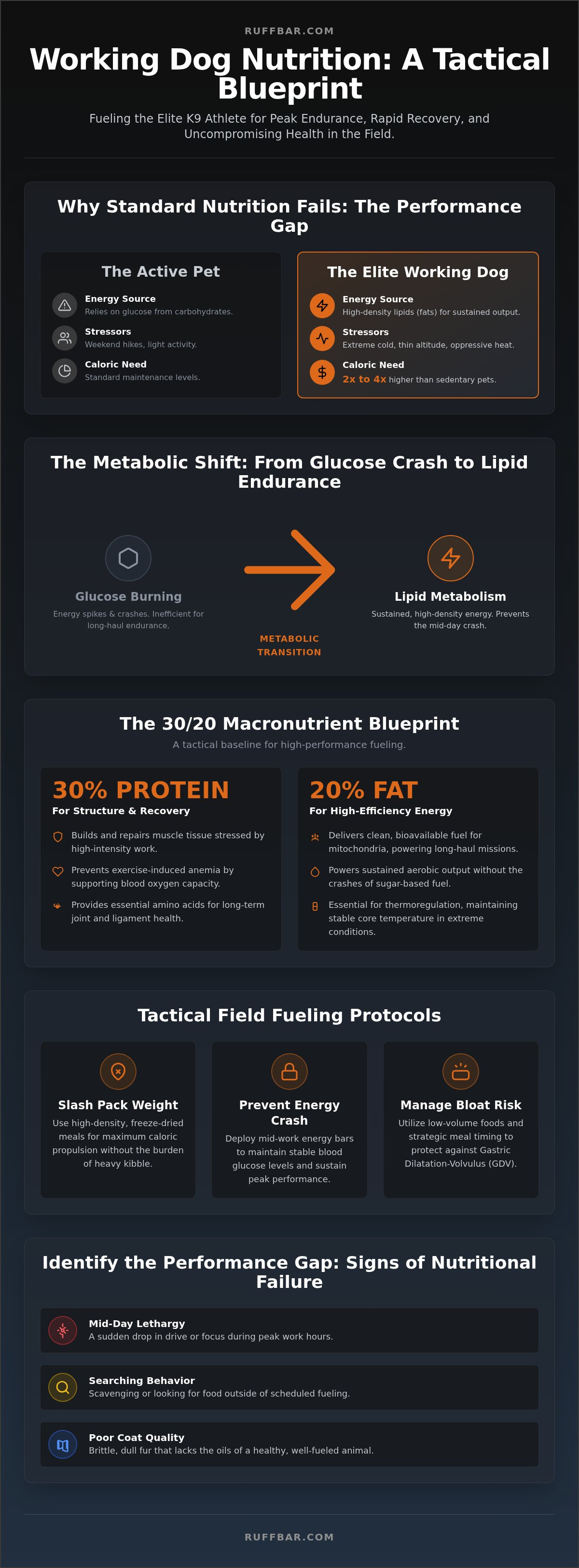
Your dog is an elite athlete, not a hobbyist. True working dog nutrition is the targeted delivery of high-density lipids and proteins to support sustained aerobic and anaerobic output. It's a tactical approach to fueling that treats food as essential equipment. While a sedentary pet relies on a slow burn of carbohydrates, the working K9 undergoes a profound metabolic shift. They transition from glucose-burning to fat-burning to power through long-haul endurance missions. This fat-adapted state is the key to preventing a mid-shift crash.
The caloric demands of the field are staggering. A working dog often requires 2x to 4x the calories of a sedentary pet just to maintain body condition. Meeting these needs with standard grocery store fare is impossible. You'd have to feed massive volumes, leading to digestive distress and physical lethargy. A no-compromise standard is required. Fillers and grains fail when the workload increases because they offer volume without propulsion. You need nutrient density that matches the intensity of the job. To see how premium brands address these specific needs, learn more about Petguru and their selection of high-performance diets.
The Working Dog vs. The Active Pet
Distinguish clearly between the weekend hiker and the daily worker. Search and Rescue (SAR), herding, and protection dogs operate under extreme environmental stressors. They battle biting cold, thin altitude, and oppressive heat. These factors drain energy reserves before the first task begins. Metabolic Scope is the ratio of peak energy expenditure to basal metabolic rate. For a high-tier working dog, this scope is pushed to its biological limit. Their nutritional needs of sporting dogs are defined by this constant state of high-stakes output.
Identifying the Performance Gap
Nutritional failure isn't always immediate. It's subtle. Look for these signs of a performance gap in your partner:
- Mid-day lethargy: A sudden drop in drive or focus during peak work hours.
- Searching behavior: Scavenging or looking for food outside of scheduled fueling.
- Coat quality: Brittle, dull fur that lacks the oils of a healthy animal.
High-density working dog nutrition provides a distinct tactical advantage: reduced stool volume. When every gram of food is bioavailable, there is less waste. This means less physical weight in the stomach and better absorption. Clean-label proteins from high-meat sources like PLATINUM outperform synthetic-heavy performance kibbles every time. They provide the structural integrity required for muscle repair and long-term vitality without the bloat-inducing weight of cheap fillers.
Endurance is a calculation. To win in the field, you must solve for the glycogen gap. While humans rely on carbohydrate loading, your dog’s engine runs on lipids. Fat isn't just an ingredient; it's the primary propulsion for every mile of rugged terrain. High-performance working dog nutrition demands a specific macronutrient ratio that prioritizes fat for energy and protein for structural integrity. This strategy ensures the body remains in a fat-adapted state, burning fuel efficiently without the spikes and crashes of a sugar-based diet.
Lipids: The High-Efficiency Energy Source
For most K9 athletes, the 30/20 rule acts as the tactical baseline. This ratio, 30% protein and 20% fat, ensures the body has enough fuel for sustained aerobic output. Fats are more than just calories. They are essential for thermoregulation, helping your dog maintain a stable core temperature in freezing backcountry or high-desert heat. Don't settle for rendered fats or generic "animal fat" labels. Rendered fats are often stripped of natural co-factors and can go rancid quickly. You need natural lipids from grass-fed meats that provide clean, bioavailable combustion for the mitochondria. This is the difference between a clean-burning fire and a smoky, inefficient one.
Amino Acids and Muscle Recovery
Protein is the scaffolding of the working dog. High-intensity work causes micro-tears in muscle tissue and places immense stress on the blood’s oxygen-carrying capacity. Using USDA-graded meats like bison, beef, and pork ensures your dog receives a full spectrum of amino acids. These 'complete proteins' prevent exercise-induced anemia and support the structural health of joints and ligaments. When a dog is pushing through deep snow or dense brush, their metabolic demand for tissue repair skyrockets. Understanding the science of high-protein dog energy bars helps you see how these nutrients work in real-time to repair tissue during the mission.
The carbohydrate myth often leads handlers astray. Working dogs have no biological requirement for grain-based fillers. Grains cause blood sugar spikes and subsequent crashes that end workdays early. If you use carbs, keep them minimal and low-glycemic. To combat the oxidative stress of heavy exertion, ensure your working dog nutrition plan includes these key elements:
- Antioxidants: Neutralize free radicals produced during high-intensity work.
- Omega-3 Fatty Acids: Support systemic anti-inflammatory responses in hard-working joints.
- Iron and B-Vitamins: Critical for maintaining red blood cell counts and oxygen transport.
A complete and balanced diet for a worker must account for this internal wear and tear. If you want to simplify your field strategy, consider adding Ruff Stix® Bison Pork to your kit for a direct hit of performance lipids and high-tier protein.
Tactical Field Fueling: Sustaining Energy from Dawn to Dusk
Tactical fueling isn't a suggestion; it's a field requirement. To master working dog nutrition, you must manage the clock as strictly as the ingredients. Start with the pre-work foundation. Feed your K9 at least 2 to 3 hours before high-intensity activity. This window allows for gastric emptying and significantly reduces the risk of gastric torsion, or bloat, which can be fatal in the field. A dog working on a full stomach is a dog at risk.
Hydration strategy is equally vital. Dogs don't just need water; they need to want to drink it. Integrating bone broth or functional toppers ensures consistent fluid intake during grueling missions. This prevents the dehydration that leads to heat exhaustion and cognitive decline. If your dog ignores their water bowl during a mission, you're looking at a rapid decline in work capacity and safety.
Mid-Day Fueling with Ruff Stix®
A mid-afternoon performance slump is often the result of plummeting blood glucose. Small, frequent 'power snacks' maintain a steady stream of energy without weighing down the digestive tract. Ruff Stix® Bison Pork provides portable integrity. These stix are shelf-stable, meaning they belong in your pack, not a cooler. For a 50lb dog under intense work, dosing one-half to one full Ruff Stix® every two hours is a solid baseline. It provides immediate field access to the high-density lipids discussed in the macronutrient blueprint without the risk of a heavy stomach.
The Post-Mission Recovery Protocol
The first 30 to 60 minutes after the work stops are the 'Golden Hour.' This is when the metabolic window is open for maximum glycogen replenishment and muscle repair. Transitioning your dog from a work-state to a rest-state requires high-value protein. Use DIY dog food toppers for energy to kickstart this process. These toppers deliver clean, organic ingredients that combat systemic inflammation and jumpstart tissue recovery.
By focusing on rapid absorption post-exertion, you're not just feeding for today. You're preparing for tomorrow's mission. Clean labels ensure you aren't introducing synthetic fillers that slow down the body's natural healing process. This disciplined approach to working dog nutrition ensures your partner is ready to deploy again at dawn.
Gut Health and Field Safety: Avoiding the 'Crash and Bloat'
GDV is a killer. For deep-chested working breeds, it's the ultimate field hazard. Gastric Dilatation-Volvulus occurs when the stomach twists; this cuts off blood flow and traps gas. It's a race against time. Proper working dog nutrition mitigates this risk by focusing on digestibility over volume. A heavy, distended stomach is a liability. By feeding high-density, low-volume meals, you reduce the physical weight and pendulum effect in the gut. Speed. Safety. Propulsion. Every gram of fuel must provide an equivalent return in energy without the baggage of dead weight.
Filler fatigue is a performance killer. Corn, soy, and wheat are cheap fillers that cause systemic inflammation. They trigger the mid-day lethargy handlers dread. These ingredients lead to "empty" calories that spike blood sugar and then leave your dog hollow. You need fuel that burns clean. When the gut is inflamed, the body diverts energy to manage the irritation rather than the task at hand. This is why clean, grain-free sources are non-negotiable for high-stakes work. A bloated gut is a distracted gut.
Managing Digestion Under Stress
The field is a high-stress environment. The gut-brain axis means that when your dog is focused on the mission, their digestive system slows down. The "fight or flight" response diverts blood to the muscles. Digestion stalls. Probiotics and natural enzymes are critical for maintaining a "rugged" gut that can handle these metabolic shifts. Freeze-dried raw is the gold standard here. It's the most bioavailable option; it requires minimal metabolic effort to process. Check out our guide on the Best Dog Foods for Sensitive Stomach: Active Breeds to see how to protect your partner's internal health during the hunt. Keeping the gut resilient ensures that stress doesn't lead to a total system shutdown.
The Clean Label Advantage
Clean labels aren't just a trend. They're tactical equipment. Eliminating empty calories maximizes mental focus and physical propulsion. USDA-graded meats reduce the risk of food-borne illness; this is a major concern when you're miles from a vet. Grain-free nutrition also has a direct impact on allergic inflammation and paw health. Red, itchy paws are often a sign of gut distress. When you fix the fuel, you fix the performance. A dog with healthy skin and a resilient gut can focus on the scent, the herd, or the target without distraction. Integrity starts in the bowl.
Don't let poor fuel compromise your mission. Invest in high-performance working dog nutrition to keep your partner safe and driven from dawn to dusk.
Optimizing the Pack: High-Density Fuel for Remote Missions
Pack weight is a mission killer. When you're miles from the trailhead, every ounce in your vest or your dog's pack costs energy. For remote, multi-day expeditions, working dog nutrition becomes a logistical math problem. You need the highest possible caloric density with the lowest physical footprint. Traditional raw food is a non-starter; it's heavy, messy, and requires refrigeration. High-heat kibble is lighter but often lacks the biological integrity and moisture content needed for elite recovery in demanding environments.
Ruff Food Freeze Dried Raw Backpacking Meals bridge this gap. These meals are shelf-stable and field-ready. They provide the raw, USDA-graded nutrition your dog needs without the dead weight of water. Preparation in the field is tactical. By rehydrating the duck or beef meals, you ensure your dog gets a massive hit of moisture along with their calories. This is critical when high-intensity work makes dogs reluctant to drink plain water from a bowl. You're not just feeding; you're hydrating.
Ruff Food Freeze Dried Raw: Performance Review
The math of the backcountry is clear. One pound of Ruff Food Freeze Dried Raw provides the caloric equivalent of roughly four pounds of traditional wet or raw food. That is a 75% reduction in pack weight. For a handler on a 72-hour mission, that weight savings translates directly into increased range and reduced fatigue. Unlike kibble, which is processed at temperatures that destroy vital enzymes, freeze-drying locks in the nutritional profile of grass-fed meats. You can find more details in The Ultimate Guide to Freeze Dried Raw Dog Food for Backpacking to fully optimize your gear list.
Building the Ultimate Performance Pack
A successful mission relies on a layered fueling strategy. Don't rely on a single large meal at the end of the day. Combine Ruff Stix® Bison Pork for immediate, mid-work energy with Ruff Food for primary evening recovery. This keeps blood glucose stable and prevents the metabolic crash. Use Ruff Bar Functional Nutrition Toppers to mask the taste of "trail water." Stagnant or heavily filtered water can taste "off" to a sensitive K9. A scoop of topper encourages hydration when it matters most. Your 3-day high-intensity mission checklist should include:
- Primary Meals: Ruff Food Freeze Dried Raw (Beef or Duck) for high-density recovery.
- Mid-Work Fuel: Ruff Stix® Bison Pork for rapid lipid delivery during the task.
- Hydration Catalyst: Functional Nutrition Toppers to ensure consistent fluid intake.
- Recovery Support: Pure Blend Toppers for post-work inflammation management.
This layered approach ensures your partner stays fueled, hydrated, and ready for the next extraction. High-standard working dog nutrition doesn't just happen; it's packed. When every gram counts, choose the fuel that provides the most propulsion per ounce.
Master the Mission: Fuel for the Long Haul
Your dog's performance is only as reliable as the fuel in their system. High-standard working dog nutrition transforms food into tactical equipment. You've mastered how to leverage lipid-heavy diets for endurance and how to manage field safety through precise meal timing. By prioritizing bioavailable proteins and high-density calories, you ensure your partner never hits a mid-shift wall. Every calorie must provide propulsion; every ingredient must support recovery.
Don't compromise on quality when the stakes are high. Real performance requires ingredients that work as hard as your K9. Ready to optimize your pack? Fuel your K9 athlete with Ruff Bar Performance Nutrition. Our formulas use USDA-graded grass-fed meats and contain no fillers, grains, or synthetic preservatives. Our freeze-dried meals reduce pack weight by up to 75%; this gives you more range and less fatigue on every mission.
The terrain is tough. The work is demanding. Your preparation should be uncompromising. Gear up, fuel right, and stay in the fight. Your partner is ready for the next deployment. Make sure their engine is, too.
Frequently Asked Questions
How many calories does a working dog need per day?
Caloric needs scale with intensity and environment. A standard 55lb dog requires roughly 1,100 kcal for maintenance, but a high-output worker can demand 2,200 to 4,400 kcal daily. Factors like extreme cold or rugged terrain push these numbers higher. Monitor body condition scores weekly. Adjust portions to maintain a lean, muscular frame. High-density fuel ensures they meet these targets without a massive, bloat-inducing volume of food.
Is high protein bad for a dog's kidneys?
High protein doesn't cause kidney disease in healthy working dogs. It's a biological necessity for muscle repair and structural integrity. Elite K9 athletes require amino acids to prevent exercise-induced anemia and tissue breakdown. Use USDA-graded, grass-fed meats rather than low-quality by-products. Clean protein sources provide the nitrogen balance needed for high-stakes performance. Always maintain access to fresh water to support metabolic filtration during intense, heavy exertion.
What is the best way to prevent bloat in working dogs?
Prevention relies on strict timing and volume management. Don't feed a large meal within two hours of high-intensity work. This window allows the stomach to empty and prevents the pendulum effect that causes twisting. Use high-density working dog nutrition to keep meal volumes small. Large amounts of low-quality kibble expand in the gut, increasing risk. Keep your dog calm during the hour after work before providing their primary recovery meal.
Can I feed my working dog human energy bars?
Human energy bars are dangerous for K9 athletes. They often contain xylitol, chocolate, or raisins, which are toxic to dogs. Even "clean" human bars rely on high sugar and fiber counts that cause digestive distress and energy crashes in canines. Dogs require a lipid-based energy system, not a glucose-heavy one. Stick to species-appropriate fuel like Ruff Stix® Bison Pork. These provide the correct fat-to-protein ratios without the risk of toxicity or gut shut-down.
How often should I feed my dog during a long hunt or SAR mission?
Deploy small, frequent "power snacks" every two to three hours during active work. This strategy maintains stable blood glucose and prevents mid-day lethargy. Don't use large meals that divert blood flow away from the muscles and toward the digestive tract. A half-stick of a shelf-stable protein snack provides immediate propulsion without weighing down the stomach. Save the primary caloric load for the post-mission recovery window when the dog is in a rest-state.
Why is fat more important than carbs for canine endurance?
Dogs are built to burn fat for long-haul endurance. Lipids provide more than twice the energy per gram compared to carbohydrates. This metabolic efficiency allows for sustained aerobic output without the "bonk" associated with glycogen depletion. High-quality working dog nutrition prioritizes animal fats from grass-fed sources to support thermoregulation and cellular health. Carbs often lead to inflammation and blood sugar spikes. Fat provides the clean, steady burn required for dawn-to-dusk missions.
What should I look for in a performance dog food label?
Look for USDA-graded meats as the first ingredients. Avoid generic "meat meal," corn, soy, or wheat fillers that offer volume without value. A true performance label should show a 30/20 protein-to-fat ratio as a baseline. Check for natural lipids and whole organic ingredients rather than synthetic preservatives. Integrity matters. If the label's loaded with chemical stabilizers and grain by-products, it won't sustain an elite athlete in the field.
How do I switch my dog to a high-performance raw diet safely?
Transition slowly over seven to ten days to prevent digestive upset. Start by mixing 25% of the new high-performance fuel with their current food. Increase the ratio every two days while monitoring stool quality and energy levels. Freeze-dried raw is the safest entry point. It's highly bioavailable and shelf-stable. It provides the benefits of raw nutrition with none of the handling risks of frozen meat. Watch for improved coat shine and drive.