
What to Feed a Hunting Dog During the Season: Tactical Nutrition for K9 Athletes
Your hunting dog is a high-performance engine running on the edge of its physical limits. It isn't just a pet. It's a K9 athlete built for propulsion and grit. You've seen the mid-afternoon crash. You know the worry of seeing ribs by day three of a backcountry haul. It's frustrating to watch a powerhouse partner hit a wall when the birds are finally moving. Understanding exactly what to feed a hunting dog during the season is more than just filling a bowl. It's about deploying tactical equipment for the gut.
We agree that standard kibble often fails under the pressure of six plus hours of hard work. This guide will help you master the science of performance fueling to keep your dog focused, energized, and injury-free all season long. We're diving into the 30/20 protein-to-fat ratio, compact fueling solutions for your pack, and rapid recovery protocols. You'll learn how to maintain optimal body condition through the coldest January hunts. Prepare for sustained energy. Prepare for faster recovery. Prepare for a dog that never quits.
Key Takeaways
- Implement the 30/20 rule. Target 30% protein and 20% fat to power sustained K9 propulsion in the field.
- Stop the mid-day crash. Use tactical, high-density snacks to stabilize blood sugar and maintain peak focus for 6+ hours.
- Master the recovery window. Learn what to feed a hunting dog during the season within 30 minutes of the final retrieve to jumpstart muscle repair.
- Protect your athlete's frame. Use portable, grain-free meals to maintain weight and muscle mass during grueling multi-day backcountry hunts.
The Metabolic Demands of the Hunting Season
Hunting isn't a hobby. It's an elite athletic feat. Your dog's body shifts from steady aerobic tracking to explosive anaerobic bursts. This transition demands a massive, immediate energy supply. Deciding what to feed a hunting dog during the season requires looking at the dog as a machine. When the engine runs hot for six hours, the fuel must be high-octane. Standard maintenance diets often fail under this pressure.
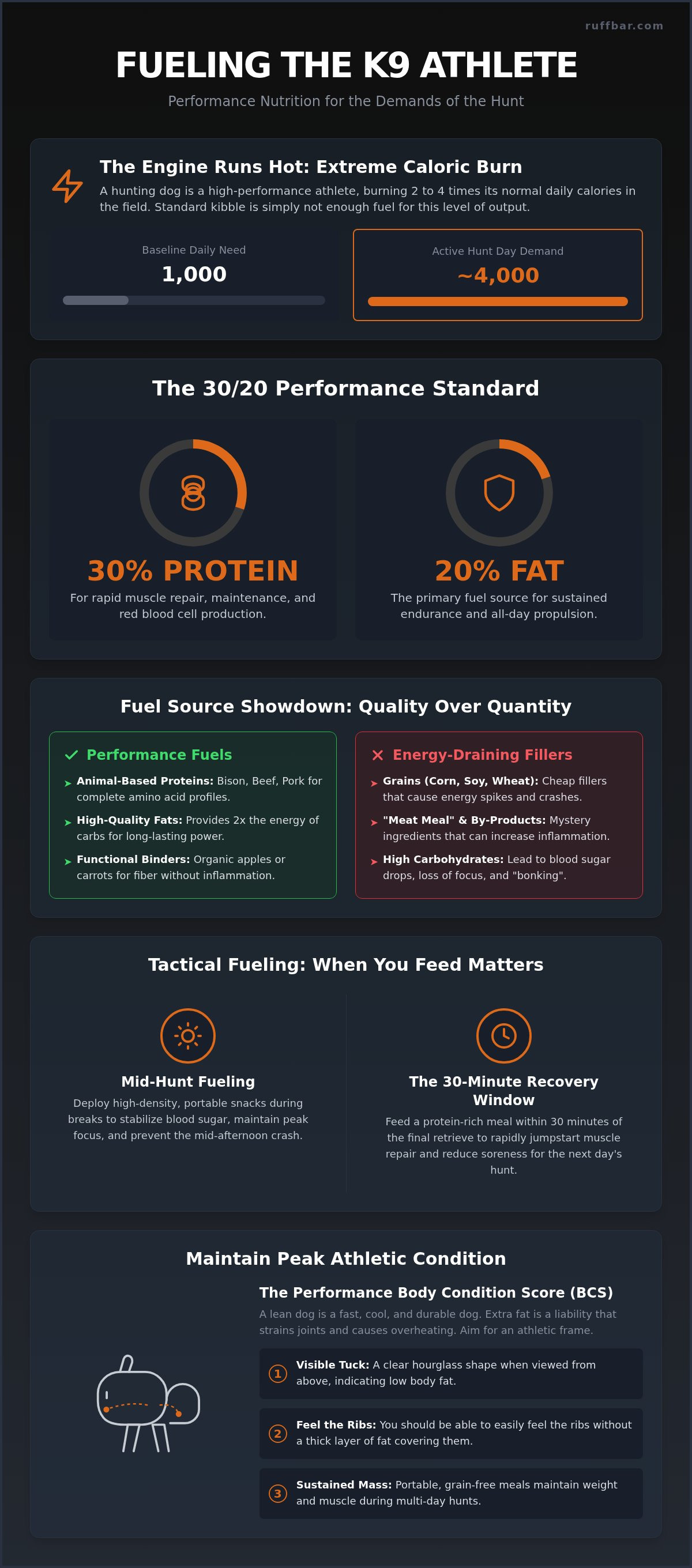
In the field, caloric burn spikes. A working K9 can burn two to four times its baseline energy. A dog requiring 1,000 calories for backyard play might demand 4,000 calories during a multi-day upland hunt. Terrain matters. Deep snow, thick brush, and freezing water accelerate the drain. Simply doubling the volume of standard Dog food often causes digestive blowouts. You need caloric density, not just more volume.
Body Condition Scoring for the K9 Athlete
Visible ribs don't mean a dog is starving. They mean the dog is lean. For a K9 athlete, a Performance BCS is the goal. You should feel the ribs easily. You should see a clear hourglass tuck when looking from above. Off-season weight is a liability. Extra fat creates internal heat and strains joints. A lean dog is a fast, cool, and durable dog. Maintaining this frame through high-intensity weeks requires constant monitoring and high-quality fuel.
The Caloric Math of the Field
Fat is the primary fuel source for endurance. While humans rely on carbohydrates for quick bursts, dogs excel at burning fat for sustained propulsion. When you calculate what to feed a hunting dog during the season, prioritize lipids. High-fat diets provide over two times the energy of proteins or carbohydrates per gram. This allows for smaller, more efficient meals that don't weigh the dog down. It prevents the mid-afternoon crash. It keeps the dog hunting hard until the final whistle.
Recognize the signs of a failing engine before the damage is done. Glassy eyes. Loss of scent focus. Lagging behind the handler. These aren't just signs of a tired dog; they are precursors to injury. A metabolically exhausted dog loses coordination. One wrong step in a badger hole or a sharp turn on frozen ground can end a season. Proper fueling prevents the fatigue that causes the wreck. It ensures your partner stays energized and injury-free from the first field to the last retrieve.
Choosing a High-Fat, High-Protein Performance Diet
The right fuel is non-negotiable. When you're deciding what to feed a hunting dog during the season, the 30/20 rule stands as the undisputed industry benchmark. This ratio, consisting of 30% protein and 20% fat, provides the metabolic foundation for sustained effort. High-performance dogs need animal-based proteins for cellular repair and muscle maintenance. Plant-based alternatives lack the complete amino acid profile required for an athlete in the field.
Quality starts with the source. USDA-graded meats offer transparency that "meat meal" or "by-product" mystery bags can't match. Choosing clean fuel reduces systemic inflammation, allowing your dog to recover faster between hunts. Expert guidance on Feeding Your Hunting Dog emphasizes that fat is the most efficient energy source for canines. It provides the propulsion needed for long-range scenting and cold-water retrieves.
The Protein-to-Fat Ratio Explained
Fat isn't just a calorie source. It's a functional requirement for endurance. While protein handles muscle repair, fat provides the slow-burn energy that prevents "the bonk." High-intensity work also puts dogs at risk for stress anemia. This condition occurs when red blood cell counts drop due to physical strain. Adequate protein levels from high-quality sources like Bison, Beef, and Pork ensure blood oxygen levels remain stable. These red meats provide the iron and zinc necessary for a resilient cardiovascular system.
Avoiding the Filler Trap
Grains are a cheap shortcut. Corn, soy, and wheat are often used as high-carb binders, but they serve no purpose for a working dog. High-carbohydrate loads lead to insulin spikes followed by mid-day energy crashes. When the blood sugar drops, the hunt stops. Clean fuel relies on functional binders like organic apples or carrots. These provide fiber without the inflammatory response associated with grain fillers.
Knowing what to feed a hunting dog during the season means choosing ingredients that support vitality, not just satiety. If you're looking for a performance-first approach, explore Ruff Food Bars to see how high-density nutrition changes the game. This focus on purity ensures every ounce of food translates directly into movement and vitality.
Mid-Day Fueling: Tactical Snacks to Prevent Fatigue
The mid-afternoon slump isn't just laziness. It's biological depletion. When blood sugar drops, focus vanishes. Scenting becomes erratic. Your dog begins to "bonk," a state of metabolic exhaustion where the body has emptied its immediate energy reserves. Knowing what to feed a hunting dog during the season involves more than just the morning bowl. It requires a strategy for mid-day tactical fueling to maintain K9 propulsion from dawn until the final retrieve.
Hypoglycemia is the enemy of the working dog. Small, frequent snacks provide the glucose necessary to keep the brain sharp and the muscles firing. Portability is a requirement. You need snacks that won't crumble into dust in a vest pocket or melt in the heat. High-density, moisture-rich toppers can also serve a dual purpose. They provide a caloric boost while encouraging the dog to drink, ensuring hydration levels stay stable in dry upland cover. Expert research on Optimal Retriever Feeding confirms that keeping a dog in a positive energy balance is critical for multi-day endurance.
The Science of Glycogen Sparing
Glycogen is the currency of athletic effort. Once these internal stores are bankrupt, the body begins to break down muscle tissue for fuel. Small snacks help preserve these internal energy stores for the most demanding moments of the hunt. Timing is everything. Feed a small portion every 2 to 3 hours to stabilize blood glucose levels. Glycogen sparing is the strategic preservation of internal glucose stores through external fueling to maintain peak athletic output.
Portable Performance: Ruff Stix® in the Field
Standard treats are often empty calories. You need functional equipment. High-protein, shelf-stable chews like Ruff Stix® Bison Pork provide concentrated energy without the bulk. These bars are designed for the backpack, not the pantry. They offer a "clean" burn, meaning they provide energy without the heavy stomach feeling that can lead to digestive upset on the trail.
For high-stakes training or precision work, use freeze dried treats for dogs. These provide high-value focus and rapid digestion. When you master what to feed a hunting dog during the season, you stop viewing food as a reward. You start viewing it as a tactical advantage. Keep the tank full. Keep the focus sharp. Finish the day as strong as you started.
The Post-Hunt Recovery Window
The hunt doesn't end when the tailgate drops. The first 30 minutes after the final retrieve represent the critical anabolic window. This is the period when the body is most efficient at replenishing glycogen and initiating muscle repair. If you miss this window, recovery slows significantly. Deciding what to feed a hunting dog during the season requires a specific post-hunt protocol that prioritizes rapid absorption over slow-burn endurance. Understanding what to feed a hunting dog during the season means recognizing that recovery is just as active as the pursuit.
Rehydration must be purposeful. Water alone often isn't enough for a dog that has spent hours in heavy cover. Use bone broth or electrolyte-infused water to encourage drinking and replace lost minerals. This is also the time to manage the "tired eater." High-stress hunts can suppress appetite. If your dog refuses a full bowl, use moisture-rich toppers to stimulate interest and deliver essential nutrients without taxing the digestive system. Whole-food antioxidants like blueberries or spinach help neutralize the oxidative stress caused by intense physical exertion.
Rebuilding Muscle and Glycogen
Recovery requires a synergy of high-quality protein and minimal clean carbohydrates. While fat fuels the hunt, protein and small amounts of glucose drive the repair. Raw-infused meals provide bioavailable enzymes that support faster tissue synthesis. Integrating performance dog food supplements into this window ensures joints and connective tissues receive the support needed to handle the repetitive impact of the field. This proactive approach prevents the cumulative wear that ends seasons early.
Strategies for Multi-Day Expeditions
Backcountry hunts demand high caloric density with minimal weight. Managing pack weight is simplified by using freeze dried raw dog food for backpacking. These meals provide the nutrition of raw meat in a shelf-stable, lightweight format. Maintain gut health consistency to prevent trail-side digestive distress. Once the season ends in late January, transition slowly back to a maintenance diet to avoid metabolic shock. Keep the portions aligned with the drop in activity to prevent unhealthy weight gain.
Equip your K9 partner with the gold standard in field nutrition by shopping the Ruff Bar performance collection today. Your dog gives everything in the field. Give them the fuel they need to do it again tomorrow.
Ruff Bar: Tactical Performance Equipment for Your Dog
Ruff Bar doesn't make treats. We build tactical equipment for the gut. In the field, your gear must be reliable. Your boots, your vest, and your dog's fuel all serve a single purpose: performance. Our philosophy is uncompromising. No fillers. No shortcuts. Just high-density nutrition. We use USDA-graded, grass-fed meats because your K9 athlete deserves the highest standard of biological excellence. When you're deciding what to feed a hunting dog during the season, you need a system that adapts to the terrain. Elite handlers choose Ruff Bar because it's built for the most demanding environments on earth.
Our complete system moves with you. From Ruff Food Bars that provide on-the-go energy to freeze-dried raw meals for the backcountry, every product is engineered for propulsion. We prioritize verbs of movement over simple consumption. We frame our nutrition as essential equipment. This isn't just about survival. It's about vitality, strength, and natural origin. It's about the bond of shared activity and the reliability of high-standard preparation.
The Ruff Stix® Difference
Ruff Stix® are built for the vest pocket. They won't crumble. They won't melt. They provide a precise strike of high-protein energy when the hunt gets demanding. Bison, Beef, and Pork options provide tailored metabolic support for every environment. These are clean ingredients. They support digestion during high-stress work. They ensure your partner stays focused on the scent, not a heavy stomach. Knowing what to feed a hunting dog during the season means choosing snacks that work as hard as your dog does.
Backcountry Meals for the Long Haul
Remote camps require efficiency. You need to maximize caloric density while minimizing pack weight. Our freeze-dried raw nutrition is the gold standard for multi-day expeditions. It provides the vitality of raw meat in a shelf-stable, rugged format. It’s fuel for the long haul. It’s the difference between a dog that fades and a dog that finishes the week strong. Don't settle for grocery store filler when the stakes are high. Your dog is a partner. Treat them like one.
Ready to upgrade your field kit? Shop the full Ruff Bar Performance Collection for your next hunt. Build a better athlete. Secure better results. Never compromise on the fuel that drives the chase.
Secure Peak Performance in the Field
Mastering hunting nutrition is the difference between a dog that coasts and a dog that excels. You now understand the metabolic surge and the critical 30/20 protein-to-fat benchmark. You know the importance of tactical mid-day snacks and the 30-minute recovery window. Deciding what to feed a hunting dog during the season is a commitment to their vitality. It's about providing clean, high-density fuel that sustains propulsion through the coldest January hauls. Every calorie should be a building block for movement.
Don't settle for fillers that cause crashes or digestive distress. Choose equipment designed for the backpack. Ruff Bar delivers USDA-graded grass-fed meats in rugged, field-tested packaging. Our formulas contain zero grain, soy, or fillers. We prioritize purity, strength, and natural origin. Your dog never quits on you. Don't quit on their fuel. Gear up your K9 athlete with Ruff Bar Performance Nutrition and finish every hunt as strong as you started. See you on the trail.
Frequently Asked Questions
How many extra calories does a hunting dog need during the season?
A hunting dog can require 2x to 4x their maintenance calories depending on terrain and weather. If a dog consumes 1,000 calories at rest, they may demand 4,000 calories during peak season. This surge supports the massive energy expenditure of 6+ hours of hard work. Adjusting the volume of standard food isn't enough. You need high-density, high-fat fuel to meet these metabolic demands without causing digestive distress or lethargy.
Can I feed my dog human energy bars during a hunt?
No. Human energy bars often contain xylitol, raisins, or high levels of chocolate, which are toxic to dogs. Even safe human bars are designed for human metabolic pathways, which rely heavily on carbohydrates. Dogs require a fat-and-protein-based energy source for sustained propulsion. Stick to canine-specific tactical snacks like Ruff Stix® Bison Pork. These provide the correct biological fuel without the risk of poisoning or insulin spikes that ruin the hunt.
What are the signs of hypoglycemia in a working hunting dog?
Watch for glassy eyes, disorientation, and a loss of scenting focus. A dog hitting the "bonk" might lag behind the handler or exhibit muscle tremors. These are clear indicators that blood sugar has bottomed out. Immediate intervention with a high-protein, easily digestible snack is required. Understanding what to feed a hunting dog during the season involves recognizing these early metabolic warning signs before they lead to physical injury or total exhaustion in the field.
Is it better to feed one large meal or several small ones during hunting season?
Use a multi-tiered approach. Feed a small portion of a performance diet at least three hours before the hunt to avoid bloat. During the day, provide small, frequent snacks every 2 to 3 hours to maintain glycogen levels. Finish with a larger recovery meal 30 minutes after the final retrieve. This strategy prevents the digestive "heavy stomach" feeling while ensuring a steady stream of energy for the K9 athlete throughout the day.
How do I prevent my hunting dog from losing too much weight?
Prioritize caloric density over food volume. High-fat diets, specifically the 30/20 ratio, provide more energy per gram than standard kibble. If the dog is still losing condition, integrate high-protein toppers or freeze-dried raw meals to boost intake. Monitor the ribs and tuck daily. A performance body condition is lean, but visible hip bones or excessive spine exposure indicate a caloric deficit that needs immediate correction with nutrient-dense, high-protein fuel solutions.
What should I feed my dog for dinner after a hard day in the field?
Focus on muscle repair and rehydration. A high-protein meal using USDA-graded grass-fed meats provides the amino acids needed for tissue synthesis. Adding a moisture-rich topper or bone broth helps replenish fluids and encourages "tired eaters" to finish their bowl after exhaustion. This evening meal is the foundation for the next day's performance. It must be grain-free to reduce systemic inflammation and support rapid recovery during demanding multi-day backcountry expeditions.
Are grain-free diets better for hunting dogs?
Yes. Grains like corn, soy, and wheat act as fillers that can cause insulin spikes and mid-day energy crashes. They also contribute to systemic inflammation, which slows down muscle recovery between hunt days. A grain-free, high-protein diet ensures the dog is burning clean fuel. This reduces the risk of inconsistent stools on the trail and ensures every ounce of food translates into movement and vitality rather than empty, hard-to-digest bulk.
How do I keep my dog hydrated if they refuse to drink water on the trail?
Use hydration-snacking as a tactical workaround. Adding water or bone broth to freeze-dried raw meals or using moisture-rich toppers can force fluid intake. You can also "bait" the water bowl with a small piece of a high-protein bar to encourage drinking. Proper hydration is critical for scenting and temperature regulation. If a dog is dehydrated, their metabolic efficiency drops, making the choice of what to feed a hunting dog during the season even more vital.