
What to Feed a Dog for Dock Diving: Fueling Guide
A heavy bowl of morning kibble won't build explosive drive; it anchors your dog to the dock. When split seconds determine whether your dog clears thirty feet or drops short into the water, what sits in their stomach matters as much as their sprint. Dialing in what to feed a dog for dock diving competition is the difference between sluggish hesitation and an explosive, podium-worthy launch.
You already know the frustration of watching your canine partner battle mid-trial stomach upset, nervous diarrhea, or an afternoon energy crash right before an elimination wave. Heavy digestion robs muscle power and elevates bloat risk when exertion peaks. By shifting to clean, lightweight energy, you fuel velocity instead of gut distress. Master competition-day nutrition timing and nutrient-dense fueling strategies to maximize your dog's dock diving launch and recovery. From an hour-by-hour feeding timeline to rapid post-splash rebuilding, here is your playbook for pure power off the ramp.
Key Takeaways
- Sprint sports demand rapid anaerobic fuel rather than heavy endurance rations, targeting fast muscle contraction for higher launch angles.
- Mastering what to feed a dog for dock diving competition requires a strict hour-by-hour schedule to prevent gut drop, mid-heat cramps, and bloat risks.
- Clean animal proteins and targeted bioavailable fats eliminate the systemic inflammation and sluggish propulsion caused by bulky grain fillers.
- Unchecked water gulping and dry kibble swell the stomach dockside; structured hydration protocols keep your dog buoyant, safe, and explosive.
- Packing concentrated, shelf-stable grass-fed meat bars in your staging gear optimizes the post-splash recovery window without refrigeration.
The Bio-Energetics of Dock Diving: Explosive Power vs. Endurance Fuel
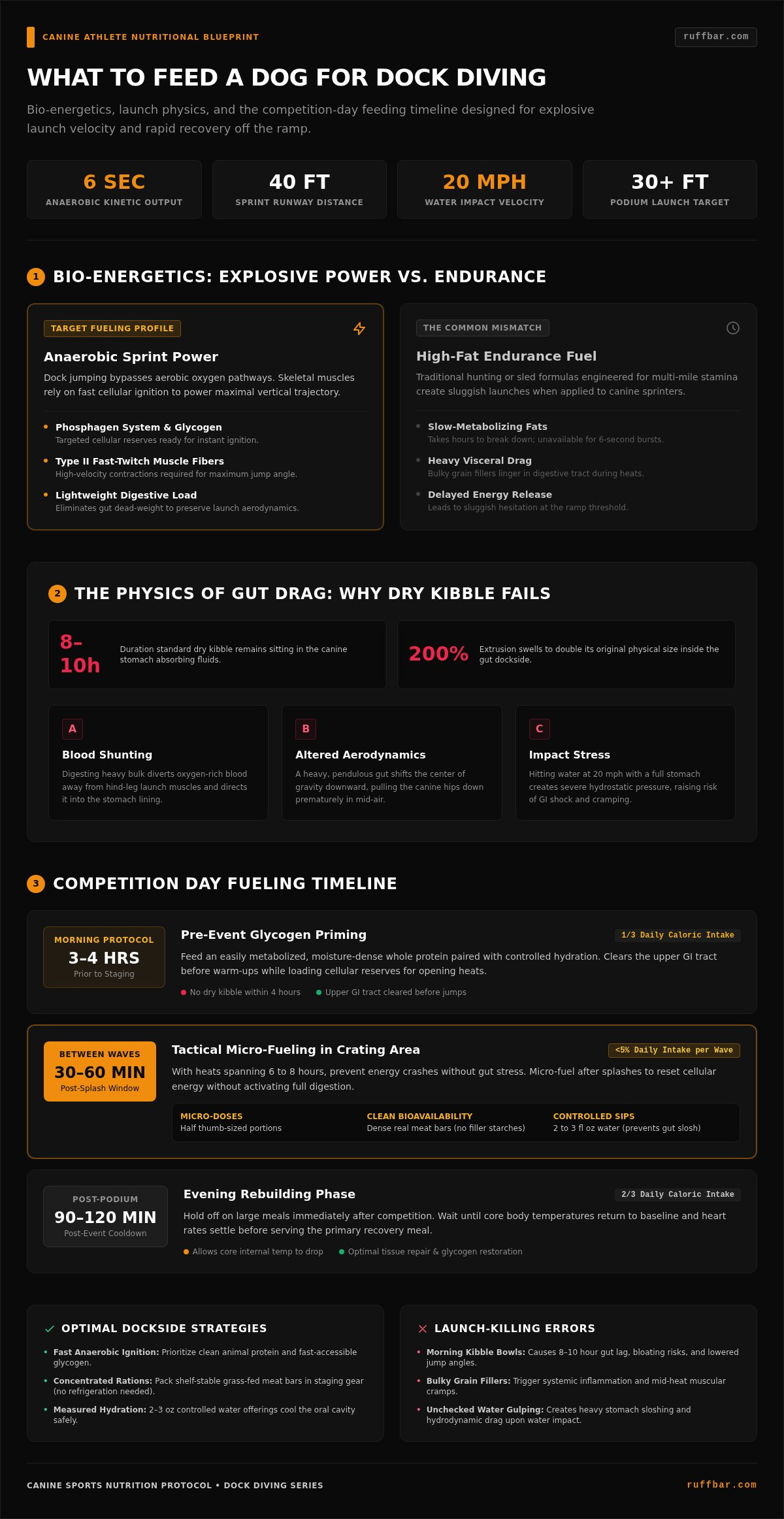
Dock diving is not a marathon. It is an all-out, six-second burst of raw kinetic output. Traditional canine sports nutrition often pushes high-fat endurance formulas engineered for all-day upland hunting or multi-mile sled pulls. Feeding a high-velocity canine sprinter like an endurance athlete creates sluggish launches. To maximize distance, your dog requires rapid-fire metabolic fuel that ignites instantly off the turf.
Anaerobic Sprint Demands on the Dock
Modern dock jumping tests pure acceleration and vertical spring. When your dog charges down the 40-foot runway, their body bypasses aerobic oxygen pathways. Instead, the skeletal muscles rely on the phosphagen system and immediate cellular glycogen to fire Type II fast-twitch muscle fibers. These explosive contractions demand readily accessible cellular energy, not slow-metabolizing fats that take hours to break down. When you evaluate what to feed a dog for dock diving competition, your primary goal is stocking those intracellular reserves without overloading the metabolic engine.
The Threat of Gut Drag and Stomach Load
Mass kills trajectory. Every extra ounce sitting undigested in your dog's gut works directly against their vertical launch angle off the platform edge. Standard dry kibble absorbs fluids, swells to double its size, and sits in the stomach for eight to ten hours. That dead weight compromises jump physics in three direct ways:
- Blood Shunting: Digesting bulky food pulls oxygen-rich blood away from the hind legs and directs it straight to the stomach lining.
- Altered Aerodynamics: A heavy, pendulous gut lowers the dog's center of gravity, dragging the hips down prematurely in mid-air.
- Impact Stress: Hitting the water at twenty miles per hour with a full belly creates acute hydrostatic pressure, increasing the risk of cramping and gastrointestinal shock.
Dialing in what to feed a dog for dock diving competition means eliminating this bulk entirely. Concentrated, bioavailable animal protein fuels maximum muscular contraction while keeping the digestive tract light, tight, and ready for flight.
Competition Day Feeding Timeline: How to Fuel Before, Between, and After Splashes
Timing your dog's fuel dictates their performance off the ramp. Guesswork leads to early exhaustion, nervous diarrhea, or dangerous mid-air cramps. Elite handlers rely on a methodical schedule that aligns digestion with every competitive wave. Knowing what to feed a dog for dock diving competition requires mastering an hour-by-hour protocol that protects the gut and maximizes launch velocity.
Morning Protocol: 3 to 4 Hours Prior to Staging
Never serve dry kibble within four hours of a splash. Dry extrusion sits heavy, drawing blood to the viscera and sharply raising bloat risk. Instead, feed roughly one-third of your dog's normal daily caloric requirement three to four hours before handler check-in. Choose an easily metabolized, moisture-dense whole protein paired with controlled hydration. This clears the upper GI tract before warm-ups while loading cellular glycogen stores for the opening heats.
Between Splashes: Micro-Fueling in the Crating Area
Elimination waves can stretch across six to eight hours. Withholding all food leaves your dog running on empty, while big meals cause lethargy. Tactical micro-fueling bridges this gap cleanly. Aim for a tight thirty-to-sixty-minute window after a splash to reset cellular energy without stressing digestion:
- Target Micro-Doses: Break off small, bite-sized portions roughly half the size of your thumb. Keep it under 5% of daily intake per wave.
- Clean Bioavailability: Dense real meats like high protein dog energy bars sustain intense prey drive without forcing the stomach to process filler starches.
- Controlled Sips: Offer two to three fluid ounces of clean water to cool the oral cavity without sloshing in the gut.
Evening Recovery: Rebuilding Tissue After Final Waves
Hold off on large recovery bowls immediately after the podium presentation. Wait at least ninety minutes to two hours post-event so core internal temperatures drop and heart rates settle. Once your dog is fully cooled, serve the remaining two-thirds of their daily caloric intake. Incorporate targeted performance dog food supplements into clean animal proteins to combat oxidative stress, soothe hard-worked joints, and restock intramuscular fats. For clean, portable trial-side fuel that fits straight into your gear bag, keep real meat options from ruffbar.com ready in your staging crate.
Macronutrient Ratios for Canine Athletes: Protein, Clean Fats, and Hydration
Propulsion starts at the cellular level. Canine physiology does not process fuel the same way human runners do. Dogs rely primarily on bioavailable animal fats and proteins for cellular ATP synthesis, using efficient gluconeogenesis to maintain glucose levels. Stacking their diet with cheap grain carbohydrates slows digestion, triggers systemic inflammation, and robs hindquarter drive. When calculating what to feed a dog for dock diving competition, precise macronutrient balance builds the foundation for explosive lift.
High-Biological Value Animal Protein for Muscle Launch
Plant proteins like pea protein and corn gluten lack the complete amino acid profile active muscle tissue demands. High-velocity launches require complete, USDA-inspected grass-fed red meats packed with naturally occurring leucine and branched-chain amino acids. Leucine acts as the primary chemical trigger for muscle protein synthesis, accelerating cellular repair between qualifying waves. Clean animal protein sharpens neurological focus, sustains intense drive, and protects lean mass against micro-tears during repeated turf sprints.
Calibrated Fats vs. Problematic Grain Carbohydrates
Starchy cereal grains create rapid blood sugar spikes followed by steep energy crashes right before finals. They also pull moisture into the bowel, causing heavy gut transit times and loose stools in the crating tent. Dogs need calibrated, clean animal fats instead. While endurance sled dogs thrive on fat profiles exceeding 30% to 35% on a dry matter basis, dock divers perform best with moderate, highly digestible fat ratios around 15% to 20%. This provides concentrated cellular energy without burdening the stomach or delaying gastric emptying.
Tactical Hydration Protocols and Water Management
Dumping gallons of standing water into a dog's bowl on competition morning is a recipe for disaster. Effective hydration operates on a cellular level hours ahead of the splash, not minutes before:
- Pre-Event Broth Baiting: Infuse clean, warm bone broth into small meals to drive fluid retention without bloating the abdominal cavity.
- Electrolyte Stability: Natural sodium and potassium balances keep fast-twitch muscle contractions firing smoothly and eliminate dockside cramping.
- Pre-Launch Restriction: Cut off free-access water thirty minutes before stepping onto the runway. Allow only tongue-wetting sips to prevent an uncomfortably full bladder and heavy stomach mid-air.
Mastering what to feed a dog for dock diving competition requires viewing every calorie as structural equipment. Pure protein, functional fats, and controlled hydration keep your athlete firing at peak wattage.
Common Fueling Mistakes That Ruin Jump Distance and Trigger Bloat
One tactical misstep at the feeding bowl can erase months of dock training. Worse, careless fueling puts your dog in life-threatening territory. In aquatic sports, physical mechanics collide with internal biology. When you choose what to feed a dog for dock diving competition, steering clear of common fueling errors protects your dog's speed, gut health, and safety.
The Threat of Bloat (GDV) and Stomach Weight
Gastric Dilatation-Volvulus (GDV) strikes when a stomach distends and twists along its axis, cutting off circulation. In dock diving, the danger compounds violently. A dog hitting the water at high speed endures sudden abdominal compression and rotational torque. If the stomach holds a heavy mass of expanding kibble, that momentum swings the organ like a pendulum, drastically raising the risk of torsion. Maintain a hard two-to-four-hour buffer between meals and dock entry. Watch for restlessness, non-productive retching, or a distended abdomen in the staging crates, and pull your dog immediately if symptoms emerge.
Managing Hyponatremia and Ingested Pool Water
Enthusiastic retrievers swallow remarkable amounts of water while grabbing bumpers. This involuntary gulping triggers hyponatremia, or water intoxication. Excess fluid enters the bloodstream, dilutes extracellular sodium levels, and disrupts electrolyte signaling. Muscles lose their capacity for rapid contraction, leading to sudden lethargy, staggering, and nausea. Counter this risk on deck:
- Use Wide-Grip Bumpers: Floating toys that keep your dog's mouth partially closed prevent open-jaw scooping on retrieval.
- Mandate Rest Intervals: Never send a dog for rapid back-to-back splash repetitions without giving their throat and stomach time to clear.
- Monitor Urination Frequency: Pale, excessive urination paired with glazed eyes signals dangerous electrolyte dilution.
The Danger of Novel Protein Introduction at Events
Vendor rows at diving events brim with free treat samples and mystery formulas. Accepting them on trial morning is an unforced error. Novel proteins, synthetic preservatives, and artificial binders irritate the gut lining, triggering mid-wave diarrhea or nausea. What to feed a dog for dock diving competition should remain completely dialed in weeks ahead. Test every protein during weekday practices, not under the show tent. To equip your kit with clean, proven, single-ingredient power before your next trial, shop performance-grade whole food fuel that keeps digestive stability uncompromised.
Tactical Fueling with Ruff Bar: Real Meat Solutions for the Staging Area
Staging paddocks are chaotic, hot, and unforgiving. Hauling bulky coolers of perishable meat or relying on crumbly commercial treats compromises preparation. High-drive canine athletes need concentrated, shelf-stable fuel that fits straight into your dry bag without refrigeration. By deploying functional, real-meat nutrition, you give your dog an unfair advantage when setting up on the runway.
Ruff Food Bars and Ruff Stix® for Staging Focus
Precision matters in the staging lanes. Ruff Food Bars deliver dense, clean fuel made from USDA-inspected grass-fed proteins without a trace of grain, corn, or soy fillers. Handlers can snap off clean, non-crumbly pieces to keep intense focus locked on the bumper without littering the turf. For quick, high-value drive between rounds, Ruff Stix® Beef and Ruff Stix® Bison Pork provide targeted amino acids in an easily digestible, chewable format. Single-source animal proteins protect sensitive stomachs, keeping your dog light, driven, and free from digestive drag.
Rehydratable Raw Meals for Post-Event Muscle Rebuild
Evening recovery demands rapid nutrient delivery without inflammatory starches. Ruff Food Freeze Dried Raw Backpacking Meals Beef solves both cellular rebuilding and hydration in one step. Simply add warm water to rehydrate the meal, replenishing fluids lost to panting while delivering essential fats and bioavailable muscle meat. Pairing your post-splash protocol with lightweight freeze dried treats for dogs gives your athlete the clean proteins required to rebuild micro-torn muscle tissue after multiple maximum-effort launches.
Functional Nutritional Support for Weekend Trials
Multi-day competitions test endurance and appetite. Crating stress and environmental noise often cause high-drive dogs to back off their standard kibble. Incorporating Ruff Bar Functional Nutrition Toppers restores appetite instantly, coating rations in nutrient-dense animal protein without introducing gut-disrupting chemicals. Combine that with Ruff Supplements for Dogs to reinforce joint capsules, protect shock-absorbing connective tissue, and soothe high-impact landing fatigue. Dialing in what to feed a dog for dock diving competition is simple when you treat nutrition like essential tactical equipment. Fuel your dock diving champion with Ruff Bar to unlock peak launch drive and rapid recovery all season long.
Own the Ramp with Precision Canine Fuel
Every extra inch off the platform demands calculated preparation. When you master what to feed a dog for dock diving competition, you eliminate sluggish gut drag, sidestep dangerous bloat risks, and deliver fast-burning cellular power right when your dog locks eyes on the toy. Strict meal timing before the morning heats and tactical micro-fueling between splashes keep drive sharp, muscles primed, and focus unbroken all day long.
Your dog works hard on the turf. Fuel them with nutrition engineered specifically for hard-charging canine athletes. With 100% USDA-inspected grass-fed proteins and zero fillers, grains, or artificial preservatives, you give your teammate the clean propulsion and rapid recovery they need to dominate the pool. Back your training with gear that performs under pressure. Equip your dog for peak dock diving performance with Ruff Bar and watch them soar past their personal best on the very next splash.
Frequently Asked Questions
How long before a dock diving splash should I feed my dog?
Feed your dog their morning meal three to four hours before staging begins. This window allows the stomach to empty, moving nutrients into the bloodstream while clearing dead gut weight. Never feed a standard dry kibble ration within four hours of launching. When planning what to feed a dog for dock diving competition on event day, keep morning portions to roughly one-third of their baseline daily calories.
What kind of treats are best for keeping my dog focused on the dock?
Choose dense, non-crumbly real meat treats that deliver instant drive without leaving residue on the runway. High-protein rewards like Ruff Stix® Beef or broken pieces of Ruff Food Bars provide intense scent attraction and clean amino acids. Avoid dry, crumbly biscuits or sugary soft chews. Starchy fillers drop crumbs, slow digestion, and trigger sharp blood sugar drops right before an elimination wave.
Can my dog get bloat from swimming right after eating?
Yes. Swimming with food in the stomach dramatically elevates the risk of Gastric Dilatation-Volvulus (GDV). Hitting the water at high speed creates strong abdominal pressure and rotational torque. If heavy, expanding food sits in the digestive tract, that momentum can cause the stomach to flip. Always enforce a strict two-to-four-hour rest buffer between any meal and dock entry to protect your dog's life.
How do I stop my dog from drinking too much pool water during jumps?
Switch to wider, buoyant bumpers that fill your dog's mouth and prevent open-jaw scooping on the retrieve. Limit continuous water repetitions during practice so your dog does not gulp excess pool water out of fatigue. Offer measured, tongue-wetting sips of clean water crating dockside. Keeping your canine athlete hydrated before entering the arena reduces the urge to drink chlorine or treated water while swimming.
Should I feed my dock diving dog more calories on competition days?
No, dock diving sprinters do not require massive caloric surpluses. Unlike multi-day endurance sled dogs, dock jumpers burn energy in short, explosive anaerobic bursts. Their race-day expenditure only rises by roughly 10% to 15%. Overfeeding creates lethargy, gut drag, and digestive distress. Keep total daily calories near standard baseline, shifting the majority of that nutrition to the evening recovery window after jumping finishes.
Are high-protein energy bars safe for dogs between competition heats?
Yes, provided they consist of pure, whole-food animal proteins without artificial binders or grain fillers. Clean energy bars like Ruff Food Bars are specifically formulated for working dogs, making them ideal for micro-dosing in the staging paddock. Giving small, thumb-sized pieces between waves replenishes depleted amino acids and sustains intense focus without triggering stomach distress or weighing down their hips on launch.
What should I feed my dog the night before a major dock diving trial?
Feed their normal, highly digestible animal protein dinner twelve to fourteen hours before the event, enhanced with warm bone broth for deep cellular hydration. Avoid switching proteins or introducing heavy fats the night before. Perfecting what to feed a dog for dock diving competition requires total consistency. A stable, familiar whole-food meal ensures gut calm, deep restorative sleep, and fully stocked glycogen reserves by morning.