
Single-Protein Dog Food Benefits: What It Can, and Cannot, Do
A simpler protein label can make the feeding picture clearer, but it can’t diagnose your dog or guarantee a better diet. If recurring itching, ear trouble, or digestive upset has you scanning ingredient lists, understanding the single protein source dog food benefits can help you make a more informed comparison. One named animal protein may narrow the ingredients you’re tracking, but “single-protein,” “limited-ingredient,” and “novel-protein” don’t mean the same thing.
When symptoms keep returning, a straightforward food can seem like an obvious next step. Treat that simplicity as one useful clue, not the whole answer. This guide explains what single-protein food can and cannot do, how to compare protein and nutrition details on labels, and when a veterinarian’s guidance matters. You’ll also learn why suspected food allergies are typically investigated through a strict, veterinarian-directed elimination diet, and why a simpler ingredient list alone doesn’t establish that a food is complete and balanced. Clear comparisons and realistic expectations can help you plan your dog’s next steps, on the trail and at home.
Key Takeaways
- Single-protein food features one animal-protein source, but that doesn’t mean it contains only one ingredient or is nutritionally complete.
- Potential single protein source dog food benefits include simpler ingredient tracking, but don’t assume the food will resolve symptoms.
- Compare single- and multi-protein recipes by ingredient transparency, protein variety, and whether the food fits your dog’s needs.
- Use a practical checklist to review the full recipe, nutritional adequacy, feeding goal, and transition plan.
- For active dogs, assess the full feeding plan, including daily nutrition and activity demands, rather than relying on one label claim.
What Does Single-Protein Dog Food Mean?
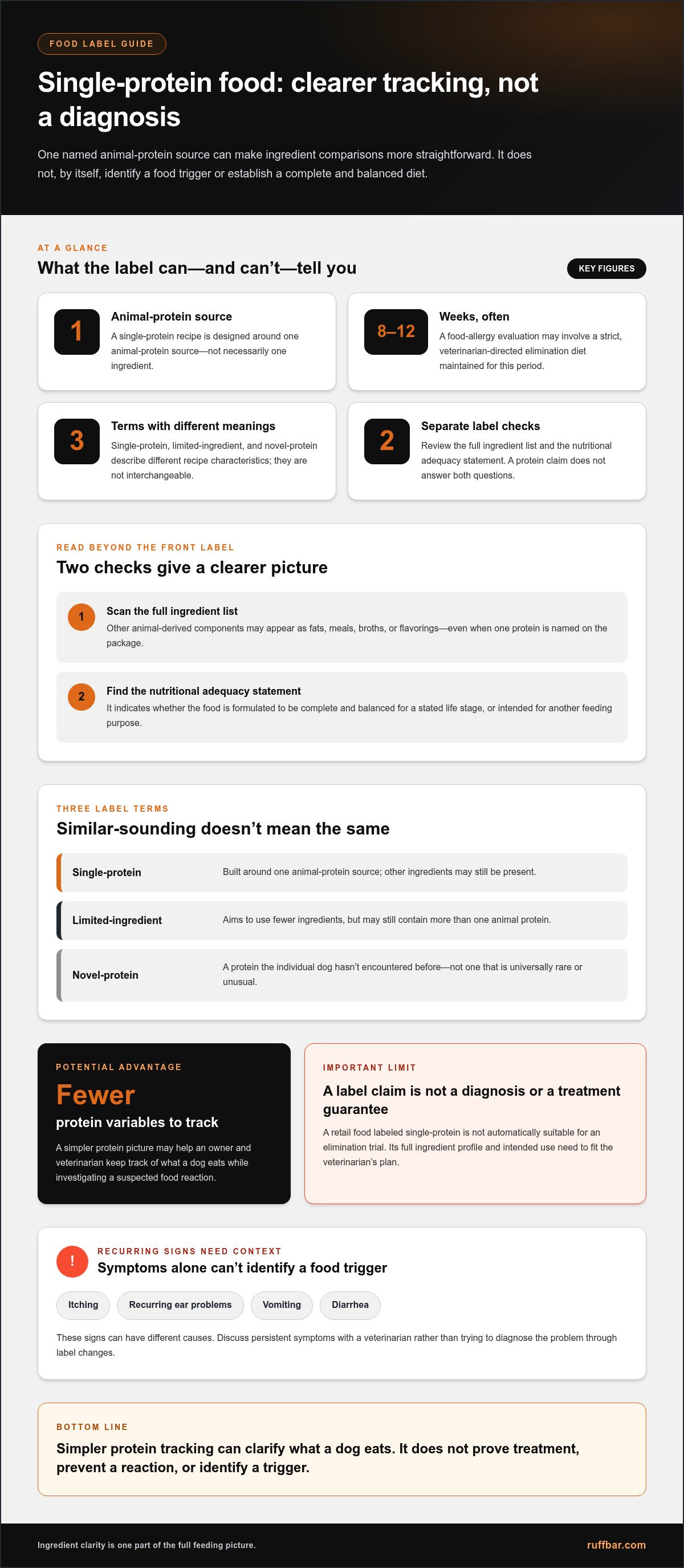
Single-protein dog food is a recipe designed around one animal-protein source, though its complete ingredient list may include other ingredients and animal-derived components. The phrase describes the protein-source approach, not a one-ingredient formula. It also doesn’t automatically mean grain-free, nutritionally complete, or suitable for a particular health concern. For a broader overview of common food types and ingredients, see Dog food.
This distinction matters when you compare labels. A recipe may feature beef while also listing ingredients derived from another animal. Understanding the term is the first step in assessing the single protein source dog food benefits without treating a short label claim as the whole nutritional picture.
Single-protein, limited-ingredient, and novel-protein diets
These terms describe different recipe characteristics. A single-protein recipe is built around one animal-protein source. A limited-ingredient recipe aims to use fewer ingredients, but it can still contain more than one animal protein. “Novel protein” means a protein the individual dog hasn’t encountered before, not one that’s universally rare or unusual. The terms aren’t interchangeable guarantees, so read the recipe rather than relying on the label alone.
What the label does, and does not, tell you
A protein name on the front of a package is a starting point, not a complete ingredient inventory. Check the full ingredient list for other animal-derived components, which may appear as fats, meals, broths, or flavorings. If you’re tracking what your dog eats, each listed component may matter. Don’t assume the named protein is the only animal-derived ingredient.
Then find the nutritional adequacy statement. It indicates whether the food is formulated to be complete and balanced for a stated life stage or is intended for another feeding purpose. A single-protein claim doesn’t establish nutritional completeness. Those are separate questions.
Marketing terms can help you understand how a food is presented, but they don’t diagnose a food sensitivity or prove a therapeutic effect. If you’re considering a diet change because of recurring symptoms, involve your veterinarian. The label can guide a careful comparison, but it can’t identify the cause of a health problem on its own.
Potential Benefits of Single-Protein Dog Food
A recipe centered on one animal-protein source may make food comparisons and ingredient tracking more straightforward. That’s a practical advantage, not a promise of improved health. The single protein source dog food benefits depend on the full recipe and the dog’s individual needs, not just the number of proteins named on the package.
Could one protein source help with food-sensitivity investigations?
Fewer protein variables may help an owner and veterinarian keep track of what a dog eats while investigating a suspected food reaction. But itching, recurring ear problems, vomiting, and diarrhea can have different causes. Symptoms alone can’t identify a food trigger, so discuss persistent signs with a veterinarian rather than trying to diagnose the problem through label changes.
Food allergy assessment may involve a strict, veterinarian-directed elimination diet, often maintained for 8 to 12 weeks. A retail food labeled single-protein isn’t automatically suitable for that trial. Its full ingredient profile and intended use need to fit the veterinarian’s plan. Tufts University Cummings School of Veterinary Medicine explains more about diagnosing a food allergy through dietary evaluation.
Simpler protein tracking can clarify what a dog eats; it doesn’t prove treatment, prevent a reaction, or identify a trigger.
Does a simpler protein choice make feeding easier?
It can make side-by-side comparisons clearer, especially if you’re considering a food rotation or trying to keep your dog’s routine consistent. A named protein is a useful starting point, but check the full ingredient list. Other foods, treats, chews, and toppers also contribute to the overall picture.
Keep a simple record of meals, snacks, treats, and noticeable symptoms. Note when a food changes and what else was different in your dog’s routine. This context can help you describe patterns to your veterinarian. It’s more useful than switching foods repeatedly and relying on memory alone.
Don’t assume one protein source inherently improves digestion, energy, or skin health. Those outcomes can’t be guaranteed by a label claim. For active dogs, ingredient transparency can still help you compare feeding options as part of the bigger nutrition picture. Explore Ruff Bar dog nutrition options as you consider how different products may fit into your dog’s overall feeding plan.
Single-Protein vs. Multi-Protein Dog Food: How to Compare
The number of protein sources is one comparison point, not a quality score. A single-protein recipe may simplify ingredient tracking, while a multi-protein recipe can offer variety. Neither is automatically better for every healthy dog. Compare the full ingredient list, nutritional adequacy statement, and your dog’s needs before choosing.
| Comparison point | Single-protein formula | Multi-protein formula |
|---|---|---|
| Ingredient tracking | May make it easier to follow one named animal-protein source, though other animal-derived ingredients may still be present. | Includes multiple protein sources, so tracking exposure may require closer review of the full recipe. |
| Protein variety | Centers the recipe on one animal-protein source. | Combines two or more animal-protein sources; variety alone doesn’t determine quality. |
| Veterinary trials | May be easier to assess, but isn’t automatically appropriate for an elimination trial. | May be unsuitable for some controlled trials, depending on the veterinarian’s plan and the complete recipe. |
Look beyond the protein count. Check what else the food contains and whether its adequacy statement fits your dog’s life stage and feeding purpose. Dogs need balanced nutrition, not simply a particular number of protein sources. The Merck Veterinary Manual’s Nutritional Requirements overview provides context for assessing canine nutrition beyond a front-of-package claim.
When might a single-protein formula be a useful fit?
If you want a simpler protein profile for routine food comparisons, one named source may make ingredient records easier to manage. Your dog’s known food history can help guide that choice. For example, a protein the dog has eaten before may not suit a veterinarian-directed investigation that calls for a different approach. Convenience is not diagnosis or treatment. The practical single protein source dog food benefits depend on your goal and the whole recipe.
When can a multi-protein formula make sense?
For a dog without a relevant dietary restriction or veterinarian-directed trial, a multi-protein recipe may be a reasonable option if the dog tolerates it and the food’s overall formulation meets its needs. Assess its ingredients and adequacy just as carefully as you would a single-protein food. More protein sources don’t automatically mean lower quality or poor suitability.
Bottom line: The right comparison depends on your dog’s needs and the food’s complete formulation, not the number of proteins named on the package.
How to Choose and Introduce a Single-Protein Dog Food
A clear goal makes the choice easier. Use this checklist to compare the full formulation, plan a careful change, and keep useful records. The possible single protein source dog food benefits are easier to assess when you know what you’re trying to achieve.
- Define the goal. Are you simplifying routine ingredient tracking, responding to a known dietary need, or investigating recurring symptoms? If itching, ear problems, vomiting, or diarrhea are driving the change, speak with your veterinarian before switching. A food change alone can’t diagnose the cause.
- Review the full recipe. Read every ingredient, not just the protein named on the front. Include treats, chews, toppers, and supplements in your review, since they can add other protein sources to your dog’s diet.
- Check nutritional adequacy. Find the nutritional adequacy statement, intended life stage, and feeding directions. Ingredient names alone don’t establish that a food provides complete nutrition. For a diagnosed condition or a veterinarian-directed trial, follow the specific feeding plan your veterinarian recommends.
- Plan the transition. If a gradual change is appropriate, follow the food label and your veterinarian’s directions. Adjust the pace to your dog’s tolerance rather than making an abrupt switch without guidance.
Read the full food label before choosing
Look for the ingredient list, nutritional adequacy statement, life-stage information, and feeding directions. Then review everything your dog eats, including training treats, toppers, supplements, and chews. A food’s featured protein is only one part of the recipe. If you’re choosing a diet to manage a diagnosed condition or investigate symptoms, let your veterinarian guide the selection.
Transition carefully and track the response
Keep the change measured and consistent. When practical, avoid introducing several major feeding changes at once so your notes remain easier to interpret. Record the food and treats, the date of each change, stool changes, and any skin signs. A log can give you and your veterinarian helpful context, but it can’t confirm a diagnosis.
Contact your veterinarian if symptoms persist, worsen, or concern you. For a routine ingredient comparison, explore Ruff Bar’s dog nutrition options and assess each product’s full label as part of your dog’s overall feeding plan.
Choosing Protein Options for Active Dogs: Where Ruff Bar Fits
On the trail, a protein label is only one piece of the feeding plan. Match the full formulation to your dog’s needs, activity level, and daily nutrition requirements, not to a single front-of-package claim. The practical single protein source dog food benefits may include easier ingredient comparisons, but that doesn’t establish that a product is a complete meal or right for every dog.
Assess the whole feeding plan for an active dog
Start with your dog’s regular meals, then account for treats, bars, and toppers separately. Consider how much activity your dog does, how feeding fits into the day, and access to water. A high-protein product alone doesn’t necessarily provide all the energy or nutrients your dog needs. Check the product’s intended role and feeding directions, and keep complete daily nutrition in view.
For a closer look at how bars fit into active routines, read this guide to high-protein dog energy bars. Use it as context for planning snacks, not as a substitute for evaluating your dog’s main diet.
Explore protein-forward options without overclaiming
Ruff Stix® Beef and Ruff Stix® Pork are named options to consider within a broader feeding plan. Don’t infer from the product name alone that either contains only one animal-protein source. Read the ingredient panel and product directions, and distinguish a treat or food bar from a meal. For any product being considered as a main diet, check its nutritional adequacy statement and intended life stage.
Format matters on the move, too. Explore this guide to freeze-dried treats for dogs for treat-format context, and see the freeze-dried raw dog food for backpacking guide for meal-planning ideas. Treats and meals play different roles, so account for each separately in your dog’s daily plan.
Choose for the whole dog: formulation, activity, hydration, and feeding purpose. Explore Ruff Bar’s adventure-ready nutrition to see options for your next outing.
Make Your Next Food Choice With Confidence
Single-protein recipes can make ingredient comparisons easier, but the single protein source dog food benefits are practical, not guaranteed health outcomes. One protein label doesn’t confirm a food is complete, diagnose a sensitivity, or make it right for every dog. Compare the full ingredient list and nutritional adequacy statement, then weigh your dog’s history, activity, and daily feeding plan.
If you’re investigating recurring skin or digestive signs, bring your observations to your veterinarian before changing foods. Keep track of meals, treats, and symptoms. A clear record can support a more informed conversation, even if it can’t identify a cause on its own.
For active dogs, Ruff Bar offers options including Ruff Stix® Beef and Ruff Stix® Pork, along with freeze-dried meals, food bars, and nutrition toppers. Consider each product’s role and label as part of the whole plan. Explore Ruff Bar’s adventure-ready nutrition and take your next step with a sharper eye for what your dog needs.
Frequently Asked Questions
What are the benefits of single-protein dog food?
Single-protein dog food can make a recipe’s protein profile easier to understand and food choices easier to track. These practical single protein source dog food benefits may help you discuss your dog’s diet with a veterinarian, but they don’t guarantee better digestion, fewer allergies, or improved health. Read the full ingredient list and nutritional adequacy statement. If your dog has symptoms, seek veterinary guidance rather than trying to diagnose the cause through food changes.
Is single-protein dog food better for dogs with allergies?
No, not automatically. A recipe featuring one animal protein may make ingredient tracking simpler, but that doesn’t mean it’s designed to diagnose or manage an allergy. Food-related symptoms can have other causes, and a retail formula may not suit a veterinarian-directed elimination trial. If your dog has persistent itching, ear problems, vomiting, or diarrhea, ask your veterinarian how to investigate before changing foods. The label alone can’t identify a trigger.
Can dogs eat food with more than one protein source?
Yes, many dogs can eat multi-protein food if the complete recipe suits their individual needs. Several protein sources don’t automatically make a food unsuitable or lower quality. Compare the ingredients with your dog’s established tolerance and check that the food’s nutritional adequacy statement fits its intended use and life stage. If a veterinarian has recommended a controlled diet for a specific concern, follow that plan instead of choosing by protein count alone.
How do I know if dog food contains only one protein source?
Read the entire ingredient list, not just the product name or front label. Look for other named meats, animal meals, fats, broths, and ingredients that may introduce additional animal proteins. Review treats, toppers, chews, and supplements too if you’re tracking your dog’s exposure. If you’re assessing a food for a medical investigation, share its label with your veterinarian before relying on it. A single-protein claim alone may not tell the whole story.
Is single-protein dog food the same as limited-ingredient dog food?
No. Single-protein describes a recipe’s animal-protein sources, while limited-ingredient generally describes a shorter or more restricted ingredient list. A limited-ingredient food can still contain multiple animal proteins, and a single-protein food can include many other ingredients. Don’t treat the terms as interchangeable. Check the complete formula to see which proteins and other ingredients are present, then assess whether the food’s nutritional adequacy statement suits your dog.
How should I switch my dog to a single-protein food?
Follow the new food’s directions and your veterinarian’s advice, especially if symptoms or a diagnosed condition prompted the change. A gradual transition may help some dogs adjust, but the right approach can vary. Keep other foods and treats consistent when practical, and record dates, appetite, stool changes, and skin signs. These notes can provide useful context, not a diagnosis. Contact your veterinarian if symptoms persist or concern you.