
Signs of Dehydration in Active Dogs: Handler's Guide
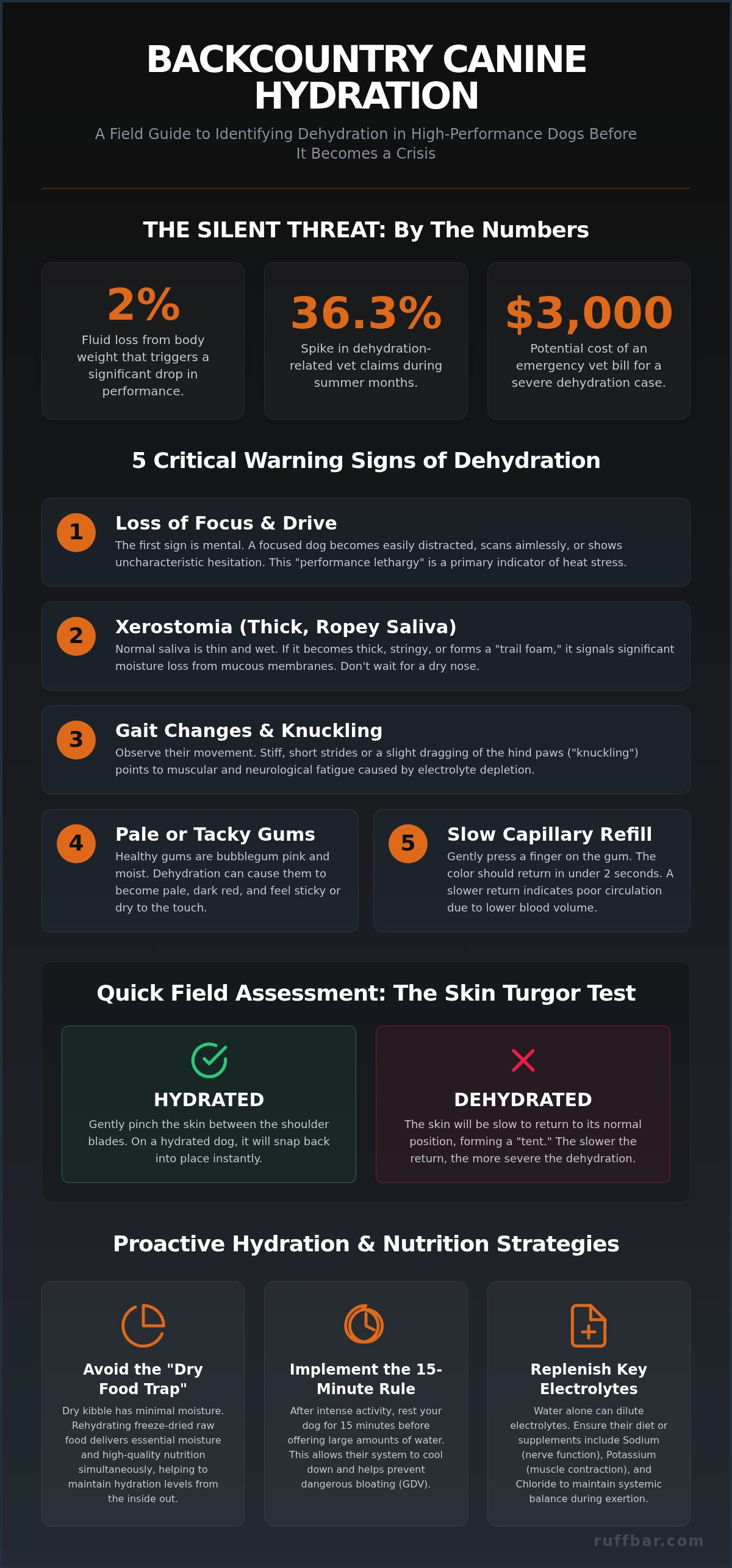
In the backcountry, a single miscalculation isn't just a setback. It's a $3,000 emergency vet bill waiting to happen. You push hard. Your dog pushes harder. You recognize the drive in their eyes, but discerning the subtle signs of dehydration in active dogs from earned fatigue is where many handlers fail. During summer months, dehydration-related claims spike by 36.3%. By the time your dog stops moving, you're already too late.
You shouldn't have to guess if your partner is hitting a wall or losing the battle against heat stress. We understand the fear of being miles from the nearest clinic with a dog that can't stand. This guide ensures you never face that uncertainty again. You'll learn to identify performance-limiting symptoms before they escalate into a medical emergency. We're breaking down a clear field-assessment checklist, the vital role of electrolytes in performance, and how to use tools like Ruff Food Freeze Dried Raw to maintain hydration levels on the move. Prepare for the terrain. Protect the engine. Let's get to work.
Key Takeaways
- Identify the subtle signs of dehydration in active dogs, including loss of focus and gait changes, before they escalate into a backcountry crisis.
- Master field assessment protocols like the skin turgor test to establish a baseline and monitor hydration levels throughout the hunt or hike.
- Avoid the "Dry Food Trap" by utilizing rehydrated Ruff Food Freeze Dried Raw to provide essential moisture and high-standard nutrition simultaneously.
- Implement strategic hydration techniques, such as water baiting and the 15-minute rest rule, to ensure maximum fluid absorption and recovery.
- Understand the critical role of electrolytes and metabolic water in maintaining systemic balance during extreme physical exertion.
Beyond Thirst: Why Dehydration is the K9 Athlete’s Silent Rival
Dehydration isn't a simple lack of water. It's a systemic failure of the fluid and electrolyte balance required for high-stakes movement. For the canine athlete, water is the medium for every metabolic transaction. It regulates temperature. It lubricates joints. It delivers nutrients. When fluid loss outpaces intake, the entire biological system begins to degrade. Mastering canine health basics is essential for any handler pushing into rugged terrain where help is miles away.
The danger is invisible at first. Research indicates that a mere 2% loss in body weight through fluid depletion triggers a significant drop in physical performance. By the time you notice the obvious signs of dehydration in active dogs, their endurance has already peaked and plummeted. Thirst is a lagging indicator. If you're waiting for your dog to beg for water, you've already lost the edge. You're no longer managing performance; you're managing a crisis.
The Physiology of a Working Dog in Heat
Dogs rely on a specific, high-energy cooling mechanism: panting. Every breath on a hot trail expels moisture from the lungs and tongue. They also lose fluid through evaporation on their paw pads. This rapid drainage reduces total blood volume. Thicker blood moves slower. It struggles to deliver oxygen to working muscles and remove metabolic waste. This friction leads to rapid glycogen depletion, forcing the dog to burn through energy reserves at an unsustainable pace. High-output activity turns the body into a furnace that consumes its own coolant. Without immediate intervention, the engine stalls.
Electrolytes: More Than Just Salt
Electrolytes are the electrical grid of the dog. Sodium, potassium, and chloride manage the signals that tell muscles to fire and nerves to respond. Sodium is the primary driver of nerve impulses during a hunt or a fast-paced run. Potassium is the key to muscle contraction and preventing the debilitating trail cramps that stall progress. Using "water-only" rehydration during extreme exertion can actually be counterproductive. It dilutes existing electrolyte levels, leading to a state of systemic imbalance. True recovery requires a high-standard approach, integrating moisture with the minerals lost during the grind. Products like Ruff Food Freeze Dried Raw provide an advantage here. They allow handlers to rehydrate meals on the trail, delivering clean protein and essential moisture in one functional package.
The 5 Critical Warning Signs of Dehydration in Active Dogs
The first signs of dehydration in active dogs often manifest in the mind before the body. Waiting for a dry nose is a tactical error. By the time that happens, your dog is already deep into a deficit. You need to identify the subtle shifts in output that signal a system under stress. Early detection prevents a performance dip from becoming a medical evacuation.
Early Warning: Behavioral and Mental Shifts
Watch the drive. A focused dog tracks with purpose; a dehydrated dog begins "scanning" aimlessly. They lose the ability to process complex commands or navigate technical obstacles. You might see uncharacteristic hesitation or irritability when asked to perform standard tasks. Performance lethargy is the sudden, uncharacteristic drop in drive or responsiveness that precedes clinical collapse. If your high-drive partner suddenly "checks out," the problem is likely fluid-related heat stress. Keeping a pack of Ruff Stix® on hand can help you test their food drive and regain focus during these critical breaks.
Physical Red Flags: The Body’s SOS
When the brain flags, the body follows. You must monitor these physical indicators throughout the day to ensure the system remains operational. If you observe multiple symptoms, the situation has moved beyond simple fatigue.
- Xerostomia: Saliva should be thin and wet. If it turns into thick, ropey "trail foam," the reservoir is low. This is a primary indicator of moisture loss in the mucous membranes.
- Gait Changes: Look for stiff movement or "knuckling," where the hind paws drag slightly. This indicates neurological and muscular fatigue caused by electrolyte depletion.
- Gum Color and Capillary Refill Time (CRT): Healthy gums are bubblegum pink. Tacky, pale, or dark red gums are a warning. Press your finger against the gum; it should return to pink in under two seconds. If it takes longer, you are looking at poor circulation and a potential need for veterinary fluid resuscitation protocols if not addressed immediately.
- Skin Turgor: Pinch the skin between the shoulder blades. It should snap back instantly. If it stays "tented," even for a second, your dog is dangerously dry. For thick-coated breeds, feel the tension of the skin rather than just the visual snap.
- Sunken Eyes: This is a critical indicator. When the eyes appear recessed or dull, it typically signals a 10% fluid loss. This is no longer a trail-side fix; it is a medical emergency.
Excessive panting that continues at a high rate after five minutes of stationary rest is the final alarm. The body is struggling to dump heat because there isn't enough fluid left to facilitate the exchange. Stop the activity. Move to shade. Rehydrate immediately.
The Hydration-Nutrition Link: Why Water Alone Isn’t Performance Fuel
Water is the foundation. Nutrition is the carrier. You cannot separate hydration from the fuel you put in the bowl. Many handlers ignore the "Dry Food Trap." Standard kibble is highly processed and moisture-depleted. When a dog consumes dry food during exertion, the body must divert internal water to the digestive tract just to process the meal. It pulls fluid from the bloodstream. It drains the reservoirs. This hidden drain can accelerate the signs of dehydration in active dogs, turning a routine trail meal into a physiological liability.
Clean protein and fat are superior fuels. Burning fat through beta-oxidation produces metabolic water. For every gram of fat oxidized, the body creates roughly 1.1 grams of internal moisture. This is the biological advantage of high-standard, grain-free nutrition. It fuels the movement while providing a secondary water source. Grass-fed meats reduce metabolic heat. They digest with efficiency. They keep the engine running cool. High-output activity requires high-output fuel.
The Advantage of Freeze-Dried Raw on the Trail
Performance requires preparation. "Wet-loading" is the strategy of pre-hydrating meals before the activity begins. Ruff Food Freeze Dried Raw acts as a biological sponge. It is designed for rehydration. By adding water to create a "stew" consistency, you force-load moisture into the system alongside USDA-graded meats. This ensures the dog is hydrated from the inside out. Grain-free formulas are critical here. Grains and starches are inflammatory. They require more water for processing and increase the overall fluid requirement. Stick to purity. Stick to performance.
High-Value Treats as Hydration Incentives
Sometimes the drive to drink fails. You need a catalyst. Use Ruff Stix® to bridge the gap. These high-value rewards encourage "thirst drive" during mandatory rest breaks. They provide the protein needed for focus without the bloat of fillers. Strategic snacking keeps blood glucose stable and prevents the lethargy associated with calorie deficits. Using high protein dog energy bars supports recovery through cellular hydration, ensuring that every cell remains functional during the grind. High-stakes nutrition is your first line of defense. Don't let a dry bowl dictate your partner's limits.
Field Assessment Protocols: Testing Hydration Levels Mid-Adventure
Precision requires a baseline. You cannot identify signs of dehydration in active dogs if you don't know their "normal" state. Check your dog at the trailhead. Note the moisture of the gums. Observe the snap of the skin. Watch the spring in their step during the first mile. This is your control data. Any deviation from this baseline during the heat of the day is a signal to evaluate the system's integrity.
Perform the Skin Turgor Test every hour during high-output sessions. Pinch the skin over the shoulders or the back of the neck. Release it. In a hydrated athlete, the skin snaps back instantly. If it moves slowly or remains tented, the reservoir is depleted. Supplement this with an output check. Urine should be frequent and light in color. Dark, concentrated urine or a total lack of output on a long expedition indicates a critical fluid deficit. Monitor the movement. A loss of the "spring" in their gait or a sudden reluctance to jump over obstacles suggests the muscles are no longer properly lubricated.
How to Perform the 2-Second Capillary Refill Test
The Capillary Refill Time (CRT) is a technical window into your dog's circulatory health. Follow this protocol for an accurate reading:
- Lift the upper lip to expose the gums.
- Press your thumb firmly against the tissue until it turns white.
- Release the pressure.
- Count how many seconds it takes for the pink color to return.
A refill time of over two seconds indicates low blood volume and dropping blood pressure. The system is struggling to push blood to the extremities. If the CRT exceeds two seconds, stop the activity immediately. Move to shade. Administer small, frequent amounts of water and electrolytes. Do not push further until the CRT returns to the sub-two-second baseline.
Reading the "Trail Foam"
Saliva is a diagnostic tool. Healthy cooling lather is thin, white, and dissipates quickly; it's a sign of active thermoregulation. Dehydration "ropes" are different. They are thick, sticky, and cling to the flews. This indicates that the body is conserving water by reducing saliva production. Xerostomia is the clinical term for dry mouth in dogs, and it signals a systemic failure of fluid balance. When you see thick saliva, it's a sign to stop and rehydrate with electrolytes to restore the electrical grid of the muscles. Prepare for your next mission by packing high-performance nutrition that supports hydration from the trailhead to the summit.
Proactive Hydration Strategies: Fueling for Recovery and Endurance
Identifying the signs of dehydration in active dogs is the first step; reversing the deficit requires a tactical approach. Many high-drive dogs refuse plain water when they're under stress or focused on a task. Use the "Baiting" technique to override this refusal. Adding bone broth for dogs to their water creates a high-value incentive that encourages deep drinking. This isn't just about palatability. It's about ensuring the reservoir is topped off before the next push. Follow the 15-minute rule for strategic rest. Never allow a dog to gulp massive volumes of water immediately after a sprint. Let the heart rate stabilize. Allow the core temperature to drop. Then, provide controlled hydration.
Recovery is a continuous process that extends beyond the trail. Use performance dog food supplements to restore the specific minerals lost during intense exertion. Standard water doesn't replace the sodium and potassium drained by hours of panting. Monitor your partner for "delayed dehydration" two to four hours after the adventure ends. The system can still crash once the adrenaline fades and the body attempts to repair muscle tissue. Stay vigilant until their output and energy levels return to their established baseline.
The Role of Fat and Protein in Hydration
Fat is the ultimate endurance fuel for the canine athlete. Snacks like Ruff Stix® provide dense, sustained energy without the metabolic sugar crash associated with low-quality treats. High-quality protein is equally essential; it facilitates cellular repair and helps the body retain necessary fluids. For a mid-adventure recharge, create a "Hydration Cocktail." Mix Ruff Food Freeze Dried Raw with twice the recommended amount of water. This turns a standard meal into a systemic hydration tool, delivering clean fuel and moisture in a single, high-stakes package.
When to Seek Emergency Veterinary Care
Dehydration is a warning; heatstroke is a catastrophe. You must recognize the tipping point where field intervention is no longer enough. If you observe vomiting, bloody diarrhea, or a total loss of consciousness, the situation has escalated to organ distress. These aren't just signs of dehydration in active dogs; they're indicators of a life-threatening emergency. If the capillary refill time exceeds two seconds or the skin fails to snap back after aggressive rehydration, move to a clinic immediately. Proper preparation is the difference between a successful summit and a rescue mission. Pack the right gear. Watch the clock. Protect the engine.
Dominate the Terrain: Precision Hydration for the Elite K9
The backcountry doesn't forgive a lack of preparation. You've learned that thirst is a lagging indicator and that true endurance requires more than a full bowl. Success on the trail depends on your ability to spot the subtle signs of dehydration in active dogs before the engine stalls. Establish your baseline. Monitor the trail foam. Use nutrition as a hydration delivery system. By integrating rehydrated meals and electrolyte-dense snacks, you ensure your partner remains operational in the most demanding environments.
We build our nutrition for those who refuse to compromise. Our formulas feature USDA-graded grass-fed meats and contain absolutely no fillers or grains. It's the high-standard fuel trusted by K9 handlers and backcountry adventurers who prioritize functional excellence. Don't leave your dog's recovery to chance. Fuel your next adventure with Ruff Bar Performance Nutrition. The summit is waiting. We'll see you out there.
Just as you wouldn't compromise on your dog's performance gear, don't overlook your own professional maintenance; for those returning to the Raleigh area, a session with Leodary the barber ensures you look your best after a rugged stint in the backcountry.
Frequently Asked Questions
How can I tell if my dog is dehydrated if they are still panting?
Panting is a cooling mechanism, not a hydration indicator. You must look for "trail foam" or thick, ropey saliva instead of thin, wet moisture. If the panting remains frantic and does not subside after five minutes of stationary rest, your dog is likely deep into a fluid deficit. Check the gums for tackiness. If they feel sticky rather than slippery, the reservoir is low regardless of the panting rate.
Is it possible to over-hydrate a dog during high-intensity exercise?
Yes, this condition is known as hyponatremia or water intoxication. It occurs when a dog consumes excessive amounts of plain water without electrolyte replenishment, which dilutes the sodium in their bloodstream. To prevent this, avoid letting your dog gulp massive volumes at once. Provide small, frequent amounts of water and use rehydrated meals to ensure a balanced intake of minerals and fluids during the grind.
What are the best electrolytes to add to a dog’s water on the trail?
The critical minerals for canine athletes are sodium, potassium, and chloride. These electrolytes maintain the electrical signals required for muscle contraction and nerve response. Avoid human sports drinks that contain xylitol or excessive sugar. Instead, use canine-specific supplements or mix water into Ruff Food Freeze Dried Raw. This strategy provides a balanced mineral profile while ensuring your partner stays focused and physically capable on technical terrain.
Why does my dog refuse to drink water even when they seem tired?
High-drive dogs often prioritize the task or the hunt over their own thirst drive. Adrenaline can mask the biological urge to drink, leading to the early signs of dehydration in active dogs. You must intervene. Use the "baiting" technique by adding bone broth to their bowl or mixing water into a high-value treat. This overrides their focus and forces the necessary hydration into their system before they hit a wall.
Can a dry nose really be a reliable sign of dehydration in active breeds?
A dry nose is an unreliable indicator for working dogs. Environmental factors like wind, sun, or dry brush can cause a dry nose even when the dog is perfectly hydrated. Conversely, a dog can have a wet nose while suffering from systemic fluid loss. Stick to the skin turgor test and capillary refill time for accurate field assessments. These technical checks provide a clearer window into the dog's actual circulatory health.
How much water does a 50lb active dog need per hour of hiking?
An active 50lb dog should consume between 4 and 8 ounces of water every 45 to 60 minutes during exertion. This amount varies based on heat, humidity, and the difficulty of the terrain. Don't wait for your dog to stop. Offer water at every mandatory rest break. Consistently topping off the fluid levels prevents the sudden performance drops associated with the 2% dehydration threshold discussed earlier in this guide.
What is the difference between dehydration and heat exhaustion in dogs?
Dehydration is a deficit of fluids and electrolytes, while heat exhaustion is a systemic failure to regulate core temperature. They often occur together, but heat exhaustion is a more immediate medical emergency. Watch for bright red gums, a temperature exceeding 103°F, and uncoordinated movement. While signs of dehydration in active dogs can often be managed on the trail, true heat exhaustion requires immediate cooling and professional veterinary intervention.
Should I give my dog ice-cold water during a summer expedition?
Stick to cool or room-temperature water. Ice-cold water can cause stomach cramps or trigger the blood vessels in the throat to constrict, which actually slows down the cooling process. Cool water is more effective for lowering the core temperature without shocking the system. Focus on steady, controlled intake. This approach ensures the water is absorbed efficiently into the bloodstream rather than causing digestive distress during high-output activity.