
Rehydrating Freeze-Dried Dog Food on the Trail: A Practical How-To
A fixed water ratio isn’t a trail plan. When water is limited, temperatures shift, and your dog’s appetite changes with the miles, rehydrating freeze-dried dog food on the trail takes more than guessing at a scoop. Build a routine around the directions for the specific meal, your route’s water access, and the time you have at each stop. The amount of water, preparation time, and clean-up all matter.
This guide shows you how to use the package directions as your starting point, choose between warm and cold water when the instructions allow either, and inspect a meal before serving. You’ll also learn how to plan water for meals, handle leftovers, and pack for a predictable routine instead of relying on a one-size-fits-all ratio. A few simple checks can make trail mealtimes easier to manage.
Key Takeaways
- Use the meal’s package directions, not a universal ratio, to rehydrate freeze-dried dog food on the trail.
- Choose warm or cold water based on what the directions allow, your clean water supply, and the gear you’re carrying.
- Plan meal water and portions around your route. Don’t assume water from streams is safe to drink.
- Use a simple preparation, serving, and clean-up routine to keep mealtimes practical and your campsite tidy.
- Ruff Bar sells Ruff Food Freeze Dried Raw Backpacking Meals in Beef and Duck for a planned pack-and-feed routine.
Why Rehydrating Freeze-Dried Dog Food on the Trail Takes a Plan
Rehydration means adding water to freeze-dried food according to the directions for that specific meal. There isn’t one correct amount for every product. Portion size, texture, and preparation instructions can vary, so a ratio that works for one meal may leave another too dry or too wet.
Use the package directions to determine the water amount and preparation method for each meal. This gives you a repeatable routine, whether you’re at camp, taking a rest stop, or pausing somewhere else along your route.
What changes when you prepare a dog meal outdoors?
At home, water, a sink, and utensils are close at hand. On the trail, you have to plan and carry what you need. Preparation space may be limited, temperatures may affect how the meal comes together, and clean water may need to serve several purposes at camp.
Before setting out, consider when your dog will eat, how many meals the outing requires, and how much clean water each preparation calls for. Don’t plan on streams or other natural sources being safe to drink from without treatment. Backpacking involves deliberate choices about equipment and resources; the Backpacking overview provides broader context for planning in the field.
Keep your dog’s established feeding routine in mind. Pack familiar portions and schedule meal stops around the usual routine as much as your route allows. A new setting is demanding enough without changing feeding habits and preparation at the same time.
Why a single water-to-food ratio can mislead
A ratio from a human backpacking recipe or another dog food isn’t a reliable substitute for the directions on your meal. Follow the product’s instructions for its intended preparation rather than borrowing a measurement that may produce a different result.
Texture matters, too. One product may rehydrate differently from another, so the same amount of water won’t necessarily give every meal the same consistency. Measure for the portion you’re preparing, not a generic scoop or assumed serving. If the package gives preparation directions, use them instead of adding water by eye.
This product-specific approach is the foundation of rehydrating freeze-dried dog food on the trail. Once you know what the meal calls for, you can plan the water, container, and stop, then follow the same method in the field.
How to Rehydrate Freeze-Dried Dog Food on the Trail, Step by Step
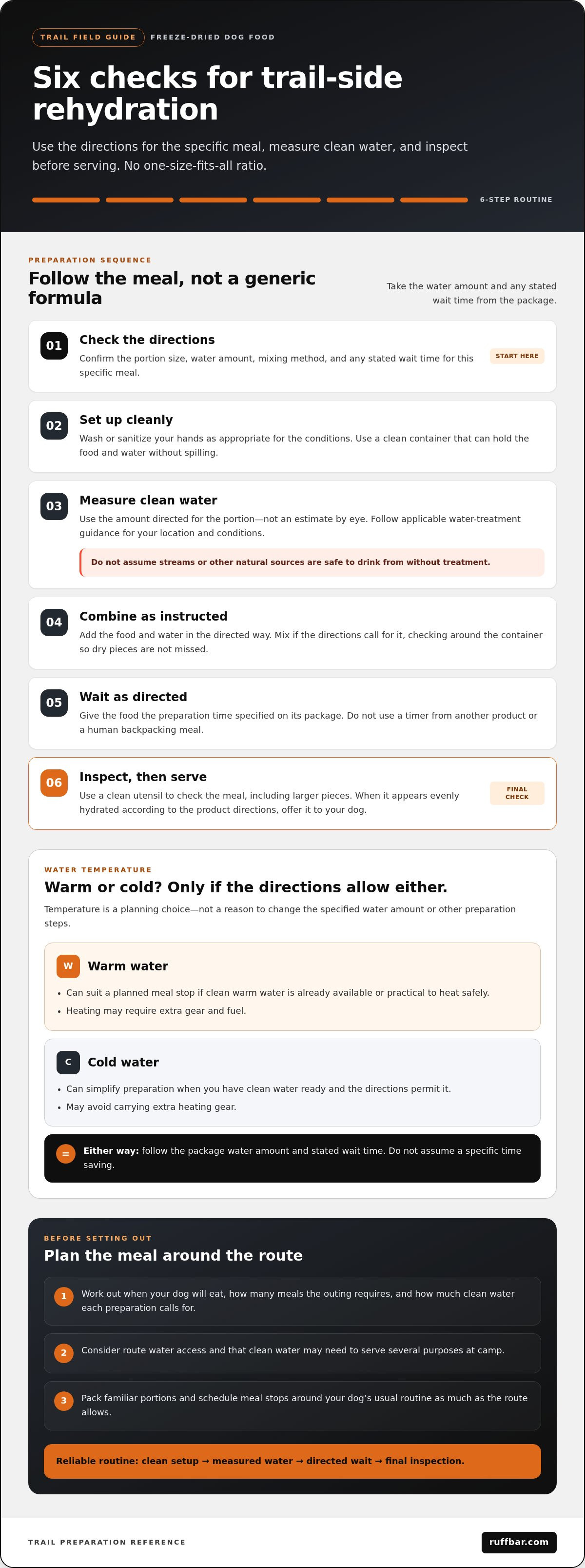
A reliable field method is simple: follow the product directions, prepare the right portion, and inspect the meal before serving. Keep clean water and a suitable container ready so you’re not improvising at the stop. The package directions, not a generic formula, set the starting point for rehydrating freeze-dried dog food on the trail.
A simple field sequence for meal preparation
Use these steps for each meal. Take the water amount and any stated wait time from the directions for the food you packed.
- Check the directions. Read the package instructions for portion size, water amount, mixing method, and any stated wait time.
- Set up cleanly. Wash or sanitize your hands as appropriate for the conditions. Choose a clean container that can hold the food and water without spilling.
- Measure the water. Use clean water and follow applicable water-treatment guidance for your location and conditions. Measure the amount directed for that meal rather than estimating by eye.
- Combine. Add the food and water as instructed. Mix if the directions call for it, checking around the container so dry pieces aren’t missed.
- Wait as directed. Give the food the preparation time specified on the package. Don’t use a timer from another product or a human backpacking meal.
- Inspect and serve. Use a clean utensil to check the meal, including larger pieces. When it appears evenly hydrated according to the product directions, offer it to your dog.
Adjusting texture without guessing
There’s no single consistency to aim for across every product. After the stated preparation period, look for dry or firm areas and compare them with the package directions. If those directions allow adjustments, add only the amount they indicate. Don’t keep pouring in water to reach a universal texture.
If the food doesn’t seem ready, check that you measured the right portion and followed the specified mixing and wait steps. If the instructions are unclear, don’t invent a ratio or preparation time. Use the directions for that product as your guide rather than making assumptions based on another meal.
Make the sequence part of your trail routine: clean setup, measured water, directed wait, final inspection. For your next outing, explore Ruff Food freeze-dried backpacking meals as part of a planned pack-and-feed routine.
Warm or Cold Water? Compare Trail Rehydration Options
Water temperature is a choice only when the product directions allow both warm and cold water. Follow the package instructions first. Warm water may suit a planned meal stop if it’s already available or practical to heat. Cold water may simplify preparation when you have clean water ready and want to avoid extra heating gear. Neither option changes the specified water amount or other preparation steps.
Use this comparison to plan, not to override the manufacturer’s directions:
| Trail consideration | Warm water | Cold water |
|---|---|---|
| Water access | Works if clean warm water is available or can be prepared safely. | Works if clean water is available and the directions permit it. |
| Preparation time | Follow the product’s stated wait time; don’t assume a specific time saving. | Follow the stated wait time; allow for the product’s directions rather than guessing. |
| Equipment | Heating may require extra gear, fuel, and a suitable stop. | Can avoid heating equipment when the directions allow cold water. |
| Texture | Inspect the prepared meal; don’t assume temperature guarantees a particular consistency. | Inspect for even hydration; don’t add water beyond the directions. |
When warm water may fit the situation
Warm water can be convenient if you’re already preparing hot water at camp or have a practical way to heat it. The trade-off is extra setup: carrying or using heating equipment adds to your load, and heating water may not suit a short break. First confirm the food’s directions allow warm water. Then use the stated amount and wait time. Don’t assume warm water will make every meal ready faster.
When cold water is the more practical choice
Cold water can keep preparation simple when you have clean water on hand and the package permits it. Plan the meal stop around the preparation time specified for that product instead of mixing it just before your dog needs to eat. If safe, treated water isn’t available, don’t assume a natural source is suitable. Temperature choice doesn’t justify changing the portion or water amount, and don’t assume it changes the meal’s nutritional value.
For rehydrating freeze-dried dog food on the trail, choose a temperature your directions allow and your route supports. Then measure, prepare, and inspect the meal as instructed.
Trail Conditions, Water Planning, and Rehydration Troubleshooting
Meal water is only one part of your water plan. Your dog also needs drinking water, and you need to account for your own supply. The route, reliable refill points, weather, and number of planned meals all affect what you carry. Don’t count a stream or lake as safe drinking water without treating it according to applicable guidance.
Plan drinking water separately from the water measured for your dog’s meals. Keeping those needs distinct helps prevent meal preparation from using water you meant to reserve for drinking.
Planning water and portions before leaving camp
Use the product directions and the portions you plan to serve to estimate meal-preparation water. Plan drinking water separately for your dog and yourself. Avoid relying on a generic volume or calorie increase, since a dog’s needs depend on the individual and the outing. Keep your dog’s usual meal pattern in mind, and plan around reliable water access rather than assuming a natural source will be usable.
- Water access: Identify reliable sources along the route and plan treatment as appropriate. Carry enough clean water for meal preparation between them.
- Meal portions: Pack the portions you expect to serve and use each product’s directions to estimate preparation water.
- Clean setup: Bring a clean container and a way to protect food and utensils from dirt and other trail contaminants.
- Leftovers: Follow the package directions and current food-safety guidance for uneaten prepared food. If you can’t determine whether it can be safely kept, don’t save it for a later meal.
These checks make rehydrating freeze-dried dog food on the trail a planned stop, not a last-minute drain on your water supply. Revisit the plan if your route changes or a refill point isn’t available.
What to do when the meal is too dry or too wet
Pause before changing the texture. Recheck the label, portion, water measurement, mixing instructions, and stated wait time. A dry-looking spot may need the directed preparation process completed. A wetter-than-expected meal may point to a measurement or portion mismatch. Don’t apply a standard fix from another food.
If the product directions allow adjustments, make only changes within those instructions, then inspect the meal again. If they don’t explain what to do, avoid inventing a water amount or wait time. For uneaten food, follow the package guidance and current food-safety advice rather than leaving it exposed or carrying it forward without a safe storage plan.
If your dog refuses the meal or shows concerning symptoms, stop experimenting with food or water adjustments and seek veterinary guidance. For your next trip, explore Ruff Food backpacking meal options and include the package directions in your water plan.
Make Ruff Food Freeze-Dried Meals Part of a Trail-Ready Routine
A dependable feeding routine starts before the trail does. Portion meals ahead, plan the clean water needed for preparation, and keep the package directions easy to reach. At each stop, prepare the meal as directed, inspect it before serving, and clean the container afterward. A simple sequence reduces campsite guesswork and helps keep feeding familiar for your dog.
Build a routine your dog already knows
Keep familiar meal timing and portions where the route allows. A demanding trip is a poor time to introduce an unfamiliar diet for the first time. If you’re planning a food change, consider doing so before the outing, when you can observe how your dog responds in a familiar setting.
For broader planning, see this guide to freeze-dried raw dog food for backpacking. Use it alongside your dog’s established feeding routine, the planned route, and the directions for the meal you pack.
Choose a meal and pack for the preparation
Ruff Bar sells Ruff Food Freeze Dried Raw Backpacking Meals Beef and Ruff Food Freeze Dried Raw Backpacking Meals Duck. For whichever meal you pack, follow that product’s directions for portion, water, and preparation. Don’t assume the same amount or method applies to both.
- Pack portions: Organize the meals you plan to serve so each stop is easy to manage.
- Carry preparation water: Set aside clean water based on the directions and your route’s reliable water access.
- Prepare and inspect: Follow the package instructions, then check the meal before offering it.
- Clean up: Keep the container and utensils clean, and pack out food scraps and packaging.
Ruff Bar describes its broader nutrition range as using USDA-graded grass-fed meats and whole organic ingredients without fillers. That brand-level ingredient context doesn’t replace checking the details and preparation instructions for the specific meal you choose.
For a routine that includes a separate discussion of supplemental trail fuel, read about high-protein dog energy bars. When you’re ready to plan your dog’s next outing, explore Ruff Food Freeze Dried Raw Backpacking Meals Beef and Duck, and build each meal’s directions into your pack-and-feed routine.
Pack With a Plan for Your Next Trail Meal
A dependable trail routine starts with the directions for the specific food. Measure the instructed water, use clean water, and give the meal the stated preparation time. Warm or cold water is a choice only when the package allows both. Plan meal-preparation water separately from your dog’s drinking water, and inspect the meal before serving.
That’s the core of rehydrating freeze-dried dog food on the trail without guesswork: follow product directions, plan for your route, and keep your dog’s familiar feeding routine in view. Ruff Food Freeze Dried Raw Backpacking Meals Beef and Ruff Food Freeze Dried Raw Backpacking Meals Duck are available from Ruff Bar. The brand describes its formulas as using USDA-graded grass-fed meats and whole organic ingredients without fillers.
Ready to plan your dog’s next outing? Explore Ruff Food freeze-dried backpacking meals and build the meal directions into your pack-and-feed routine.
Frequently Asked Questions
How much water should I use to rehydrate freeze-dried dog food on the trail?
Follow the directions for the specific meal, not a universal water-to-food ratio. Products can differ in portion size, texture, and preparation instructions. Measure the stated amount when possible, then check the food before serving to see whether it’s evenly hydrated. If the package doesn’t clarify an adjustment, don’t guess or borrow a ratio from another food. Let the product’s directions guide your preparation.
Can I rehydrate freeze-dried dog food with cold water?
Cold water can be a practical trail option if the meal’s directions allow it. Preparation time and texture can vary by product, so don’t assume cold water works exactly like warm water. Follow the label’s stated water amount and wait time, then inspect the food before serving. Plan the meal stop around those directions, and use clean water prepared according to applicable treatment guidance.
Does warm water rehydrate freeze-dried dog food faster?
Warm water may be convenient if the product directions permit it, but don’t assume it will reduce preparation time by a specific amount. The meal, water temperature, and outdoor conditions can affect how it comes together. Use the package’s stated wait time and inspect the texture before serving. Don’t heat the food or water beyond what the product instructions recommend.
Can I use stream or lake water to rehydrate my dog’s food?
Don’t assume stream or lake water is safe for drinking or meal preparation. Follow established water-treatment guidance for your trip, and use treated water for your dog’s drinking supply and food. Plan for rehydration water before setting out, alongside the water you and your dog need to drink. If you can’t make a natural source safe, use a safer water supply instead.
How long can rehydrated dog food sit out on the trail?
There isn’t one safe holding time for every recipe and outdoor condition. Follow the product’s storage and serving directions, and account for heat, sunlight, and handling. When practical, prepare only the portion your dog is ready to eat. If instructions or field conditions leave you unsure about safely keeping leftovers, discard them. Don’t rely on smell alone to decide whether food is safe.
Can I prepare my dog’s freeze-dried meal before the hike?
Prepare the meal at the time and in the way its directions recommend. Adding water can change how food needs to be stored and carried, so don’t assume a rehydrated meal remains shelf-stable. If you want to prepare it before reaching camp, follow the product’s storage guidance and protect it during transport. Packing the dry portion separately may make it easier to prepare at the planned stop.
What should I do if my dog will not eat rehydrated food on the trail?
First, check that you followed the meal directions and prepared the texture intended for that product. Keep your dog’s familiar feeding routine in mind, and avoid repeated, unplanned changes to the food or water amount. Exertion, stress, heat, or illness can affect appetite. If your dog’s appetite loss persists or comes with concerning symptoms, stop trail experimentation and seek veterinary advice.