
Pre-Workout Meals: Fueling Your K9 for Peak Performance
For sustained canine work, fat matters more than a last-minute carb load. But the right pre-workout meal for dogs isn’t just about fuel. Timing, portion size, and digestive tolerance all matter when your dog is heading out for demanding activity.
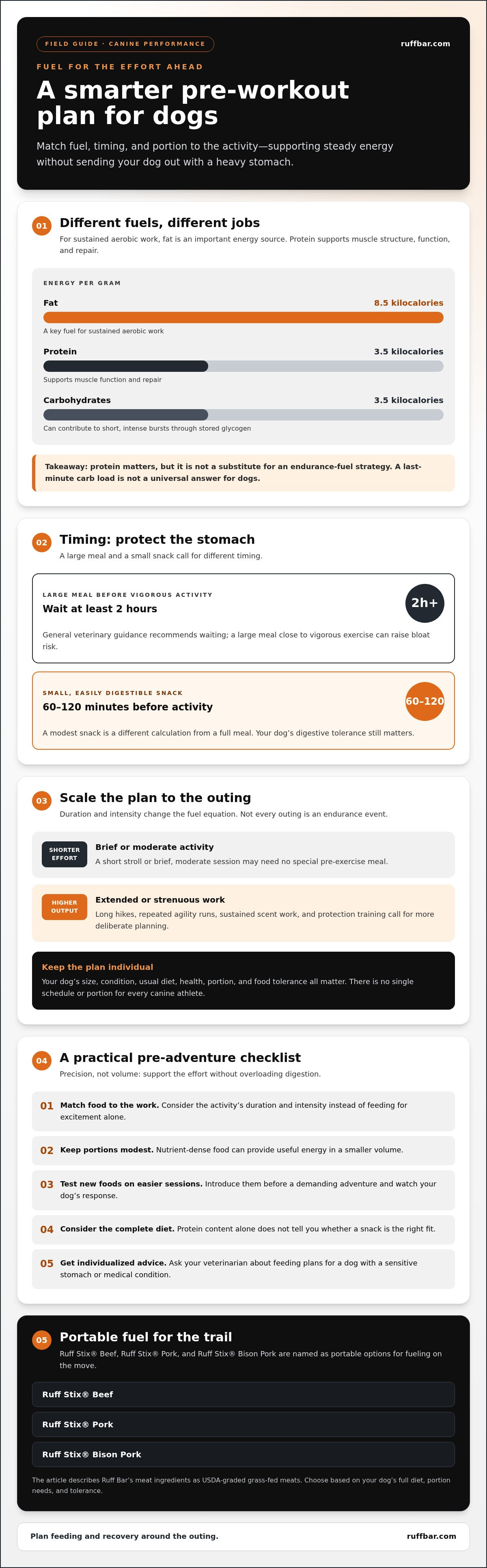
If you’ve watched your dog lose steam halfway through an outing, or worried that feeding too close to exercise could trigger bloat, those concerns are real. A large meal before vigorous activity can raise risk, so general veterinary guidance is to wait at least two hours after one. A small, easily digestible snack is a different calculation, typically offered 60 to 120 minutes before activity.
This guide explains how dogs use fat and protein, why carb-loading isn’t a universal answer, and how to time pre-workout fuel for the effort ahead. You’ll learn how to support steady energy without overloading the stomach, and what to consider for portable trail nutrition and post-exercise recovery. A clear plan means less guesswork and more time focused on the outing.
Key Takeaways
- Match your dog’s fuel strategy to the demands of the outing, not just the excitement of heading outside.
- Understand how fat supports sustained work while protein helps maintain muscle during demanding activity.
- When choosing a pre-workout meal for dogs, consider protein sources, portion size, timing, and digestive tolerance.
- Ruff Stix® Beef, Ruff Stix® Pork, and Ruff Stix® Bison Pork offer portable options for fueling on the move.
- Plan feeding and recovery around the outing, and introduce new foods before a demanding adventure.
The Strategy of a Pre-Workout Meal for Dogs
A pre-workout meal for dogs is a fuel plan, not simply a bigger breakfast. The aim is to match food to the work ahead, support steady energy, and avoid sending a dog into demanding activity with a heavy stomach. A couch dog heading out for a short stroll has different needs from a working dog tackling a long hike, agility session, scent-work search, or protection-training drill.
Dogs rely on a mix of fuels. Fat is a key source of energy during sustained aerobic work, while stored glycogen can help power short, intense bursts. Protein supports muscle function and repair, but it isn’t a substitute for an endurance fuel strategy. General dog food nutrition also depends on the animal and its overall diet, not one pre-exercise snack.
Why Performance Dogs Aren’t Human Athletes
Human athletes often use carb-loading strategies. That doesn’t make a large serving of grain-heavy food the right pre-workout choice for a dog. For prolonged activity, canine metabolism can use fat efficiently. Protein is vital, but it isn’t the primary fuel for endurance. Glycogen contributes to quick, powerful efforts, while longer outings call for a broader energy plan rather than a last-minute carbohydrate surge.
Don’t judge a dog energy bar by protein content alone. A protein-forward, nutrient-dense option may be practical for an active dog, but the full formulation, portion, and your dog’s tolerance matter. Grain-heavy snacks aren’t automatically unsuitable, and high-protein bars aren’t automatically superior. Choose food that fits your dog’s complete diet and the demands of the session.
Identifying High-Output Activities
“Workout” can mean a steep hike, repeated agility runs, sustained scent work, or protection training. Duration and intensity change the fuel equation: a brief, moderate session may need no special pre-exercise meal, while extended or strenuous work requires more deliberate planning. Your dog’s size, condition, usual diet, and health also affect their needs. Avoid treating every outing as an endurance event.
Keep pre-activity portions modest. Nutrient density can provide useful energy in a smaller volume, limiting stomach weight as the dog moves. A large meal close to vigorous exercise can contribute to digestive discomfort, and improper feeding may leave a dog sluggish rather than ready to work. There’s no single portion or schedule for every canine athlete. Use your dog’s response as a guide, introduce any new food during easier sessions, and ask your veterinarian for individualized advice, especially if your dog has a sensitive stomach or a medical condition.
Think precision, not volume. Prepare for the specific effort without overloading digestion or relying on a sudden carb boost.
The Science of Canine Energy: Fat vs. Protein
For sustained aerobic work, fat is an important fuel source. It provides 8.5 kilocalories per gram, compared with 3.5 kilocalories per gram from protein or carbohydrates. That doesn’t mean every active dog needs a high-fat pre-workout meal for dogs. Activity type, duration, body condition, and the dog’s established diet all shape the right approach. Cornell’s guidance on the nutritional needs of your sports dog also emphasizes that fuel requirements differ across endurance, middle-distance, and sprint activities.
Protein has a different job. Its amino acids support muscle structure, function, and repair. Adequate protein helps meet the demands of hard work, but protein isn’t a substitute for energy, and no snack can prevent muscle breakdown in every circumstance. Think of the full diet as the foundation, with pre-activity fuel tailored to the outing.
The Power of Grass-Fed Proteins
Bison and beef can provide protein and amino acids dogs use to maintain and repair muscle. Ruff Bar uses USDA-graded grass-fed meats, including in Ruff Stix® Beef and Ruff Stix® Bison Pork. USDA grading is a meat-quality designation; it doesn’t, by itself, prove greater bioavailability. Likewise, “raw” doesn’t automatically mean more digestible or nutritionally superior to kibble. The ingredient, formulation, handling, and individual dog all matter. For a deeper look at protein-forward trail fuel, explore high-protein dog energy bars.
Avoiding the “Sugar Crash”
Don’t assume every carbohydrate causes a crash, or that grain-free automatically means better gut health or less inflammation. Dogs can use carbohydrates, and a grain-free label alone doesn’t establish a food’s digestibility or suitability. Refined, sugary extras may offer little value in a balanced performance plan, while whole ingredients can contribute nutrients and variety. Apples, for example, can be offered in small pieces if they suit your dog, but they aren’t a guaranteed slow-release energy source. Introduce new foods gradually and watch for digestive changes.
Metabolic flexibility is a dog’s ability to shift between available fuel sources, including fat and carbohydrates, as activity demands change. Build that capacity with consistent, appropriate feeding, not a sudden diet overhaul before a big day. For portable fuel during an outing, review Ruff Stix® options and choose a portion that fits your dog’s routine and tolerance.
Tactical Timing: The 2-Hour Pre-Workout Rule
Timing matters as much as ingredients. A large meal shortly before vigorous exercise can leave a dog uncomfortable and may increase concern about gastric dilatation-volvulus (GDV), commonly called bloat. A general veterinary recommendation is to wait at least two hours after a large meal before high-intensity activity. That’s a risk-reduction measure, not a guarantee against GDV. Ask your veterinarian for guidance tailored to your dog, especially if they have a history or elevated risk.
Use this morning plan as a starting point, adjusting it to your dog and the outing:
- Before the outing: Offer water and the usual meal early enough to leave at least two hours before strenuous work.
- As departure approaches: If your dog needs extra fuel, consider only a small, familiar, easily tolerated snack. General guidance places a light snack about 60 to 120 minutes before activity, but individual needs vary.
- On the trail: Carry water and offer regular opportunities to drink. Avoid forcing food or water, and pause if your dog seems uncomfortable.
- After the effort: Let your dog cool down and settle before offering a meal. Resume normal feeding based on their routine and your veterinarian’s advice.
For more on matching fuel to exercise intensity, see the Purina Institute’s Nutrition for Active, Working and Sporting Dogs.
Preventing Gastric Torsion (Bloat)
With GDV, the stomach becomes distended and may rotate, trapping gas and disrupting blood flow. It’s a life-threatening emergency. Exercise on a full stomach is a concern, so avoid large pre-workout meals and build in calm periods before and after feeding. A small portion of a familiar food, such as Ruff Stix®, can be more practical than a full meal during an outing, but no snack eliminates bloat risk. Know the warning signs, including a swollen abdomen, repeated unproductive retching, restlessness, or weakness, and seek emergency veterinary care if they appear.
The Mid-Adventure Micro-Feed
On a hike lasting four hours or more, a small snack during a natural rest stop may help keep your dog fueled without serving a large meal all at once. Ruff Stix® can be portioned for on-the-go feeding, but introduce any new food on an easier outing first and watch your dog’s response. For complex training, a small, familiar high-value treat can reinforce focus. Explore premium freeze-dried treats for dogs as another trail-friendly option.
A comfortable, well-fueled dog generally moves willingly and stays engaged. A dog that slows abruptly, seems unusually restless, retches, or develops abdominal swelling needs a break and close attention. Don’t use food to push through signs of distress.
What to Feed: Ideal Pre-Adventure Ingredients
Build a trail menu around familiar, nutrient-dense food. Beef, bison, and pork provide protein and fat, but the right choice depends on your dog’s complete diet, activity, and tolerance. Organ meats can supply vitamins and minerals involved in normal body functions, yet they’re concentrated ingredients, not a reason to improvise a large serving before a demanding outing. Check the food’s label and introduce unfamiliar ingredients well before departure.
For a pre-workout meal for dogs, keep the portion modest and avoid experimenting on the trail. A sudden switch, rich snack, or ingredient your dog doesn’t tolerate can lead to digestive upset far from home. If your dog has known food sensitivities, stick with established options and ask your veterinarian about suitable alternatives.
Freeze-Dried Raw: The Backcountry Advantage
Freeze-drying removes much of the food’s water, making it lighter to carry than a comparable moist meal. Add water according to the package directions before serving, and pack enough drinking water for your dog as well as yourself. Freeze-dried raw food isn’t automatically more nutritious or digestible than every other format; compare the label, feeding directions, and your dog’s response. For more trip-planning context, see this guide to freeze-dried raw dog food for backpacking.
Ruff Food Freeze Dried Raw Backpacking Meals Beef and Ruff Food Freeze Dried Raw Backpacking Meals Duck are portable meal options for backcountry outings. Assess their ingredients and suitability as you would any food you’re considering. Don’t assume a particular energy-to-weight advantage over another recipe without comparing product labels and serving needs.
Functional Toppers for Extra Propulsion
Ruff Bar Functional Nutrition Toppers can add flavor and variety to a dog’s meal. Follow the product directions, account for toppers as part of the overall feeding plan, and test them at home before a major expedition. Keep fresh water available; don’t rely on a topper to meet hydration needs. Bone broth may be used in some feeding routines, but its electrolyte content varies, so don’t treat it as a dependable electrolyte replacement during hot-weather exercise. Ask your veterinarian how to manage hydration for long or strenuous outings.
Choose food your dog already handles well, carry water, and keep the serving practical for the effort ahead. For ingredient ideas and topper inspiration, read ideas for dog food toppers. Ruff Bar’s dog food and nutrition products include backcountry nutrition options.
Ruff Bar: Precision Fuel for the Modern K9 Athlete
Reliable adventure nutrition starts with a plan, not a last-minute switch. Ruff Bar offers high-protein, grain-free options made with USDA-graded grass-fed meats and whole organic ingredients without fillers. Check each label, account for treats and meals across the day, and choose portions that suit your dog’s routine. A pre-workout meal for dogs should fit the effort ahead without replacing a complete feeding plan or ignoring the timing needed for safe exercise.
The Ruff Stix® Edge
Ruff Stix® Bison Pork offers a portable way to bring a meat-based snack along for an outing. Use it as a small, measured fuel stop during activity or as part of a broader feeding routine, rather than assuming one portion suits every dog or adventure. Its stick format can make it practical to carry and serve on the move. Let your dog try it at home first, then observe how they tolerate it before relying on it in the field.
Keep expectations grounded. No single snack guarantees better performance, and the specific calorie content of Ruff Stix® Bison Pork should be checked on its product information rather than guessed. Match the amount to your dog’s size, usual diet, and workload. Break up a long outing with a calm pause for food and water, then continue when your dog is ready.
Ruff Food: Lightweight Raw Power
For backpacking, Ruff Food Freeze Dried Raw Backpacking Meals Beef and Ruff Food Freeze Dried Raw Backpacking Meals Duck offer meal options designed for backcountry use. Freeze-dried meals can be a lightweight alternative to carrying heavy kibble, which can matter when you’re planning pack weight. Follow the package directions for preparation and serving, and bring enough water for both rehydrating food and your dog’s drinking needs. Review the label and plan portions before setting out, especially for multi-day trips.
Preparation matters as much as the product. Keep food familiar, follow storage and handling instructions, and don’t introduce a new meal on the morning of a demanding expedition. Let your dog try it during a lower-intensity outing first. That gives you a chance to check acceptance and digestive tolerance before the stakes are higher.
Every meal is part of preparing for the next trail, training session, or hard-earned mile together. Explore Ruff Bar products for your next adventure.
Prepare for the Next Trail
Peak performance starts before the first step. Match food to the work ahead, keep portions sensible, and give your dog time to digest before intense activity. For endurance, a steady nutrition plan matters more than a last-minute carb load. A thoughtful pre-workout meal for dogs supports the outing without asking a heavy stomach to keep pace.
Ruff Bar brings that backcountry mindset to high-protein, grain-free nutrition made with USDA-graded grass-fed meats and whole organic ingredients without fillers. Ruff Stix® offers a portable option for fueling on the move, while Ruff Food Freeze Dried Raw Backpacking Meals provide a freeze-dried meal option for backcountry outings. Check product directions, portion to your dog’s needs, and test new foods before a demanding adventure.
Shop Ruff Bar’s nutrition products for your next adventure, and plan your dog’s food before you head out.
Frequently Asked Questions
Can I feed my dog right before we go for a run?
Avoid giving your dog a large meal immediately before a run. Eating a lot and then exercising vigorously can cause discomfort and raises concern about bloat, a life-threatening emergency. For a small, familiar snack, allow time to see how your dog tolerates it rather than feeding at the starting line. Keep water available, and stop if your dog shows distress. Ask your veterinarian for advice based on your dog’s health and exercise routine.
What is the best pre-workout protein for an active dog?
There isn’t one protein that’s best for every active dog. Beef, bison, pork, poultry, and other protein sources can fit into a suitable diet, depending on your dog’s needs, sensitivities, and preferences. Focus on a complete feeding plan and a food your dog already tolerates, rather than choosing a snack based on protein alone. Introduce new ingredients during an easy day, not just before a demanding hike or training session.
How many calories does a working dog need before a hike?
There’s no reliable calorie target based on the word “working” alone. Needs depend on factors such as body size, age, condition, usual diet, weather, and the hike’s duration and intensity. A veterinarian can help estimate your dog’s daily energy needs and adjust the plan for workload. Avoid adding a large pre-hike serving without accounting for the dog’s normal meals and treats. Check package feeding directions, then monitor body condition and energy over time.
Is raw food better than kibble for performance dogs?
Raw food isn’t automatically better for performance than kibble. The right choice depends on nutritional adequacy, safe handling, your dog’s health, and whether the food suits their digestion and activity level. Compare labels and discuss major diet changes with your veterinarian. Freeze-dried raw meals can be convenient to pack for some trips, but they still need to be prepared and served according to package directions. Don’t assume one format guarantees better stamina or recovery.
What are the signs that my dog is “bonking” or out of energy?
Slowing down, lagging behind, reduced interest in activity, or unusual weakness can signal fatigue, but they may also indicate heat stress, pain, or illness. Stop the activity, move your dog to a safe place, offer water, and let them rest. Don’t try to push through or assume food will fix the problem. Collapse, confusion, repeated vomiting, heavy distress, or a swollen abdomen calls for urgent veterinary attention.
How long should I wait to exercise my dog after a meal?
For vigorous activity, general veterinary guidance recommends waiting at least two hours after a large meal. A small, familiar snack is different, but allow time for digestion and observe your dog’s response before increasing intensity. There’s no timing plan that removes bloat risk for every dog. Dogs with a history of digestive problems or other health concerns need individualized advice from a veterinarian before strenuous exercise.
Can I use human energy bars as a pre-workout for my dog?
Don’t assume a human energy bar is safe for dogs. Some contain ingredients that can be dangerous, including xylitol, chocolate, caffeine, or raisins, and the calorie or nutrient balance may not suit your dog. Read the full ingredient list and choose food formulated for dogs instead. If your dog eats a bar containing a potentially toxic ingredient, contact a veterinarian or animal poison-control service promptly. Keep human snacks secured in your pack.
Does a pre-workout meal help with my dog’s recovery time?
A pre-workout meal alone can’t guarantee faster recovery. It’s one part of preparation; overall nutrition, suitable hydration, workload, rest, and your dog’s health all matter. Feed a diet appropriate for your dog and avoid making sudden changes around a major outing. After strenuous activity, give your dog time to cool down before a normal meal. If fatigue lasts unusually long or your dog seems painful or unwell, contact your veterinarian.