
Post-Activity Nutrition for Dogs: A Practical Recovery Guide
A hard run, a long hike, and a backyard training session don’t call for the same feeding plan afterward. Post-activity nutrition for dogs should reflect the effort involved, access to water, and what suits each dog. More food isn’t automatically better, and a treat or supplement isn’t a substitute for a balanced routine.
It’s natural to wonder whether to feed your dog right away, wait until they’ve settled, or offer a snack on the trail. The answer depends on the activity, your dog’s usual meals, and how they seem after exercise. Make fresh water available first, then choose food based on the outing and your dog’s regular plan.
This guide explains how activity shapes post-exercise needs, when a meal or portable snack may fit, and how toppers differ from both. You’ll also find a practical way to plan around your dog, whether you’re finishing a training session or returning from a backpacking trip. Ruff Bar’s bars, freeze-dried meals, and toppers offer different formats to consider as part of that plan.
Key Takeaways
- Build post-activity nutrition for dogs around the effort involved and your dog’s individual needs, not a one-size-fits-all rule.
- Consider exercise type, duration, intensity, and conditioning when deciding what your dog needs after activity.
- Choose between a regular meal, portable snack, or topper based on the outing and your feeding plan.
- Use a simple routine: offer water, observe your dog, and decide what food fits next.
- Ruff Bar snacks, meals, and toppers offer different formats for active-dog adventures, but none is a guaranteed recovery solution.
What post-activity nutrition for dogs needs to account for
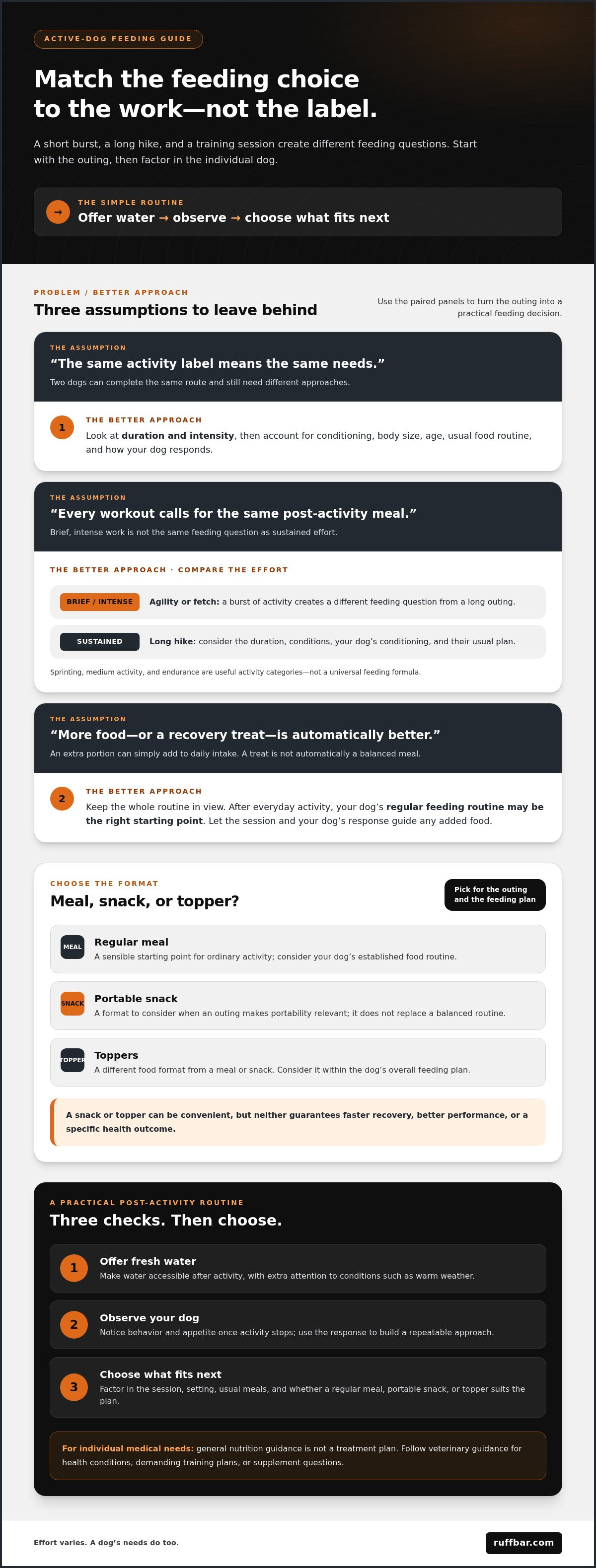
Post-activity nutrition is the food and water choices around a dog’s recovery after exercise, not one special “recovery food.” Start with the work your dog has done, then account for their usual diet, condition, and response. A short obedience session or a few fast agility runs create a different feeding question from hours of steady hiking. The aim isn’t to change every meal after every outing. It’s to make choices that suit both the activity and the dog.
Duration and intensity matter, but they aren’t the whole picture. Conditioning, body size, age, and everyday food routine can all affect how a dog handles exercise and what may suit them afterward. The environment matters, too: after a demanding outing in warm conditions, pay close attention to water access and how your dog acts once activity stops. General guidance on dog health and exercise provides context, but it can’t replace a plan tailored to an individual dog.
Keep the full routine in view. Consider the session, the setting, and what your dog already eats before adding a snack or changing meal timing. An extra portion may simply increase their daily intake, while a treat isn’t automatically a balanced meal. Appetite and behavior after activity can help you build a repeatable approach rather than follow a rigid feeding rule.
How the activity changes the feeding question
A brief, intense burst, such as agility work or fetch, differs from sustained effort on a long hike. Cornell’s activity categories offer useful context: endurance, medium activity, and sprinting. They describe different demands, not a universal feeding formula. Two dogs completing the same route may also need different approaches because their conditioning and usual diets differ. Base your feeding decision on the actual session, not just its activity label.
What recovery nutrition can and cannot promise
Food and water are parts of overall care. They can support a sensible routine, but no snack or topper guarantees faster recovery, better performance, or a particular health outcome. General nutrition principles also aren’t a treatment plan for a dog with a health condition. Follow veterinary guidance for individual medical needs. Timing and food choice depend on the dog’s schedule and response, so observe what works and keep changes measured.
Distinguish an ordinary outing from prolonged or unusually demanding work. After everyday activity, your dog’s regular feeding routine may be the right starting point. Longer efforts can make planning more important, especially when workload, conditions, or health needs are unusual. Begin with the basics: access to water, an appropriate regular diet, and close attention to your dog. That’s a stronger foundation than assuming every active dog needs the same post-exercise meal.
What happens in a dog's body after exercise
Exercise asks the body to turn stored energy into movement. How much energy it uses, and which fuel sources contribute most, depends on the work: a quick sprint differs from a steady hike, and a conditioned dog may respond differently from one new to the same effort. Duration, intensity, fitness, and overall health all shape the picture. There’s no single post-activity nutrition for dogs formula that fits every outing.
Carbohydrates, fat, and protein each have a role in a balanced diet, but they aren’t interchangeable recovery switches. Carbohydrates can be stored as glycogen, a readily available energy reserve in the body. Fat is also an important fuel source, particularly during sustained work. Protein supplies amino acids used for many body functions, including maintaining tissues. The balance that suits a dog depends on its whole diet and workload, not just what happens after one session.
Energy use, glycogen, and activity demands
Glycogen is stored carbohydrate that the body can draw on for energy. A short, high-intensity effort, such as sprinting through agility obstacles, places different demands on a dog than a prolonged endurance outing. Neither activity means glycogen is always depleted; the amount used depends on the dog and the effort. Cornell University College of Veterinary Medicine groups performance dogs by sprinting, medium, and endurance demands. This is a useful framework, not a universal feeding formula.
That distinction helps put fuel choices in context. A sprint-focused dog and a dog covering sustained distance may rely on energy sources differently. Cornell’s activity-specific guidance also discusses carbohydrate repletion for medium-activity dogs during competition, but that isn’t a prescription for every dog after every workout. A dog’s conditioning, the session’s length and intensity, and its regular food plan all matter. For a general overview of how exercise fits into canine wellbeing, see this guide to dog health and exercise.
Protein, hydration, and the limits of supplement claims
Protein is essential in a complete diet, but a protein-rich snack isn’t automatically a muscle-repair treatment. Make fresh water accessible after activity and pay attention to your dog’s behavior and the conditions. Don’t assume every dog needs the same measured amount. Cornell also cautions against treating supplements as shortcuts. If a health concern, demanding training plan, or supplement question calls for tailored advice, involve your veterinarian.
Established principle: Exercise uses energy, and dogs need access to water and an appropriate overall diet. Dog-specific variables: the fuel mix, feeding timing, and whether added food is useful depend on the dog, the session, and its normal routine. Keep claims grounded. A snack or topper can be a convenient food format, but it can’t guarantee recovery. For outings where portability matters, Ruff Bar’s nutrition options for active dogs include snacks, meals, and toppers to consider within an individual feeding plan.
Post-activity meals, snacks, and toppers: how the options differ
After exercise, the right format depends on what your dog already eats, when their next meal is due, and what’s practical for the outing. A regular meal follows the feeding plan. A snack is portable. A topper is added to food. Each format can have a place, but they aren’t interchangeable, and activity alone doesn’t make one the right choice.
Use this comparison to narrow the options, then check the product’s feeding directions and consider how it fits your dog’s overall diet.
| Format | Likely use | Key limitation |
|---|---|---|
| Regular meal | Feeding at the dog’s usual mealtime, including after a planned outing | Extra food may not be needed if the next meal is soon |
| Portable snack | A convenient option to carry on a walk, training day, or hike | A snack isn’t automatically a complete, balanced meal |
| Topper | An addition to the dog’s usual food | It shouldn’t displace the nutritional role of a complete diet |
When a regular meal makes more sense
Start with your dog’s normal feeding plan, not an automatic extra portion. If a short outing ends close to the next scheduled meal, that meal may be the natural next step. For a long day outdoors, plan where feeding fits into the trip and how it aligns with your dog’s routine. Follow the food’s label rather than guessing at extra servings; each dog’s needs and daily intake are individual.
When portable snacks or toppers may fit
A portable snack can be convenient during an outing or when a full meal isn’t practical. Ruff Food Bars and Ruff Stix® are formats to consider for active-dog adventures, while Ruff Food Freeze Dried Raw Backpacking Meals are another option for planned trail feeding. Their format doesn’t guarantee a recovery effect, so fit them into your dog’s overall feeding plan. For more context on energy bars, see this high-protein dog energy bar guide.
A topper has a different role: it’s added to food, not used as a stand-alone substitute for a complete diet. Ruff Bar toppers can be added to a meal. For individual supplement questions, consult your veterinarian. The performance dog food supplements guide covers that topic in more detail.
For post-activity nutrition for dogs, make the format serve the routine. Keep the usual meal as the anchor, use snacks for convenience, and treat toppers as additions. Check labels and account for extras in the day’s overall food plan. That keeps the choice practical without asking one bar, meal, or topper to do every job.
How to build a practical post-activity feeding routine
A reliable routine is simple enough to repeat but flexible enough to fit the day’s workload. For everyday walks, play, or a short training session, your dog’s regular feeding schedule is a practical starting point. Prolonged hikes, repeated training, and competitive work may call for a plan tailored to the dog’s workload and health. This is general guidance, not veterinary treatment.
- Finish the activity. Let the session end before deciding whether extra food makes sense. Note how demanding it was and whether conditions, such as heat or a long stretch outdoors, made it harder.
- Offer fresh water. Keep water accessible and let your dog drink at their own pace. Don’t assume every dog needs the same amount.
- Observe your dog. Notice whether they’re settling comfortably and showing their usual interest in food. A dog who seems unwell or unusually distressed needs attention, not an improvised feeding fix.
- Follow the feeding plan. Consider when the next regular meal is due. Keep to the usual routine when appropriate, and account for any snack or topper as part of your dog’s overall daily food.
Timing food around the activity
There’s no single post-exercise wait time that suits every dog and outing. Timing depends on exertion, comfort, and the dog’s normal schedule. After a familiar, everyday session, the next scheduled meal may fit naturally. For repeated or competitive work, don’t build a plan around a generic rule. Ask your veterinarian about an individualized nutrition plan, especially if the workload is changing substantially.
Keep changes gradual. If you’re introducing a new food format or adjusting the routine for more demanding activity, avoid suddenly adding a large portion on top of the usual meals. Follow feeding directions and make one change at a time. That makes it easier to notice whether your dog tolerates the change, rather than guessing which part of the new routine caused a reaction.
Watch the dog and adjust responsibly
Track a few practical signals across outings: appetite, energy, stool quality, and tolerance of any added food. A brief note about the activity and what your dog ate can reveal patterns that are hard to spot from memory. Don’t take one off day as proof that a particular snack or meal is needed. Look for repeated changes, and seek veterinary advice for concerning or persistent symptoms after activity.
Senior dogs and dogs with health conditions may need feeding guidance tailored to their individual needs. If activity, appetite, or digestion changes, get veterinary input before making a major diet adjustment. A routine can help you stay consistent, but it can’t diagnose a problem or replace care.
Routine summary: Finish the session, offer water, observe your dog, then follow their feeding plan. Adjust carefully as activity and individual needs change. For portable food formats to consider for outings, explore Ruff Bar options for active dogs.
Choosing Ruff Bar nutrition for active-dog adventures
The right format depends on the day’s plan. A short outing, a long hike, and a backpacking trip create different logistics, even before you consider your dog’s usual diet. Ruff Bar offers portable Ruff Stix® and Ruff Food Bars, freeze-dried backpacking meals, and toppers. These are food-format options to fit into a considered feeding plan, not guaranteed recovery treatments.
Match the format to the day outside
When carrying a full meal doesn’t suit the outing, Ruff Stix® or Ruff Food Bars offer portable formats. For planned feeding on a backpacking trip, Ruff Food Freeze Dried Raw Backpacking Meals provide a meal option. Toppers are added to food, so they serve a different role from a snack or meal. The freeze-dried treats for dogs guide offers more context on that format and outdoor use.
| Adventure context | Format to consider | Keep in mind |
|---|---|---|
| Training or a day outing | Ruff Stix® or Ruff Food Bars | Fit snacks into your dog’s daily feeding plan |
| Planned backpacking meals | Ruff Food Freeze Dried Raw Backpacking Meals | Use the product directions as part of meal planning |
| Adding to a regular meal | Ruff Bar toppers | A topper is an addition, not automatically a complete diet |
Ruff Bar formulas use USDA-graded grass-fed meats and whole organic ingredients without fillers. That describes ingredient sourcing, not a promise that a particular product will improve recovery or performance. Choose a format for its practical role, and keep your dog’s appropriate daily feeding plan at the center.
If you’re comparing formats for your next trip, consider how each option could fit the outing and your dog’s routine.
Fuel the next outing with a considered plan
Before packing food, run through a quick check:
- Activity: What kind of work will your dog do, and for how long?
- Hydration: Will fresh water be accessible during and after the outing?
- Usual diet: How does a snack or planned meal fit your dog’s regular feeding schedule?
- Dog’s response: Has your dog tolerated this format, and are appetite and digestion staying typical?
Use those answers to plan what to carry and when it fits, rather than adding food automatically after every activity. For prolonged or demanding work, individual health needs, or a major change in workload, seek veterinary guidance for a tailored nutrition plan.
Explore Ruff Bar nutrition for active dogs and choose a format that fits your next adventure and your dog’s feeding routine.
Make the next outing easier to plan
Let your dog’s response guide the routine. Notice what fits comfortably after a walk, training session, or longer adventure, then keep the plan consistent unless your dog’s needs change. That steady approach makes post-activity nutrition for dogs more practical than chasing a perfect snack or a fixed clock rule.
For your next trip, choose a format that suits the day and your dog’s usual feeding plan. Ruff Bar’s range includes Ruff Stix®, Ruff Food Bars, freeze-dried backpacking meals, toppers, and supplements. Its formulas use USDA-graded grass-fed meats and whole organic ingredients without fillers. These options can complement a thoughtful routine, but they aren’t guaranteed recovery treatments or a substitute for individualized veterinary guidance.
Explore Ruff Bar nutrition for active dogs and find a format to consider for your next adventure. Plan well, pack thoughtfully, and keep moving together.
Frequently Asked Questions
Should I feed my dog immediately after exercise?
Not necessarily. There’s no single timing rule for every dog or activity, so immediate feeding isn’t a recovery requirement. Give your dog access to fresh water, allow a calm transition, and use their normal feeding schedule as your guide. For example, after a familiar walk that ends near mealtime, the regular meal may fit naturally. Strenuous or competitive work may call for individualized veterinary nutrition guidance.
Can dogs eat after a long hike or run?
Yes, food can fit into a dog’s routine after a demanding outing, but the suitable choice and amount depend on the individual dog, their usual diet, and how hard they worked. Offer water and notice whether your dog seems comfortable and interested in food. Don’t assume a long distance means they need an extra portion. For repeated endurance work or existing health conditions, ask your veterinarian about a tailored plan.
How much water should a dog drink after exercise?
There isn’t one fixed volume that suits every dog. Water needs can vary with body size, effort, weather, and individual factors, so make fresh water available and let your dog drink comfortably rather than forcing a set amount. Unusual thirst, vomiting, weakness, or other concerning signs warrant prompt veterinary guidance. Don’t try to manage those symptoms with food or supplements; get advice about the underlying concern.
What if my dog will not eat after activity?
Don’t force food. A dog may not be ready to eat right after exertion, so let them settle and offer their usual meal at the normal time. Pay attention to overall behavior as well as appetite; a single skipped meal is different from an ongoing change. If refusal persists or appears with other symptoms, seek veterinary advice rather than trying a new food as an appetite fix.
Are treats enough after a workout for a dog?
Usually, treats are best viewed as convenient extras, not automatically as a complete meal or replacement for a balanced feeding plan. For example, a snack on a training outing should be considered alongside the dog’s regular food for the day. The right overall intake depends on the dog and their activity. If training is frequent or you’re unsure whether the full diet is adequate, discuss it with a veterinarian or qualified veterinary nutrition professional.
Does every active dog need a recovery supplement?
No. Being active alone doesn’t mean a dog needs a supplement, and supplements shouldn’t be treated as guaranteed recovery tools. Consider the dog’s complete diet, workload, age, and health before adding one. Claims deserve careful scrutiny, especially when they suggest a product can address a health problem. Ask your veterinarian before introducing a supplement if your dog has a medical condition or takes medication.