
Portable Dog Food for Outdoor Adventures: Caloric Density vs. Pack Weight
Every ounce in your pack is a tax on your endurance. Why are you still hauling heavy moisture and useless fillers? You know the toll of a multi-day trek. You feel the bulk of traditional kibble in your shoulders. It is a constant struggle to balance gear weight with the high-energy demands of an active partner. Finding the right portable dog food outdoor solutions shouldn't mean sacrificing your dog's condition or your own comfort on the trail.
You deserve a system that works as hard as you do. This guide helps you master backcountry nutrition by prioritizing caloric density over raw volume. You will learn to choose lightweight, high-performance fuel that maintains peak vitality. We'll analyze how freeze-dried options provide 75 to 80 percent weight savings compared to standard wet food. We will compare nutritional efficiency and build a no-mess feeding system. It is about movement, endurance, and uncompromising quality for the rugged miles ahead.
Key Takeaways
- Eliminate dead weight. Understand how traditional kibble fillers and moisture tax your endurance on the trail.
- Harness the science of sublimation. Freeze-dried raw nutrition removes 80% of total weight while locking in vital nutrients for peak performance.
- Optimize your kit with the right portable dog food outdoor formats. Compare energy density and prep time to keep your pack light and your dog fueled.
- Scale your fuel to the terrain. Learn to calculate the "Adventure Multiplier" to meet caloric needs that often double during high-output expeditions.
- Master the tiered feeding strategy. Use high-protein Ruff Stix for trail motivation and fat-rich freeze-dried meals for recovery.
The Kibble Burden: Why Traditional Dog Food Fails the Trail
Traditional kibble is a logistics failure. It is the dead weight of low-calorie fillers. It is the tactical error of hauling moisture into the wild. We call this the Kibble Burden. It turns a performance animal into a pack mule for its own waste. When selecting portable dog food outdoor solutions, you must look beyond the bag size. You must look at the energy return on weight. You need fuel, not filler.
Most grocery store bags are 10 to 12 percent moisture. You are paying to carry water you could find in a stream. They rely on heavy carbohydrates to provide bulk. Standard Dog food is designed for shelf life and cost efficiency. It is not built for the high-altitude demands of a working animal. This moisture and carb-heavy profile is a liability on the trail. It adds weight without adding performance.
This creates the Portability Paradox. Your dog needs more calories to handle the terrain. You pack more kibble to meet that need. The pack gets heavier. Now, your dog burns even more energy just to carry the extra weight. It is a losing cycle of diminishing returns. It strains the metabolism. It slows the pace. You are working against the mountain and your own gear.
Weight vs. Energy: The Backpacker's Equation
Success in the backcountry requires a simple calculation. You need to know your kcal per ounce. High-performance gear is measured in grams. Your dog’s fuel should be no different. Standard grocery brands often fail this test. They offer low energy density that forces you to pack massive volumes. This bulk is a liability. It is a health risk. Excessive pack weight places immense stress on canine joint health. It leads to premature fatigue. It causes potential injury on long-distance treks. Every ounce saved is an investment in your dog’s longevity.
The Hidden Cost of Fillers
Grains and legumes are heavy to carry. They are harder to digest under physical stress. When your dog is working hard, their body prioritizes blood flow to the muscles. It does not prioritize the gut. Heavy fillers sit in the stomach like lead. Choosing filler-free options is a logistical advantage. It keeps the pack light. It keeps the digestion efficient. It ensures that every gram of weight in the bag translates directly into propulsion. Nutrient density is the total concentration of bioavailable energy and essential micronutrients delivered per gram of dry weight.
Why Freeze-Dried Raw is the Gold Standard for Portability
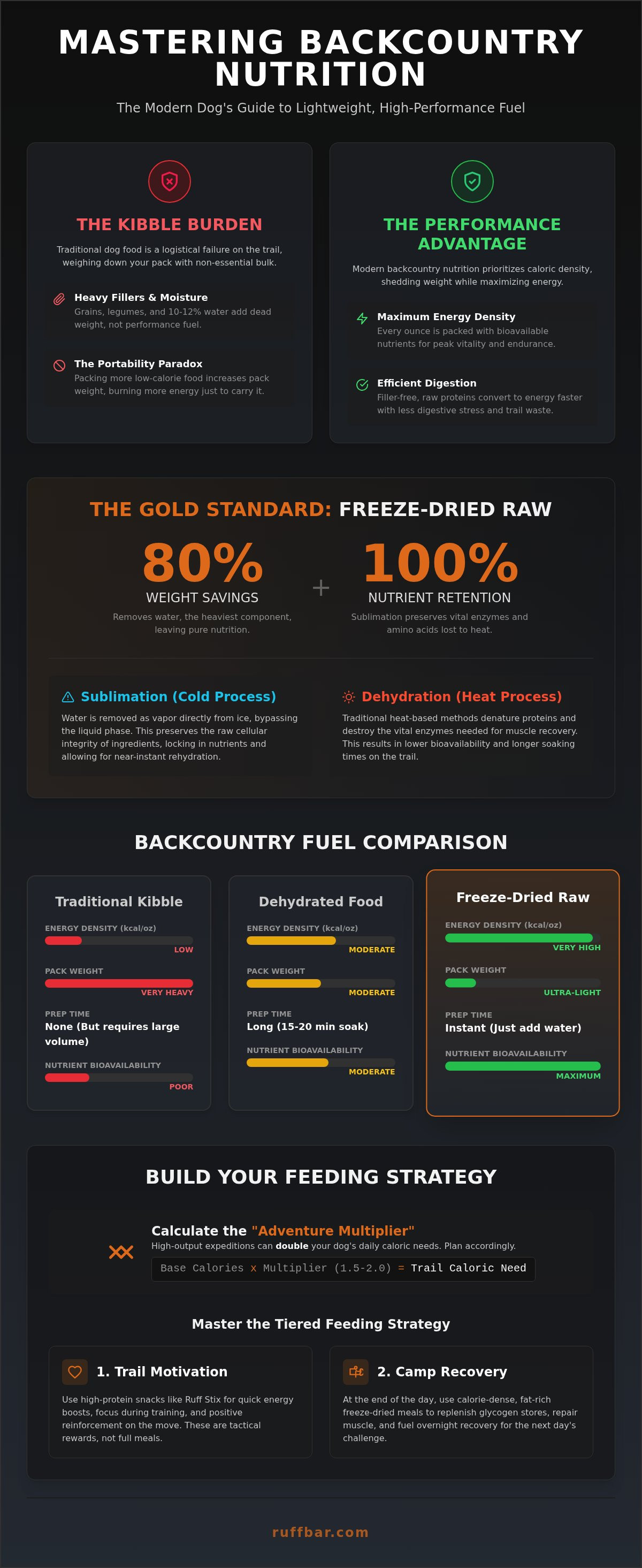
Freeze-dried raw nutrition is not a luxury. It is a tactical upgrade for the backcountry. By removing the heaviest component of any meal, water, while preserving the raw cellular integrity of the ingredients, you create the ultimate portable dog food outdoor solution. This process, known as sublimation, allows you to carry 100% of the nutrition with only 20% of the weight. You are essentially stripping away the dead weight of moisture to leave behind pure, high-performance fuel.
The logistical benefits are immediate. Freeze-dried meals are shelf-stable. They require no refrigeration. They don't spoil in the heat of a summer trek or degrade during winter expeditions. This stability ensures your dog receives consistent, high-standard nutrition regardless of the environment. While traditional kibble fats can go rancid in extreme heat, freeze-dried raw remains stable and ready for deployment at a moment's notice.
Sublimation vs. Dehydration
Standard dehydration uses heat. Heat is a destroyer. It denatures proteins and kills the vital enzymes needed for muscle recovery. Sublimation is a cold process. It bypasses the liquid phase, moving water from ice directly to vapor. This preserves the amino acid profiles and biological markers found in fresh meat. Because the cellular structure remains porous, freeze-dried food rehydrates almost instantly. On a cold ridge, you don't have time to wait 20 minutes for a meal to soak. You need speed. You need efficiency.
Bioavailability on the Move
Efficiency isn't just about pack weight. It's about what happens inside the dog. Raw proteins are highly bioavailable. They convert to energy faster and more completely than processed grains. When you are Feeding your performance dog, every calorie must count. Higher absorption rates mean less trail waste. This reduces the burden of cleanup in rugged environments. For a deeper dive into the logistics, consult The Ultimate Guide to Freeze Dried Raw Dog Food for Backpacking (2026). Mastering these nutritional metrics ensures your partner stays strong through every mile. If you are ready to lighten your load without compromising on power, consider starting with a high-protein freeze-dried meal system designed for the trail.
Comparing Portable Dog Food Formats: Bars, Meals, and Kibble
Choosing the right format is a matter of tactical utility. You must balance caloric density with operational speed. Traditional kibble, freeze-dried meals, and performance bars each occupy a specific niche in your kit. While the Pet Food industry offers endless options, only a few are fit for the backcountry. You need to evaluate them based on three metrics: kcal per ounce, ease of deployment, and prep time. This isn't just about nutrition. It's about maintaining momentum in high-stakes environments. Selecting the right portable dog food outdoor system determines how far you can push before fatigue sets in.
Picky eater syndrome is a real threat on the trail. Physical stress and environmental changes can kill a dog's appetite. When a dog stops eating, they stop performing. They lose condition. They lose focus. High-value, protein-rich fuel becomes essential to bypass this survival instinct. You need options that are irresistible even under duress. If your dog rejects their standard kibble at mile ten, you need a high-density alternative ready to go. You cannot afford a calorie deficit in the wild.
The Performance Bar Advantage
Performance bars are the ultimate mid-trail energy spikes. Products like Ruff Stix® Bison Pork provide high-impact nutrition without the need for a bowl. You can feed while moving. You maintain your pace. You keep the engine running. These bars utilize specific protein-to-fat ratios designed for sustained aerobic output. They aren't treats. They are propulsion units. No-bowl feeding means you don't have to stop, unpack, and clean gear in the middle of a climb. It is the most efficient way to maintain blood sugar and focus. For a deeper look at the chemistry, read High Protein Dog Energy Bars: The Science of Sustained Adventure Fuel.
Mealtime Logistics in the Wild
End-of-day recovery requires a different approach. Rehydration is non-negotiable. Hard-working dogs face significant trail-induced kidney stress. Adding water to freeze-dried meals at camp ensures they stay hydrated while they sleep. It flushes toxins. It aids muscle repair. It prepares them for the next day's ascent. While kibble is technically "instant," the weight penalty is too high for multi-day treks. Freeze-dried meals offer a superior middle ground. They take five minutes to prep but save you pounds of pack weight.
Consider the operational reality of each format:
- Traditional Kibble: Instant prep but 10 percent moisture weight and low caloric density.
- Freeze-Dried Meals: 5-minute rehydration with 80 percent weight reduction and raw integrity.
- Performance Bars: Instant deployment with zero gear required and maximum portability.
Use bars for intermittent fueling to keep energy levels stable during the day. Save the nutrient-dense meals for the evening. This tiered system maximizes energy while minimizing the physical burden on your back. It is a smarter, lighter way to navigate demanding terrain.
Planning Your Dog’s Outdoor Nutrition Strategy
Precision planning is the difference between a summit and a forced retreat. You cannot guess your dog’s caloric needs when the terrain turns vertical. A structured portable dog food outdoor strategy ensures your partner maintains condition through every mile. It requires a shift from sedentary maintenance to high-output fueling. Follow these four steps to build a bulletproof nutrition plan for the backcountry.
- Step 1: Calculate the Adventure Multiplier. Maintenance calories belong on the couch. On the trail, your dog is an athlete. Most dogs require 1.5x to 2.5x their normal daily intake. High elevation and technical terrain push this demand to the upper limit.
- Step 2: Diversify the fuel source. Don't rely on a single delivery method. Mix protein-heavy bars for mid-day propulsion with fat-rich freeze-dried meals for evening recovery. This tiered approach provides a steady stream of amino acids and long-burning lipids.
- Step 3: Master your logistics. Pre-portion every meal into compostable bags. This eliminates the weight of bulky original packaging and reduces pack trash. It ensures you don't overfeed on day one and run dry on day four.
- Step 4: Execute a taste test. The wilderness is no place for a hunger strike. Verify palatability in a low-stress environment before you are 20 miles from the trailhead. If they won't eat it at home, they won't eat it under the stress of the trail.
Caloric Math for K9 Athletes
Estimating daily burn requires a basic formula: start with base kcal, apply your adventure multiplier, and add 10 percent for every 1,000 feet of elevation gain. Fat is the superior fuel for the long haul. It provides more than double the energy per gram compared to protein or carbohydrates. This density is why performance-grade portable dog food outdoor options prioritize high-quality animal fats. Endurance dogs possess a specialized fat-burning metabolism that spares glycogen during long-duration, low-intensity movement. This biological advantage allows them to push further on less total weight.
Hydration and Digestion Management
Portable systems fail without water. Dry feeding is a tactical error in the backcountry. It causes rapid dehydration. It strains the kidneys. It slows the digestive process when energy is needed elsewhere. You must pair every meal with aggressive hydration to ensure nutrient absorption. Watch for signs of nutritional depletion like sudden lethargy, coat changes, or "hiking hunger." If your dog seems focused on scavenging rather than the trail, their caloric intake is insufficient. For advanced recovery and nutrient support, consult Performance Dog Food Supplements: Fueling the Modern K9 Athlete. Maintaining this balance keeps the engine running hot. Ready to optimize your pack? Build your custom trail kit at Ruff Bar today.
Ruff Bar: Purpose-Built Nutrition for Rugged Exploration
Ruff Bar isn't a snack company. We are specialists in high-stakes nutrition. We treat fuel as essential equipment. It belongs in your pack next to your compass, your shelter, and your first-aid kit. Our portable dog food outdoor solutions are engineered for the most demanding environments on earth. We reject the "grocery store" mentality. We embrace the "summit" mentality. No compromise. No shortcuts. Just pure performance. Nutrition is the software that runs the hardware of your dog’s body. When the software fails, the expedition ends.
Our philosophy is rooted in functional excellence. We provide the integrity of raw nutrition with the logistical ease of a dry bag. Every product we ship is a result of rigorous sourcing and athletic standards. We use USDA-graded meats. We select whole organic ingredients. We eliminate the grains and legumes that cause inflammation and digestive drag. This is clean-label integrity for owners who view their animals as active partners, not just companions. It is the reliability of high-standard preparation for the unpredictability of the wild.
Ruff Food: The Lightweight Heavyweight
Ruff Food Freeze Dried Raw Backpacking Meals provide the foundation for metabolic recovery. We offer Beef and Duck profiles to ensure nutritional rotation and prevent flavor fatigue. These meals are the ultimate lightweight heavyweights. They integrate seamlessly into any ultralight backpacking setup. By stripping away 80 percent of the weight through sublimation, we leave behind a dense core of propulsion fuel. Grass-fed proteins are the critical component here. They deliver the specific amino acids required for muscle tissue repair after a punishing 15-mile day. Your dog wakes up restored. They wake up ready. They wake up strong.
Ruff Stix®: Precision Propulsion
Mid-trail energy requires precision. Ruff Stix® Bison Pork and Beef offer immediate motivation when the climb turns technical. The Bison Pork blend is a strategic choice for dogs navigating common protein sensitivities. It is clean. It is potent. It is reliable. We designed these for operational efficiency. You can feed your partner with a single hand while holding trekking poles or a lead. It maintains your pace. It keeps the focus sharp. It bridges the gap between morning output and evening recovery. Don't let a calorie deficit dictate your turnaround point. Equip your dog for the next adventure with Ruff Bar's portable nutrition.
Master the Miles Ahead
The mountain does not care about your intentions. It only cares about your preparation. You have seen the tactical advantage of shedding the kibble burden. You understand that true portable dog food outdoor solutions prioritize caloric density over raw volume. Freeze-dried raw meals and performance bars are not just food. They are essential equipment for the modern K9 athlete. They provide the 80 percent weight savings you need to push deeper into the backcountry.
Success on the trail requires uncompromising quality. We rely on USDA-graded grass-fed meats. We provide grain-free, filler-free formulas. We build nutrition that is trusted by K9 handlers and backcountry explorers. It's time to lighten your pack and power your partner's performance. Stop hauling moisture. Start hauling results. The trail is waiting. Go further. Climb higher. Stay strong.
Fuel your dog's next adventure with Ruff Bar's high-performance trail food.
Frequently Asked Questions
What is the best portable dog food for long-distance hiking?
Freeze-dried raw is the superior choice for high-mileage expeditions. It provides the highest caloric density per ounce by removing 80 percent of moisture weight. This process preserves the raw cellular integrity of the meat, ensuring your dog receives maximum nutrition without the heavy burden of traditional kibble fillers.
How many calories does my dog need for a full day of hiking?
Most dogs require an "Adventure Multiplier" of 1.5x to 2.5x their normal maintenance calories. A dog that consumes 1,200 calories at home may need 3,000 calories to sustain performance on technical terrain. Factors like elevation gain, pack weight, and ambient temperature will dictate the final energy requirement.
Can I just feed my dog human energy bars on the trail?
No. Human energy bars often contain xylitol, chocolate, or raisins that are toxic to dogs. Even "safe" human bars have sugar levels and fiber profiles that cause digestive distress or insulin spikes. Canine athletes require specific protein-to-fat ratios designed for their unique metabolic needs.
Is freeze-dried raw dog food safe for backpacking in hot weather?
Yes. The freeze-drying process makes the food completely shelf-stable by removing the moisture bacteria need to survive. It won't spoil or go rancid in extreme heat like some high-fat kibbles or fresh options. Store it in a dry, shaded section of your pack to maintain maximum nutrient stability.
How do I transition my dog to portable trail food without an upset stomach?
Start the transition at least 10 days before your departure. Gradually mix the portable dog food outdoor fuel into their current meals, increasing the ratio by 10 percent each day. This slow introduction allows the gut microbiome to adapt to the higher protein and fat density of performance-grade nutrition.
Do I need to add water to freeze-dried dog food while hiking?
Yes, rehydration is essential for metabolic efficiency. While you can feed performance bars dry during movement, main meals should be soaked in water. This prevents your dog from pulling moisture from their own tissues to digest the food, protecting their kidneys and ensuring rapid nutrient absorption.
What are the most lightweight dog food options for ultralight backpacking?
Freeze-dried meals and high-density energy bars are the gold standard for ultralight kits. They offer the highest kcal-per-gram ratio available. By eliminating moisture and heavy grain fillers, you can reduce your total food weight by up to 80 percent compared to carrying standard wet or fresh food.
How do I store portable dog food to keep it fresh and bear-safe?
Store all food in scent-proof, airtight bags inside a hard-sided bear canister or a certified Ursack. High-protein fuel has a potent scent profile that attracts predators and rodents. Keeping it sealed protects the integrity of the ingredients and ensures your dog's fuel isn't compromised by the environment.