
Nutrition Plan for Agility Dogs: Fueling Speed, Focus, and Recovery
Agility is not a marathon; it is a high-stakes, explosive sprint where every millisecond counts. You have felt that sinking feeling when your dog loses their edge during the second half of a trial. The drive fades. The focus slips. The speed drops. You are not alone in the struggle against mid-day sluggishness, stress-induced diarrhea, or the confusion of balancing protein versus fat. A precision-engineered nutrition plan for agility dogs is the critical difference between a podium finish and a frustrating "N-Q."
We believe your dog is an elite partner, not a sedentary companion. This guide will help you master the science of canine sports nutrition to optimize explosive power and sharp course focus. We will break down the exact macronutrient ratios required for short-burst athletes, the danger of pre-run feeding, and the 30-minute anabolic window for rapid recovery. You will learn to fuel for propulsion, maintain long-term joint health, and eliminate the gut weight that holds your athlete back. It is time to stop guessing and start fueling for the win.
Key Takeaways
- Prioritize high protein density to repair muscle micro-trauma and use clean fats for intermediate energy during high-stakes trials.
- Master the precision fueling timeline to prevent gastric distress while maintaining the explosive power needed for every run.
- Build a nutrition plan for agility dogs that eliminates inflammatory fillers to ensure unwavering course focus and peak drive.
- Harness the 30-minute post-exercise window to accelerate glycogen replenishment and protect long-term joint health.
- Integrate portable, high-performance fuel like Ruff Stix® to maintain glucose levels without adding unnecessary gut weight.
The Agility Athlete's Macro Profile: Protein vs. Fat
Agility is a sport of explosive propulsion. It demands instant energy and rapid recovery. Many handlers mistakenly apply endurance-based feeding strategies to a sprinter's game. This leads to heavy, sluggish dogs that lack the "pop" needed for the A-frame. A precise nutrition plan for agility dogs recognizes that these athletes are powered by different metabolic pathways than a distance hiker. You are fueling an athlete, not a passenger. Success on the course requires a balance that prioritizes immediate muscle repair and glycogen availability over slow-burn fat storage.
Protein: The Building Block of Explosive Power
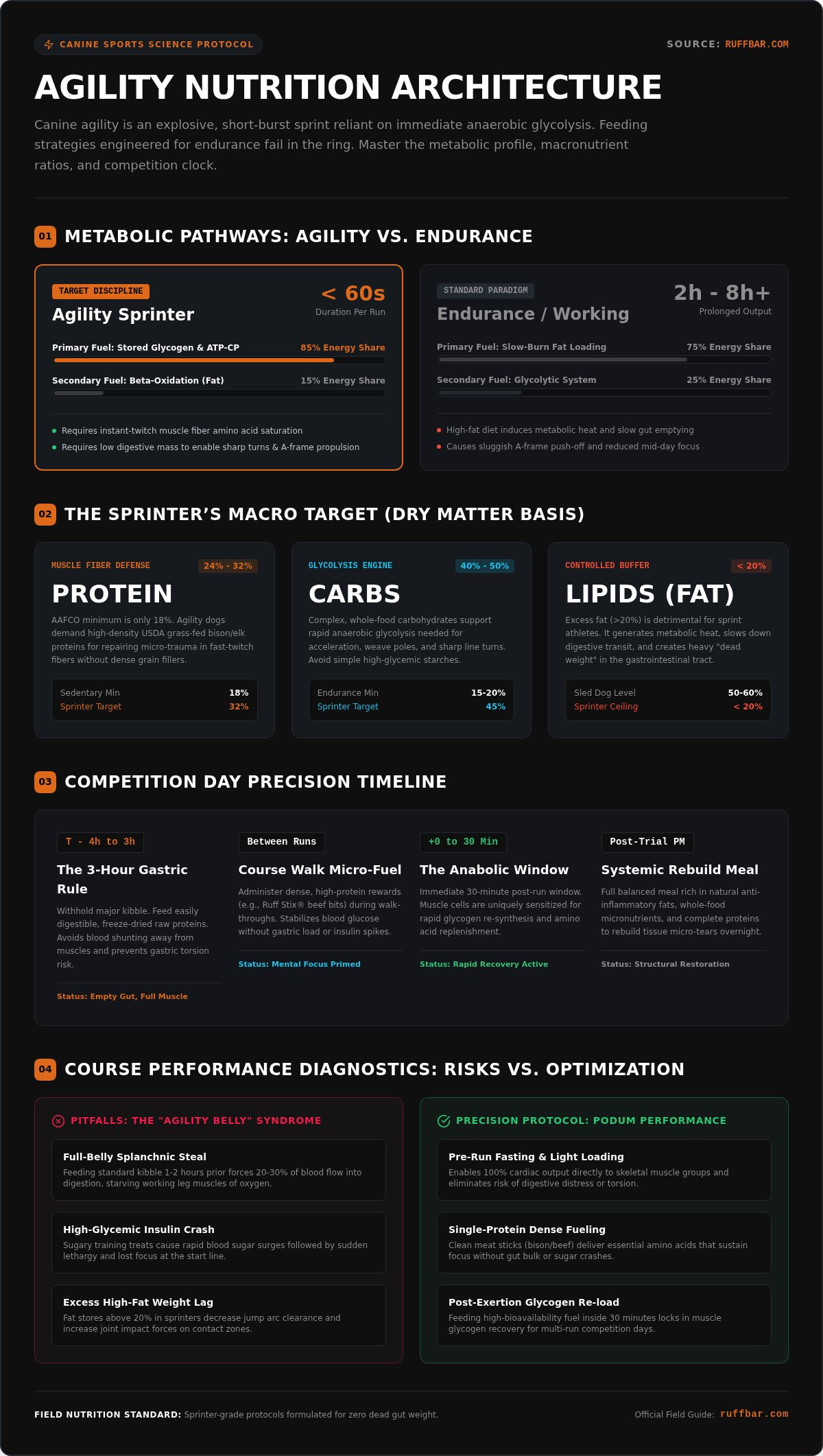
High-intensity movements like tight weaves and steep jumps place immense stress on fast-twitch muscle fibers. These fibers require immediate amino acid availability for repair. While AAFCO maintenance minimums sit at 18%, competitive athletes need 24% to 32% protein on a dry matter basis to thrive. USDA-graded grass-fed meats offer superior amino acid profiles compared to rendered meals. Choosing grain-free, high-density protein sources is essential. This strategy reduces systemic inflammation. It allows your dog to stay agile and responsive throughout a multi-day trial. Purity in sourcing matters. When you don't fuel with fillers, you provide the tools for muscle repair without the "dead weight" of unnecessary bulk.
Metabolic Efficiency: Anaerobic vs. Aerobic Energy
The demands of canine agility competitions rely heavily on the ATP-CP system. Most runs finish in under 60 seconds. This is anaerobic work. It's powered by stored adenosine triphosphate and glycogen, not the slow-burn fat loading used by endurance breeds. Excessive fat, specifically levels above 20%, can actually hinder performance in sprinters. It causes digestive heaviness and metabolic heat. Sprinters require diets with approximately 40% to 50% carbohydrates on a dry matter basis to support the glycolysis needed for that initial burst.
Lean proteins like bison and elk provide the energy for propulsion while keeping the dog's weight optimal for joint safety. Managing carbohydrates is equally vital. Avoid the "sugar crash" associated with simple starches. Instead, rely on complex, whole-food sources that provide steady glucose levels. This ensures your dog maintains focus from the first jump to the final tunnel. Performance requires discipline. Your dog's macro profile should reflect the intensity of their work. High-stakes trials leave no room for metabolic errors.
Timing is Everything: The Competition Day Fueling Timeline
Timing determines the podium. A precision nutrition plan for agility dogs is more than a list of ingredients; it is a masterclass in the clock. On trial days, every ounce of energy must be directed toward propulsion and focus. Feeding too much too late creates a metabolic anchor. Feeding too little leads to a mid-afternoon crash. You must align your dog's digestive cycle with the competition schedule to ensure peak performance.
The 3-Hour Rule: Pre-Run Preparation
A full stomach is a liability. During intense exertion, blood flow shunts away from the digestive tract and toward the limbs. This makes digestion nearly impossible during a run. Gastric emptying in performance dogs refers to the rate at which food exits the stomach and enters the small intestine; this process must be finalized well before the first jump to mitigate the risk of life-threatening gastric torsion or cramping.
Adhering to Merck Veterinary Manual's working dog feeding guidelines suggests withholding major meals for at least three to four hours before high-intensity work. For morning trials, choose easily digestible, freeze-dried raw meals. These provide nutrient density without the heavy bulk of traditional kibble. It keeps the dog light, fast, and ready to fire.
Strategic Snacking Between Runs
Agility is a series of explosive bursts. These sprints deplete glycogen stores rapidly. If you are facing a three-run day, your dog needs a mid-trial recharge. The goal is to replenish glucose without triggering a heavy insulin spike or weighing down the gut. High-protein snacks are the solution. They provide the amino acids needed for muscle maintenance while keeping the mind sharp.
Using Ruff Stix® Beef between course walks offers a clean, portable energy boost that won't cause digestive sluggishness. It anchors the dog's focus at the gate and provides the immediate fuel required for the next 30-second sprint.
The Recovery Window and Hydration
The first 30 minutes post-run is the "Golden Hour." This is when skeletal muscle cells are most receptive to nutrient uptake. Administer a small, high-protein snack immediately after the run to jumpstart the repair process. Hydration is equally critical. Many dogs refuse plain water in high-stress environments. Use low-sodium bone broths or rehydrated toppers to ensure they take in the fluids necessary for cooling and waste removal. This proactive approach prevents the cumulative fatigue that ruins the second half of a trial weekend.
Maximizing Recovery and Managing Oxidative Stress
High-intensity sprinting is a double-edged sword. It generates the power needed for a clean run, but it also creates microscopic muscle tears and significant oxidative stress. Without a proactive recovery strategy, this micro-trauma accumulates. It leads to stiffness. It reduces drive. It triggers chronic inflammation. A comprehensive nutrition plan for agility dogs must prioritize the "repair crew": amino acids and Omega-3 fatty acids. These nutrients act as the foundation for structural integrity. They don't just mask soreness; they rebuild the machine.
Research from the Cornell University College of Veterinary Medicine highlights the importance of nutrient partitioning in performance dogs. Agility athletes increase their protein turnover by 5% to 15% during strenuous exertion to repair tissue and support red blood cell generation. This makes high-density amino acid intake non-negotiable. Beyond basic joint support like glucosamine, Omega-3s from clean sources manage the inflammatory cascade. They keep joints fluid, responsive, and ready for the next gate.
Cooling Proteins and Inflammation Control
In sports nutrition, not all proteins are equal. High-stakes competition generates metabolic "heat." Using "cooling" proteins like duck or bison helps regulate the dog's internal state post-trial. Duck is particularly effective for recovery meals. It provides a rich profile of iron and B vitamins without the inflammatory potential of heavily processed meats. Clean, whole-ingredient diets are the standard. Eliminating synthetic binders and fillers reduces the workload on the liver and kidneys. This allows the body to focus entirely on muscle repair. Integrating performance dog food supplements can further bridge the gap between maintenance and elite recovery.
Rehydration and Electrolyte Balance
Plain water is a baseline. For the elite athlete, it's insufficient. Multiple runs over a weekend deplete glycogen and essential minerals. If your dog refuses water in a noisy trial environment, they risk dehydration and sluggishness. Rehydration requires a delivery system. Bone broth acts as a functional recovery topper. It provides collagen for connective tissue and electrolytes for cellular balance. Use Ruff Bar Pure Blend Toppers to "bait" water. This ensures your dog drinks deeply. It flushes metabolic waste. It restores hydration levels. It prepares the body for the next day's challenges. Recovery is where the next win is built. Don't leave it to chance.
Avoiding 'Agility Belly': Digestive Health and Course Focus
A precision nutrition plan for agility dogs must account for the gut-brain axis. If the digestive system is in distress, the mind cannot focus on the handler's cues. You have seen it on the course: the "zoomies," missed contacts, or a sudden loss of drive. These aren't always training failures. Often, they are physical reactions to gastrointestinal discomfort. High sympathetic nervous system activity during competition shunts blood away from the GI tract and toward the limbs. This process, known as mucosal ischemia, can trigger "runner's diarrhea" or exercise-induced colitis. You need a diet that minimizes fecal bulk and maximizes stability.
Eliminate fillers. Grains, beet pulp, and synthetic binders create unnecessary waste. This leads to mid-run gas and bloating. When a dog feels heavy or cramped, they lose their competitive edge. A clean, high-standard diet ensures that every gram of food is converted into energy or muscle repair. Consistency is your greatest tool against stress-induced diarrhea. By maintaining the same high-quality fuel during travel and trials, you protect the delicate balance of the microbiome.
Clean Ingredients for Mental Clarity
Blood sugar stability is the foundation of course focus. Low-quality treats filled with glycerin and simple starches cause rapid insulin spikes followed by a mental crash. This volatility leads to "brain fog" and erratic behavior in the ring. You need low-glycemic energy sources for a steady, unwavering drive. Using Ruff Bar Pure Blend Toppers as a foundation keeps the gut stable during the stress of travel. It provides the pure meat protein required for performance without the inflammatory additives found in commercial "sensitive stomach" formulas.
High-Value Treats that Support the Plan
Training treats are not "free" calories. They are part of the total daily macro balance. Most handlers use "junk food" treats for high-value rewards, which ruins the protein-to-fat ratios established in the main meal. Your rewards must be as clean as the primary bowl. Selecting grain-free, high-density treats ensures you aren't accidentally introducing inflammatory triggers between runs. For handlers who need sustained focus during long course walks or multiple runs, high protein dog energy bars provide the necessary glycogen replenishment without the digestive weight of a full meal.
Don't let a "sour stomach" stand between your dog and a clean run. Invest in performance nutrition that prioritizes digestive integrity and mental sharpness.
Implementing the Ruff Bar Agility Nutrition Plan
Precision requires a system. To execute a successful nutrition plan for agility dogs, you must move beyond generic feeding and toward a performance-driven protocol. Your dog's caloric needs shift based on intensity. During heavy training or multi-run trial weekends, energy requirements often spike to 1.6x or 2.0x their resting energy requirement (RER). You cannot meet this demand with volume alone; you must meet it with density. Building the foundation starts with Ruff Food Freeze Dried Raw Backpacking Meals Beef or Duck. These provide the raw, grain-free fuel necessary for muscle repair and sustained drive.
Integrate Ruff Stix® as your primary competition-day performance fuel. These are not just treats. They are functional tools designed for rapid glycogen replenishment. Use Ruff Bar Functional Nutrition Toppers to address specific agility stressors, such as joint impact or travel-induced anxiety. By layering these components, you create a comprehensive strategy that supports the athlete from the first warm-up to the final recovery meal. This is about functional excellence. It is about providing the highest standard of preparation for your partner.
The Agility Trial Starter Kit
Success in the ring depends on the gear in your bag. Ruff Stix® Bison Pork is the secret weapon for multi-day trials. It offers high-protein density in a portable, shelf-stable format. It provides the quick energy needed between runs without weighing down the gut. For travel, the convenience of Ruff Food Bars is unmatched. They belong in your backpack, not on a grocery shelf. When the day ends, prepare a recovery meal using Ruff Food Freeze Dried Raw Backpacking Meals Duck. The cooling properties of duck help manage the metabolic heat generated by a day of sprinting. It is the ultimate recovery foundation.
Consistency is the Key to Performance
Integrity in preparation builds trust on the course. Never change your dog's diet the day of a big trial. Unfamiliar proteins or new supplements can trigger digestive instability at the worst possible moment. Test your fueling strategy during weekly training sessions. Observe the results. Does your dog maintain focus? Is their recovery rapid? Once you find the optimal balance, stick to it. Reliability is the hallmark of a champion. It is the result of disciplined, uncompromising standards. Fuel your next run with Ruff Bar and witness the difference that high-standard nutrition makes for your athlete.
Master the Course with Precision Fuel
Success on the agility course is built in the bowl long before the first whistle blows. You now have the blueprint to align your dog's metabolic needs with the uncompromising demands of high-intensity sprinting. By prioritizing high-protein density and mastering the competition-day fueling timeline, you eliminate the metabolic anchors that cause mid-trial sluggishness. You protect the gut-brain axis. You accelerate recovery. A precision-engineered nutrition plan for agility dogs is your most powerful tool for maintaining explosive power and unwavering focus throughout a grueling weekend.
Stop settling for generic, filler-heavy kibble that slows your athlete down. Our formulas rely on USDA-graded grass-fed meats and contain no fillers or grains. It's why our products are trusted by performance handlers nationwide who refuse to compromise on quality. It is time to equip your partner with the integrity of high-standard preparation and functional excellence. Give your dog the fuel they need to hit every contact and shave seconds off every run.
Fuel Your Agility Athlete with Ruff Bar
Your partner is ready for the next gate. Victory belongs to those who prepare with the same intensity they bring to the ring.
Frequently Asked Questions
What is the best protein level for an agility dog?
Agility athletes require a protein level between 24% and 32% on a dry matter basis to support rapid muscle tissue repair. This is significantly higher than the 18% minimum required for sedentary dogs. You should prioritize USDA-graded grass-fed meats to ensure a superior amino acid profile. High-density protein provides the building blocks for explosive power. It helps repair the micro-trauma caused by high-speed weaves and steep jumps during intense competition.
How many hours before an agility run should I feed my dog?
You should withhold major meals for at least 3 to 4 hours before an agility run. Feeding too close to a trial increases the risk of life-threatening gastric dilation-volvulus, also known as bloat, and intestinal cramping. During intense runs, blood flow shunts away from the gut and toward the skeletal muscles. This stops digestion and creates a heavy metabolic anchor. Stick to light, easily digestible fuel like Ruff Stix® Bison Pork for mid-day energy.
Can I use energy bars for dogs during a trial?
Yes, high-protein energy bars are essential equipment for multi-run trial days. Agility is a series of explosive sprints that rapidly deplete glycogen stores. Portable options like Ruff Food Bars provide a clean energy boost without the digestive bulk of a full meal. They help maintain glucose levels and mental focus between course walks. Ensure your choice is grain-free and uses high-standard meats to avoid the insulin crashes associated with low-quality fillers.
How do I prevent my agility dog from getting diarrhea at competitions?
Preventing "agility belly" requires a nutrition plan for agility dogs that eliminates inflammatory fillers and grains. Stress-induced diarrhea occurs when adrenaline shunts blood away from the digestive tract. Consistent, high-standard nutrition builds a stable microbiome that can withstand the pressure of travel and competition. Avoid changing proteins on trial days. Use Ruff Bar Pure Blend Toppers to maintain gut integrity and provide the pure meat energy your athlete needs to stay focused.
Should I feed my dog differently on training days vs. trial days?
Your dog's caloric requirements increase significantly on trial days, often reaching 1.6x to 2.0x their resting energy requirement. While the foundation remains the same, the timing and density of delivery change. Use Ruff Stix® Beef for precision mid-trial fueling to maintain propulsion. On training days, focus on building the structural foundation with Ruff Food Freeze Dried Raw Backpacking Meals. Always test your trial-day fueling strategy during weekly training sessions to ensure total digestive stability.
Is a grain-free diet better for canine athletes?
A grain-free diet is superior for canine athletes because it eliminates unnecessary gut weight and reduces systemic inflammation. Fillers like corn, wheat, and beet pulp provide empty calories that don't support muscle repair or explosive power. Grain-free formulas using grass-fed meats ensure that every gram of food contributes to propulsion and recovery. This purity of sourcing keeps your dog light on their feet and maintains the mental clarity needed for complex obstacle navigation.
How can I help my agility dog recover faster between runs?
Maximize the 30-minute post-exercise window to jumpstart recovery between runs. This is when skeletal muscle cells are most receptive to glycogen synthesis and amino acid uptake. Administer a small, high-protein snack immediately after leaving the ring. Rehydration is equally vital. Use bone broth or rehydrated Ruff Bar Pure Blend Toppers to bait water. This ensures your dog takes in essential fluids and electrolytes to flush metabolic waste and reduce oxidative stress.
Does my agility dog need extra supplements for their joints?
Active agility dogs benefit from targeted support to manage the inflammatory cascade caused by high-impact jumping. While glucosamine is a baseline, elite athletes require Omega-3 fatty acids and specific amino acids for connective tissue repair. Ruff Supplements for Dogs or Ruff Bar Functional Nutrition Toppers provide these critical nutrients without synthetic binders. Prioritize clean, whole-food sources to protect long-term joint health. This proactive approach ensures your partner remains sound and competitive for many seasons to come.