
Nutrition for Search and Rescue Dogs: Fueling Scenting Precision and Endurance
Nutrition is tactical equipment. It is the difference between a dog that flags at hour six and one that pushes through the midnight shift with laser focus. When the stakes are life and death, a dip in scenting precision isn't just a setback; it's a failure of preparation. You already know that grueling deployments demand more than standard kibble. You have seen the fatigue. You've felt the weight of heavy packs. You have managed the digestive stress that comes with high-stakes missions. Mastering the right nutrition for search and rescue dogs is the only way to ensure your partner stays sharp when the terrain gets brutal.
We promise to help you dial in the metabolic fueling required to maintain olfactory focus and physical stamina during your most demanding call-outs. This article explores why high-fat diets are the gold standard for endurance and how to utilize lightweight, high-calorie fuel that doesn't bulk up your kit. We will also cover strategic recovery protocols to get your dog back in the field faster. It is time to treat your dog's fuel with the same discipline you bring to their training.
Key Takeaways
- SAR dogs are high-output athletes. Learn why their caloric needs spike in rugged environments and how to meet those demands without causing digestive stress.
- Optimal nutrition for search and rescue dogs prioritizes fat as a primary fuel source. Discover the specific macro ratios that sustain long-range endurance and muscle repair.
- Scenting is an energy-intensive process. Understand how to fuel olfactory cells to maintain precision and avoid the scenting fatigue that leads to missed finds.
- Strategy beats volume. Master the art of micro-feeding in the field to keep your partner’s energy stable during grueling, high-stakes missions.
- Pack light and fuel heavy. Learn why shelf-stable, nutrient-dense options like Ruff Food Freeze Dried Raw are essential equipment for any deployment backpack.
The Extreme Metabolic Demands of Search and Rescue Operations
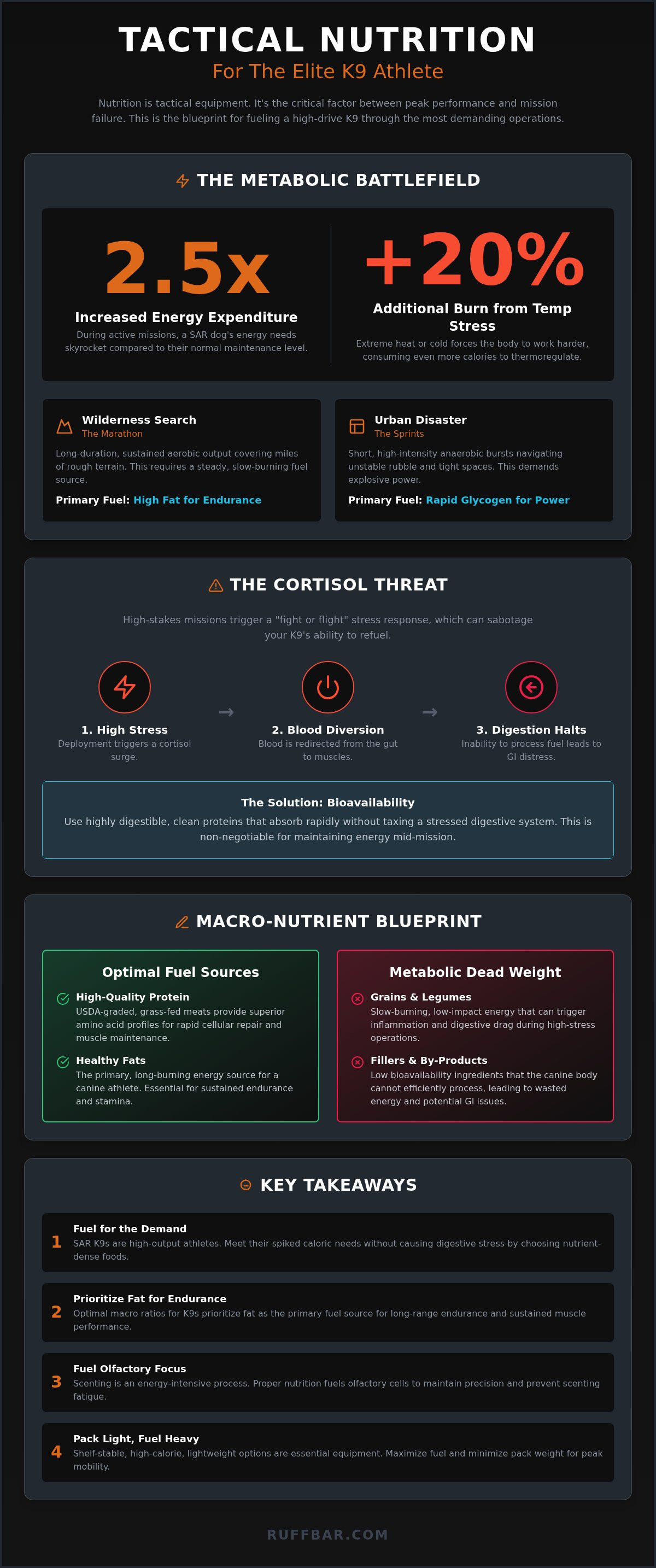
SAR dogs are not pets. They are elite endurance athletes. They operate in high-stress, unpredictable environments where a standard afternoon at the park doesn't compare to a 12-hour wilderness sweep. These animals operate at a metabolic peak. Energy expenditure often reaches 2.5 times their maintenance level during active missions. When the tank runs dry, burnout sets in. This isn't just tired behavior; it is a physiological failure known as glycogen depletion. If your partner hits this wall, scenting precision vanishes. Standard active kibble often fails to meet these specific requirements. It relies on bulk fillers rather than bioavailable energy. Proper nutrition for search and rescue dogs demands a tactical approach to fueling. You need density over volume.
Wilderness vs. Urban Search: Different Fuel Needs
Terrain dictates the metabolic burn. Wilderness tracking is a marathon. It requires sustained aerobic energy to cover miles of dense forest or alpine slopes. In contrast, urban disaster searches are a series of high-intensity, anaerobic bursts. Navigating unstable rubble and tight voids demands explosive power and constant micro-adjustments. These environments force the body to switch fuel sources rapidly. Environmental factors add another layer of complexity:
- Wilderness: Sustained aerobic output. High fat requirements for long-range endurance.
- Urban: High-intensity anaerobic bursts. Rapid glycogen use during rubble navigation.
- Temperature Stress: Extreme cold or heat can increase caloric burn by up to 20 percent as the body struggles to maintain thermoregulation.
Understanding the Sport dog nutrition requirements for these varied environments is critical for mission success. You cannot fuel a sprint the same way you fuel a 20-mile track.
The Stress Factor: Cortisol and Digestion
Deployment is high-stakes. The immediate "fight or flight" response triggers a surge of cortisol. This hormone is essential for survival but devastating for digestion. High cortisol levels redirect blood flow away from the gut and toward the lungs and muscles. This means your dog cannot process complex, low-quality proteins during a mission. If the fuel isn't clean, it sits heavy in the stomach. This causes GI distress, lethargy, or a total refusal to eat. It's a dangerous cycle: the dog needs energy, but the stress of the search prevents them from absorbing it. Maintaining intensity requires highly digestible, clean proteins that absorb quickly without taxing the system. Utilizing high protein dog energy bars ensures your partner gets the fuel they need without the digestive drag of traditional meals. This is the cornerstone of effective nutrition for search and rescue dogs during active deployment.
Macro-Nutrient Optimization: Balancing Protein and Fat for Working K9s
Every ounce in a search and rescue pack must earn its place. High-performance nutrition for search and rescue dogs leaves no room for filler. Grains and legumes are metabolic dead weight. They offer slow-burning, low-impact energy that can trigger inflammation or digestive drag. Precision requires purity. Your partner needs a nutrient profile that mirrors their ancestral biology: high protein, high fat, and zero fluff. This isn't just about calories. It is about the specific fuel types that keep a dog moving through a 48-hour wilderness deployment without hitting the wall.
Protein Quality and Bioavailability
Protein is more than a muscle builder. It is the raw material for scenting enzymes and immune resilience. Bioavailability is the only metric that matters here. USDA-graded grass-fed meats offer superior amino acid profiles compared to "meat by-products" or plant-based proteins. Low-grade ingredients are often rendered waste that the canine body cannot efficiently process. Choosing clean, whole-meat sources like Bison and Pork ensures rapid cellular repair. It supports long-term systemic health and allows for faster recovery between training sessions and active call-outs. When the body doesn't have to fight through fillers, it can focus on rebuilding.
Fat as the Endurance Engine
Fat is the primary fuel source for the canine athlete. While humans rely heavily on glycogen, a dog's metabolism is optimized for lipid oxidation. This is their endurance engine. Peer-reviewed research into the Nutritional management of search and rescue dogs highlights how fat sustains energy without the "spike and crash" cycle of simple sugars. It provides the sustained propulsion needed for multi-day deployments in challenging terrain. Aim for a "sweet spot" ratio of 20 to 30 percent fat. This ensures the metabolic engine never stalls during a long-range track. If your dog's base diet is too lean for the mission, use performance dog food supplements to bridge the gap and boost healthy lipid intake.
Carbohydrates have a specific, narrow role. They provide the glucose required for cognitive focus. A dog that cannot think cannot find. Precision scenting is mentally exhausting. Small amounts of digestible carbohydrates keep the brain sharp while the muscles burn fat for movement. This balance prevents "scenting fatigue" and keeps the dog's nose on the target. Investing in tactical grade nutrition ensures your partner is as ready for the mission as you are. Don't let a low-quality diet be the weak link in your deployment kit.
The Scenting-Nutrition Link: How Diet Impacts Olfactory Performance
Scenting is a high-stakes biological operation. It is not passive breathing. It is active data processing. The canine olfactory system contains up to 300 million receptors, and these cells require immense energy to translate chemical signals into neural information. When energy levels dip, the nose fails first. This is where nutrition for search and rescue dogs becomes a critical factor in mission success. A dog with a depleted system will start missing finds. They will give false alerts. They will lose the drive to work. Precision requires consistent metabolic support.
The link between gut health and cognitive focus is undeniable. Modern nutrition for search and rescue dogs prioritizes neuro-protective nutrients that support the neural pathways handling complex scent discrimination. These nutrients help the dog filter out "noise" in contaminated urban environments. A well-fueled brain stays on task longer. It resists the mental drain of a multi-hour wilderness track. Precision isn't just about the nose; it's about the processor behind it.
Olfactory Fatigue and Glucose Spikes
Olfactory fatigue is the metabolic exhaustion of scent-processing neurons. It occurs when the brain and sensory organs run out of the glucose needed for high-level cognition. Many handlers make the mistake of using high-sugar training treats or low-quality snacks during a search. This creates a rapid glucose spike followed by a devastating crash. That crash kills scenting focus. You need steady-state fueling to maintain a consistent alert profile. Clean, fat-based energy provides the endurance, but stable blood sugar keeps the neural pathways open and responsive.
Hydration and Scenting Precision
Precision requires a wet nose. The mucosal lining of the nasal cavity traps and transports scent molecules to the receptors. If that lining dries out, the dog is effectively blind to the trail. Dehydration is a silent mission killer. Dogs lose significant moisture through panting, especially in arid or high-altitude environments. Even mild dehydration thickens the mucus and slows down molecule transport. This leads to "scenting lag" where the dog overshoots the source.
Strategic hydration is essential. You cannot just hope the dog drinks when offered. Many working dogs are too high-drive to stop for a bowl of plain water. You must "bait" the water to ensure intake. Using the best dog food toppers for energy is a tactical way to encourage fluid consumption in the field. These toppers add flavor and essential nutrients, turning a hydration break into a functional recovery session. Keep the nose moist. Keep the focus sharp. Keep the search moving.
Tactical Field Feeding: Managing Energy During High-Stakes Deployments
Nutrition for search and rescue dogs isn't just about what you feed. It is about when you feed. A tactical feeding schedule is as vital as your GPS or radio; just as you depend on Horizon Battery to keep your essential navigation gear powered, you must build the glycogen tank 24 hours before the mission begins. This isn't the time for experimentation. It is the time for proven, high-density fuel. Start building the reserve early. Feeding a calorie-dense meal the night before a known training or planned search allows for full digestion and tops off muscle stores. When the alarm goes off, your dog is already primed for the first push. Once the deployment starts, the strategy shifts to maintenance. You're managing a metabolic fire that burns hot and fast.
Pack weight is the enemy of endurance. Every extra pound of food is a pound less of water or medical gear. You need to maximize calories while minimizing mass. High-fat, freeze-dried options offer the highest calorie-to-weight ratio available. This allows you to carry multiple days of high-performance nutrition for search and rescue dogs without compromising your own mobility on the trail. Efficiency in the pack translates to efficiency on the track.
Feeding a full meal in the field is a tactical error. It redirects blood flow to the stomach when the muscles and nose need it most. Worse, it increases the risk of Gastric Dilatation-Volvulus, or bloat, in high-stress environments. Use the micro-meal approach instead. Small, frequent hits of energy keep blood sugar stable without weighing down the digestive system. Ruff Stix® Bison Pork or Beef are designed for this exact scenario. They provide immediate, clean protein and fat during five-minute tactical breaks. This keeps the drive high and the stomach light.
Deployment Recovery Protocol
The search doesn't end at the find. The 30-minute window following a mission is the critical period for muscle repair. This is when the canine body is most receptive to amino acids. Rehydrating with freeze dried raw dog food for backpacking at base camp ensures the recovery process starts immediately. It prevents "Searcher’s Fatigue" and prepares the dog for the next shift. It is lightweight for your pack but heavy on nutritional impact. Monitor energy levels and stool quality throughout the deployment. These are your early warning systems for burnout. If the output drops, the fuel quality must increase. Maintaining a strict recovery protocol ensures your partner is ready for the next call-out, no matter how soon it comes.
Equip your K9 partner with performance-ready field fuel to ensure mission readiness in any environment.
Ruff Bar: High-Performance Nutrition Built for the Mission
Your 24-hour pack is a survival system. Every gram must earn its place. In high-stakes environments, nutrition for search and rescue dogs is tactical gear. It is not just food; it is the fuel that powers scenting precision and physical endurance. Ruff Bar is engineered for this exact purpose. We use USDA-graded grass-fed meats. We include whole organic produce. We eliminate fillers, grains, and shortcuts. This is uncompromising nutrition for dogs who view the world as a mission. When the terrain is brutal and the clock is ticking, you need fuel that is as disciplined as your training.
SAR dogs are active partners, not sedentary companions. Their biology demands energy that propels them forward. We prioritize animal-based fats and bioavailable proteins because they are the most efficient fuel sources for the canine athlete. This approach ensures sustained search intensity and faster recovery between shifts. Our products are built to survive the bottom of a backpack and the rigors of a multi-day deployment. They are essential equipment for the modern K9 team.
Why SAR Handlers Trust Ruff Stix®
Ruff Stix® offer the ultimate field solution for handlers who need results, not excuses. They provide clean, punchy energy without the mess or safety risks of carrying raw meat in a warm pack. When your dog makes a successful find, the reward needs to match the effort. These sticks serve as high-value motivation that reinforces training while providing the metabolic support needed for the next leg of the search. Choose from Bison Pork, Beef, or Pork to keep palates interested and energy levels peaked. No refrigeration. No mess. Just raw, functional power.
The Freeze-Dried Advantage for Base Camp
Wilderness deployments demand maximum nutrition with minimum weight. Carrying heavy bags of kibble is not an option when you are miles from the trailhead. Ruff Food Freeze Dried Raw Backpacking Meals in Beef or Duck solve the caloric density problem. They are shelf-stable. They are ultra-light. They rehydrate in minutes to support both energy and fluid needs at base camp. This ensures your dog starts every shift with a full tank and a hydrated system.
Integrating premium freeze dried treats for dogs acts as a high-value focus booster between shifts. These treats provide the cognitive "brain fuel" discussed earlier without the digestive drag of low-quality snacks. This is nutrition for search and rescue dogs that understands the stakes. It is the reliability of high-standard preparation in every bite. Build your kit with fuel that matches your partner's drive.
Fuel the Mission with Precision
Success in the field is a product of relentless preparation. Scenting precision isn't just about training. It is about biology. It requires high-fat endurance, rapid protein recovery, and tactical micro-feeding. These are the pillars of mission success. Every deployment is a high-stakes test of your gear and your partner's stamina. Don't let the fuel be the weak link in your kit. Efficiency in the pack translates to intensity on the track.
Mastering the right nutrition for search and rescue dogs ensures they never flag when the search is on the line. Our grain-free, no-filler formulas use only USDA-graded grass-fed meats to deliver uncompromising results. It's the reason we are trusted by working dog handlers navigating the most brutal terrains. Stop settling for domestic standards. Equip your K9 partner with Ruff Bar performance fuel today. Your partner is ready to push the limits. Ensure their fuel can keep up with the drive. Stay focused. Stay sharp. Stay on the track.
Frequently Asked Questions
What is the best protein source for a working search and rescue dog?
USDA-graded grass-fed meats provide the highest bioavailability for muscle repair and enzyme production. Bison, Pork, and Beef are superior to the meat by-products found in lower-grade foods. Clean, whole-meat sources ensure that every gram of protein is used for recovery rather than filtered as waste. This is the gold standard for nutrition for search and rescue dogs operating in high-stakes environments. High-quality protein keeps the system sharp and the muscles resilient.
How many calories does a SAR dog need during a 10-hour mission?
Caloric needs vary by weight and terrain, but working dogs often require 1.5 to 2.5 times their standard maintenance calories. For a 10-hour mission, a 60-pound dog might burn between 2,500 and 4,000 calories depending on environmental stress. Cold weather and rugged urban rubble increase these demands significantly. You must fuel for the specific output of the day. Don't wait for exhaustion to start feeding; stay ahead of the burn.
Can I feed my SAR dog human energy bars?
Never feed human energy bars to a working dog. Many contain ingredients like xylitol, raisins, or macadamia nuts that are toxic to canines. Even safe human bars often have excessive sugar levels that cause a glucose spike followed by a focus-killing crash. Use specialized tools like Ruff Food Bars instead. These are engineered with the correct macro ratios to provide sustained propulsion without the dangerous additives found in human snacks.
How do I prevent bloat (GDV) while working my dog in the field?
Prevent bloat by avoiding large, heavy meals before or during active work. Use a micro-meal strategy to provide small, frequent hits of energy. Ruff Stix® are perfect for these tactical breaks. Always wait at least 30 to 60 minutes after high-intensity activity before offering a larger meal. This allows the dog's heart rate and body temperature to stabilize. Keeping the stomach light is a critical safety protocol in the field.
What are the signs of nutritional fatigue in a search dog?
Nutritional fatigue manifests as a loss of scenting precision and a drop in search intensity. You will see the dog start to flag or miss clear scent cones. They might offer false alerts or show a noticeable lack of interest in the trail. These are physiological signals that the brain and olfactory cells lack the glucose and fat required for data processing. When the nose stops working, the fuel tank is empty.
Is freeze-dried raw food safe for multi-day deployments?
Freeze-dried raw food is the ultimate solution for multi-day wilderness deployments. It offers the high-protein, high-fat density of raw meat without the weight or spoilage risks. It is shelf-stable and fits easily into a 24-hour pack. Rehydrating meals like Ruff Food Freeze Dried Raw Beef at base camp supports both caloric intake and hydration. It is the most efficient way to maintain nutrition for search and rescue dogs during long deployments.
How often should I give my dog water breaks during a search?
Offer small water breaks every 15 to 30 minutes during active searching. Dogs lose moisture rapidly through panting, especially in dry or high-altitude conditions. Even mild dehydration can thicken the mucosal lining of the nose and kill scenting accuracy. Don't wait for the dog to show signs of thirst. Frequent, small amounts of water are better than one large drink. Use toppers to bait the water if the dog is too driven to stop.
Should I change my dog’s diet during the off-season?
Adjust the caloric density but maintain the quality. During the off-season, your dog likely needs fewer calories from fat and carbohydrates to prevent obesity. However, the requirement for high-quality, bioavailable protein remains constant to preserve lean muscle mass. You don't need to switch brands. Simply scale the volume of Ruff Food down to match the lower activity level. Keep the no-filler standard year-round to ensure the digestive system stays optimized for the next call-out.