
Meal Prep for a Week of Camping With a Dog: A Practical Plan
A camping week runs more smoothly when your dog’s meals are planned before you reach the trailhead. Meal prep for a week of camping with a dog doesn’t have to mean hauling bulky food or improvising dinner at camp. The practical challenge is to pack enough, protect it from heat and wildlife, and keep meals familiar while your routine shifts.
A simple plan makes those decisions manageable. This guide explains how to estimate your dog’s food for seven days, portion meals, and pack them for the trip. You’ll compare familiar food, shelf-stable choices, and combinations of formats, then see where freeze-dried backpacking meals, Ruff Food Bars, and Ruff Stix® may fit within an established feeding routine. The guide also covers home prep, daily meal organization, and safe food storage at camp. Always follow the rules for your specific destination. The result is less guesswork in your pack and a steadier routine for your dog on the move.
Key Takeaways
- Start with your dog’s usual diet, feeding plan, and expected activity to set a practical seven-day food target.
- Use the food label and established portions to map meals before you pack, rather than guessing at camp.
- Compare familiar dry food, freeze-dried meals, and portable treats by preparation, water needs, storage, and role in the plan.
- Make meal prep for a week of camping with a dog easier by portioning meals, labeling them by day, and keeping food organized and accessible.
- Consider Ruff Food Freeze Dried Raw Backpacking Meals as one possible part of an established routine, and follow the package directions.
Why a Week of Camping With a Dog Needs a Meal Plan
A week outdoors changes the logistics, not your dog’s need for a steady feeding routine. Familiar meals must fit alongside camping gear, stay protected in the storage available at your destination, and work around travel, trail days, and camp setup. Without a plan, it’s easy to misjudge how much food to bring or find that a meal needs more water or preparation than camp allows.
Start with what your dog already eats and the routine that works at home. Consider their usual diet, any veterinarian-directed feeding instructions, and the activity you expect on the trip. A demanding hike can change the day’s rhythm, but don’t assume you should alter portions without a sound basis. Use the established feeding plan and food label as your starting point, not a last-minute guess. For general background, see types of dog food, but let your dog’s familiar food and individual needs guide your decision.
Keep food categories separate. Daily meals are the foundation. Training rewards are for planned practice and trail skills, while emergency food is a modest contingency supply kept apart from the regular count. Optional toppers or other nutrition add-ons belong in their own category too. This makes it easier to track what your dog needs each day without accidentally counting treats as meals.
Start with the trip and your dog's usual routine
Write down the trip length, travel time, expected daily activity, and food-storage conditions at camp. Include travel days in your count. Then note your dog’s usual food, meal times, and any veterinarian-directed diet instructions. Consider access to clean water and whether you’ll have a practical way to prepare each meal. These details help you compare formats and avoid choosing food that doesn’t suit your setup.
Build a food inventory before packing
Make the count visible. List each day and feeding time instead of trying to remember the week all at once. Use your dog’s usual serving and the current food label as references, then record rewards and contingency food separately. Check the package directions and expiration information for every food you plan to bring, including optional add-ons. Preparation and storage instructions can affect what’s practical at camp.
- Meals: Record the planned serving for each feeding time.
- Rewards: Estimate what you’ll set aside for training, separate from meals.
- Contingency: Add a modest reserve for delays or unexpected changes.
- Add-ons: Note any optional extras and how the package directs you to use them.
This inventory is the first step in meal prep for a week of camping with a dog. Plan first, choose formats second, then pack from a checklist. That order keeps familiar food and feeding needs at the center while helping you weigh space, preparation, and storage before you leave home.
How to Set Up a Seven-Day Camping Meal Plan for Your Dog
Build the plan around your dog’s real routine, not a generic calorie chart. The current food label and established feeding plan provide a practical baseline. Age, size, health, and workload all affect individual needs, so no single serving amount fits every dog. A long, strenuous day may call for a different plan than a quiet day at camp, but substantial feeding changes should be guided by your veterinarian.
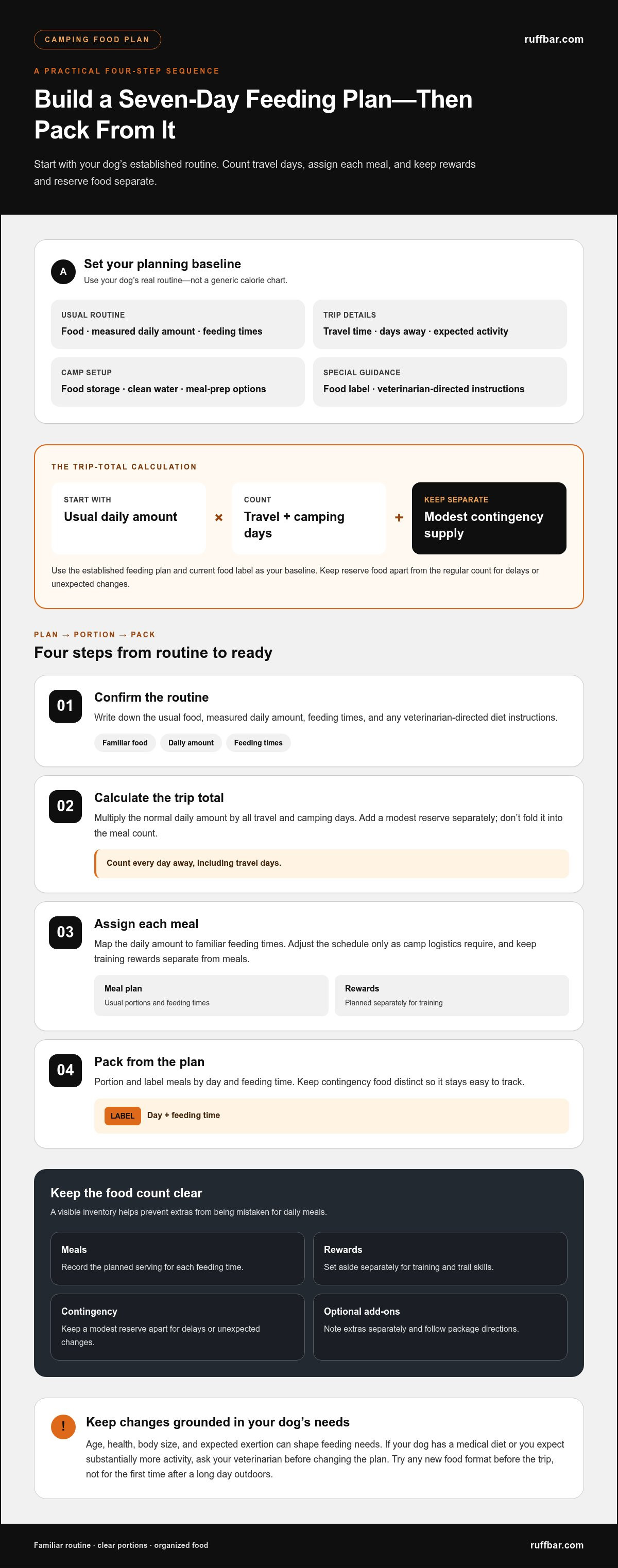
- Confirm the routine. Write down the usual food, measured daily amount, and feeding times. Note any veterinarian-directed diet instructions.
- Calculate the trip total. Multiply the normal daily amount by the number of travel and camping days. Add a modest, separate contingency supply for delays or unexpected changes.
- Assign each meal. Map the daily amount to familiar feeding times, adjusting the schedule only as camp logistics require. Keep training rewards separate.
- Pack from the plan. Portion and label meals by day and feeding time. Keep contingency food distinct so it’s easy to track.
Estimate food from the dog's established daily routine
Use your dog’s normal measured daily amount as the baseline. For example, if the established plan divides the day’s food between morning and evening, preserve that split across the trip rather than estimating from memory. Multiply the usual daily amount by each day away, including travel days, then set aside a modest reserve. Don’t use a broad formula to override feeding instructions tailored to your dog.
Account for the trip’s demands without guessing at extra portions. Age, health, body size, and expected exertion can all shape feeding needs. If your dog has a medical diet or you expect a substantial increase in activity, ask your veterinarian for guidance before changing the plan.
Adjust the schedule without making abrupt diet changes
Keep familiar foods and feeding times wherever the route and campsite routine allow. If an early departure shifts breakfast, plan the meal around travel rather than replacing it with unfamiliar food. Try any new format before the trip, not for the first time after a long day outdoors. Portable Ruff Bar options, including freeze-dried backpacking meals, may suit some established routines. Compare formats using Ruff Bar’s portable dog food options.
Count training rewards separately. Set aside what you expect to use for trail practice, recall, or camp manners, rather than quietly subtracting treats from meals. Keep emergency food separate too. This helps maintain a clear distinction between planned feeding and extras, even on a busy day.
Sample schedule framework
- Travel day: Usual morning meal, planned rewards, usual evening meal, contingency supply kept separate.
- Trail day: Usual meal slots, rewards set aside for training, contingency supply untouched unless needed.
- Camp day: Familiar feeding times where practical, rewards counted separately, daily meals checked against the plan.
Which Dog Food Formats Work Best for Camping?
The most practical format is one that fits your dog’s established diet and the trip’s real constraints. Compare preparation, water, storage, and pack space rather than assuming one format is nutritionally superior. Familiar food that needs specific storage may suit a car campsite but complicate a long carry. A compact option may save room but require water and meal prep. Test any new food before departure, not on the trail.
Familiar food, freeze-dried meals, and treats serve different roles
Familiar dry food can preserve the home routine if you can protect and store it as directed. Freeze-dried meals may be portable, but preparation varies by product, so follow the package directions. Treats and energy bars can support training or serve as supplemental items. Don’t assume they replace daily food unless the label identifies them as suitable for that role.
| Format | Preparation | Water needs | Storage | Packing convenience | Role in the feeding plan |
|---|---|---|---|---|---|
| Familiar dry food | Usually portioned and served as at home | Provide drinking water; check the label for any other directions | Follow package directions and protect food from moisture and wildlife | Familiar, but the total amount can take space | Regular meals when storage suits the trip |
| Freeze-dried meals | Follow the product’s preparation directions | Check whether water is needed to prepare the meal | Follow label directions; plan for any opened-package instructions | May be a portable option; compare packed portions and preparation needs | Potential meal format if it suits the dog’s established routine |
| Portable treats | Typically offered as rewards according to package directions | Keep drinking water available | Keep packaging protected and follow label directions | Useful to keep accessible for planned training | Rewards or supplemental items, not automatic meal replacements |
Choose based on preparation, storage, and the dog's acceptance
Run a quick camp test at home: portion a meal, follow its directions, and check that the preparation steps and water needs work with your gear. If your dog hasn’t eaten a format before, introduce it ahead of the trip and see how it fits their routine. The guide The Ultimate Guide to Freeze Dried Raw Dog Food for Backpacking covers a related topic to explore as you compare options.
Ruff Food Freeze Dried Raw Backpacking Meals Beef and Ruff Food Freeze Dried Raw Backpacking Meals Duck are two options to assess against those practical factors. Check each package for serving, preparation, storage, and expiration directions. Don’t infer that a meal format is a complete diet just because it’s portable. Use the label to understand its intended role.
For meal prep for a week of camping with a dog, choose a format your dog accepts and that you can prepare and store reliably. You can also combine familiar meals with a portable option if it suits the feeding plan. Keep treats in their own count, and let the product directions and your dog’s needs guide the final choice.
How to Prepare, Portion, and Pack Seven Days of Dog Food
Turn the meal plan into a camp-ready system before you leave. Make the right portion easy to find, keep food protected, and avoid guesswork when setting up or heading out for the day. Follow each food’s package directions for serving, preparation, and storage. Use clean hands and utensils when portioning and serving.
Portion and organize meals before leaving
Start with your dog’s established meal amounts and the instructions for the food you’ve selected. Measure each meal separately, using clean, sealable containers or packaging suited to the food. Label portions by day and feeding time, such as “Day 2, breakfast.” Clear labels help anyone sharing feeding duties follow the same plan.
Group each day’s meals together, but keep treats and training rewards in a separate pouch or container. Set aside a modest reserve portion for delays or an unexpectedly longer travel day, and mark it clearly so it isn’t mistaken for a planned meal. If a food needs water or another preparation step, note that on the portion or checklist and keep the required tools accessible.
Protect food and simplify campsite feeding
Match storage to the food’s label directions and the conditions at camp. Use clean, sealable containers to guard against moisture and spills, then store food and scented items according to the specific campground or land manager’s rules. Requirements can vary by location. Keep meal containers separate from treats, and pack the next feeding where you can reach it without unloading the whole kit.
Set up a small preparation station in your pack or camp kitchen: the day’s meal, a clean bowl, a scoop if needed, and any tools required by the package directions. Keep clean water available for your dog and for meal preparation where directed. After feeding, secure leftovers and packaging instead of leaving them at the site. Carry out waste and dispose of food remnants according to local instructions.
Departure checklist
- Portioned food for each planned meal, labeled by day and feeding time
- Separate training treats and clearly marked contingency food
- Clean water for drinking and any package-directed preparation
- Food and water bowls, plus a scoop or other required preparation tool
- Clean, sealable containers and a plan for secure food storage at camp
- Waste bags and a way to pack out used packaging and leftovers
A checklist makes meal prep for a week of camping with a dog repeatable: portion, label, group, protect, and pack within reach. If you’re building the food kit around portable Ruff Bar options, explore Ruff Bar camping food options and use current package directions to plan their place in your dog’s established routine.
Build Your Camping Food Kit With Ruff Bar Options
Bring the plan together as a working kit: meals for each day, training rewards, clean water, preparation tools, and secure storage. Choose each item for a specific job. Your dog’s established food and feeding needs stay at the center. Portable products are options to consider, not automatic replacements for regular meals.
Match Ruff Bar formats to the job in your plan
Ruff Food Freeze Dried Raw Backpacking Meals Beef and Ruff Food Freeze Dried Raw Backpacking Meals Duck may suit planned meals if they fit your dog and routine. Check each package for its intended use and follow current serving, preparation, and storage directions. Try the format before departure to see how it fits your feeding setup and whether your dog accepts it.
Ruff Food Bars and Ruff Stix® are distinct portable options that may fit as rewards or supplemental items when used according to their labels. Don’t treat a bar or Stix as a complete-meal substitute unless its packaging supports that role. For more context on energy bars, High Protein Dog Energy Bars: The Science of Sustained Adventure Fuel explores how they can fit into an active dog’s routine.
Organize the kit by purpose, not just by product. Group daily meals together, set rewards aside for training, and clearly mark reserve food. Store water and preparation tools where they’re easy to reach at mealtime, and pack food according to its label and your campsite’s rules.
Run a final seven-day departure check
Before you leave, compare the packed kit against the meal plan. Confirm that every day’s portions and feeding times are accounted for, rewards are separate, and reserve food is included. Review package directions and expiration information, especially for any format you haven’t used on a trip before.
- Meals: Planned portions for every travel and camping day.
- Rewards and reserve: Counted separately from regular food.
- Water and tools: Clean water, bowls, and anything needed to prepare or serve meals.
- Storage and cleanup: Suitable containers, waste bags, and a plan for packaging and leftovers.
Test the chosen routine at home before departure. This gives you time to confirm your dog accepts the food and that you can manage preparation with the gear you’ll carry. For meal prep for a week of camping with a dog, the best kit is the one that supports your dog’s needs and works in real campsite conditions.
Once your plan is set, explore Ruff Bar’s portable dog food options as potential components of your established feeding routine.
Make Your Next Trip Easier to Launch
Before departure, turn your plan into a routine you can repeat: set out the first meal, check the food kit, and make sure everyone sharing feeding duties knows what to serve. A final run-through can reveal small snags at home, before camp is packed and the trail is calling. Keep your dog’s normal needs at the center, and let the trip’s conditions guide what you bring.
For meal prep for a week of camping with a dog, a portable format can be one part of the plan, not a reason to overhaul a familiar diet. Ruff Bar offers freeze-dried backpacking meals, energy bars, Stix, and toppers. Its product information describes USDA-graded grass-fed meats and whole organic ingredients without fillers. Review package directions and choose options that fit your dog’s established routine.
Explore Ruff Bar fuel for the trail, then take your tested food plan outdoors. Preparing at home can make more room for what matters on the trip: moving well together and enjoying the miles ahead.
Frequently Asked Questions
Can I switch my dog to freeze-dried food right before a camping trip?
It’s better not to make a sudden food switch just before departure. A new food may not suit every dog, and a reaction on the trail can be harder to manage than at home. If you’re considering a change, introduce it gradually before the trip and watch your dog’s appetite and stool. For a dog on a veterinarian-directed diet or with a history of food sensitivity, get veterinary guidance first.
Is freeze-dried raw dog food safe to bring camping?
It can be brought along if you follow its package directions and handle it carefully. Freeze-drying doesn’t mean you can ignore the product’s preparation or storage instructions. Keep the food and any prepared portions away from people’s food, wash hands and utensils after handling, and secure packaging at camp. Don’t assume every freeze-dried product has the same instructions or that the format is right for every dog.
Can dogs eat food cooked over a campfire?
Only offer plain, fully cooked food that’s safe for dogs, and let it cool completely first. Keep your dog away from the fire, hot cookware, skewers, and grease. Avoid seasoned scraps, especially anything containing onion or garlic, and never give cooked bones, which can splinter. A dog’s interest in campfire food isn’t a reason to share it; their familiar meal is the safer default.
What should I do if my dog refuses food while camping?
Offer the usual food in a quiet spot and make sure fresh drinking water is available. Travel, unfamiliar surroundings, heat, or a change in routine may affect appetite, but refusal can also signal a health problem. Don’t force food or repeatedly replace it with rich treats. If your dog continues refusing meals, seems unwell, or shows other concerning symptoms, contact a veterinarian rather than waiting out the trip.
Can I feed my dog human food during a camping trip?
Some plain foods may be suitable as an occasional small treat, but human meals shouldn’t become a substitute for your dog’s usual diet. Camp recipes can contain ingredients that are unsafe for dogs, including chocolate, grapes or raisins, onions, garlic, and xylitol. Keep your dog away from unattended plates, food scraps, and cooking areas. If you’re unsure about an ingredient, don’t offer it.
How do I introduce a new camping food to my dog?
Start at home well before departure, offering a small amount alongside your dog’s familiar food and following the product label. Keep the rest of the routine consistent, and watch for changes in appetite, stool, or comfort. If your dog doesn’t tolerate the new option, you’ll have time to return to the established plan instead of troubleshooting at camp. Avoid testing a new food for the first time during a strenuous outing.
Should I bring my dog's supplements on a camping trip?
Bring supplements that are part of your dog’s established routine, especially if your veterinarian has advised their use. Pack them in their original container or clearly labeled packaging so directions stay with the product, and store them as directed. Don’t start a new supplement during the trip or increase an amount to match extra activity without veterinary advice. If a dose is missed, follow the label or your veterinarian’s instructions rather than doubling the next one.