
Lightweight Dog Food for Thru-Hiking: Nutrition Guide
What if the biggest threat to your thru-hike isn't the elevation gain, but the weight of your dog's dinner? On a 2,000 mile trek, every gram is a liability. You want your partner to have high-octane energy. Traditional kibble is heavy, bulky, and prone to spoiling. Finding the right lightweight dog food for thru-hiking is a game of math and grit. It's about maximizing caloric density. It's about minimizing the burden on your spine. Fuel is equipment. Treat it that way.
We agree that your dog is an athlete, not a passenger. They deserve nutrition that matches their output without forcing you to carry a 40 pound sack of fillers. Precision matters on the trail. This guide promises to master the science of pack weight and canine vitality. You'll learn how to build a meal plan that prevents trail fatigue and keeps your dog in peak condition from the first blaze to the final summit. We're diving into freeze-dried raw advantages, caloric requirements for fifteen mile days, and tactical strategies for mid-trail recovery. Energy. Endurance. Exploration.
Key Takeaways
- Master the math of caloric density to eliminate non-functional fillers and slash your dog's base weight without sacrificing power.
- Understand the architectural roles of protein for muscle repair and fat as the primary fuel source for sustained, high-mileage days.
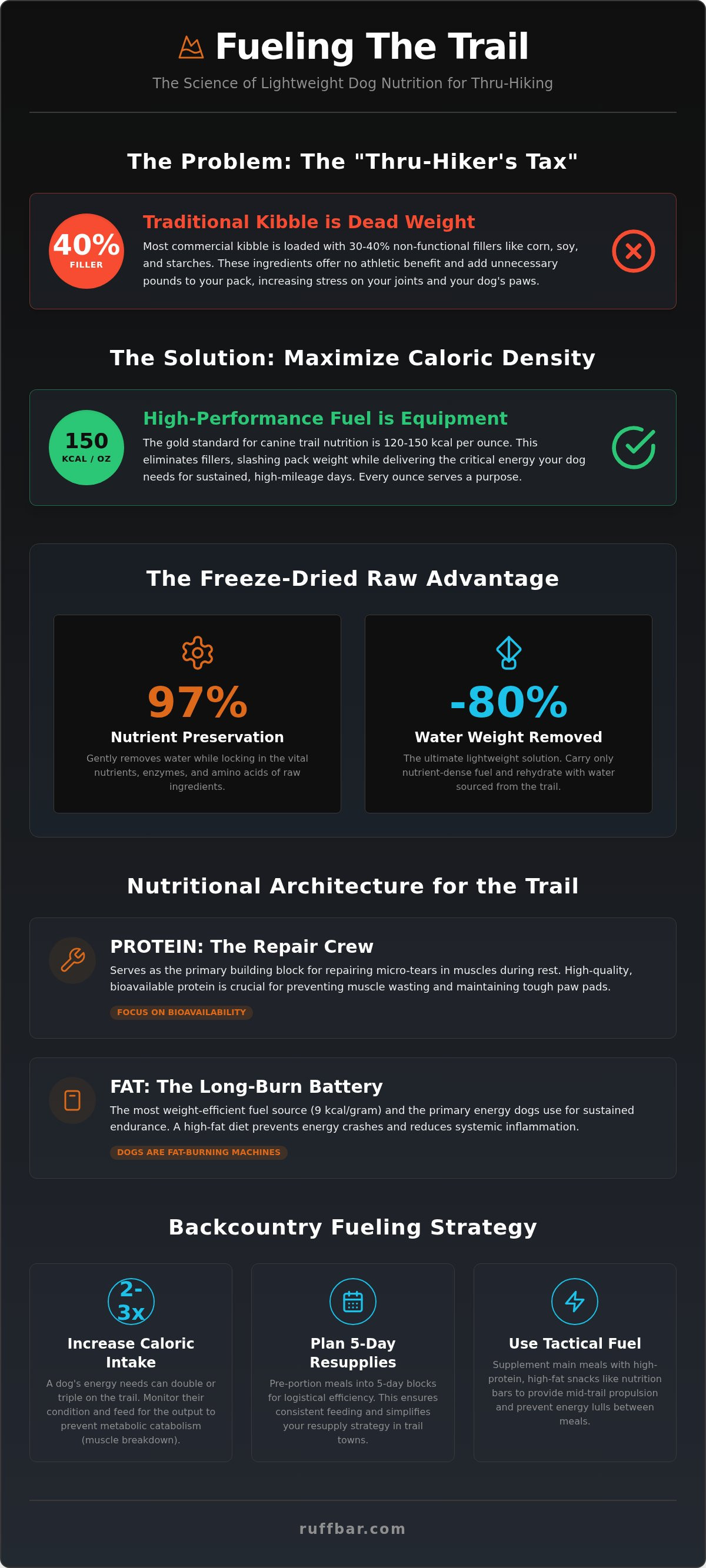
- Discover why freeze-dried raw is the gold standard lightweight dog food for thru-hiking by stripping 80% of water weight while preserving 97% of nutrients.
- Learn professional backcountry logistics for portioning 5-day resupply stretches and maintaining clean rehydration on the move.
- Identify tactical fuel options like high-protein stix to provide mid-trail propulsion and prevent your dog from losing condition over 2,000 miles.
The Math of Miles: Caloric Density vs. Base Weight
Every ounce in your pack is a tactical decision. On a thru-hike, those decisions determine your success or your failure. Caloric density is the only metric that matters for the long haul. It is the ratio of energy (kcal) to weight (ounces). High-performance dogs require high-performance fuel. You need maximum energy in the smallest possible footprint. Precision nutrition is equipment. Treat it that way.
Traditional kibble fails this test. Most commercial brands are loaded with 30 to 40 percent non-functional filler. Corn, soy, and starches are cheap ingredients used to bulk up the bag. They provide no athletic benefit. They are dead weight. Carrying filler is paying a "Thru-Hiker’s Tax" that costs you in miles and joint health. Every unnecessary pound increases the impact on your dog's paws and your own spine. Aim for 120 to 150 kcal per ounce. This is the gold standard for canine nutritional requirements during high-intensity travel. Anything less is a liability.
Calculating Your Dog's Trail Burn
A 15 to 25 mile day in rugged terrain is an ultra-marathon. Your dog's metabolic engine shifts. Maintenance feeding levels don't apply here. Energy demands often double or triple during sustained movement. If the fuel isn't there, the body enters starvation mode. This is metabolic catabolism. The system begins to consume its own muscle tissue to keep the heart and lungs moving. You must provide enough lightweight dog food for thru-hiking to stay ahead of this deficit. Watch for signs of condition loss. Feed for the output. Protect the muscle. Sustain the drive.
The Weight of Water: Dry vs. Wet Food
Carrying moisture is a logistical failure in the backcountry. Water is essential, but it is heavy. It weighs 8.3 pounds per gallon. Carrying wet food or "fresh" meals means you are hauling weight that has zero caloric value. It is a tactical error. The most efficient strategy relies on a rehydration model. You carry the nutrient-dense dry weight. You source the water from the trail. This approach optimizes your pack and ensures your dog stays hydrated during mealtime. High-quality lightweight dog food for thru-hiking uses this method to maximize efficiency. Pack the power. Source the water. Keep moving.
Nutritional Architecture for High-Output Dogs
A thru-hike is a biological siege. Your dog isn't just walking; they are performing a multi-month feat of endurance that taxes every physiological system. To survive the grind, their diet must be more than just calories. It requires a specific nutritional architecture designed for repair and propulsion. This is why choosing the right lightweight dog food for thru-hiking is a matter of structural integrity. You are building a body that can withstand 2,000 miles of impact.
Protein serves as the primary building block for muscle repair during essential rest periods. Without sufficient high-quality protein, the body cannot heal the micro-tears caused by vertical climbs. This leads to muscle wasting and "trail anemia," a condition where red blood cell production fails to keep pace with demand. Amino acids are the critical components here. They don't just fix muscles; they maintain the tough keratin in paw pads and prevent skin breakdown. Following professional feeding strategies for working dogs ensures these biological needs are met before the first signs of fatigue appear.
Protein Quality Over Quantity
Not all protein is created equal. Bioavailability refers to the efficiency with which a dog's digestive tract absorbs and utilizes nutrients, such as how high-quality muscle meats provide immediate amino acids for myofibrillar protein synthesis. USDA-graded grass-fed meats offer superior bioavailability compared to "rendered meals" or mysterious "animal by-products." These clean sources ensure that the energy goes toward recovery rather than digestion. High-quality fuel also results in less digestive waste. In the backcountry, less waste means less pack-out weight and a more efficient metabolic engine.
Fat: The Long-Burn Battery
Fat is the primary fuel source for sustained, low-intensity aerobic movement. While humans often rely on glycogen, dogs are fat-burning machines. Sedentary house pets may thrive on low-fat diets, but a thru-hiking dog needs a massive increase in lipid intake to avoid energy crashes. Fat provides 9 calories per gram, making it the most weight-efficient energy source available. Animal fats paired with omega-3s also reduce systemic inflammation. This keeps joints fluid and skin resilient against the elements. If you want to optimize your dog's endurance, consider adding a functional nutrition topper to their daily ration to boost fat levels without adding bulk. Grain-free, organic ingredients further minimize the inflammatory load, allowing your dog to wake up ready for the next summit. Performance is the priority. Purity is the method.
Freeze-Dried Raw: The Gold Standard for Thru-Hiking
Freeze-drying isn't just a processing method. It is a technological advantage for the backcountry. While heat-dehydration destroys vital enzymes and vitamins, freeze-drying preserves 97% of the original nutrient profile. This process removes 80% of the water weight through sublimation. You get the nutritional power of raw meat without the logistics of a cooler. It is the gold standard for lightweight dog food for thru-hiking. It ensures your dog receives the dense, bioavailable energy needed for sustained vertical gain.
Trail fatigue is a silent mission-killer. After weeks on the move, many dogs begin to refuse dry kibble. This isn't stubbornness; it's a biological signal that the body needs better fuel. Freeze-dried raw solves this through high palatability and intense aroma. It mimics a natural diet, sparking a feeding drive even in exhausted animals. It's shelf-stable and rugged. You don't need refrigeration for multi-week stretches between resupplies. It stays fresh in your pack, resisting the moisture and pests that ruin traditional bags.
Freeze-Dried vs. Air-Dried vs. Kibble
Efficiency is measured in calories per ounce. Traditional kibble often requires 4 to 5 ounces to reach a 500-calorie threshold. Air-dried options are denser but often rely on heat that compromises protein structures. Freeze-dried raw hits the same calorie mark at roughly 3 ounces. This weight savings compounds over a 5-day resupply. High digestibility is another tactical gain. Because the body utilizes almost every gram, it produces smaller, firmer stools. This reduces the pack-out burden. For a deeper dive into these metrics, consult The Ultimate Guide to Freeze Dried Raw Dog Food for Backpacking (2026).
The Raw Advantage for Recovery
Recovery starts in the gut. Raw-based nutrition preserves natural enzymes that assist in high-stress digestion. This is a critical factor for dogs performing under extreme physical load. High-carb kibble increases the risk of gas and bloat, which can be fatal in the backcountry. By focusing on raw proteins and fats, you align with Cornell University's guide to feeding performance dogs, which emphasizes high caloric density and fat-driven energy. This nutritional profile supports faster muscle recovery overnight. It ensures your dog wakes up with the propulsion needed for another 20-mile day. Choosing the right lightweight dog food for thru-hiking means choosing a system that repairs as fast as it fuels. No compromises. No shortcuts.
Trail Logistics: Packing, Ratios, and Clean Rehydration
Logistics win wars and finish trails. When you are 50 miles from the nearest road, your dog's fuel supply is a critical system. Managing lightweight dog food for thru-hiking requires a disciplined approach to packing and portioning. Do not guess. Calculate your dog's daily burn and pre-portion meals into 5-day resupply stretches. Use heavy-duty, waterproof, and scent-proof bags. This prevents rodent infiltration and keeps bear attractants to a minimum. Every gram of plastic is weight. Choose high-strength, low-bulk liners.
Leave No Trace (LNT) principles apply to your canine partner too. Pack out all food waste and packaging. High-efficiency food reduces stool volume, but you are still responsible for managing what remains. In sensitive alpine environments, this means using waste bags and carrying them to the next receptacle. Discipline on the trail preserves the environment for future teams. Using lightweight dog food for thru-hiking also reduces the physical footprint you leave behind. Maintain a clean camp. Protect the wild.
The 'Topper' Strategy for Resupply Points
Resupply points are often limited to gas stations or small general stores. You might find yourself forced to buy low-quality town food that lacks the nutritional density your dog needs. Don't let a bad resupply wreck their gut stability. Use Ruff Bar Functional Nutrition Toppers to bridge these gaps. These high-potency additions transform empty calories into functional fuel. They provide the amino acids and fats missing from bargain brands. This ensures your dog's performance never dips between major supply drops.
Hydration Hacks for Active Dogs
Thirst is a lagging indicator of dehydration. If your dog is thirsty, they are already behind. The souping method is the most effective tactical solution. Add water to every meal to ensure they are hydrating while they eat. Monitor their status constantly. Check skin elasticity on the neck and ensure gums are pink and moist. A 2:1 ratio of water to freeze-dried food provides the optimal balance for cellular absorption and digestive efficiency. This prevents the body from pulling moisture from vital organs to process dry matter. Fuel the movement. Hydrate the engine. Finish the trail.
The Ruff Bar Expedition Kit: Tactical Fuel for the Long Haul
The final mile requires more than grit; it requires a system that works as hard as you do. The Ruff Bar Expedition Kit is that system. We designed Ruff Food Freeze Dried Raw Backpacking Meals in Beef and Duck to be the definitive lightweight dog food for thru-hiking. These aren't just meals. They are tactical assets. Every bag focuses on the weight-to-performance ratio. You get maximum caloric density without the burden of fillers or moisture. This is precision engineering for the canine athlete.
Mid-trail propulsion is equally critical. You can't wait until camp to refuel an athlete. Ruff Stix® in Bison, Pork, and Beef provide high-value energy between major milestones. They keep the metabolic fire burning. For those steep vertical pushes, Ruff Food Bars serve as the ultimate summit snack. They provide quick glycogen replenishment to prevent the exhaustion that stops teams in their tracks. This is total nutritional coverage for the duration of your journey. It ensures your partner stays fueled, focused, and fast.
Why Bison and Duck? Choosing Your Trail Protein
Protein rotation prevents the food refusal discussed in earlier sections. Bison offers lean, powerful energy for high-output days. Duck provides calorie-dense fats for cold nights or extreme endurance blocks. Switching between these sources keeps the drive alive over 2,000 miles. It maintains the appetite. It ensures a broad amino acid profile. Learn more about the biology of movement in High Protein Dog Energy Bars: The Science of Sustained Adventure Fuel. Feed for the terrain. Feed for the temperature.
The 'No-Compromise' Commitment
We reject shortcuts. Every product in the expedition kit uses USDA-graded meats and organic ingredients. There are no "rendered meals" or hidden chemicals. This brand was built in a backpack, not on a grocery store shelf. It belongs in the wild. It is designed for those who view their dogs as partners, not pets. If you are ready to prioritize your partner's vitality, it is time to upgrade your kit. Gear up for your thru-hike with Ruff Bar and see the difference that high-standard nutrition makes on the long haul. Performance is the only metric that matters. Fuel accordingly. Finish strong.
Command the Trail
A 2,000-mile trek is won in the preparation. You've mastered the math of caloric density. You understand why fillers are a liability. Choosing the right lightweight dog food for thru-hiking isn't just about shedding pack weight; it's about the metabolic integrity of your partner. Every ounce must provide propulsion. Every meal must drive recovery. Precision matters when the nearest resupply is fifty miles away. Don't settle for grocery store standards.
We believe in high-standard preparation. Our kits feature USDA-graded grass-fed meats. We use zero fillers or synthetics. These meals are field-tested by endurance K9s who thrive in the most demanding environments. You deserve equipment that matches your ambition. Your dog deserves nutrition that honors their effort. Fuel your dog's next 2,000 miles with Ruff Bar's Thru-Hiking Kits. The summit is within reach. Your partner is ready. Go further together.
Frequently Asked Questions
How many calories does a dog need per day for thru-hiking?
Active dogs on 15 to 25 mile days often require double or triple their standard maintenance calories. A 50 pound dog might burn 2,500 to 3,500 calories daily depending on elevation and temperature. You must monitor body condition weekly to prevent muscle wasting. Feed for the output, not the label. Performance requires surplus energy.
Is freeze-dried raw dog food safe to carry in bear country?
Freeze-dried raw is safe provided you use tactical storage. Treat it like any other attractant by using scent-proof bags and bear canisters where required. The low moisture content reduces odor compared to fresh meat, but the high-protein aroma is still detectable. Always follow local regulations for food storage to protect the wildlife and your camp.
How do I switch my dog to freeze-dried food before a thru-hike?
Start the transition at least 14 days before your departure. Mix 25% freeze-dried food with their current kibble for three days, then slowly increase the ratio. This allows the gut microbiome to adapt to higher protein and fat levels. Don't wait until the first day of the trek to change their diet. A stable digestive system is a requirement for endurance.
Can my dog carry their own food in a pack?
Most healthy, conditioned dogs can carry 10% to 15% of their body weight. A 60 pound dog should never exceed 9 pounds of total gear, including the pack itself. Using lightweight dog food for thru-hiking is essential here to maximize the energy-to-weight ratio. Ensure the pack is balanced to prevent joint strain and check for chafing at every rest stop.
What happens if my dog refuses to eat on the trail?
Refusal usually signals exhaustion or trail fatigue. Use high-value toppers or warm water to increase the aroma and spark their appetite. If they continue to refuse, rest for 24 hours to allow their system to recover from metabolic stress. Never push a dog that isn't fueling. Performance requires calories; no food means no miles.
Is lightweight dog food for thru-hiking more expensive than kibble?
The cost per calorie is higher than budget kibble due to the quality of USDA-graded meats. However, you are paying for performance and reduced pack weight. Cheap fillers increase the risk of injury and condition loss, which can end a thru-hike prematurely. View lightweight dog food for thru-hiking as an investment in your dog's longevity and your shared success.
How do I prevent my dog from getting diarrhea on the trail?
Prevent digestive upset by filtering all trail water and maintaining a consistent diet. Avoid sudden switches between different resupply brands. Adding a probiotic supplement can help stabilize the gut during high-stress periods. If issues persist, increase hydration and reduce mileage until their stool firms up. A clean gut is a functional gut.
Can I mix freeze-dried raw with traditional kibble to save money?
You can mix formats, but it compromises the weight-to-performance ratio. Adding freeze-dried raw to kibble boosts protein and fat while keeping costs manageable. If you choose this route, ensure the kibble is high-quality and grain-free to minimize inflammation. You are still carrying the weight of the kibble fillers, so balance your budget against your pack weight goals.