
Kibble vs. Freeze Dried: The Ultimate Trail Fuel for Backpacking Dogs (2026)
Your dog’s pack shouldn’t be a weight anchor. It should be a power source. Every ounce carried into the backcountry must earn its place through performance and recovery. When evaluating kibble vs freeze dried for backpacking dogs, the decision isn’t just about convenience. It is about the biological demands of high-mileage endurance. You want a partner that stays strong through the final mile, not one that loses condition or suffers from digestive upset by day three.
We understand the struggle of balancing a lighter load with the massive caloric needs of an active dog. You need a solution that prevents fatigue without adding bulk to the kit. This guide will teach you how to master the weight-to-performance ratio to fuel your K9 partner for elite backcountry output. We will break down the essential metrics of caloric density, protein bioavailability, and the logistical advantages of freeze-dried raw meals. From reducing pack weight by up to 80 percent to ensuring easy cleanup on the trail, you will learn how to turn nutrition into a competitive advantage for your dog.
Key Takeaways
- Maximize your K9 pack efficiency by prioritizing caloric density over volume to significantly reduce total load weight.
- Analyze the performance gap of kibble vs freeze dried for backpacking dogs to ensure your partner maintains condition on high-mileage trails.
- Utilize rehydrated meals as a strategic hydration vehicle to combat the metabolic water cost associated with dry food.
- Execute a mandatory 5-day transition protocol to safeguard your dog’s digestive health before entering the backcountry.
- Enhance recovery and streamline Leave No Trace cleanup by selecting high-bioavailability proteins that minimize trail waste.
The Backpacking Dilemma: Caloric Density vs. Pack Weight
Backpacking is an athletic mission. It is not a casual stroll. For your dog, every mile on the trail demands explosive energy and rapid muscle recovery. Caloric density is the primary metric that determines success in the backcountry. It measures the ratio of usable energy to physical weight. When evaluating kibble vs freeze dried for backpacking dogs, the math is clear. You want maximum propulsion with minimum burden. High-mileage days require a fuel source that powers movement without crushing your dog's spirit under a heavy pack.
Standard Dog food often relies on volume rather than density. Fillers like corn, soy, and grain create bulk that fills the stomach but fails to fuel the engine. On 10-mile treks with significant vertical gain, maintenance calories are insufficient. Your dog needs a nutrient-dense profile that supports endurance. A heavy pack leads to shorter strides, faster fatigue, and decreased morale. To keep your partner moving, you must prioritize the weight-to-performance ratio.
The Burden of Bulk: Why Kibble Fails the Ultralight Test
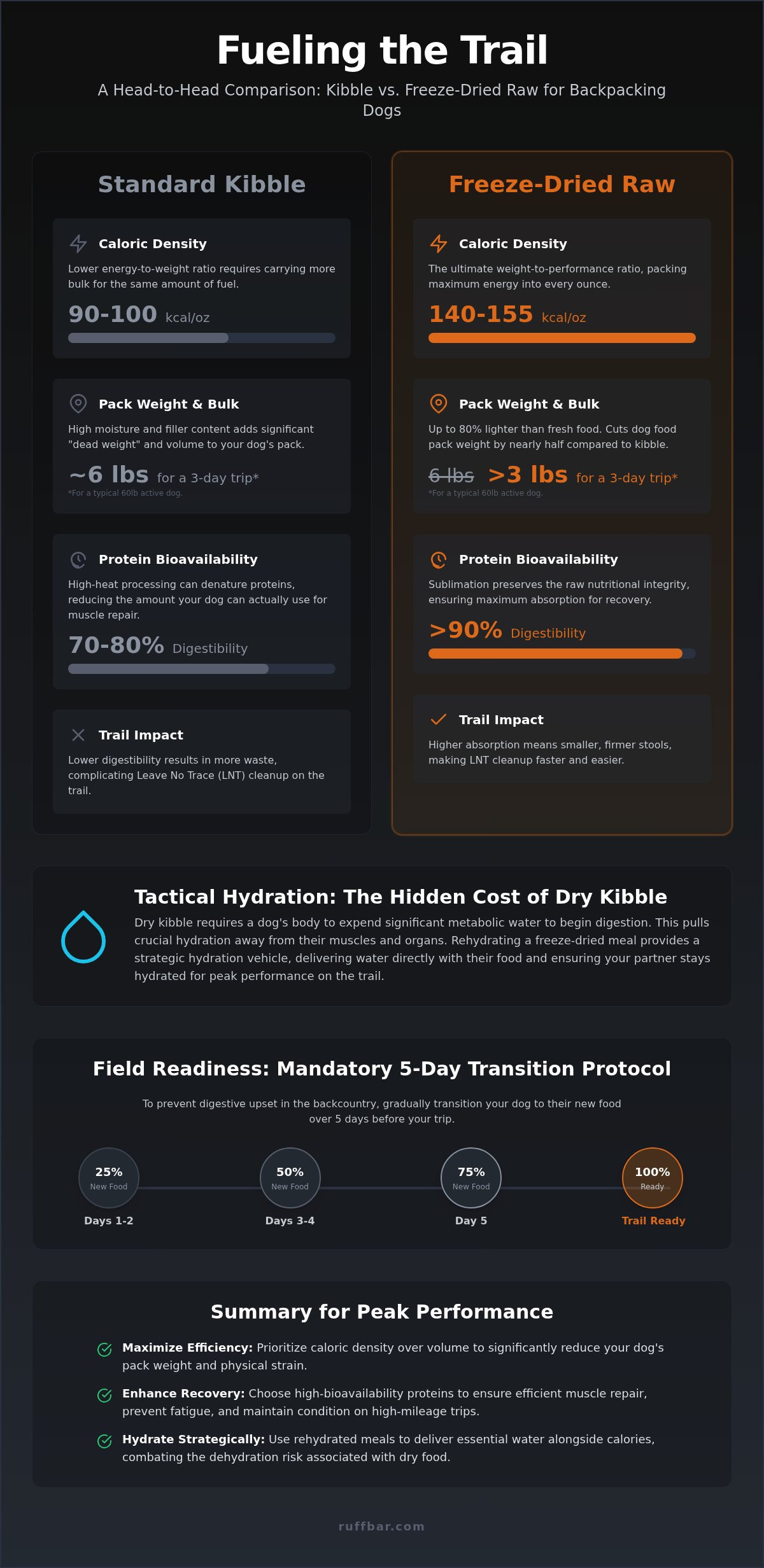
Kibble is inefficient gear. It is the "empty calorie" of the wilderness. Most commercial formulas are packed with moisture and air, occupying massive space in a K9 pannier. This bulk forces you to use larger packs, which increases the physical strain on your dog's joints. Moisture content in kibble is essentially dead weight. You are carrying water that provides zero energy. For a 60lb active dog, you might need to carry 2 pounds of kibble per day to meet their trail needs. Over a three-day trip, that is 6 pounds of weight just for food. It is heavy. It is bulky. It is a liability for high-performance teams.
Freeze-Dried Raw: The Gold Standard for Trail Nutrition
Freeze-dried raw is the ultimate performance equipment. The process involves removing moisture through sublimation, which preserves the biological integrity of the ingredients. This locks in the bioavailable nutrients, enzymes, and amino acids your dog needs for high-intensity recovery. Ruff Food Freeze Dried Raw Backpacking Meals offer a massive advantage with 140-155 kcal per ounce. Compare this to the 90-100 kcal found in premium kibble. It is a superior energy source that allows your dog to carry less while performing better.
The weight savings are undeniable. Freeze-dried raw is up to 80% lighter than fresh or wet food. By switching to freeze dried raw dog food for backpacking, you can cut your dog's food weight by nearly half while increasing their caloric intake. It is the gold standard for backcountry endurance. It's clean. It's powerful. It's essential. This is how you fuel for the long haul without compromising on speed or vitality.
Kibble vs. Freeze Dried: The Performance Breakdown
Kibble relies on meat meal. It is rendered at high temperatures. This heat denatures essential amino acids and reduces the efficiency of the protein. Freeze-dried raw preserves the cellular structure of the meat. Bioavailability in the context of raw meat vs. meat meal is the measurement of how much protein your dog’s body can actually absorb and utilize for muscle repair rather than losing it as waste. High bioavailability ensures your dog stays in an anabolic state. They repair tissue while they sleep. Low bioavailability leads to muscle wasting and cumulative fatigue.
While FDA guidelines on pet food establish a baseline for nutritional adequacy, they don’t differentiate between survival and peak performance. Digestibility scores translate directly to trail logistics. High-quality freeze-dried food often boasts digestibility rates exceeding 90 percent. Kibble frequently falls between 70 and 80 percent. This gap creates more waste. For Leave No Trace (LNT) compliance, smaller stools are a massive advantage. You spend less time burying waste and more time moving. When comparing kibble vs freeze dried for backpacking dogs, the cleaner system always wins.
Fats are the primary fuel for endurance K9s. While humans burn carbohydrates, dogs rely on fat oxidation for sustained aerobic output. Kibble is often high in starch. This leads to energy spikes and crashes. Freeze-dried raw mimics a natural diet with high fat-to-protein ratios. It provides a steady burn. It powers your dog through the final ascent without the metabolic crash associated with grain-heavy fillers.
Recovery Science: Repairing Tissue After Big Vert Days
High-protein diets prevent "hiking hunger." This is the ravenous, desperate state where a dog begins to consume its own muscle tissue to meet energy demands. USDA-graded meats provide the complete amino acid profile necessary to halt this process. Avoid animal by-products. They lack the density required for recovery. For mid-day propulsion, high protein dog energy bars provide a targeted dose of fuel without stopping for a full meal. Consider adding Ruff Food to your kit to ensure they have the recovery protein needed for back-to-back 15-mile days.
The Gut Health Factor: Avoiding Trail Diarrhea
Trail diarrhea is a mission-ender. It causes rapid dehydration and lethargy. Grain-free diets are essential for active digestion under stress. High-intensity expeditions trigger cortisol release, which can slow digestion. Simple, whole-food ingredients are easier to process. They prevent the fermentation in the gut that leads to gas and loose stools. Stable energy requires a stable gut. Stick to pure blends to ensure your partner stays focused on the path ahead. A calm digestive system is the foundation of a successful expedition.
Tactical Hydration: The Hidden Cost of Dry Kibble
Kibble is a dry sponge in your dog's gut. To digest it, the body must pull water from vital tissues to facilitate breakdown. This is the metabolic water cost of dry food. When you analyze kibble vs freeze dried for backpacking dogs, you must account for this internal dehydration. A dog eating dry kibble starts the day at a deficit. They require significantly more trail water just to reach baseline hydration. Freeze-dried meals flip this script. They act as a mandatory hydration vehicle. By rehydrating the food before serving, you ensure your partner consumes a massive volume of water alongside their calories.
Water logistics dictate your pace. Plan your meals around reliable trail sources. Don't carry the weight of rehydration water in your pack for miles. Instead, time your feedings at creek crossings or alpine lakes. Use the "soup" method. By adding excess water to the meal, you create a nutrient-rich broth that encourages even the most exhausted dogs to drink. This strategy mirrors the Iditarod sled dog diet, where mushers prioritize moisture-rich meals to keep athletes performing in extreme conditions. It turns a simple meal into a tactical hydration tool.
Rehydration Logistics: Speed vs. Nutrition
Speed matters in the field. Cold-soaking is the standard for the modern trail dog. Add water to your Ruff Food Freeze Dried Raw Backpacking Meals and let it sit for three to five minutes. It is fast. It is efficient. It is designed for the high-intensity user. In high heat, use Ruff Bar Functional Nutrition Toppers to entice a reluctant drinker. The scent of real grass-fed meat triggers the drive to consume. Keep your gear clean. Wash bowls immediately after use to prevent bacterial growth in the warm backcountry environment. Hygiene is as critical as the fuel itself.
Hydration Safety: Preventing Bloat and Dehydration
"Wolfing" dry kibble after a 15-mile day is a significant safety risk. Rapid consumption of dry pellets can lead to gastric torsion or bloat. Moisture-rich meals are safer. They naturally slow down the pace of consumption and support kidney function by flushing metabolic waste from the system. To achieve optimal absorption and digestion, use a 2:1 ratio of water to freeze-dried food. This ensures every nutrient is fully accessible to the body while maximizing fluid intake. Proper hydration isn't just about survival. It's about maintaining the propulsion needed for the next vertical climb.
Field Readiness: Transitioning Your K9 Partner
Preparation is the difference between an elite expedition and a failed mission. A cold turkey food swap is a recipe for trail disaster. It triggers gastrointestinal distress. It causes rapid dehydration. It leads to severe lethargy. When analyzing kibble vs freeze dried for backpacking dogs, the transition phase is your most critical window. You must prime the digestive system before the physical stress of the backcountry begins. Sudden dietary changes coupled with high-mileage output create a metabolic shock that no dog should endure.
Success requires data. Monitor stool quality daily. Watch for steady energy levels. Use high-value treats like Ruff Stix® Beef or Bison Pork to establish a palatability baseline. If your dog refuses a high-protein treat at home, they won't eat their meal under stress in the wilderness. Testing these components early ensures your partner is ready for the demands of the trail. Precision in preparation leads to dominance in the field.
The 5-Day Trail Transition Plan
Follow a disciplined protocol. Don't skip steps. This timeline allows the gut microbiome to adapt to the nutrient-dense profile of raw ingredients. It ensures your dog maintains peak propulsion throughout the trip without the risk of an upset belly.
- Days 1-2: Integrate 25% Ruff Food Freeze Dried Raw Backpacking Meals into their current kibble. Observe for any signs of sensitivity or digestive hesitation.
- Days 3-4: Move to a 50/50 split. This is the critical threshold. Monitor energy levels during your pre-trip training hikes to ensure their engine is firing correctly.
- Day 5: Transition to 100% trail rations. By this point, the system is primed for the high-protein, high-fat fuel required for endurance.
Pre-Trip Nutrition Loading
Utilize the banked energy concept. Increase caloric intake by 15 to 20 percent starting 48 hours before you hit the trailhead. This builds a metabolic reserve. It offsets the immediate deficit caused by the first day's vertical gain. Identifying food sensitivities now is mandatory. You don't want to discover a protein intolerance when you're 15 miles from the nearest road. Ensure your dog associates the new trail rations with high-value activity. Feed the transition meals after training sessions to build a psychological link between the food and the mission.
Ready to equip your partner for the long haul? Secure your Ruff Food rations here to begin your transition protocol today.
Ruff Food: Freeze-Dried Raw Power for the Long Haul
Backpacking nutrition is a matter of integrity. You don't compromise on your shell, your boots, or your sleep system. You shouldn't compromise on your dog's fuel. Ruff Food Freeze Dried Raw Backpacking Meals are engineered for the specific demands of the backcountry. This is not just food. It is essential equipment designed for high-stakes environments. While standard grocery brands prioritize shelf volume and cost-cutting fillers, we prioritize biological excellence and pack efficiency. Our formulas belong in a rugged backpack, ready for the next 2,000 feet of vertical gain, not on a supermarket shelf.
The difference in kibble vs freeze dried for backpacking dogs comes down to the source. We use USDA-graded grass-fed beef and wild-caught duck. These are high-standard proteins that provide the dense amino acid profiles needed for muscle repair. By removing the grains and legumes found in kibble, we eliminate the dead weight. You carry only what your dog can use. This honors the bond of adventure by ensuring your partner is never burdened by low-quality bulk.
Why Handlers Choose Ruff Food
The reality of elite performance is simple. Clean. Pure. Powerful. This staccato approach to nutrition ensures that every gram of weight in the K9 pack serves a functional purpose. Handlers who tackle high-mileage trails choose Ruff Food because it eliminates the fluff. USDA-graded quality isn't a luxury; it is a requirement for dogs who work as hard as their human partners. We provide the fuel that sustains movement and accelerates recovery, allowing your dog to wake up ready for another day of exploration without the "hiking hunger" associated with inferior diets.
Gear Up for the Next Expedition
Strategic fueling requires variety. Rotating between our Beef and Duck formulas prevents palate fatigue and provides a broad spectrum of nutrients. This rotation keeps your dog’s drive high, even on the most demanding multi-day treks. For tactical mid-trail recovery, integrate Ruff Stix® into your plan. These are high-protein tools designed for immediate propulsion. They provide a targeted dose of energy when the terrain gets steep and the miles get long.
Choosing the right fuel is the ultimate act of preparation. It is about moving faster, staying longer, and recovering harder. Don't let heavy, filler-laden kibble limit your team's potential. Master the weight-to-performance ratio and give your partner the advantage of raw nutrition. Fuel your next adventure with Ruff Food Freeze Dried Raw Backpacking Meals and experience the difference of no-compromise trail nutrition.
Fuel the Mission: Elevate Your Backcountry Strategy
The debate over kibble vs freeze dried for backpacking dogs is won in the miles, not the marketing. You've seen the data. Freeze-dried raw is the superior equipment for high-stakes endurance. It cuts pack weight by up to 80 percent. It maximizes caloric density. It ensures your partner recovers while they sleep. By prioritizing USDA-graded grass-fed meats and high-intensity recovery, you aren't just feeding a dog. You're fueling an athlete. This is about more than survival. It is about sustained propulsion and vitality.
Ditch the heavy, filler-laden bulk. Choose the gear that honors the shared miles. Every meal is a tactical decision. Every ounce matters. Our products are proudly made in the USA for teams that reject shortcuts and demand excellence. Your dog works as hard as you do. Give them the nutrition they deserve to stay strong through the final ascent. Your next objective is waiting. Gear up with Ruff Food Freeze Dried Raw Backpacking Meals and conquer the trail together. See you at the summit.
Backcountry Nutrition: Frequently Asked Questions
Is freeze-dried dog food better than kibble for long-distance hiking?
Yes. Freeze-dried raw is the superior choice for long-distance hiking because it offers a higher caloric density in a lighter package. While premium kibble averages 90 to 100 kcal per ounce, Ruff Food Freeze Dried Raw Backpacking Meals provide 140 to 155 kcal per ounce. This allows your dog to consume the massive energy required for 15-mile days without the physical burden of carrying heavy, filler-laden bags.
How much freeze-dried dog food should I carry per day?
You should plan for 1.5 to 2 times your dog's normal caloric intake on high-mileage days. For a 50lb dog, this typically equates to approximately 0.8 lbs of freeze-dried raw food per day. Always calculate based on the specific caloric density of your chosen fuel. Carrying a small reserve is a tactical necessity in case of unplanned delays or extreme terrain that spikes energy expenditure.
Do I need to rehydrate freeze-dried dog food on the trail?
Rehydration is mandatory for performance and safety. Adding water to freeze-dried food ensures your dog stays hydrated during the metabolic process of digestion. It also prevents the risk of bloat associated with "wolfing" dry food after heavy exertion. Use a 2:1 water-to-food ratio to create a nutrient-rich soup. This method encourages drinking and supports kidney function during grueling backcountry expeditions.
Can I mix kibble and freeze-dried food for my dog while backpacking?
You can mix them, but this strategy requires a careful transition period at home. Mixing kibble vs freeze dried for backpacking dogs is often done to manage costs while still gaining some weight-saving benefits. However, ensure your dog’s digestive system is primed for the combination. Sudden changes on the trail lead to GI distress. Stick to a consistent ratio once you leave the trailhead to maintain stable energy.
Will freeze-dried dog food help reduce my pack weight?
Freeze-dried meals will significantly reduce your K9 pack weight. These rations are up to 80 percent lighter than traditional fresh or wet alternatives because the moisture has been removed. Because they are more calorically dense than kibble, you carry fewer physical pounds of food for the same energy output. This weight reduction allows your dog to move faster, stay more agile, and maintain better morale over challenging vertical terrain.
How do I prevent my dog from getting diarrhea on a backpacking trip?
Prevention starts with a disciplined 5-day transition protocol before your trip. Sudden dietary shifts are the leading cause of trail diarrhea. Use grain-free, high-protein options like Ruff Food to avoid inflammatory fillers. Additionally, ensure your dog drinks filtered water to prevent parasites. Stable gut health is the foundation of endurance. If you notice signs of upset, reduce mileage and increase hydration immediately to prevent rapid dehydration.
Is freeze-dried raw food safe for dogs in the wilderness?
Freeze-dried raw food is highly safe and shelf-stable for wilderness use. The freeze-drying process removes the moisture that bacteria need to thrive, making it ideal for multi-day trips. We use USDA-graded meats to ensure the highest standards of purity. Unlike fresh raw food, freeze-dried rations don't require refrigeration. They provide the biological benefits of a raw diet with the convenience of a lightweight, packable gear item.
What are the best high-protein snacks for dogs on the trail?
The best trail snacks provide immediate recovery protein and fat. Ruff Stix® Bison Pork or Beef are tactical choices for mid-day propulsion. These high-protein treats help prevent muscle wasting during high-intensity output. Look for snacks with zero fillers or grains to ensure they don't cause energy crashes. Small, frequent doses of high-value fuel keep your partner's engine firing correctly between major morning and evening meals.