
Improving a Dog’s Coat with Diet: A Practical, Evidence-Informed Guide
A glossy coat doesn’t always start with a bottle of oil. Improving a dog's coat with diet begins with the basics: a complete, balanced food that supplies the protein, essential fats, vitamins, and minerals your dog needs. Oils and supplements may have a role, but adding them without a clear reason can unbalance the overall plan.
If you’re weighing advice about salmon, flaxseed, biotin, or special diets, the confusion is understandable. Coat changes can reflect nutrition, but they can also point to allergies or health problems that food alone won’t fix. A dull, brittle, or thinning coat deserves attention, not guesswork.
This guide explains how balanced nutrition supports skin and coat health, which nutrients matter, and how to make careful, trackable food changes. You’ll learn why supplements should fill identified gaps rather than replace a sound diet, what to record as you adjust your dog’s meals, and when itching, hair loss, or other changes call for a veterinarian. Build the foundation first, then make the next move with a clear reason.
Key Takeaways
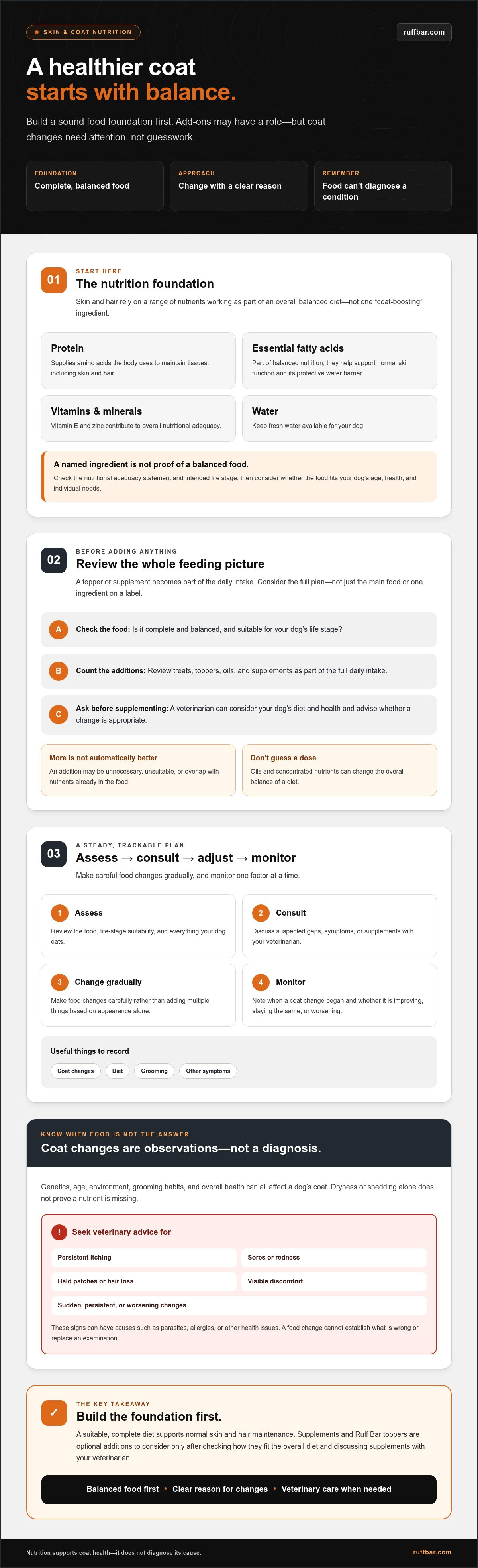
- Nutrition can support normal skin and hair growth, but it can’t identify the cause of every coat change.
- Protein and essential fatty acids are part of balanced nutrition for skin and coat health.
- Before adding anything, review your dog’s full daily intake and check that their food suits their life stage.
- Improving a dog's coat with diet calls for a steady plan: assess, consult, change gradually, and monitor one factor at a time.
- Ruff Bar toppers and supplements are optional additions to consider only after confirming they fit your dog’s diet and discussing supplements with your veterinarian.
How Diet Can Support a Dog’s Skin and Coat
Good nutrition can support normal skin function and hair growth, but it can’t diagnose why a coat has changed. Improving a dog's coat with diet starts with adequate nourishment from a suitable, balanced diet. Dryness or shedding alone doesn’t prove that a specific nutrient is missing.
A dog’s coat reflects more than food. Genetics, age, environment, grooming habits, and overall health can all affect how it looks and feels. Nutrition is one part of the picture: the body uses nutrients to maintain skin and hair, while other factors influence their condition and appearance. For a basic overview of how a dog's coat grows and the role of nutrients, see the Dog coat reference.
Nutrition supports a healthy coat; it doesn’t treat a diagnosed skin or coat condition. A balanced diet can provide a foundation for normal skin and hair maintenance, but a medical problem may need veterinary assessment and targeted care.
What can a dog’s coat tell you about its overall condition?
Watch for persistent dryness, unusual shedding, or a coat that feels rougher than usual. These changes are useful observations, not a diagnosis. Coat texture and shedding vary between dogs and can be affected by the season, grooming, and health. Appearance alone can’t confirm a nutrient deficiency. Note when the change began and whether it is improving, staying the same, or worsening.
If a change is sudden or doesn’t resolve, arrange a veterinary assessment rather than guessing at the cause. A brief record of coat changes, diet, grooming, and any other symptoms can help you give the veterinarian a clearer picture.
When should coat changes prompt a vet visit?
Seek veterinary advice if your dog has persistent itching, sores, redness, bald patches, or visible discomfort. These signs can have causes such as parasites, allergies, or other health issues. A food change may be relevant in some cases, but it can’t establish what’s wrong or replace an examination.
Don’t use dietary changes to postpone needed care. Contact your veterinarian about sudden or persistent symptoms, especially if your dog seems unwell or uncomfortable. After assessing the cause, your veterinarian can advise whether nutrition changes belong in the plan and how to make them safely.
Which Nutrients Matter Most for a Dog’s Coat?
A dog’s skin and hair rely on a range of nutrients, not one “coat-boosting” ingredient. Protein supplies amino acids the body uses to maintain tissues, including skin and hair. Essential fatty acids are part of balanced nutrition, too. They help support normal skin function, including its protective water barrier. The role of dietary fats in skin health is discussed in veterinary literature.
Vitamins and minerals, including vitamin E and zinc, also contribute to overall nutritional adequacy. Water matters as well, so keep fresh water available for your dog. No single nutrient works in isolation, and a prominent ingredient on the label doesn’t tell you whether a food supplies the right balance. The overall formulation and its suitability for your dog’s life stage matter.
Protein and essential fatty acids in a balanced diet
For improving a dog's coat with diet, start by checking the food’s nutritional adequacy statement rather than judging it by a named ingredient or marketing phrase. A food can contain meat or added oils without being complete and balanced for your dog. Confirm its intended life-stage suitability, then ask your veterinarian whether it fits your dog’s age, health, and individual needs.
A complete diet is the foundation; isolated add-ons can’t replace balanced nutrition. This is especially important if treats, toppers, or supplements are part of your dog’s daily intake. Check how each addition fits into the full feeding plan.
Why more supplements do not automatically mean a better coat
Adding more isn’t automatically better. A supplement may be unnecessary, unsuitable for an individual dog, or overlap with nutrients already in their food. Oils and concentrated nutrients can also change the overall balance of a diet. Don’t guess at a dose or combine products based on coat appearance alone.
If you suspect a deficiency, talk with your veterinarian before supplementing. They can consider your dog’s diet and health, then advise whether a change or further assessment is appropriate. If you’re considering an optional addition, review the label and ask your veterinarian how it fits alongside a suitable complete diet. You can also explore Ruff Bar toppers and dog supplements as product categories, without treating them as a substitute for balanced food or veterinary advice.
How to Assess Your Dog’s Food Before Adding Anything
Before changing your dog’s food or adding a supplement, take stock of the full daily diet. Include meals, treats, toppers, supplements, and anything regularly shared from your plate. This gives you and your veterinarian a clearer starting point and helps avoid adding something that duplicates nutrients already in the food.
For improving a dog's coat with diet, compare foods by their nutritional adequacy statement, life-stage suitability, and fit for your dog’s individual needs. Marketing terms and a standout ingredient don’t establish that a food is complete and balanced. The Merck Veterinary Manual’s guidance on essential fatty acids provides context for why these nutrients belong in a considered nutrition plan, not an improvised supplement stack.
What to check on a dog-food label
Find the nutritional adequacy statement and check which life stage the food is intended for. Review the feeding directions, too, but treat them as a starting point: your dog’s needs and the rest of their daily intake matter. Ingredient lists show what’s included, but ingredient order alone can’t prove coat-health outcomes or overall nutritional adequacy. If the statement is unclear or your dog has health concerns, ask your veterinarian to review the label with you.
How to assess treats, toppers, and supplements
Extras count. Note what you give, how often you give it, and the label’s ingredient and feeding guidance. Check current product information before use, and ask your veterinarian whether an addition suits your dog’s full diet. For broader context, see Ruff Bar’s performance dog food supplements guide. Its DIY dog food toppers for energy article is related topper information, not a coat treatment.
Use this quick inventory to prepare for a food review:
| What to record | Details to gather |
|---|---|
| Current food | Name, life-stage statement, and feeding directions |
| Label information | Nutritional adequacy statement and any questions about suitability |
| Additions | Treats, toppers, and supplements, including how often you give them |
| Questions for the vet | Whether the overall diet fits your dog and whether any addition is appropriate |
How to Improve a Dog’s Coat with Diet Safely
Make changes with a plan, not a pile of new foods and supplements. Improving a dog's coat with diet is easier to evaluate when you know what your dog already eats, have veterinary guidance, and adjust one factor at a time. If symptoms change, you’ll have useful observations to share instead of several changes to untangle.
Use this four-step process:
- Assess: Record your dog’s current food, treats, toppers, supplements, and any coat or skin concerns.
- Consult: Ask your veterinarian whether a diet change or addition makes sense for your dog’s health and life stage.
- Change gradually: Follow the food’s transition instructions and your veterinarian’s advice. Don’t introduce multiple changes at once.
- Monitor: Keep dated notes on what your dog eats, symptoms, coat appearance, and relevant changes in their environment or routine.
How to introduce a suitable food or topper
Before switching foods or adding a topper, confirm it’s appropriate for your individual dog. Follow the product’s feeding guidance and your veterinarian’s recommendations; there isn’t one transition schedule that suits every dog or situation. If itching, digestive upset, redness, or another concerning reaction appears, stop the new addition and contact your veterinarian for advice.
How to monitor changes without expecting an overnight fix
Keep the log simple and consistent. Note the date, food and additions, itching or other symptoms, coat texture and appearance, and changes such as a new grooming routine or more time outdoors. Share the record with your veterinarian. It can help show whether changes occur alongside a diet adjustment or another shift.
Coat changes don’t follow a guaranteed timeline. Visible improvement may take time, and results depend on the underlying cause. If symptoms persist, worsen, or include discomfort, seek veterinary assessment instead of repeatedly experimenting with food. Persistent symptoms need veterinary assessment, not another round of food changes.
If your veterinarian agrees an addition may fit your dog’s plan, explore Ruff Bar’s toppers and dog supplements and review the product label before use. These are optional additions, not substitutes for a suitable complete diet or veterinary care.
Choosing Nutrition Support, and Knowing What to Do Next
Start with the foundation: confirm that your dog’s main food is complete and suitable for their life stage. Then review the full daily intake and decide with your veterinarian whether anything needs to change or an addition is appropriate. Improving a dog's coat with diet isn’t about stacking products. It’s about making a deliberate choice that fits the dog in front of you.
Ruff Bar offers toppers and supplements for dogs. These are optional additions, not substitutes for a suitable complete diet. Don’t assume a product will improve a coat because of a marketing phrase or a single feature. High-protein or grain-free descriptions alone don’t establish coat-specific benefits or prove a product is right for an individual dog.
When a topper or supplement may be worth discussing
A topper or supplement may be worth considering if you and your veterinarian identify a reason to add it. Check the current label, ingredients, and feeding guidance, then consider how it fits with your dog’s existing food, treats, health, and needs. Ask your veterinarian before adding supplements, especially if your dog has ongoing symptoms or a health condition. Keep the complete diet in the lead.
A simple next-step checklist for dog owners
Before seeking advice, get the details in order. A clear snapshot helps your veterinarian assess the situation and recommend a sensible next move:
- Write down what coat or skin changes you’ve noticed and when they began.
- List your dog’s current food, treats, toppers, and supplements, including product labels if available.
- Ask whether your dog needs an examination, a diet review, or further assessment before you change anything.
- If a product is considered, confirm its suitability and feeding instructions with your veterinarian.
Keep the plan measured. Change one factor at a time, follow professional guidance, and share any new or worsening symptoms rather than trying another product on your own. A nutrition addition can’t replace veterinary assessment when the cause of a coat problem is unclear.
Once you’ve reviewed your dog’s needs and checked with your veterinarian, you can explore Ruff Bar’s dog nutrition products as possible additions to an appropriate feeding plan.
Build a Stronger Nutrition Plan, One Step at a Time
Improving a dog's coat with diet starts with a suitable, complete food, not a shortcut or a stack of supplements. Protein, essential fats, vitamins, minerals, and hydration all belong in the broader picture, but coat changes can also signal issues that nutrition alone won’t address.
Take a measured approach: review everything your dog eats, check that their food suits their life stage, and consult your veterinarian before making changes or adding products. Change one factor at a time and track coat changes and symptoms. If problems persist or your dog seems uncomfortable, seek veterinary advice instead of continuing to experiment.
Ruff Bar describes its nutrition products as high-protein and grain-free, with formulas using USDA-graded grass-fed meats and whole organic ingredients without fillers. Toppers and supplements are optional additions, not substitutes for a suitable complete diet, and their labels should be reviewed before use.
Ready to explore your options? Explore Ruff Bar’s dog nutrition products and discuss any potential addition with your veterinarian. Steady choices and close attention can help you support your dog’s overall wellbeing with confidence.
Frequently Asked Questions
Can changing my dog’s food improve its coat?
It can help if the current diet isn’t meeting your dog’s nutritional needs, but food isn’t a fix for every coat problem. Improving a dog's coat with diet starts by checking that the main food is complete and suitable for your dog’s life stage. Review treats and other additions, too. Before switching foods, ask your veterinarian whether a change makes sense and how to introduce it safely.
What nutrients help a dog have a healthy coat?
A healthy coat depends on overall nutritional adequacy, including enough protein to maintain skin and hair, essential fatty acids, and appropriate vitamins and minerals. Hydration is part of overall health, so keep fresh water available. No single ingredient guarantees a healthy-looking coat. Check that your dog’s food is complete and suitable for their life stage, and ask your veterinarian about individual dietary needs.
How long does it take for a diet change to affect a dog’s coat?
There’s no guaranteed timeline for a coat to change after a diet adjustment. Hair growth takes time, and the pace of visible change depends on factors such as the dog’s health and the reason for the coat issue. Follow veterinary guidance and the food’s transition instructions. Keep dated notes on diet, symptoms, and coat appearance. If the problem persists or worsens, contact your veterinarian rather than waiting for food to resolve it.
Are fish oil or other supplements good for a dog’s coat?
Some supplements may be appropriate for a dog’s specific needs, but they aren’t automatically beneficial just because they’re marketed for skin or coat support. Your dog’s current food, health, and other supplements all matter. Don’t guess at an oil or supplement dose, or combine products without guidance. Check the label and ask your veterinarian whether a particular product is suitable before adding it to your dog’s diet.
Can a dull coat mean my dog has a nutritional deficiency?
A dull coat alone can’t confirm a nutritional deficiency. Coat appearance may be affected by grooming, age, environment, genetics, or health, among other factors. Persistent dryness, unusual shedding, or a rough coat is worth tracking, but avoid diagnosing the cause from appearance alone. Contact your veterinarian about sudden or ongoing changes, especially if you also notice itching, redness, sores, bald patches, or discomfort.
Should I add a topper to my dog’s food for a healthier coat?
Only add a topper if it fits your dog’s overall diet and needs. Toppers are optional additions, not substitutes for a complete, suitable food, and their presence doesn’t guarantee coat benefits. Check the current label and feeding guidance, account for other treats and additions, and ask your veterinarian before use, particularly if your dog has symptoms or a health condition. Address persistent coat changes with veterinary advice, not additions alone.