
How to Pack Dog Food for Camping: Ultimate Guide
Is your dog’s nutrition a performance asset or a heavy liability? Most hikers treat kibble like an afterthought. They cram bulky, oily bags into overstuffed packs and hope for the best. Then the leaks happen. The gear smells. Your dog loses steam by mile ten because their caloric intake cannot keep up with the elevation gain. Learning how to pack dog food for camping isn't just about storage. It's about weight efficiency. It's about metabolic fuel. It's about protecting your gear from the mess.
We agree that backcountry prep should be rigorous and uncompromising. You need a system that survives the trail and supports the athlete at your side. This guide will help you master the art of canine nutrition through weight-saving freeze-dried options and scent-proof containment. We will show you how to cut pounds from your pack while increasing your dog's endurance. We are covering everything from caloric density and durable packing systems to the specific storage regulations required in rugged environments like Isle Royale. Your next expedition starts with better preparation. Let's get to work.
Key Takeaways
- Shed the weight penalty by ditching traditional kibble. High-moisture fillers add unnecessary pounds that drain your energy and slow your pace on steep ascents.
- Master how to pack dog food for camping using a tiered containment system. This strategy ensures zero leaks and protects your gear from moisture, sweat, and trail odors.
- Prioritize caloric density over volume. High-performance nutrition allows you to pack less weight while providing the sustained fuel your dog needs for high-mileage days.
- Protect your partner’s spinal health by following the 10-15% weight rule. Symmetrical loading is essential for maintaining balance and joint integrity during technical maneuvers.
- Optimize your loadout with Ruff Food Freeze Dried Raw Backpacking Meals. These nutrient-dense solutions provide maximum energy with a minimal pack footprint.
The Weight Penalty: Why Traditional Kibble Fails on the Trail
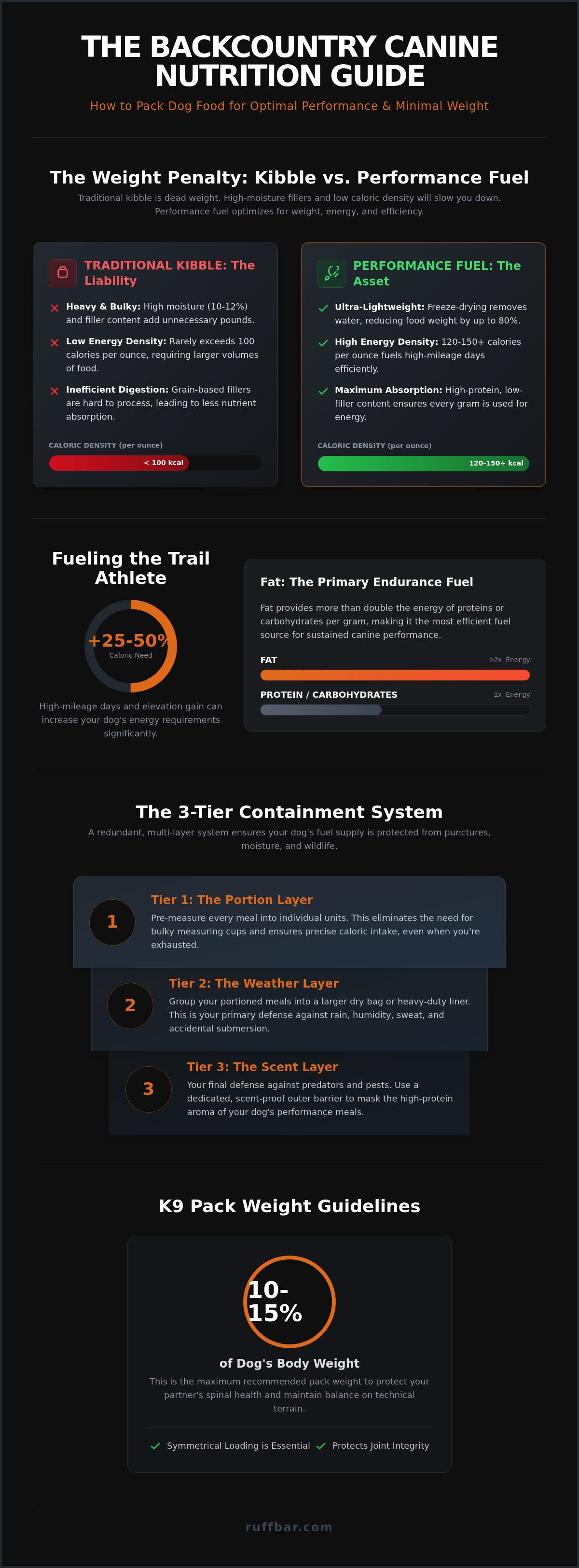
Traditional kibble is a liability in the backcountry. It is dead weight. Most commercial dry foods consist of 10-12% moisture and a high percentage of grain-based fillers. These ingredients offer zero performance benefits. They only add unnecessary mass to your pack. When you are calculating how to pack dog food for camping, you must optimize for Trail Density. Your goal is a ratio of 120-150 calories per ounce of weight. Standard kibble rarely exceeds 100 calories per ounce. This is the Volume Trap. Carrying four cups of low-density kibble is significantly less efficient than packing one cup of nutrient-dense raw food. Every extra ounce translates to increased fatigue and slower trail times.
Efficiency also extends to digestion. High-filler diets are difficult for the canine gut to process under stress. This leads to lower nutrient absorption and more waste to manage on the trail. You want a fuel source that burns clean. High-protein, low-filler options ensure your dog utilizes every gram of food for propulsion and recovery. This reduces the physical burden on both the dog and the hiker.
Moisture vs. Mass: The Science of Dehydration
Water is the enemy of a lightweight pack. Removing moisture reduces total food weight by up to 80% without sacrificing essential vitamins or minerals. This process creates a stable, concentrated fuel source. Moisture also accelerates spoilage. In hot, humid, or high-altitude environments, damp kibble becomes a breeding ground for bacteria and mold. Choosing freeze dried raw dog food for backpacking is the gold standard for weight-conscious hikers. It provides shelf-stable nutrition that survives stream crossings and temperature swings. You carry the nutrition. You add the water at camp.
Caloric Requirements for the Active Trail Dog
High-mileage days demand extreme energy. Your dog's daily caloric requirements can spike by 25-50% when navigating technical terrain or significant elevation gain. To meet this demand, you must prioritize fat. Fat is the primary fuel source for canine endurance. It provides more than double the energy of protein or carbohydrates per gram. A foundational understanding dog nutrition reveals that many grocery-store brands rely on "empty" calories from corn, wheat, or soy. These fillers provide short bursts of energy followed by a metabolic crash. True performance requires sustained power. When you master how to pack dog food for camping, you prioritize caloric density over bag volume. Every ounce must serve a purpose. Every calorie must drive the mission forward.
The Multi-Tier Packing System: Odor, Moisture, and Durability
A single-bag approach is a recipe for failure. If your primary container rips, your dog's entire fuel supply is compromised. High-mileage expeditions require a redundant, multi-tier system. This strategy ensures durability, weatherproofing, and wildlife safety. When you are refining how to pack dog food for camping, treat your containment as essential gear. It must survive punctures, pressure, and the elements. This system allows you to maintain the high caloric density required for endurance without the risk of contamination.
- Tier 1: The Portion Layer. Pre-measure every meal into individual units. This eliminates the need for heavy measuring cups and ensures caloric accuracy after a grueling day.
- Tier 2: The Weather Layer. Group your portioned meals into a dry bag or heavy-duty liner. This protects against rain, sweat, and the inevitable stream crossing.
- Tier 3: The Scent Layer. This is your final defense against predators. Use a scent-proof outer barrier to mask the high-protein aroma of your dog's meals.
Thin plastic bags are a single-point-of-failure in the backcountry. They lack the puncture resistance needed to survive the shifting weight of a backpack. One sharp corner of a stove or tent stake can shred a standard Ziploc, turning your gear into a greasy mess. Redundancy is the only way to ensure your dog's nutrition reaches the final campsite intact.
Vacuum Sealing vs. Reusable Silicone
Vacuum sealing is the ultimate space-saver. It removes air, prevents oxidation, and keeps meals fresh for weeks. It's the most efficient method for long-distance treks where volume is at a premium. Reusable silicone bags offer a different advantage. They are rugged and heat-resistant, making them ideal for trail-side rehydration. You can pour hot water directly into the bag, seal it, and let the food steep while you set up camp. Burst strength refers to the maximum internal pressure a bag can withstand before the seals or material fail under the weight of your pack load.
Scent Control and Wildlife Safety
Your dog’s food is a beacon for wildlife. Meat-heavy diets have a potent olfactory signature that attracts bears, rodents, and raccoons. Standard plastic bags are porous at a molecular level; scents leak through them almost immediately. Use specialized scent-proof bags like OPSAK to create a true barrier. These should be integrated into your hard-sided bear canister or suspended in a bear-hang. If your dog carries their own gear, manage the "smell trail" by keeping open bags inside a scent-proof liner. This reduces the chance of unwanted nocturnal visitors in your vestibule. For the best results, start with high-quality, shelf-stable fuel from Ruff Bar which is already optimized for scent management and packability. This disciplined approach to how to pack dog food for camping keeps you and your partner safe in the wild.
Step-by-Step: How to Pack Dog Food for a 3-Day Trip
Systematic preparation is the difference between a successful mission and a forced retreat. Mastering how to pack dog food for camping requires a disciplined, step-by-step approach that prioritizes caloric density and pack efficiency. For a 3-day expedition, your goal is to maximize propulsion while minimizing dead weight. Follow this protocol to ensure your partner stays fueled for every ascent.
- Step 1: Assess the Mission. Calculate total daily caloric needs based on terrain difficulty. A 60-pound active dog typically requires 1 pound of dry weight (about 4 to 4.5 cups) of dehydrated food per day. If you are navigating steep elevation gains or technical scrambles, increase this baseline by 25-50% to account for the metabolic surge.
- Step 2: Pre-Portion the Fuel. Use the multi-tier system to divide meals into individual units. Pre-portioning eliminates the need for heavy measuring cups and prevents overfeeding early in the trip.
- Step 3: Establish Discipline. Label each bag with the specific day and meal. This allows you to track consumption at a glance and ensures you aren't dipping into tomorrow's energy supply.
- Step 4: Strategic Access. Pack mid-day energy boosts in your most accessible pockets. These high protein dog energy bars provide the rapid glycogen replenishment needed for sustained effort between primary meals.
The 'Plus One' Rule for Emergencies
Unforeseen delays are a reality of the backcountry. You must always pack 24 hours of extra nutrition. This emergency buffer protects your dog if a stream crossing becomes impassable or an injury slows your pace. Select emergency rations that require zero water or preparation. Store this stash at the very bottom of your main pack. It should remain untouched unless the mission profile changes. This disciplined approach to how to pack dog food for camping ensures you are never caught off-guard by the elements.
Rehydration Strategies for Freeze-Dried Meals
Optimizing digestion starts with proper rehydration. Use the "Cold Soak" method to save time at camp. Add water to your dog's dinner bag during your mid-day break and let it steep in your pack. This ensures the food is fully reconstituted and easier to digest by nightfall. Maintain a strict water-to-food ratio to support hydration levels. When cleaning bowls, follow Leave No Trace principles. Never wash gear directly in a water source. Carry water 200 feet away from streams or lakes to manage waste properly and protect the environment.
K9 Trail Logistics: Who Carries the Weight?
Determining who carries the weight is a tactical decision. It affects endurance, joint health, and overall mission success. When you are planning how to pack dog food for camping, the standard rule for a conditioned dog is 10-15% of their body weight. Some online forums suggest up to 25%. This is a high-risk gamble. Overloading leads to premature fatigue and long-term joint damage. Symmetrical packing is critical for canine spinal health. An unbalanced load forces the dog to compensate with every step, creating uneven strain on the hips and shoulders. Use a digital scale to verify that both panniers weigh exactly the same before you step onto the trailhead.
Implement the 'Decreasing Load' strategy to manage energy levels. Always feed your dog from their own pack first. This lightens their burden early in the trip when the terrain is often most demanding. As the days progress, their pack becomes lighter, allowing them to maintain a consistent pace even as fatigue sets in. However, there are times when the human must carry the entire nutrition supply. High-heat environments, senior dogs, or high-mileage pushes require the dog to focus solely on movement. If the temperature exceeds safe thresholds, remove the pack entirely. A dog's ability to thermoregulate is compromised when their core is covered by heavy panniers. Your job is to monitor their gait and breathing constantly.
Conditioning Your Dog for a Pack
Conditioning is mandatory. You cannot expect a dog to perform under load without preparation. Start your dog with an empty pack at least 4 weeks prior to the expedition. Gradually increase the weight by 2-3% each week using sandbags or water bladders. This builds the specific muscle groups required for load-bearing. During the hike, monitor for hot spots or chafing. Shifting food bags can cause friction points near the armpits or chest. As the food volume decreases, adjust the harness straps to maintain a snug, bounce-free fit. A loose pack is a dangerous pack; it shifts the center of gravity and increases the risk of falls on technical sections.
Managing Hydration on the Move
Hydration and nutrition are inseparable. Pack collapsible bowls in an outer pocket for rapid water access. If your dog is a reluctant drinker in high-heat environments, use bone broth for dogs to encourage fluid intake. This adds electrolytes and flavor that drive hydration. Watch for signs of dehydration: thick saliva, dry gums, or a loss of skin elasticity. If these occur, stop immediately. Prioritize recovery over mileage. Proper hydration ensures that the high-protein nutrients you packed are actually absorbed and utilized by the muscles. Equip your dog with Ruff Bar performance nutrition to ensure they have the cleanest, most efficient fuel available for the journey.
The Ruff Bar System: Tactical Nutrition for the Trail
Tactical nutrition is the final piece of the puzzle. When you master how to pack dog food for camping, you transition from carrying supplies to managing a precision equipment list. The Ruff Bar system is engineered for this transition. By utilizing Ruff Food Freeze Dried Raw Backpacking Meals, you achieve the lightest possible pack weight without sacrificing biological integrity. These meals provide a high-protein, grain-free foundation that powers your dog through technical ascents and long-distance pushes. They are essential gear for any high-stakes environment.
Mid-hike energy management is equally critical. Ruff Stix® act as the "energy gels" of the canine world. Whether you choose Ruff Stix® Bison Pork or Beef, these snacks provide rapid metabolic fuel between primary meals. They maintain blood sugar levels and sustain focus during difficult maneuvers. High-value treats are also vital for trail safety. Use them to reinforce trail manners, command recall during wildlife encounters, and maintain a tight heel on narrow ridges. Preparation is about maintaining control over every variable. It ensures your dog remains an active partner rather than a liability.
Efficiency at camp saves precious resources. Use the "No-Clean" feeding method to streamline your logistics. Add water directly to the Ruff Food bag, let it rehydrate, and feed your dog straight from the container. This eliminates the need for a heavy bowl and saves your limited water supply for drinking. It also prevents the spread of food odors to your other gear, maintaining the integrity of your scent-proof system. When you understand how to pack dog food for camping, you prioritize these small wins to save energy for the miles ahead.
Recovery Nutrition: The Golden Hour
The first sixty minutes after a 10-mile day are vital for metabolic recovery. This is the Golden Hour. Protein timing matters. Use Ruff Bar Functional Nutrition Toppers to jumpstart the repair process and entice tired eaters who may be too exhausted to finish a full meal. USDA-graded grass-fed meats provide the essential amino acid profile required to support rapid muscle repair and reduce inflammation in working dogs. This targeted nutrition ensures your partner is ready for the next day's elevation gain. Don't let a caloric deficit end your expedition early.
Ruff Bar Pure Blend: The Ultimate Space Saver
You don't always need a 100% raw diet to see performance gains. Ruff Bar Pure Blend Toppers are the ultimate space savers for shorter trips or mixed diets. Use these toppers to boost the caloric value of standard kibble, providing more power in a significantly smaller package. This allows you to pack less volume while maintaining the high-standard nutrition your dog deserves. Disciplined packing leads to better exploration and deeper backcountry penetration. Gear up for your next trip with Ruff Bar's backpacking meals and experience the difference of tactical nutrition on your next mission.
Master the Trail: Optimize Your Canine Loadout
Backcountry success depends on the integrity of your preparation. You now understand how to pack dog food for camping by prioritizing caloric density over bag volume. You have the tools to build a redundant, multi-tier packing system that defies moisture and masks scent. Every ounce saved in your pack is an ounce of energy preserved for the final ascent. High-performance fuel supports muscle repair and sustained propulsion. This is the difference between a dog that survives the hike and a dog that dominates it.
Don't settle for fillers that slow your partner down. Professional K9 handlers and thru-hikers rely on nutrition that works as hard as they do. Our formulas feature USDA-graded grass-fed meats with zero fillers or grains. This is nutrition designed for the rugged reality of the trail. It is essential equipment for the modern explorer. Shop Ruff Bar Backpacking Meals: Lightweight, Raw, and Rugged. Gear up. Build your system. Fuel the athlete at your side. We will see you at the summit.
Frequently Asked Questions
How much extra food should I pack for my dog when camping?
Always pack 24 hours of extra nutrition. This "Plus One" rule protects against unforeseen delays like impassable stream crossings or injury. For a 3-day trip, pack 4 days of food. Ensure these emergency rations are calorie-dense and require zero preparation. This disciplined approach to how to pack dog food for camping ensures your dog remains fueled regardless of trail conditions or mission changes. Never cut your buffer to save weight.
Is freeze-dried dog food better than kibble for backpacking?
Freeze-dried raw food is the superior weight-saving choice for every expedition. Kibble contains 10-12% moisture and high filler content that adds dead weight to your pack. Freeze-drying removes up to 80% of water weight without losing nutrients. This results in higher caloric density per ounce. You carry less volume while providing higher-quality protein for muscle recovery. It is the gold standard for optimizing how to pack dog food for camping.
How do I keep my dog's food from attracting bears?
Use a multi-tier scent-proof system. Place meals in specialized odor-barrier bags and store them inside a hard-sided bear canister or a bear-hang. Never keep food in your tent or your dog's pack at night. In many national parks, hard-sided containers are now mandatory for all scented items to protect wildlife. Masking the meat-heavy aroma of high-performance diets is essential for both wildlife safety and your own security in the backcountry.
Can my dog carry his own food in a backpack?
Dogs can carry their own food if they are properly conditioned and the load is safe. Follow the 10-15% body weight rule for a healthy, athletic dog. Start conditioning four weeks before your trip with an empty pack. Gradually increase weight by 2-3% weekly. Ensure the load is perfectly symmetrical to protect their spinal health. If the environment is extremely hot, the human should carry the food to prevent canine overheating.
What is the best way to keep dog food dry while camping?
Implement a redundant weatherproofing strategy. Start with individual portioned bags to isolate moisture. Place these inside a heavy-duty dry bag or a waterproof pack liner. This protects the fuel from rain, sweat, and stream crossings. Keeping freeze-dried meals dry is critical; accidental rehydration leads to rapid spoilage and mold in humid environments. A durable, tiered containment system ensures your dog's fuel remains shelf-stable and effective throughout the entire journey.
How do I calculate my dog's caloric needs for a strenuous hike?
Increase their baseline daily intake by 25-50% to account for the metabolic surge. A 60-pound active dog typically needs about 1 pound of dry weight in dehydrated food per day. If you are tackling significant elevation gain, prioritize fat as the primary fuel source. Fat provides double the energy of protein per gram. Focus on caloric density, aiming for 120-150 calories per ounce to sustain power without adding excessive bulk.
Should I change my dog's diet specifically for a camping trip?
Transition to high-performance food at least two weeks before departure. Sudden dietary changes on the trail cause digestive distress and waste management issues. Switch to nutrient-dense options like Ruff Food Freeze Dried Raw Backpacking Meals early. This allows their metabolism to adapt to the higher protein and fat levels. Testing the new diet at home ensures your dog maintains high energy and clean digestion once the real expedition begins in rugged terrain.
How do I handle dog food waste and bowls in the backcountry?
Follow Leave No Trace principles strictly. Use the "No-Clean" method by feeding directly from the food bag to eliminate bowl washing. If you use a bowl, wash it at least 200 feet from water sources. Manage all crumbs and waste as you would human food; never leave scraps behind. Pack out all empty food packaging. This disciplined approach keeps the wilderness pristine and prevents habituating wildlife to domestic food sources.