
How to Keep a Dog Energized on All-Day Hikes: A Trail-Day Plan
Trail food alone won’t carry your dog through an all-day hike. Knowing how to keep a dog energized on all-day hikes starts before you reach the trailhead: build fitness gradually, choose a suitable route, and plan for water, food, and rest.
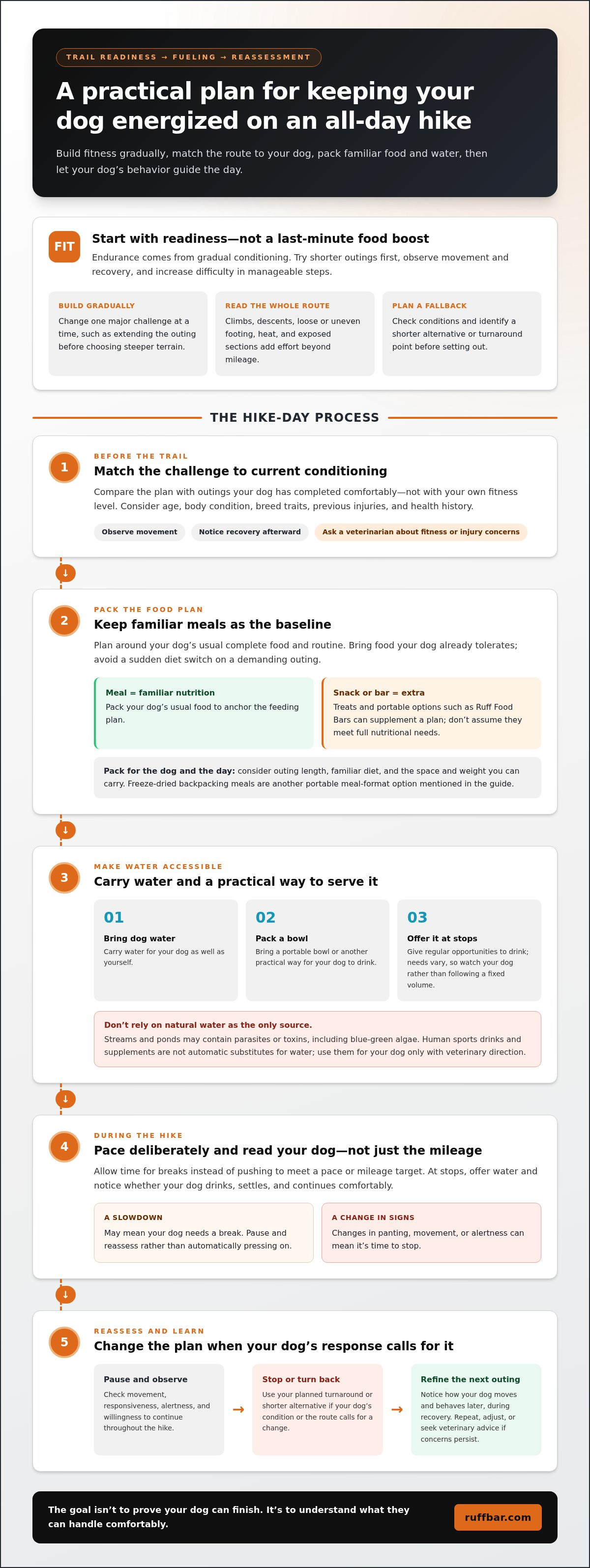
It’s sensible to consider both how much to pack and whether your dog is ready for the distance. A slowdown may mean your dog needs a break, but changes in panting, movement, or alertness can mean it’s time to stop. Read your dog, not just the mileage.
This guide offers a practical plan for conditioning, pacing, food, water, and breaks. It also explains how to recognize when to turn back or seek veterinary advice. Portable options such as Ruff Food Bars and freeze-dried backpacking meals can be part of your food plan, alongside preparation and close observation throughout the hike.
Key Takeaways
- Build hiking fitness gradually, and judge trail difficulty by more than distance alone.
- Plan around your dog’s familiar meals and the trip’s demands. Don’t rely on treats or make abrupt diet changes.
- Learn how to keep a dog energized on all-day hikes by pairing suitable trail food with regular water offers and deliberate pacing.
- Pause and reassess your dog’s movement, responsiveness, and willingness to continue throughout the hike.
- Choose portable food as one part of a broader plan, then use what you observe to improve the next outing.
How to Keep a Dog Energized on All-Day Hikes Starts Before the Trail
Endurance comes from gradual conditioning, not a last-minute food boost. Before planning a long day, take shorter outings and observe how your dog moves on different terrain and recovers afterward. Increase the challenge in manageable steps instead of adding distance, steep climbs, and rough footing all at once.
A dog-ready hike matches your dog’s fitness to the route and leaves room for recovery.
Distance alone doesn’t tell you how demanding a route will be. Steady climbs, loose rock, heat, and long stretches of uneven footing all add effort. A familiar, shaded path may be a better training step than a shorter route with a sharp ascent. Consider the full route, not just the mileage on the map.
Match the route to your dog's current conditioning
Start with outings your dog already handles comfortably. Build duration and difficulty gradually, and watch for changes during the hike and later at home. Age, body condition, breed traits, previous injuries, and health history can affect readiness. If you’re concerned about your dog’s fitness or an earlier injury, ask your veterinarian for individualized guidance before increasing the workload.
- Compare the planned route with hikes your dog has completed comfortably, not with your own fitness level.
- Account for climbs, descents, uneven surfaces, and exposed sections as added demands.
- Change one major challenge at a time, such as extending the outing before choosing steeper terrain.
Gradual outings show you what your dog tolerates and whether a particular surface or route feature changes their movement or willingness to continue. A lively start isn’t proof that your dog is ready for a full day.
Plan around weather, terrain, and recovery
Check the forecast and trail conditions before you go. Heat, direct sun, mud, or rougher-than-expected footing can make a familiar route more demanding. Identify a shorter alternative or turnaround point before setting out. Plan for breaks, and use your dog’s behavior to guide decisions. Excitement at the trailhead doesn’t reliably predict endurance.
- Choose a turnaround point in advance so you can change plans before your dog is overextended.
- Allow time for breaks instead of pushing to meet a pace or mileage target.
- After shorter outings, notice how your dog moves and behaves later in the day and during recovery.
Use your dog’s recovery to plan the next outing. You might repeat a similar route, adjust the challenge, or pause and seek veterinary advice if concerns persist. The goal isn’t to prove your dog can finish. It’s to understand what they can handle comfortably. That preparation is the foundation of how to keep a dog energized on all-day hikes.
Build a Dog-Specific Hiking Fuel and Hydration Plan
Start with what your dog already eats and drinks. Needs vary with the dog, route, weather, and outing length, so there’s no single calorie count, water volume, or feeding schedule for every hike. Keep the plan familiar, pack what your dog needs for the day, and adjust future outings based on what you observe.
Keep your dog’s familiar feeding routine wherever practical.
- Plan around usual meals. Use your dog’s normal complete food as the baseline. Consider how the hike fits with their usual routine. If health needs or increased activity call for individualized feeding advice, consult your veterinarian.
- Pack familiar food. Bring food your dog already tolerates rather than introducing a new diet on a demanding outing. A meal and a treat aren’t interchangeable. Treats or bars can be supplemental trail snacks, but don’t assume they meet your dog’s full nutritional needs.
- Carry water and a way to serve it. Bring water for your dog and a portable bowl or another practical way for them to drink. Don’t rely on streams or ponds as the only source. Natural water may contain parasites or toxins, including blue-green algae.
- Offer water and monitor. Give your dog regular opportunities to drink and observe their response. Note whether they drink, settle, and continue comfortably, or show a change in their usual behavior. Use those observations to guide the next break and the rest of the plan.
Pack food that fits the dog and the day
Consider the outing’s length, your dog’s familiar diet, and the space and weight you can carry. Keep meals separate from supplemental snacks, and don’t make a sudden food switch on the trail. For more detail about this category, see the high-protein dog energy bar guide. Portable options such as Ruff Food Bars can fit into a broader plan, but they don’t replace your dog’s regular nutritional needs or individualized veterinary guidance.
Make water access part of the routine
Carry water for your dog as well as yourself, and offer it during stops rather than waiting for your dog to seek it. Needs vary, so watch your dog instead of following a fixed volume. Human sports drinks and supplements aren’t automatic substitutes for water. Use them for your dog only with veterinary direction.
Portable trail nutrition can be one component of your dog’s food plan. Rather than overhaul the menu on hike day, pack familiar food, make water accessible, and use your dog’s response to refine what you bring next time.
Compare Trail-Fueling Options Without Confusing Snacks with Meals
Different trail foods serve different purposes. Familiar food can anchor your dog’s feeding routine, while a treat or bar can be a convenient extra. A backpacking meal is another meal-format option to consider on longer outings. Choose what fits your dog’s usual diet, the trip, and their individual feeding needs. No food format guarantees better endurance or recovery.
| Option | Purpose | Portability | Familiarity | Meal or snack? |
|---|---|---|---|---|
| Familiar regular food | Provides a baseline for the dog’s usual feeding routine. | Pack the amount needed for the outing; the format affects how you carry it. | High if it’s part of the dog’s established diet. | Can be a meal, according to its feeding directions. |
| Portable treats or bars | Can be offered as supplemental trail food. | Often convenient to pack alongside the dog’s regular food. | Depends on whether the dog has tried the item before. | Generally a snack, not an automatic meal replacement. |
| Backpacking meals | Offer a meal-format option for trail use. | Consider the package and preparation directions when planning what to carry. | Depends on the dog’s previous experience with the food. | Meal-format; follow the product’s feeding directions. |
When familiar food is the best starting point
A familiar diet makes it easier to plan around an established feeding routine. Account for the meals your dog would normally need during the outing and pack accordingly. Don’t assume a handful of treats covers those needs. If you’re considering a meaningful change to the usual plan, get individualized veterinary guidance rather than testing a new approach on a demanding hike.
Where portable trail nutrition can fit
Convenience matters on the trail, but it doesn’t make every snack a meal. Ruff Food Bars and Ruff Stix® are portable canine nutrition options that can be part of a broader trail-food plan. Match any option to your dog’s familiar diet and feeding needs, and follow its directions rather than assuming it replaces regular food.
For meal-format and packing considerations, the freeze-dried raw backpacking meals for dogs guide can help you think through what to carry. You can also explore Ruff Bar’s portable nutrition at Ruff Bar. Keep each item’s role clear: meals, snacks, and water serve different purposes. That distinction is part of how to keep a dog energized on all-day hikes without expecting one food format to suit every dog or trip.
Use a Practical On-Trail Routine to Pace, Feed, and Reassess
A simple routine gives you regular opportunities to assess your dog before fatigue becomes obvious. Start conservatively, pause, offer water, check how your dog is doing, and continue only if they seem comfortable. Reassess after a climb, a rough stretch, or a change in sun and weather. The goal isn’t to follow a schedule at all costs. Make each decision based on your dog, not a mileage target.
Look for observable changes. Is your dog moving as they did earlier? Are they responding to you normally and showing interest in continuing? One change alone doesn’t identify a cause, but a marked or worsening change is a reason to stop and reassess. Food can be part of your plan, but it won’t address signs that your dog may be unwell.
Set a pace that leaves room to adjust
Begin at a manageable pace and take breaks before your dog is visibly struggling. At each pause, offer water and observe your dog’s movement, responsiveness, and willingness to continue. After a climb or difficult stretch, give them time to settle before deciding what to do next. If conditions become hotter or more exposed than expected, slow down, change the route, or turn back. Your dog’s comfort matters more than a fixed distance.
- Start conservatively. Let your dog find a comfortable rhythm instead of setting the pace by your own stride.
- Pause and offer water. Give your dog a chance to drink and regroup during breaks.
- Assess observable changes. Look for differences in gait, response to your cues, or willingness to continue.
- Choose the next step. Continue only if your dog appears comfortable. Otherwise, shorten the route or head back.
Know when to stop rather than push through
Stop and assess if your dog starts lagging, moves unevenly, stumbles, seems unusually unresponsive, or no longer wants to continue. These signs don’t identify a diagnosis, but they are reasons not to press on just because the trail plan says so. If your dog appears overheated or injured, or can’t continue comfortably, end the hike and seek veterinary advice as appropriate.
Excessive panting, lethargy, and disorientation are concerning signs that warrant prompt attention. Don’t try to address urgent symptoms with an energy snack. Seek veterinary care for urgent signs or concerns that persist, and follow veterinary direction. Knowing how to keep a dog energized on all-day hikes includes planning a safe turnaround, not just making forward progress.
Choose portable food as one part of your plan, not as a substitute for observing your dog. Explore Ruff Bar’s portable dog nutrition when considering options for your trail kit.
Choose Trail Food That Supports Your Plan, and Make the Next Hike Smarter
The best trail-food choice is familiar to your dog, suits the outing, and is practical to carry. Start with your dog’s established diet and the meals they’ll need, then consider whether a portable option fits alongside it. Trip length matters, as do your dog’s feeding needs and the space you have for food and water.
Select a portable option that fits your dog's routine
Ruff Bar offers portable canine nutrition, including Ruff Food Bars, Ruff Stix®, and freeze-dried backpacking meals. These products can be part of a broader food plan, not a guaranteed solution for energy or endurance. Ruff Bar’s formulas use USDA-graded grass-fed meats and whole organic ingredients without fillers. Keep your dog’s familiar diet and individual needs at the center of your decision.
For a multi-day outing, think through how much food your dog needs and how you’ll carry it. The Ruff Bar backpacking nutrition guide covers freeze-dried meal formats and packing considerations. Whatever you choose, avoid making unfamiliar food the centerpiece of a demanding trip. Portable nutrition should support your plan, not replace your dog’s usual feeding needs or veterinary guidance.
Explore Ruff Bar trail nutrition as one part of your broader preparation.
Review the outing before planning the next one
After the hike, record what happened while it’s fresh. Note the route’s distance and difficulty, climbs, footing, weather, and exposure. Include when you paused, what your dog ate and drank, and how they moved, responded, and behaved during and after the outing. These details can help you identify what was manageable and where the plan may need adjusting.
- Route and conditions: Record terrain, elevation changes, weather, and unexpected challenges.
- Food and water: Note what you packed and what your dog actually ate and drank.
- Your dog’s response: Describe movement, willingness to continue, and recovery after the hike.
Use these observations to make the next outing a better fit. You might choose an easier route, adjust the pace, or change how much familiar food and portable nutrition you carry. Adjust the plan gradually, and seek veterinary advice if concerns persist. This feedback loop is a practical part of how to keep a dog energized on all-day hikes: prepare, observe, and refine without pushing past your dog’s comfort.
Fuel your next adventure with Ruff Bar as part of a thoughtful trail-day plan.
Make Your Next Trail Day a Smarter One
Let your dog’s response shape the next outing. A successful hike isn’t just one your dog finishes. It should also help you choose a suitable route, set a realistic pace, and pack more thoughtfully next time. Keep building gradually, and let your dog’s comfort guide how far you go.
That’s the practical answer to how to keep a dog energized on all-day hikes: prepare carefully, pay attention on the trail, and stay ready to adjust. Portable food can support your plan without replacing familiar meals or individualized veterinary guidance. Ruff Bar offers trail-friendly options, including energy bars, Stix®, and freeze-dried backpacking meals, made with USDA-graded grass-fed meats and whole organic ingredients without fillers.
Choose nutrition that fits the day ahead, then head out ready to adapt. Explore Ruff Bar nutrition for your next adventure and plan a more comfortable outing for both of you.
Frequently Asked Questions
Can a puppy go on an all-day hike?
A puppy generally needs shorter, low-demand outings rather than a full day on the trail. Readiness depends on age, growth, breed, fitness, terrain, and individual health, so ask your veterinarian for guidance suited to your puppy. Build activity only as advised, and avoid steep climbs or rough routes while establishing what they can comfortably handle. A puppy eager to keep moving may still not be ready for prolonged exertion.
Is an all-day hike suitable for a senior dog?
Possibly, but age alone doesn’t determine whether a long hike is suitable. Health, mobility, conditioning, and your dog’s individual comfort all matter. Discuss a demanding outing with your veterinarian, especially if your dog’s health or mobility has changed. A shorter route with a flexible turnaround lets your dog explore without committing to a longer distance. If ordinary walks have become difficult, reassess the plan before adding trail demands.
What should I do if my dog refuses food on the trail?
Pause somewhere calm and safe, then offer water and familiar food if appropriate. Appetite can vary during an outing, so don’t force-feed your dog or cycle through unfamiliar foods. The setting may be distracting, but pay attention to your dog’s overall behavior rather than treating food refusal in isolation. If it comes with signs of illness or unusual behavior, or continues after the hike, seek veterinary guidance.
Can treats or an energy bar replace my dog's meal on a long hike?
Not automatically. Treats and energy bars aren’t necessarily equivalent to a complete meal. Their role depends on the product’s intended use, your dog’s usual diet, and individual needs. Follow product directions and any veterinary feeding advice. Plan for the regular food your dog needs instead of relying on snacks alone. If you’re considering replacing a meal, get individualized guidance rather than assuming a portable format provides the same nutritional needs.
How should I plan a long hike for a dog that has not hiked recently?
Rebuild activity gradually with shorter walks and hikes before attempting a demanding day. Increase duration and terrain difficulty in manageable steps, and observe your dog during the outing and afterward. This progression helps you judge whether a longer route is a realistic next step. If your dog has health concerns, is returning after an injury, or struggles with ordinary activity, seek veterinary guidance before increasing exercise.
What happens if my dog becomes unusually tired during a hike?
Stop somewhere safe, reduce exertion, and assess your dog instead of pushing ahead or treating food as a fix. If your dog can’t continue comfortably or appears unwell, shorten the route or end the outing. Unusual tiredness can have different causes, so don’t try to diagnose it on the trail. Seek veterinary care promptly for severe or urgent signs, or if concerning symptoms persist after you stop.