
How to Get a Dog to Eat More: Safe, Practical Steps
The fastest way to get a dog to eat more may be to pause before adding food. If you’re searching for how to get a dog to eat more, it’s natural to worry your dog isn’t getting enough and reach for treats, toppers, or a new recipe. But a sudden appetite change can point to pain or illness, and extra calories won’t fix the cause. Note when the change began and what else has shifted.
A dog’s appetite can vary with activity, routine, stress, and health, so the pattern matters. This guide explains how to distinguish a sudden change from a normal fluctuation, build a steady and appealing meal routine, and recognize when home adjustments should stop. It also covers why adding variety isn’t always the safest first move.
Start with the signals, not the supplements. If your dog refuses food for more than 24 hours, or appetite loss comes with vomiting, diarrhea, unusual tiredness, or signs of pain, contact a veterinarian promptly. Once health concerns are addressed, measured meal changes can support a consistent feeding plan.
Key Takeaways
- Compare your dog’s appetite with their normal pattern, and track meals, leftovers, treats, and recent changes.
- A sudden drop in appetite can have several causes, so don’t assume your dog is simply being picky.
- A practical approach to how to get a dog to eat more starts with predictable meals, measured portions, and one change at a time.
- Consider activity, body condition, and weight trends together. A busy day doesn’t explain every appetite change.
- Ruff Bar toppers, food bars, Stix, and freeze-dried meals can be measured additions when appropriate for your dog’s diet, not treatments for appetite loss.
Understanding Changes in Your Dog's Eating Habits
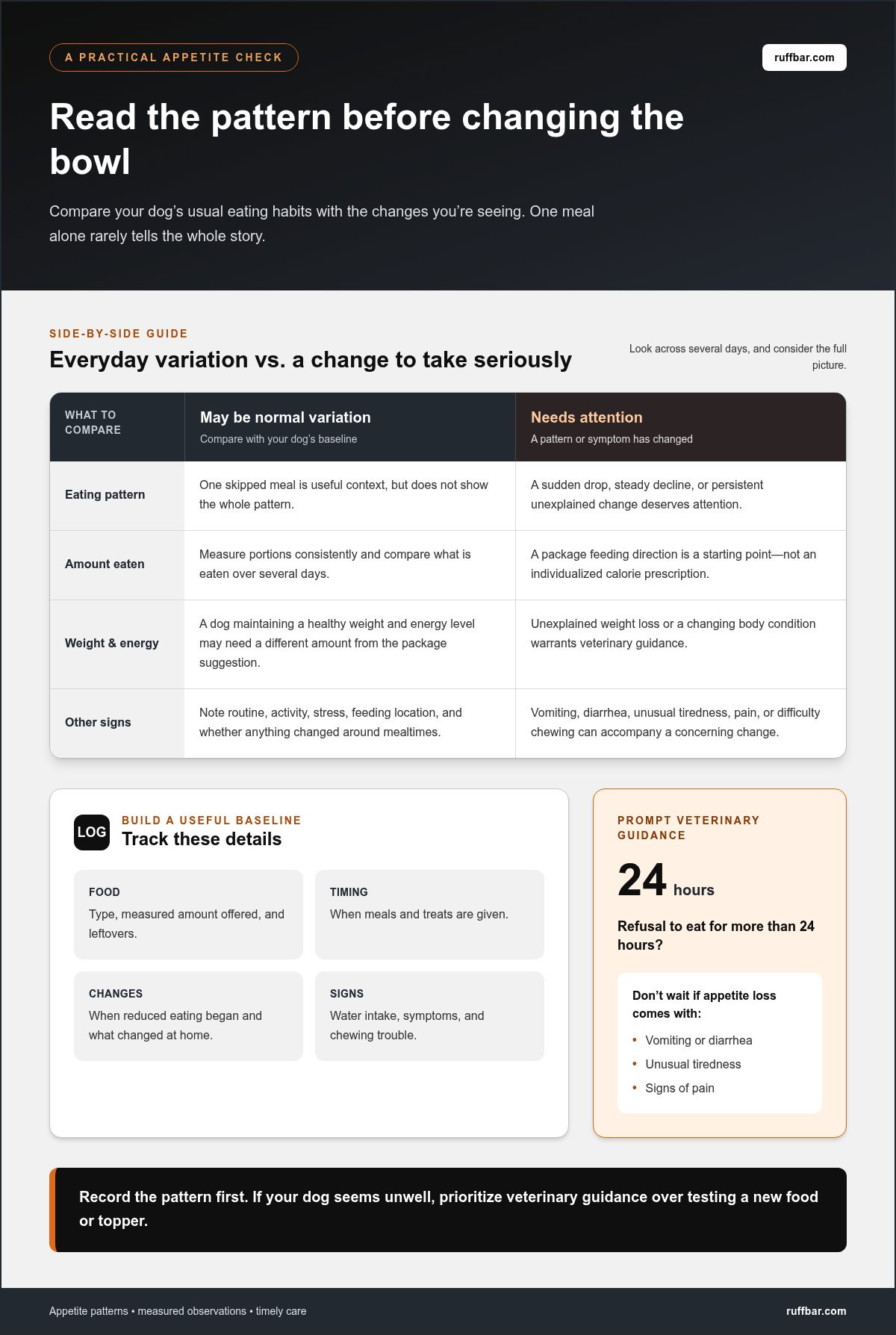
Some dogs naturally eat less than the amount suggested on a food package and still maintain a healthy weight. A sudden drop, steady decline, or change accompanied by other symptoms is different. Before deciding how to get a dog to eat more, establish what your dog actually eats and whether the pattern has changed. One skipped meal is useful context, but it doesn’t tell the whole story.
Record each meal offered and what remains, along with treats, water intake, and changes to routine. This creates a timeline to share with your veterinarian. Appetite loss can accompany a range of common health problems in dogs, so don’t assume a sudden change is pickiness.
Is your dog eating less, or simply eating the right amount?
Compare portions eaten over several days, not just one meal. Measure food consistently and note whether your dog finishes more at one meal than another. Consider body condition and weight trends alongside age and activity. A dog who maintains a healthy weight and energy level may need a different amount from the package suggestion, while unexplained weight loss deserves veterinary attention.
Package feeding directions are a starting point, not an individualized calorie prescription. Energy needs vary, and activity is only one part of the picture. Ask your veterinarian to assess your dog’s ideal weight and feeding needs, especially if weight is changing or you’re unsure whether intake is adequate.
What details should you track before changing meals?
Keep the record practical: note the food type, measured portion, meal time, amount left, treats, and water intake. Mark when the change began and what shifted around that time, such as the household routine, feeding location, or food. This helps distinguish a one-off skipped meal from a pattern that needs attention.
Also note vomiting, diarrhea, low energy, or difficulty chewing. Mouth discomfort can make eating harder, even when a dog approaches the bowl. Contact a veterinarian promptly if appetite loss occurs with concerning symptoms, or if your dog refuses food for more than 24 hours. Don’t delay care to test a new food or topper first.
- Food: type, measured amount offered, and leftovers.
- Timing: when meals and treats are given.
- Changes: when reduced eating began and what changed at home.
- Signs: water intake and any new symptoms or chewing trouble.
These observations provide a useful baseline before adjusting portions or trying another feeding strategy. If your dog seems unwell, prioritize veterinary guidance over home experiments.
Why Dogs Lose Their Appetite: Medical, Routine, and Food-Related Causes
A dog who suddenly turns away from food isn’t automatically being picky. Appetite can shift for many reasons, sometimes before other signs are obvious. Consider health, mouth comfort, medication, surroundings, and feeding habits. These clues can help you describe what’s happening, but they can’t identify the cause on their own.
Pain, digestive upset, infection, or another illness may reduce interest in food. Dental trouble can look different: a dog may approach the bowl, seem eager, then struggle to chew or drop food. VCA’s veterinary explanation of appetite loss describes the difference between lacking interest in food and wanting to eat but being unable to do so comfortably. Medication can also affect appetite, so note any recent prescription or dosage change and share it with your veterinarian.
When appetite changes may point to a health problem
Take sudden refusal, a worsening change, or reduced eating paired with vomiting, diarrhea, low energy, or signs of pain seriously. A change in appetite can appear before other signs are obvious. Contact a veterinarian about a persistent or unexplained shift, and seek guidance promptly if your dog seems unwell. Don’t try to solve a possible medical problem by switching foods or adding treats.
How routine, stress, and feeding habits can affect meals
Travel, visitors, a new household schedule, a changed feeding spot, or competition from another pet can make a dog less comfortable at the bowl. A busy or noisy location may distract a dog that usually eats well. Note what was happening around meals when the change began, but treat timing as a clue, not proof that stress is the cause.
Frequent snacks or generous treats can also leave a dog less interested in regular meals. Repeatedly changing foods makes it harder to tell whether appetite is improving or fluctuating. Keep the diet and routine steady enough to observe a pattern, unless your veterinarian recommends a change.
Use these observations to guide your next step: a change that coincides with a new routine may suggest an environmental factor, while chewing difficulty or illness signs warrant veterinary evaluation. If a veterinarian has addressed health concerns and you’re considering measured variety, explore Ruff Bar nutrition toppers as an optional addition, not a treatment for appetite loss.
How to Encourage a Dog to Eat More Without Overfeeding
Make changes in sequence, not all at once. Keep meals predictable and measure what you offer, then adjust one detail and observe the result. This helps you assess whether a calmer setting, different texture, or small addition makes a difference. The goal isn’t to push extra food at every meal, but to support steady intake without letting treats and add-ons quietly unbalance the daily plan.
Build a consistent feeding routine
Offer meals at regular times in a calm, low-distraction spot. Measure each serving and include treats when assessing your dog’s total daily intake. Log what gets eaten and what remains. If your dog doesn’t finish, remove the bowl after the same reasonable meal window each time, rather than leaving food out and changing the routine from day to day.
Keep the routine steady before switching foods. If you change the schedule, location, portion, and recipe together, you won’t know which change mattered. Use your notes to assess the pattern, and follow your veterinarian’s guidance on portions rather than trying to make your dog finish a set amount.
Make the meal more appealing with measured changes
Once the routine is consistent, try one suitable adjustment. A different texture may appeal to your dog, and gently warming food can bring out its aroma. Warm it only as directed for that food, mix thoroughly, and check the temperature before serving to avoid hot spots. Don’t warm food in packaging unless its instructions say that’s safe.
If you try a topper, introduce it gradually and count it as part of the overall diet. Keep the serving measured, since even small additions can contribute calories. For general inspiration, explore DIY dog food toppers for energy.
Change one variable at a time, then record whether your dog eats more of the regular meal. This helps distinguish a useful adjustment from a short-lived response. More ideas on causes for a dog's loss of appetite can put feeding concerns in context, but a new or worsening appetite change needs veterinary attention, not a series of home experiments.
Don’t force-feed your dog or use appetite stimulants unless a veterinarian directs you to. Avoid repeated abrupt diet changes, too. If you’re weighing how to get a dog to eat more, start with a measured routine and one safe adjustment. If appetite remains low or concerning symptoms appear, stop experimenting and contact your veterinarian.
How to Match Food Intake to Your Dog’s Health and Activity
A hard run, long hike, or demanding training session can change an active dog’s energy needs, but activity is only one signal. Appetite, body condition, and weight trends each tell a different part of the story. A dog may eat less without losing weight, or seem hungry while gradually gaining. Read the signals together instead of assuming a busy day explains a change in appetite.
How to tell whether activity is changing food needs
Track activity duration and intensity alongside meals and weight. A short, easy walk isn’t the same workload as a long outing over rugged terrain. Note changes in stamina and body condition, too. Food needs vary with size, age, health, and individual metabolism, so the same workload won’t produce the same needs in every dog.
If your dog’s workload changes for more than a brief stretch, discuss a feeding plan with your veterinarian. They can help set calorie targets based on ideal weight and health, rather than relying on a package range or adding food by guesswork. This guidance is especially useful for puppies, senior dogs, dogs with a medical condition, or dogs whose weight is changing.
When to call a veterinarian instead of trying another food
Activity can affect appetite, but it doesn’t account for every drop in intake. Contact a veterinarian about sudden appetite loss, a continuing decline, or reduced eating accompanied by other symptoms. Repeated vomiting, marked lethargy, pain, or difficulty swallowing needs prompt attention. Don’t delay care while testing toppers, treats, or appetite products.
- Appetite: Is your dog eating less than their usual pattern?
- Activity: Has the duration or intensity of exercise changed?
- Body condition: Does your dog look or feel different over time?
- Weight trend: Is weight stable, rising, or falling?
These are separate indicators, not a home diagnostic test. A veterinarian can interpret them together and recommend a feeding plan suited to your dog. Once health needs and portions are clear, measured additions may fit some active dogs’ routines, but a high-energy food or topper isn’t a treatment for poor appetite. To explore options designed for active dogs, browse Ruff Bar food and toppers.
If you’re weighing how to get a dog to eat more, first work out whether your dog needs more fuel or whether appetite loss is a warning sign. Match the plan to the dog, not just the miles covered.
Using Ruff Bar Nutrition Products as Measured Additions
Nutrition products can add variety to a feeding plan, but they aren’t a cure for appetite loss. First identify what changed and address health concerns with your veterinarian. If your dog is otherwise well and an addition suits their diet, measure it. An extra bite, bar, or topper still contributes to daily intake and can affect how much regular food they need.
Ruff Bar’s range includes nutrition toppers, food bars, Stix, and freeze-dried meals designed for active dogs and adventure use. Choose a format that fits your dog’s routine and follow its current product directions. A topper or bar may be an addition, while a freeze-dried meal may serve a different role in the feeding plan. Don’t assume every product is interchangeable or suitable for every dog.
When a topper or food bar may fit a feeding plan
A measured topper can bring variety to a dog’s usual meal when it fits their needs. Food bars and Stix may also fit into an overall plan, especially for active routines. The right amount depends on the dog, not just the miles covered: workload, body condition, age, health, and weight trend all matter. Ask your veterinarian how additions fit your dog’s daily nutrition, particularly if weight or appetite is changing.
For more context on fueling active dogs, read about high-protein dog energy bars. Use that information as general guidance, not an individual feeding prescription.
How to make an informed next move
Keep the sequence clear: identify the appetite change, consider health first, measure what your dog eats, then adjust carefully. Add one product or feeding change at a time, follow its directions, and count it as part of the whole diet. This makes it easier to see what your dog accepts without layering on unmeasured calories.
If reduced appetite is persistent, unexplained, or accompanied by other signs of illness, get veterinary guidance before changing the diet or adding products. Appetite products don’t diagnose or treat the cause. Once you have a suitable feeding plan, explore Ruff Bar nutrition for active dogs and consider whether a measured addition fits.
Build a Feeding Plan That Keeps Your Dog Ready
The safest answer to how to get a dog to eat more starts with understanding why intake changed. Track what your dog eats, consider appetite alongside activity, body condition, and weight trends, and avoid changing several parts of the feeding routine at once. If reduced appetite persists or comes with signs of illness, contact your veterinarian before trying another food or topper.
Once you understand your dog’s needs, measured additions can bring variety to an appropriate feeding plan. Ruff Bar offers food bars, Stix, freeze-dried meals, and nutrition toppers made with USDA-graded grass-fed meats and whole organic ingredients without fillers. These are optional nutrition choices, not treatments for appetite loss. Follow product directions and count additions as part of your dog’s overall intake.
Fuel your active dog with care and purpose. Explore Ruff Bar nutrition for active dogs and consider options as part of a balanced, veterinarian-guided plan. Steady observation and thoughtful adjustments can help you move forward with confidence.
Frequently Asked Questions
How can I get my dog to eat more?
Start by checking whether your dog’s appetite change is sudden, then measure what they actually eat. Review treats, meal routine, and activity before changing the food. Offer meals at consistent times in a calm space, and test one safe adjustment at a time so you can tell what helps. If reduced appetite continues, worsens, or comes with other symptoms, contact your veterinarian instead of relying on feeding tricks.
Why is my dog eating less than usual?
Dogs may eat less because of illness, mouth pain, medication effects, stress, a routine change, excess treats, or food preference. They may also need a different portion from the average suggested on a food package. Since appetite change can be an early health clue, note when it began and whether other signs appeared. Ask your veterinarian about sudden or persistent changes rather than assuming your dog is just picky.
Should I add a topper if my dog will not eat?
A suitable topper may make a meal more appealing to some dogs, but it won’t address every cause of reduced appetite. If your dog is otherwise well and a topper fits their diet, introduce it gradually, follow its feeding directions, and count it as part of daily intake. If your dog suddenly refuses food or seems unwell, contact a veterinarian before trying multiple additions or changing the diet.
Can I warm my dog’s food to encourage eating?
Yes, gently warming food that is safe to serve that way may release more aroma and make the meal appealing. Warm it carefully, mix it thoroughly, and check the temperature before offering it to avoid hot spots. Keep the usual meal routine steady, and don’t treat warming as a solution to an unexplained appetite change. If your dog continues eating less, ask your veterinarian for advice.
How much should my dog eat each day?
There isn’t one daily portion that suits every dog. Food-label guidance is a starting point, while age, size, activity, health, body condition, and the food’s calorie density affect individual needs. Measure what your dog eats and track weight or body-condition changes. Ask your veterinarian to help set an appropriate daily amount, especially if your dog’s appetite or weight has changed.
When should I call the vet if my dog is not eating?
Contact a veterinarian if appetite loss is sudden, persistent, worsening, or paired with vomiting, diarrhea, unusual tiredness, pain, or trouble chewing or swallowing. Puppies, older dogs, and dogs with existing health conditions may need individualized advice sooner. Don’t wait for home feeding adjustments to work if your dog appears unwell. Share when the change began, what your dog has eaten, and any other signs you’ve noticed.
Can exercise make a dog hungrier?
Activity can change a dog’s energy needs, but it doesn’t always increase appetite and can’t explain every eating change. Consider exercise duration and intensity alongside measured food intake, body condition, and weight trends. If a more active routine coincides with reduced appetite or weight change, discuss the feeding plan with your veterinarian. Avoid increasing portions automatically, since dogs vary in age, health, size, and individual metabolism.