
How to Adjust Your Dog’s Food as Weight and Activity Change
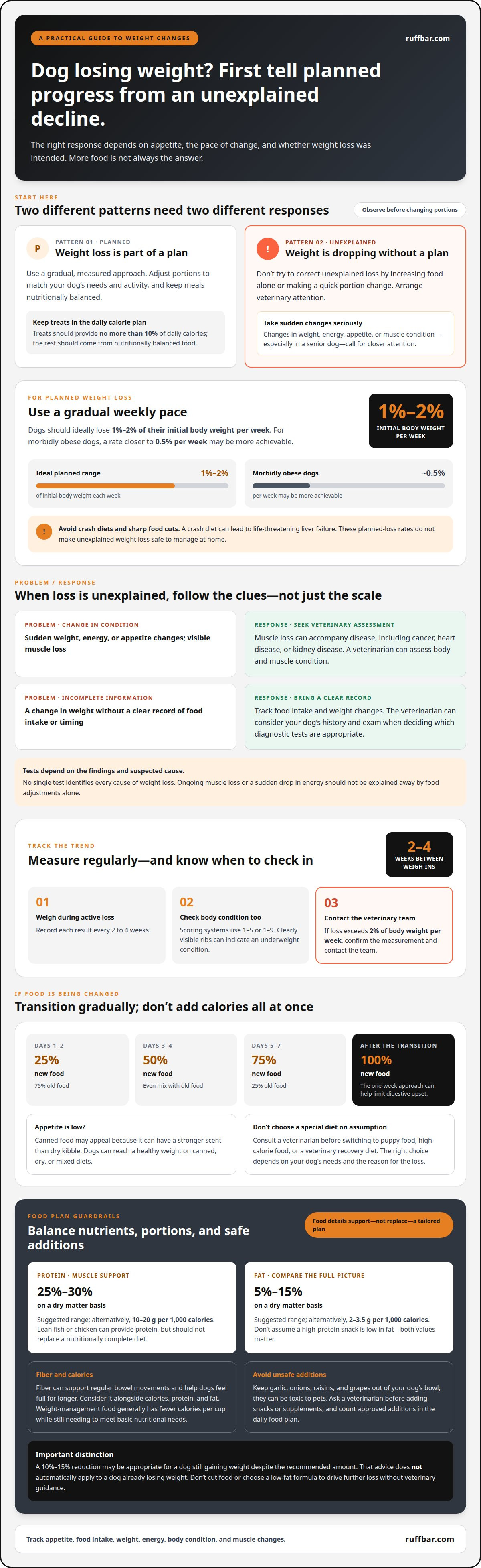
A lighter dog doesn’t always need a larger serving. What to feed a dog that is losing weight depends on whether the loss is planned, how well the dog is eating, and whether illness could be involved. For a planned weight-loss program, keep treats to no more than 10% of daily calories and provide the rest through a nutritionally balanced food.
It’s natural to wonder whether treats need to disappear when you’re adjusting your dog’s food. Not necessarily, but treats contribute calories, and unexplained weight loss calls for veterinary attention rather than a quick portion change.
This guide covers appetite, food nutrients, possible health concerns, treats, and portions as your dog’s weight and activity change. Learn how to make measured adjustments, track progress, and recognize when weight loss needs closer attention. Feed with purpose, keeping meals in step with your dog’s body and daily demands.
Key Takeaways
- Track appetite and weight changes before adjusting meals, and take sudden or unexplained weight loss seriously.
- Choose a balanced food with appropriate protein, fat, and fiber, then adjust portions to match your dog’s changing activity.
- Count treats as part of the daily food plan, not as extras outside it.
- Learn which appetite cues and changes in muscle condition can signal that a food adjustment alone may not be enough.
Food palatability and appetite
Choosing what to feed a dog that is losing weight starts by separating planned weight management from unexplained loss. Appetite, food choice, and portion size each shape the next step.
- Track what your dog eats and note changes in appetite. Canned food may appeal to a dog eating less because it can have a stronger scent than dry kibble. Dogs can reach a healthy weight on canned, dry, or mixed diets. Don’t switch to puppy food, high-calorie food, or a veterinary recovery diet without consulting a veterinarian. The right choice depends on your dog’s needs and the reason for the weight loss.
- Read calorie information and feeding directions before adjusting portions. Weight-management food generally has fewer calories per cup, while still needing to meet basic nutritional needs. One diet-food listing gives 60 grams of fiber per 1,000 calories. If weight loss is unexplained, a veterinarian can help decide what to feed a dog that is losing weight. Don’t cut food or choose a low-fat formula to drive further loss without guidance.
-
Increase Calories Safely
Introduce a new food gradually instead of adding a large portion at once. Start with 25% new food and 75% old food on days 1 to 2, then use an even mix on days 3 to 4. Feed 75% new food on days 5 to 7, then transition to 100% new food. This one-week approach can help limit digestive upset.
-
Avoid Unsuitable Foods and Supplements
Keep garlic, onions, raisins, and grapes out of your dog’s bowl because they can be toxic to pets. Consult a veterinarian before adding snacks or supplements to support weight gain. Don’t use human foods or supplements as calorie boosters without guidance, and count approved additions as part of the daily food plan.
- Avoid rapid weight gain and overfeeding. Extra calories can push portions beyond your dog’s needs and complicate healthy-weight management. For a dog still gaining weight despite the recommended amount, a 10% to 15% reduction may be appropriate. That advice does not automatically apply to a dog already losing weight.
Dietary protein, fat, and fiber levels
Choose a nutritionally balanced food, then consider its protein, fat, fiber, and calorie content. These details can inform feeding choices, but they don’t replace a plan tailored to your dog’s individual needs.
-
Prioritize Lean Protein for Muscle Maintenance
Choose a food that supplies protein while supporting muscle, especially if your dog is losing lean body mass. A suggested range for dog food is 25% to 30% protein on a dry-matter basis, or 10 to 20 grams per 1,000 calories. Lean fish or chicken can provide protein, but they shouldn’t replace a nutritionally complete diet. For a senior dog, consider digestibility and an appropriate balance of nutrients.
-
Choose High-Protein, Low-Fat Snacks
Use small portions of lean fish or chicken as treats, and include their calories in your dog’s daily intake. A suggested fat range for dog food is 5% to 15%, or 2 to 3.5 grams per 1,000 calories. Compare the food’s nutrient information on the same basis before making a choice. Don’t assume a high-protein snack is low in fat; both values matter when you feed your dog.
-
Consider a Higher-Protein Diet
Ask a veterinarian whether a higher-protein diet fits your dog’s condition, particularly if muscle loss is visible. Weight-loss diets still need to meet basic nutritional requirements, while a dog losing lean body mass may need more protein. Fiber can support regular bowel movements and help dogs feel full for longer, so consider its role alongside calories, protein, and fat. For dogs whose feeding plan includes supplements, dog supplements may be another topic to discuss with your veterinarian.
Lean fish or chicken can be suitable protein options, but safe portions depend on your dog’s needs and overall diet. Treats should complement meals, not displace balanced food.
Underlying diseases associated with muscle loss
Weight loss despite eating can signal a health concern, not simply a need for larger portions. Track changes in appetite, energy, body condition, and muscle, and use those details to guide your next step.
- Arrange veterinary attention for sudden changes in weight, energy, or appetite, especially in a senior dog. Muscle loss can accompany underlying disease, including cancer, heart disease, or kidney disease. Unexplained weight loss deserves prompt attention; a sudden decline or worsening condition makes it more urgent. Don’t try to correct it by increasing food alone.
- Bring a clear record of your dog’s food intake and weight changes to the appointment. A veterinarian can assess body condition and muscle condition, then consider your dog’s history and examination when deciding which diagnostic tests are appropriate. Tests depend on the findings and suspected cause; no single test identifies every cause of weight loss.
- For planned weight loss, follow a gradual plan rather than chasing rapid results. Dogs should ideally lose 1% to 2% of their initial body weight per week. For morbidly obese dogs, a rate closer to 0.5% per week may be more achievable. A crash diet can lead to life-threatening liver failure, so avoid sharp food cuts.
- Weigh your dog every 2 to 4 weeks during active weight loss and record each result. If weight loss exceeds 2% of body weight per week, confirm the measurement and contact the veterinary team. Compare body condition as well as pounds: scoring systems use 1 to 5 or 1 to 9, and clearly visible ribs can indicate underweight condition. A veterinarian can interpret body condition alongside muscle changes.
- Use progress checks to distinguish a planned, controlled weight change from unexplained decline. An overweight dog may need a structured approach, while weight loss without a planned calorie change calls for assessment for disease. Food adjustments that increase fullness don’t explain ongoing muscle loss or a sudden drop in energy.
Changing portions when activity and weight change
Match food intake to your dog’s current activity and body weight, not an old routine. Changes in exercise can shift energy needs, so adjust portions in measured steps.
- Reassess activity before changing the bowl. As dogs age and become less active, their energy requirements generally decrease. If a less active dog starts gaining weight, smaller portions or lower-calorie food may be appropriate. If activity increases, don’t automatically add food; first track body weight and condition, then assess whether the current nutrition still fits.
- Measure each serving instead of estimating by eye. A kitchen gram scale makes portion changes easier to repeat. For example, one daily amount can be adjusted from 150 grams to 135 grams. Treat that as a measurement example, not a universal portion. Your dog’s calorie needs depend on individual factors, including body size, life stage, and activity.
- Make one adjustment at a time and watch the trend. Regular weight and body-condition checks can show whether intake matches activity. If weight keeps rising despite feeding the recommended amount, review meals, treats, and exercise together. Weight-management plans work best when reduced calories are paired with activity that is safe for the dog.
- Keep meals consistent while assessing changes. Divide the daily allowance into two or more meals, depending on your dog’s dietary needs and eating habits. This makes total intake easier to track when routines shift. On active days, record exercise and food offered, then compare those notes with later weight measurements before changing the portion again.
- Use nutrition support as part of a measured routine, not as a substitute for adjusting the main food. If a topper fits your dog’s feeding plan, count it within the day’s intake. Explore functional nutrition toppers as one option to discuss within your portion plan.
Ruff Bar
Ruff Bar offers high-protein, grain-free nutrition for active dogs, including Ruff Stix® Bison Pork and freeze-dried backpacking meals in Beef and Duck. These products can be considered within your dog’s broader feeding routine, while keeping portions and overall nutrition in view.
If your dog is losing weight without a clear reason, speak with a veterinarian before changing food; nutrition products don’t diagnose or treat illness. Once you understand your dog’s needs, Ruff Bar’s options may help you plan food for an active routine. Contact Ruff Bar to discuss its dog nutrition offerings and how they may fit your feeding approach.
Build a Feeding Routine That Moves With Your Dog
Your dog’s needs can shift as activity, appetite, and body weight change. Keep the next step measured: decide what to feed a dog that is losing weight based on the reason for the change, not a guess at the bowl. If the loss is unexplained, work with your veterinarian before changing the feeding plan.
Once you have a clear nutrition approach, choose additions that fit its purpose and count them as part of your dog’s overall intake. Ruff Bar offers Ruff Stix® Bison Pork, Ruff Food Freeze Dried Raw Backpacking Meals Beef, and Ruff Stix® Beef for active dogs. These options can be part of a broader feeding routine, not a substitute for veterinary care or a complete feeding plan.
For a practical next step, contact Ruff Bar for feeding support. Keep the plan steady, watch how your dog responds, and keep moving forward together.
Frequently Asked Questions
Can I still feed treats?
Yes, treats can fit if you count them as part of your dog’s daily food plan. For training, set aside some of the regular meal to use as rewards instead of adding extra snacks. This keeps the routine clear and helps you notice changes in appetite or eating habits. Ask your veterinarian before adding new treats to your dog’s diet.
How long will my dog need to be on a diet?
There’s no fixed duration. The plan depends on your dog’s starting condition, progress, and eventual maintenance needs. Keep the routine consistent while weight changes, then reassess portions as activity or body condition shifts. A dog that reaches a healthy weight may still need adjusted meals to maintain it, rather than automatically returning to the previous serving size.
How often should I have my dog's progress checked?
During active weight loss, weigh your dog every 2 to 4 weeks. Use the same scale when possible, and record appetite, activity, and changes in body condition alongside each weight. This gives your veterinarian a useful trend to review, rather than relying on a single measurement. Arrange an earlier check if weight loss is sudden or your dog’s energy drops.
How much should I feed an underweight dog per day?
There’s no single daily portion for every underweight dog. The amount depends on the food’s calories, your dog’s current condition, life stage, activity, and the reason for the weight loss. Use feeding directions as a starting reference, not a weight-gain prescription. A veterinarian can assess body and muscle condition and help set a suitable daily intake.