High Protein Grain Free Dog Treats for Active Dogs: The Ultimate Guide
Your dog doesn't slow down, so why should their nutrition? If you've been searching for high protein grain free dog treats for active dogs, you already know the struggle: endless ingredient labels, vague marketing claims, and treats that look premium but perform like filler. It's exhausting, and your dog deserves better.
You're right to be selective. Active dogs burn more energy, stress their muscles harder, and recover differently than dogs living a low-intensity lifestyle. What you put in their body between training runs, trail sessions, and hard working days genuinely matters. Generic treats built on grains and cheap binders don't cut it when performance is the standard.
This guide cuts through the noise. You'll learn exactly what separates a high-quality, protein-packed treat from a cleverly packaged compromise, what ingredients to prioritize and which to avoid, and how to build treats into your dog's routine in a way that supports real recovery and sustained energy. Whether your dog is a trail runner, a working dog, or just built for movement, the right fuel changes everything.
Key Takeaways
- Active dogs have distinct nutritional demands - understanding what qualifies as an "active dog" helps you choose treats that actually support their energy output and recovery needs.
- The best high protein grain free dog treats for active dogs go beyond marketing claims, delivering real muscle repair and sustained energy through quality protein sources, not grain-based fillers.
- Not all high-protein treats are built the same - you'll learn how to match treat type and protein density to your dog's specific activity level and training demands.
- Treats aren't just rewards; when used strategically, they become a functional part of your dog's performance nutrition and daily recovery routine.
- Ruff Bar's USDA-graded, grass-fed ingredients and no-filler formulas set a clear standard for what performance-focused dog nutrition should look like.
Understanding the Nutritional Needs of Active Dogs
Not every dog qualifies as active, but the ones that do operate on an entirely different physiological level. Their muscles work harder, their joints absorb more impact, and their metabolic demands spike well beyond what a standard diet is designed to support. If you're choosing high protein grain free dog treats for active dogs, you need to understand what's actually happening inside your dog's body during and after high-output activity.
What Makes a Dog Active?
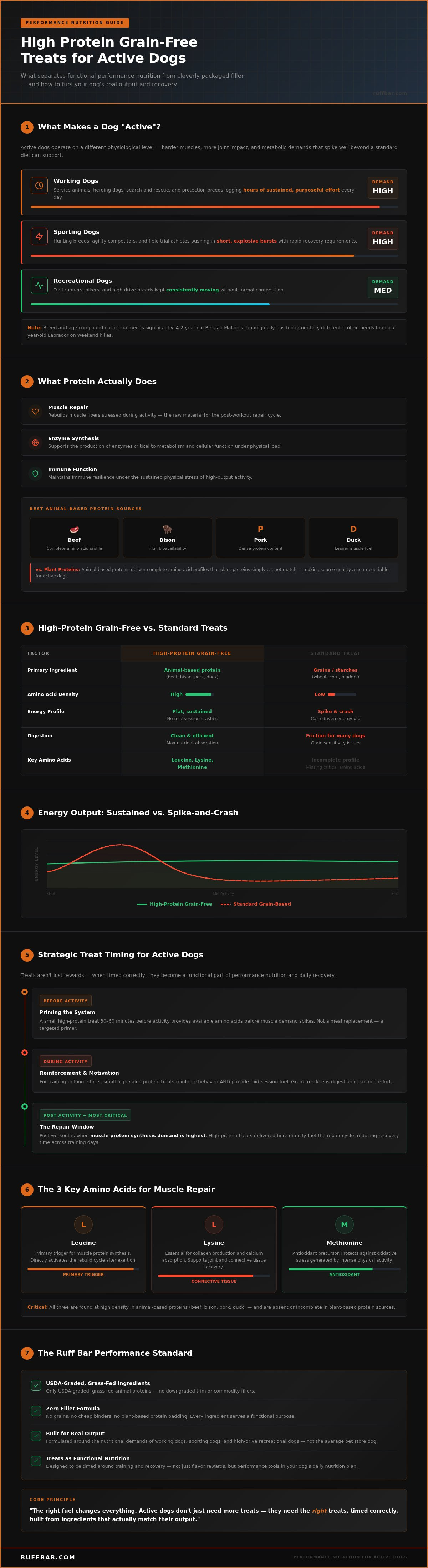
Active dogs fall into three broad categories, each with distinct demands:
- Working dogs: Service animals, herding dogs, search and rescue, and protection breeds logging hours of sustained, purposeful effort every day.
- Sporting dogs: Hunting breeds, agility competitors, and field trial athletes pushing hard in short, explosive bursts with rapid recovery requirements.
- Recreational dogs: Trail runners, hikers, and high-drive breeds whose owners keep them moving consistently, even without formal competition.
Breed and age layer onto this significantly. A two-year-old Belgian Malinois running daily has fundamentally different caloric and protein needs than a seven-year-old Labrador on weekend hikes. Activity level doesn't exist in isolation. It intersects with body composition, metabolic rate, and developmental stage to create a nutritional profile that's genuinely unique to each dog.
Protein's Role in Canine Nutrition
Protein isn't just fuel. It's the structural material your dog's body uses to rebuild muscle fibers stressed during activity, synthesize enzymes, and maintain immune function under physical load. When a dog works hard, muscle tissue breaks down. High-quality protein is what drives the repair cycle.
The best protein sources for active dogs are animal-based: beef, bison, pork, and duck rank highest for bioavailability, meaning the body can actually use what it absorbs. Plant proteins don't deliver the same complete amino acid profile, which is why ingredient sourcing matters so much.
Active dogs generally benefit from diets where protein makes up a meaningful portion of their daily caloric intake, though the right amount varies by size, intensity, and duration of activity. Your vet can help dial in specifics, but the baseline principle is clear: more output demands more recovery fuel.
Treats play a real role here. Strategically timed around training and activity, high-protein treats deliver targeted amino acids when muscle repair demand is highest. That's not a marketing claim. It's basic recovery nutrition applied to canine physiology. Choosing high protein grain free dog treats for active dogs means you're treating the treat as functional nutrition, not just a reward.
Benefits of High-Protein, Grain-Free Treats
The gap between a treat that tastes good and one that actually works is wider than most labels let on. For active dogs, that gap translates directly into performance on the trail, in the field, and during recovery. High protein grain free dog treats for active dogs aren't a premium upgrade. They're a functional necessity when the workload is real.
How Protein Enhances Performance
During sustained activity, muscle fibers experience microtears. That's not damage to worry about; it's the biological trigger for growth and adaptation. But repair requires raw material. Specifically, complete amino acids derived from animal-based protein sources. Without adequate protein delivered at the right time, that repair cycle stalls. Recovery slows. Fatigue compounds across training days.
The difference between a high-protein treat and a standard biscuit comes down to what's actually in it. Conventional treats often lead with grains, starches, or plant-based binders that provide calories without meaningful amino acid density. A treat built on grass-fed beef or bison delivers leucine, lysine, and methionine, the amino acids most directly tied to muscle protein synthesis. That's not a minor distinction. It's the entire point.
Endurance and stamina benefit too. Dogs metabolizing high-quality protein maintain steadier energy output over long efforts compared to those fueled primarily by carbohydrate-heavy snacks. The energy curve is flatter, more sustained, and less prone to the kind of spike-and-crash pattern that shows up mid-run or mid-session.
Grain-free formulas compound this advantage by removing the digestive friction that grains introduce for many dogs. Cleaner digestion means more efficient nutrient absorption, which means more of what's in the treat actually reaches the muscles that need it.
Real-Life Benefits: Owner Testimonials
Active dog owners who've made the switch to Ruff Bar's USDA-graded, grass-fed treats consistently report the same observations: faster bounce-back after hard days, sharper focus during training, and less visible fatigue in the hours following intense activity. One owner running trails weekly with a high-drive shepherd noted that post-run restlessness dropped noticeably after shifting to higher-protein, no-filler treats timed around their sessions. Another working dog handler described the change as moving from "maintenance mode to actual recovery."
These aren't isolated experiences. They reflect what happens when treat nutrition is taken as seriously as the training itself.
If you're ready to match your dog's nutrition to their output, explore Ruff Bar's performance-focused treat lineup and see what no-compromise ingredients actually deliver.
Choosing the Right High-Protein Treats for Your Active Dog
Not every high-protein treat belongs in every dog's kit. Format, ingredient density, and production standards all determine whether a treat actually delivers under real working conditions. Matching the right treat to your dog's specific output level is where most owners leave performance gains on the table.
Types of High-Protein Treats Explained
Format matters more than most labels acknowledge. Here's how the main types stack up for active dogs:
- Functional bars: Dense, portable, and calorie-stable across temperature extremes. Ruff Bar's food bars are built for exactly this use case, delivering whole-ingredient nutrition that holds up on the trail, in the field, or packed into a training bag. They're not a snack. They're a fuel source.
- Protein stix and chews: Lower calorie per piece, easier to dispense during training intervals. Ruff Stix in bison pork, beef, and pork formats give you single-protein options with clean ingredient profiles and no grain-based binders diluting the protein density.
- Freeze-dried raw: Maximum nutrient retention. The freeze-drying process locks in amino acids, enzymes, and moisture-sensitive micronutrients that heat processing destroys. Ruff Bar's freeze-dried raw backpacking meals in beef and duck formats extend this advantage into full-meal territory for dogs covering serious distance.
- Functional toppers: Ruff Bar's nutrition toppers and pure blend toppers layer targeted functional ingredients onto existing meals, supporting recovery and daily health without replacing the treat entirely.
What to Look for When Selecting Treats
The ingredient label tells you everything. Read it like it matters, because it does. When evaluating high protein grain free dog treats for active dogs, the first ingredient should always be a named animal protein: beef, bison, pork, duck. Not "meat meal." Not "animal by-product." A named, traceable source.
USDA-graded ingredients signal a production standard, not just a marketing claim. Ruff Bar uses USDA-graded, grass-fed meats across their lineup, which means the sourcing meets a defined quality threshold before it ever reaches the formula.
Red flags to cut immediately from your consideration list:
- Corn, wheat, or soy as primary ingredients: These are cheap caloric fillers with low amino acid utility for active dogs.
- Artificial preservatives: BHA, BHT, and ethoxyquin have no place in a performance-focused treat.
- Vague protein sourcing: "Poultry" or "meat" without a species name means the sourcing standard is undefined.
- Sugar or syrup additives: Added to mask palatability issues in low-quality formulas.
Choosing high protein grain free dog treats for active dogs isn't complicated once you know what to filter out. The shorter and more traceable the ingredient list, the more of the treat's caloric value is actually working for your dog's recovery and performance rather than just filling space in the formula.
How to Incorporate High-Protein Treats into Your Dog's Diet
Knowing what's in a treat is only half the equation. The other half is knowing when to use it, how much to give, and how to build it into a routine that actually supports your dog's performance rather than working against their diet. Treats used without intention are just calories. Treats used strategically are a tool.
Timing and Quantity: Finding the Right Balance
Timing is everything in performance nutrition, and it applies to dogs the same way it applies to athletes. The window immediately following intense activity is when muscle protein synthesis is most active. Delivering high protein grain free dog treats for active dogs within 30 to 60 minutes after a hard session gives the body the amino acids it needs precisely when demand is highest. Pre-activity treats work differently: a small, protein-dense option given 20 to 30 minutes before output provides a steady fuel baseline without the digestive load of a full meal.
Quantity depends on output level. A general rule most performance-focused owners follow is keeping treats within 10 percent of daily caloric intake. For high-drive dogs logging serious hours, that allowance stretches further, but it should always be tracked against what's in the bowl. If you're increasing treat volume during heavy training blocks, reduce meal portions proportionally. Don't double the calories and wonder why conditioning stalls.
In training contexts, smaller pieces deliver more repetitions per treat. Break Ruff Stix into thirds or quarters during drill sessions. You get more reward moments per gram, which improves reinforcement frequency without inflating daily intake.
Incorporating Treats into Adventure
On the trail, in the field, or anywhere away from a controlled feeding environment, preparation determines whether your treat strategy holds up. Pack for the day's output, not just the distance. Dogs working elevation gain or covering rough terrain burn significantly more than flat-ground estimates suggest.
Practical packing habits that hold up under real conditions:
- Pre-portion treats into a dedicated pocket or pouch so you're not digging through a bag mid-session while your dog is waiting for a reward cue.
- Choose formats built for field conditions. Ruff Food Bars and Ruff Stix hold up across temperature ranges without melting, crumbling, or losing structural integrity the way softer treats do in summer heat.
- Pair treats with hydration breaks. Every treat stop is a natural checkpoint for water. Build the habit so your dog associates the two, which helps maintain hydration discipline on long efforts.
- Use freeze-dried raw formats for multi-day trips. Ruff Food Freeze Dried Raw Backpacking Meals in beef and duck formats extend full-meal nutrition into the backcountry without refrigeration requirements, giving you a complete recovery option when you're far from a kitchen.
Monitoring intake in the field takes discipline. It's easy to over-reward when your dog is performing well and the energy is high. Track loosely by counting pieces before you leave, not by feel in the moment. Your dog's body doesn't care how good the day felt. It responds to what it actually received.
Build the system before you need it. Stock your trail kit with Ruff Bar's performance-ready treat lineup and go prepared.
Why Choose Ruff Bar for Your Active Dog
At this point, you understand what active dogs need and how to use treats strategically. The harder question is which brand actually delivers on those standards without hiding behind vague claims and clean packaging. Ruff Bar's answer is simple: show the ingredients, show the sourcing, and let the formula speak.
Quality Ingredients for Quality Performance
Every Ruff Bar product starts with USDA-graded, grass-fed meats. That's not a tagline. It's a sourcing standard that defines the protein quality before anything else enters the formula. Grass-fed beef and bison carry a higher concentration of omega-3 fatty acids and conjugated linoleic acid compared to grain-finished alternatives, both of which support inflammation management in dogs under regular physical load. When you're choosing high protein grain free dog treats for active dogs, the upstream sourcing decision determines the downstream recovery outcome.
There are no fillers. No corn, no wheat, no soy, no cheap binders inflating the calorie count without adding amino acid value. What's in the treat is there because it works, not because it reduces production cost. Whole organic ingredients support cleaner digestion, which means better nutrient absorption and less gastrointestinal friction on hard training days when your dog's system is already under load.
The lineup reflects this philosophy across every format:
- Ruff Food Bars: Dense, portable whole-ingredient bars built for sustained output in demanding conditions.
- Ruff Stix in bison pork, beef, and pork: Single-protein chews with clean labels and no grain-based dilution.
- Ruff Food Freeze Dried Raw Backpacking Meals in beef and duck: Full-meal nutrition for dogs covering serious distance, with nutrient retention that heat processing can't match.
- Ruff Bar Functional Nutrition Toppers and Pure Blend Toppers: Targeted functional support layered onto existing meals for daily recovery and health.
Ruff Bar: Trusted by Active Dog Owners
Active dog owners are a demanding audience. They track performance, monitor recovery, and notice when a product underdelivers. The consistent feedback from Ruff Bar's community centers on the same outcomes: dogs that bounce back faster, maintain sharper focus during training, and sustain energy across long efforts without the crash pattern that grain-heavy treats produce.
Brand transparency is built into the sourcing model. USDA grading isn't self-reported. It's a verified production standard that removes the guesswork from ingredient quality. You know what's in the bag because the sourcing process demands it.
If your dog's output is serious, their nutrition should be too. Check out Ruff Bar's full range of high-protein treats and build a fuel strategy that matches the work your dog actually puts in.
No fillers. No shortcuts. Just performance nutrition that earns its place in your dog's routine.
Your Dog's Performance Starts With What You Feed Them
Active dogs don't get a rest day from their biology. Every trail run, training session, and working hour puts real demand on their muscles, joints, and recovery systems. Choosing high protein grain free dog treats for active dogs isn't a premium preference; it's a practical decision that directly affects how your dog performs and recovers day after day.
Three things matter most: quality protein sourced from named, traceable animals; no grain-based fillers diluting the nutritional value; and a treat strategy timed to your dog's actual output. Get those right, and treats stop being a reward and start being a recovery tool.
Ruff Bar is built on exactly those standards. USDA-graded, grass-fed ingredients. No shortcuts. No filler. Formulas designed specifically for dogs that work hard and need nutrition that keeps up.
Your dog puts everything into every session. Their treats should too. Explore Ruff Bar's high-protein treats for your active dog today and fuel every mile, every rep, and every recovery with ingredients that actually earn their place in the bowl.
Frequently Asked Questions
What are the benefits of high-protein treats for active dogs?
High-protein treats deliver the amino acids active dogs need to repair muscle tissue after hard output, maintain steady energy across long efforts, and support immune function under physical load. Animal-based proteins like beef and bison provide complete amino acid profiles that plant proteins can't match. For dogs logging real miles and real work, that difference shows up in recovery speed and sustained performance over consecutive training days.
Are grain-free treats better for my dog?
For active dogs, grain-free formulas remove digestive friction that grains introduce, allowing for more efficient nutrient absorption. That means more of what's in the treat actually reaches the muscles that need it. Dogs with grain sensitivities benefit most, but even dogs without sensitivities absorb clean, grain-free formulas more effectively during periods of high physical demand. If your dog is working hard, cleaner digestion is a performance advantage, not just a dietary preference.
How many treats should I give my active dog daily?
A practical baseline is keeping treats within 10 percent of your dog's daily caloric intake, adjusting upward during heavy training blocks while reducing meal portions proportionally. Don't estimate by feel in the field; count pieces before you leave. Dogs covering elevation or rough terrain burn significantly more than flat-ground estimates suggest, so output level should drive your daily treat volume, not habit or convenience.
What ingredients should I avoid in dog treats?
Cut corn, wheat, and soy immediately. These are cheap caloric fillers with low amino acid utility for active dogs. Avoid artificial preservatives like BHA, BHT, and ethoxyquin, and reject any treat listing vague protein sources like "poultry" or "meat" without a named species. Added sugars and syrups signal palatability masking in low-quality formulas. The ingredient list should be short, traceable, and led by a named animal protein.
Can high-protein treats help with my dog's recovery after exercise?
Yes. High protein grain free dog treats for active dogs, when timed correctly, deliver targeted amino acids during the window when muscle protein synthesis is most active. Giving a protein-dense treat within 30 to 60 minutes after intense activity gives the body the raw material it needs precisely when repair demand peaks. This isn't a marketing claim; it's basic recovery nutrition applied to canine physiology, the same principle that drives post-workout nutrition for human athletes.
How do I choose the best high-protein treats for my dog?
Start with the ingredient label. The first ingredient must be a named animal protein: beef, bison, pork, or duck, not "meat meal" or "animal by-product." Look for USDA-graded sourcing standards, no grain-based fillers, and no artificial preservatives. Then match the format to your use case: dense bars for sustained field work, chews like Ruff Stix for training intervals, and freeze-dried raw formats for multi-day trips where full-meal nutrition matters.
Are Ruff Bar treats suitable for all dog breeds?
Ruff Bar's high-protein, grain-free formulas are built around whole organic ingredients and USDA-graded grass-fed meats, making them a strong option across breeds with active lifestyles. That said, individual dogs vary in caloric needs, sensitivities, and health conditions. If your dog has a specific medical history or dietary restriction, consult your vet before introducing any new treat into their routine. For generally healthy, active dogs across sizes and breeds, the clean ingredient profiles translate well regardless of breed type.