
High-Calorie Dog Food Topper: How to Choose for an Underweight Dog
The most calorie-dense option isn’t automatically the best fit for an underweight dog. A high calorie dog food topper can add energy, but it won’t explain unexpected weight loss or ensure a balanced diet. If your dog is losing weight, refusing food, or has a sudden change in appetite, start with a veterinarian. The cause matters as much as the calories.
It’s understandable to look for a simple way to help your dog regain condition. Choosing well, however, takes more than comparing calorie claims. Check the label, serving directions, ingredients, and how the topper fits with your dog’s regular food and daily routine.
This guide explains how to compare calorie-dense toppers, when to seek veterinary advice, and how to introduce an addition without letting it crowd out a complete, balanced diet. Use clear label information, measured portions, and a plan suited to your dog.
Key Takeaways
- A high calorie dog food topper should complement your dog’s regular food, not replace a veterinary assessment for unexplained weight loss.
- Compare calories using the same serving basis, then check serving directions, ingredients, and intended use on each label.
- Choose a format that fits your dog’s meals and routine, and use product information rather than assumptions to compare options.
- Before adding a topper, review its feeding directions and seek veterinary guidance when your dog’s weight or appetite has changed unexpectedly.
- Assess Ruff Bar Functional Nutrition and Pure Blend Toppers by verifying each product’s calories, ingredients, directions, and supplemental-feeding status.
When Does a High-Calorie Dog Food Topper Make Sense?
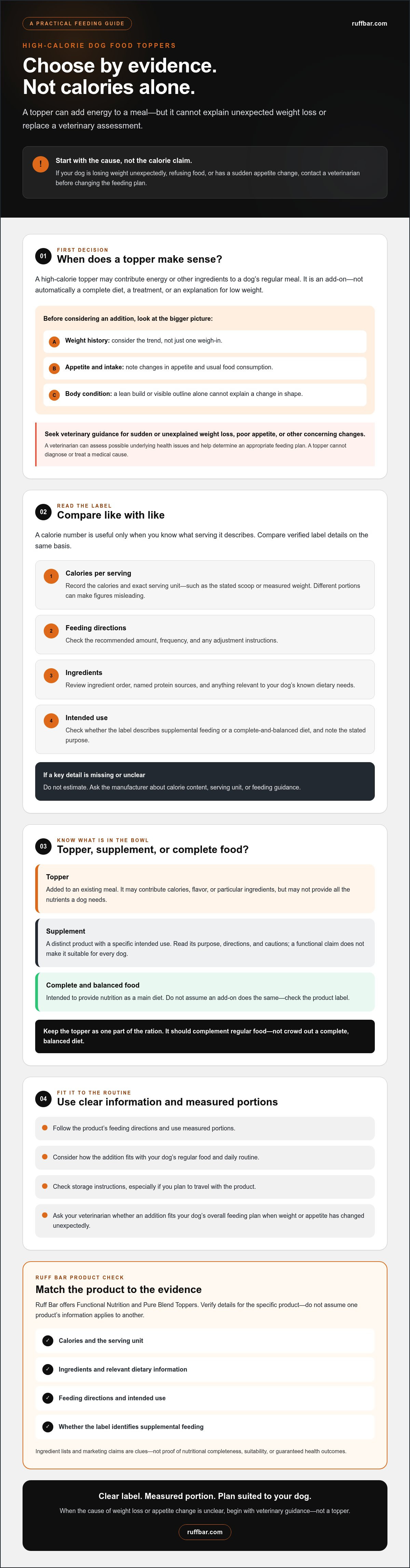
A high-calorie dog food topper adds energy or other ingredients to a dog’s regular meal. It isn’t automatically a complete diet or a treatment for weight loss. Extra calories may be useful when they fit the dog’s needs and feeding plan, but they won’t identify or resolve the cause of unexplained weight loss.
For an active dog, consider whether activity, appetite, or food intake has changed. A topper may have a place in the feeding plan, but a calorie claim alone can’t show whether a product suits your dog. First understand your dog’s condition and what their current food provides.
Is a topper appropriate for an underweight dog?
Look at the trend, not just a single weigh-in. Note your dog’s weight history, appetite, usual food intake, and body condition. A lean build or visible outline alone can’t tell you whether a dog is underweight or explain a change in shape.
Contact a veterinarian before changing food if weight loss is sudden or unexplained, appetite is poor, or you notice other concerning changes. A professional can assess possible underlying health issues and help determine an appropriate feeding plan. Don’t use a topper to delay that assessment. It can add calories, but it can’t diagnose or treat a medical cause.
Topper, supplement, or complete food: what is the difference?
A topper is added to an existing meal, often to contribute calories, flavor, or particular ingredients. It may not provide all the nutrients a dog needs, so check whether the label says it’s intended for supplemental feeding or describes it as a complete diet. A complete and balanced dog food is intended to provide nutrition as a main diet. Don’t assume an add-on does the same.
A supplement is a distinct product with a specific intended use. Check its label for purpose, directions, and cautions, and don’t assume a functional claim makes it suitable for every dog. Confirm that your dog’s main food is appropriate and nutritionally complete, then ask your veterinarian whether an addition fits the overall plan.
Think of the topper as one part of the ration, not a shortcut to finding the reason for low weight. That’s a safer starting point for comparing options.
How to Compare High-Calorie Dog Food Toppers
A high calorie dog food topper earns a place in the bowl through clear label facts, not bold front-of-package language. Compare products on the same terms, then check whether the nutrition and intended use fit your dog’s existing diet. “High calorie” alone doesn’t prove a topper is appropriate.
| What to compare | What to record | Why it matters |
|---|---|---|
| Calories per serving | Calories and the exact serving unit, such as a stated scoop or measured weight | Serving sizes differ. Comparing unlike portions can make calorie figures misleading. |
| Feeding guidance | Recommended amount, frequency, and any adjustment instructions | Directions help you understand how the product is intended to be used. |
| Ingredients | Ingredient order, named protein sources, and ingredients relevant to your dog’s known needs | The list supports a practical diet-fit check, but doesn’t prove the food is complete. |
| Intended use | Supplemental feeding or complete-and-balanced status, plus stated purpose | Clarifies whether the product is an add-on or intended to provide a full diet. |
Which label details matter most?
Start with calories per stated serving, and confirm exactly what that serving means. A scoop, tablespoon, and measured weight aren’t interchangeable. Before comparing calorie figures, match the portions or calculate calories for the same amount using the verified information on each label.
Next, scan the ingredient list and feeding directions. Note named proteins and anything relevant to your dog’s known dietary needs. Check storage instructions, especially if you plan to travel with the product. If calorie content, serving unit, or feeding guidance is missing or unclear, ask the manufacturer rather than estimating.
How should ingredient and nutrition claims be judged?
Ingredients and marketing claims are useful clues, not proof of nutritional completeness or suitability. Verify sourcing or organic statements against the specific product’s label, since a claim about a broader range may not apply to every topper. If you’re assessing your dog’s body condition, the Body Condition Score (BCS) chart from the World Small Animal Veterinary Association can help you discuss your observations with your veterinarian.
Look for clear information about intended use, and don’t treat promises about digestion, recovery, weight gain, or health outcomes as guaranteed results. Ruff Bar offers Functional Nutrition and Pure Blend Toppers. Compare the Ruff Bar topper options using the same checks: calories, ingredients, directions, and supplemental-feeding status.
Which Topper Format Fits Your Dog’s Meals and Routine?
The best format is one your dog will eat and you can serve consistently. Powders, soft toppers, and freeze-dried options can differ in how they mix, portion, store, and travel. Those practical differences don’t tell you which contains more calories. Compare verified calorie information and serving directions on each product’s label.
How do powders, soft toppers, and freeze-dried options differ?
Use format as a routine check, not a shortcut for judging nutrition:
- Powders: Consider how easily you can mix a measured portion into your dog’s usual meal, and follow the label’s storage directions.
- Soft toppers: Check how to portion and store the product after opening, and whether its texture suits your dog’s preferences and chewing ability.
- Freeze-dried options: Review serving instructions, storage requirements, and whether the product is a topper, treat, or complete meal. These categories aren’t interchangeable.
For hikes or travel, consider packaging and handling alongside the meal setup you’ll have. A format that works at home may be less convenient on the move. Don’t assume a dry or freeze-dried product is more calorie-dense than a soft one. Compare calories using the serving amounts stated on the actual labels.
Ruff Bar offers Functional Nutrition Toppers and Pure Blend Toppers. Those category names don’t establish a format, calorie content, or suitability for an active dog. Check each product’s current label and instructions before deciding whether it fits your routine.
How can a topper fit into a dog’s existing food?
Map out the full feeding routine first: regular food, meal schedule, current toppers, and supplements. Consider whether the new product can be portioned accurately and served with meals your dog already eats. If your dog has a health concern or takes supplements, ask a veterinarian before combining products.
A convenient format can’t resolve unexplained weight or muscle loss. Tufts University’s Cummings School of Veterinary Medicine explains how an underlying disease can cause weight loss, which is why a change in condition needs more than a feeding add-on. Choose a format that works with an appropriate feeding plan, not instead of one.
How to Introduce a Topper and Monitor Your Dog
Keep the change controlled. Before adding a high calorie dog food topper, follow this sequence:
- Review the label. Confirm the product’s intended use, calories, serving directions, and storage instructions.
- Check whether veterinary guidance is needed. Get advice first if weight loss is unexplained, appetite has changed, or your dog has a health concern.
- Follow the product directions. Introduce it gradually, and don’t guess at portions or set a calorie target without dog-specific guidance.
- Track the response. Note what your dog eats and any changes in appetite, stool, energy, comfort, or weight.
A gradual transition over five to seven days can help you observe tolerance, but follow the product’s instructions and your veterinarian’s advice. Change one product at a time so you can more easily connect a reaction with the new addition instead of juggling several variables.
What should owners track after changing food?
Keep a simple log of regular food intake, topper amount, weight, appetite, stool quality, and energy. Weigh your dog under similar conditions each time, such as using the same scale at a consistent point in the routine. One weigh-in can’t establish a meaningful trend. A change in weight also doesn’t show by itself that an underlying health problem has resolved.
When should a veterinarian guide the feeding plan?
Seek veterinary advice for unexplained weight loss, persistent appetite changes, or digestive symptoms that continue or worsen. Puppies, senior dogs, and dogs with diagnosed conditions need extra care before their diet changes. If a new topper is followed by concerning changes, stop offering it and contact your veterinarian for next steps. For dogs with a history of digestive sensitivity, get professional guidance before trying a new ingredient or format.
Keep the plan grounded in clear product directions, steady observations, and veterinary input when needed. To review Ruff Bar’s topper options and product information, explore Ruff Bar toppers.
Choosing a Ruff Bar Topper: Match the Product to the Evidence
Ruff Bar offers Functional Nutrition Toppers and Pure Blend Toppers. These categories give you a place to start, not a reason to assume a particular product is high in calories or designed for underweight dogs. Use the same checks you would for any high calorie dog food topper: label facts, feeding directions, and fit with your dog’s existing diet.
What can shoppers verify about Ruff Bar toppers?
Before comparing either category, look for current product information that confirms:
- Calories: Check the amount per stated serving and how that serving is measured.
- Composition: Review the actual ingredient list, including named protein sources.
- Feeding directions: Confirm the recommended use, portion guidance, and storage instructions.
- Dietary role: Check whether the product is intended for supplemental feeding or labeled as complete and balanced.
Ruff Bar describes its broader range as using USDA-graded grass-fed meats and whole organic ingredients without fillers. Confirm whether those sourcing or ingredient claims apply to the specific topper you’re considering. A broad brand statement can’t replace product-level details. If calorie content, serving guidance, or intended use isn’t clear, ask the manufacturer before making a feeding decision.
What should happen before placing an order?
Compare the product with your dog’s regular food, meal schedule, and any other additions to the diet. If a veterinarian is guiding weight management, or your dog has an unexplained change in body weight or appetite, review the label with them before ordering. Product descriptions can explain what’s offered, but they can’t establish whether a topper suits an individual dog.
For a non-product point of comparison, the DIY dog food toppers article can help you consider homemade additions alongside packaged options. Keep the comparison practical: preparation and ingredients alone don’t establish calorie content, nutritional completeness, or suitability.
Choose based on evidence, not category names or broad claims. Review Ruff Bar’s available topper details, compare verified information with your dog’s diet and feeding plan, and decide whether an option fits. If key details aren’t available, pause and request them rather than guessing.
Choose a Topper With a Clear Feeding Plan
A high calorie dog food topper can add to your dog’s meal, but it can’t explain unexplained weight loss or replace veterinary guidance. Start with your dog’s health and feeding needs. Then compare label details, including calories per serving, ingredients, directions, and whether the product is meant for supplemental feeding.
Introduce a new topper according to its directions, and track appetite, digestion, energy, and weight over time. A steady plan beats guesswork. Ruff Bar offers Functional Nutrition Toppers and Pure Blend Toppers; check each product’s information before deciding how it fits your dog’s diet. The brand describes its broader range as using USDA-graded grass-fed meats and whole organic ingredients without fillers, but verify whether those claims apply to the topper you’re considering.
Explore Ruff Bar’s dog food toppers and compare the product details with your dog’s needs and veterinarian’s guidance. With careful checks and a clear plan, you can make a more informed choice for the miles ahead.
Frequently Asked Questions
Can a high-calorie dog food topper help an underweight dog?
It may add energy to a meal, but it won’t identify or treat the reason a dog is underweight. If your dog has lost weight unexpectedly, is eating less, or has other changes in health or behavior, contact a veterinarian before changing the diet. Once medical concerns have been assessed, your veterinarian can help determine whether extra calories are appropriate and how a topper might fit into the feeding plan.
How do I choose a high-calorie topper for my dog?
Compare calories per stated serving, serving instructions, ingredients, and intended use. Make sure you’re comparing equivalent amounts, since scoop sizes and serving units can differ between products. Check whether the topper is intended for supplemental feeding or is labeled complete and balanced. Consider your dog’s regular food, preferences, and known dietary needs. If key label details are missing, ask the manufacturer rather than estimating.
How can I find the calories in a dog food topper?
Check the product packaging or official product information for a calorie statement, often listed as calories per serving or per unit of weight. Read the serving directions closely so you know the quantity that calorie figure describes. If calories or serving units aren’t provided, contact the manufacturer for clarification. Don’t compare products using different portion sizes, and don’t guess at a serving amount to meet a calorie goal.
Is a dog food topper a complete and balanced meal?
Not necessarily. Many toppers are additions to a dog’s regular food and may not provide all the nutrients required as a main diet. Check the product label to see whether it’s intended for supplemental feeding or described as complete and balanced. Keep your dog’s regular food as the nutritional foundation unless a veterinarian recommends a different plan. A protein-rich ingredient list alone doesn’t establish that a product is nutritionally complete.
Can I add a high-calorie topper to my dog’s regular food every day?
Daily use depends on the specific product, its feeding directions, and your dog’s overall diet. Check the label and account for the topper as part of the full feeding plan rather than treating it as calorie-free. If your dog has a medical condition, unexplained weight changes, or other dietary additions, ask a veterinarian before making it routine. Introduce a new product according to its directions and monitor your dog’s tolerance.
When should I ask a veterinarian about my dog’s weight?
Ask for veterinary guidance if your dog is losing weight without an obvious explanation, has a persistent change in appetite, or shows ongoing digestive or other concerning symptoms. Don’t rely on body shape alone to diagnose a problem. Puppies, senior dogs, and dogs with diagnosed conditions also need extra care before a feeding change. A veterinarian can assess your dog and help determine whether the next step is a diet adjustment or further evaluation.
What is the difference between a dog food topper and a supplement?
A topper is added to regular food, commonly to contribute ingredients, flavor, or calories, and may be intended only for supplemental feeding. A supplement is a separate product with a stated purpose and directions for use. Categories can overlap in how products are used, so rely on the label rather than the name alone. Check the intended use, instructions, and cautions, especially before combining a supplement with other additions.