
Herbs to Support Female Hormones in Dogs
A sudden drop in drive after a hard heat cycle isn't simple fatigue. It's an endocrine crash. When your active female dog battles erratic cycle swings, deep post-estrus lethargy, or sudden mood shifts, her momentum stops cold. Reaching for synthetic hormone therapies brings real physiological risks and side effects, yet leaving her drained isn't an option when endurance matters. You need a clean, uncompromising strategy that works directly with her biology. Harnessing targeted herbs to support female hormones offers a reliable, natural way to stabilize her internal systems and keep her working strong.
You'll discover the most effective botanical herbs to support female hormones, balance canine endocrine health, and maintain peak physical vitality across every season. In this guide, we cut through the confusion around botanical safety, detail precise canine-specific delivery methods, and provide a straightforward plan to integrate whole botanicals into raw, high-protein rations for rapid absorption, balanced recovery, and lasting field stamina.
Key Takeaways
- Rigorous field exertion and seasonal cycles tax the canine hypothalamic-pituitary-gonadal axis, requiring targeted endocrine support.
- Discover proven herbs to support female hormones, including chasteberry for pituitary regulation and red raspberry leaf for muscular and tissue tone.
- Address post-estrus lethargy, false pregnancy, and spay-related muscular tone with focused botanical strategies rather than synthetic shortcuts.
- Calculate precise, weight-based canine dosages while eliminating dangerous human additives, alcohol carriers, and toxic sweeteners.
- Pair active botanicals with pasture-raised, high-protein rations to deliver the clean fats and amino acids required for steroid hormone synthesis.
Understanding the Canine Endocrine System: Why Active Females Need Support
Trail mileage, cold mornings, and explosive field work demand massive metabolic output. At the center of that drive sits the hypothalamic-pituitary-gonadal (HPG) axis. This neuroendocrine circuit controls ovarian activity, regulating the synthesis of estrogen and progesterone. When working conditions push an active female dog to her physical limits, biological priorities shift fast. Survival and muscle output take precedence over reproductive equilibrium. Understanding this cascade is essential when selecting targeted herbs to support female hormones, because endocrine exhaustion directly compromises drive, structural strength, and recovery speed.
The Interplay of Estrogen, Progesterone, and Cortisol
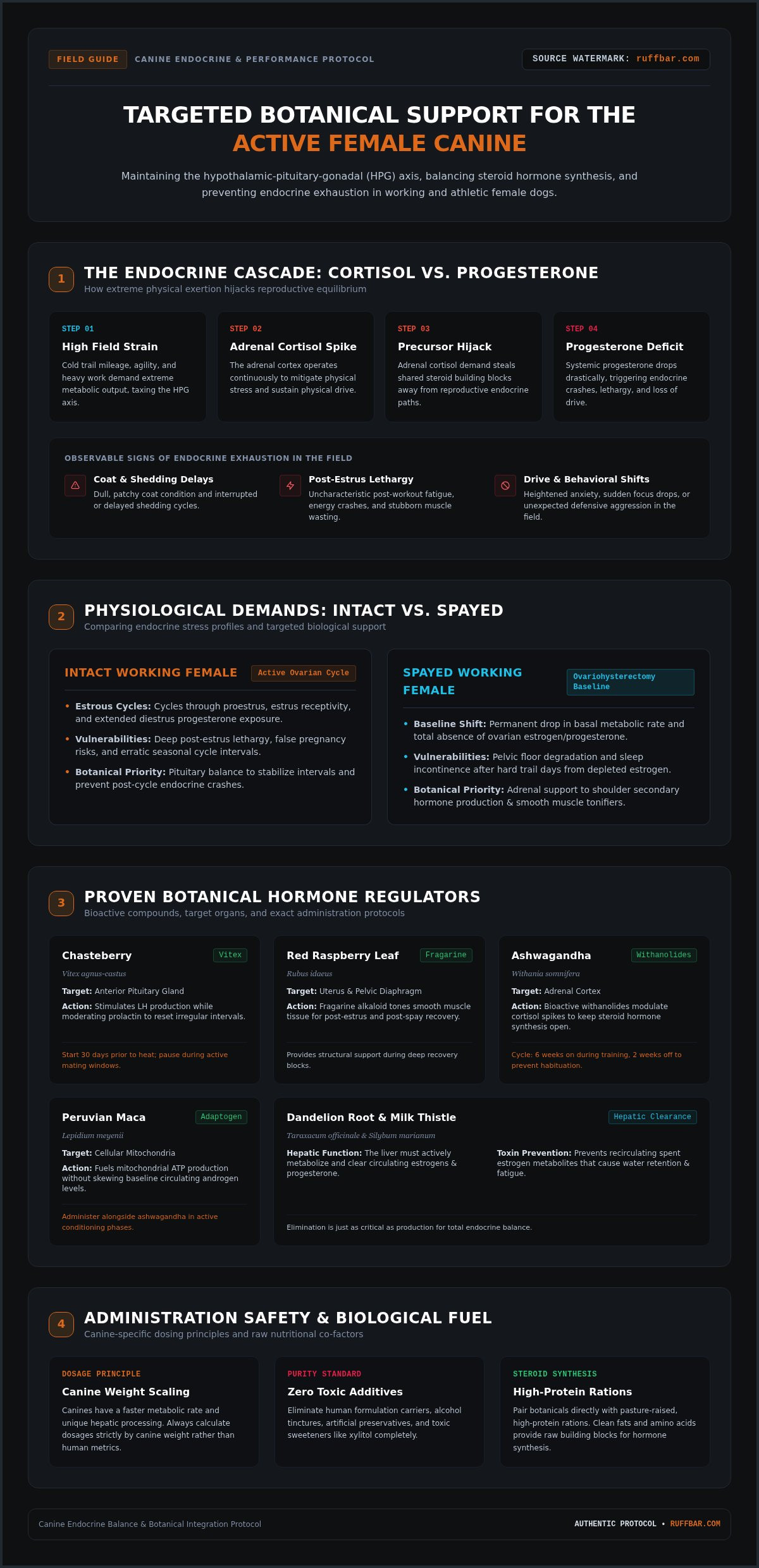
Every active female navigates the rigorous shifts of the canine estrous cycle, progressing from follicular development in proestrus to behavioral receptivity in estrus, followed by prolonged progesterone exposure in diestrus. High physical exertion spikes circulating cortisol. When the adrenal cortex runs continuously to manage physical stress, it hijacks common hormonal precursors. Cortisol demand pulls steroidal building blocks away from reproductive pathways, shortchanging systemic progesterone levels. This imbalance hits working dogs hard, producing unmistakable signs of systemic strain:
- Dull, patchy coat condition and delayed shedding cycles.
- Uncharacteristic post-workout lethargy and stubborn muscle wasting.
- Heightened anxiety, sudden focus drops, or unexpected defensive aggression in the field.
Hormone Fluctuations in Spayed vs. Intact Working Dogs
Ovariohysterectomy removes the primary engine of estrogen and progesterone signaling. This surgical baseline permanently lowers basal metabolic rate and alters cellular tissue maintenance throughout the pelvic floor. Depleted circulating estrogen frequently degrades the tone of the internal urethral sphincter, leading to spay-related incontinence during deep sleep after intense trail days. Intact bitches endure severe cyclical hormonal drops; spayed females face complete ovarian absence. For both, the adrenal glands must shoulder secondary hormone production. Integrating clean herbs to support female hormones eases this adrenal burden, preserving core strength and endocrine resilience across every demanding mile.
Top Herbs to Support Female Hormones and Endocrine Function
Targeted botanicals bridge the gap between hard work and hormonal stability. You cannot treat a working canine like a small human; her metabolic rate is faster, and her liver processes phytochemicals differently. Deploying validated herbs to support female hormones demands clinical precision. You need plants that act directly on endocrine tissues without overloading her digestive tract or blunting her natural drive.
Chasteberry and Red Raspberry Leaf: Reproductive Tone and Balance
Chasteberry (Vitex agnus-castus) acts directly on the anterior pituitary gland. It stimulates luteinizing hormone (LH) production while gently moderating elevated prolactin. This action makes Vitex ideal for resetting erratic intervals between seasons. For intact hunting or agility females, initiate Vitex 30 days before their projected heat cycle, but discontinue use during active mating windows. Red raspberry leaf pairs naturally here; its primary alkaloid, fragarine, tones the smooth muscle of the uterus and pelvic diaphragm. This provides essential structural support during deep recovery blocks.
Adaptogenic Roots: Ashwagandha and Maca for Adrenal Stability
Intense physical conditioning constantly demands adrenal output. Ashwagandha (Withania somnifera) delivers bioactive withanolides that modulate excessive cortisol spikes from brutal training days. This preservation keeps steroid pathways open. Peruvian maca (Lepidium meyenii) works alongside it to fuel mitochondrial ATP production without directly altering circulating androgen levels. Cycle these adaptogens methodically: administer daily for six weeks during rigorous training, then pause for two weeks to prevent physiological habituation.
Hepatic Support: Dandelion and Milk Thistle for Hormone Clearance
Endocrine balance relies as much on eliminating spent compounds as it does on producing new ones. The liver metabolizes circulating estrogens and progesterone. If hepatic pathways stall, recirculating estrogen metabolites trigger systemic lethargy and water retention. Combining dandelion root and milk thistle ensures prompt elimination:
- Milk Thistle (Silymarin): Protects hepatic cell membranes and accelerates tissue regeneration under heavy training loads.
- Dandelion Root: Provides bitter taraxacin to stimulate bile excretion, while natural inulin feeds healthy intestinal flora responsible for metabolizing estrogen.
- Burdock Root: Binds cellular debris and assists systemic fluid balance across high-mileage blocks.
Bitter botanicals present an administration challenge for active dogs. To ensure consistent intake and maximize nutrient absorption, pairing these extracts with pure additions like Ruff Supplements for Dogs allows you to integrate functional roots seamlessly into daily performance feed without fillers or resistance.
Targeted Scenarios: Heat Cycles, False Pregnancy, and Post-Spay Care
Working conditions expose hormonal vulnerabilities fast. Intact females facing intense physical workloads frequently battle lingering cycle fatigue, while spayed athletes deal with baseline structural shifts. You need specific botanical protocols matched directly to these biological events. Choosing verified herbs to support female hormones allows you to target distinct physiological phases rather than guessing with broad-spectrum remedies.
Managing False Pregnancy and Prolactin Spikes
Roughly six to eight weeks after estrus, falling progesterone combined with elevated prolactin tricks the female body into phantom pregnancy. You will notice clear signs: nesting, lethargy, obsessive toy guarding, and mammary swelling. To curb this disruption, introduce chasteberry to blunt prolactin secretion at the anterior pituitary. Pair this botanical with a 10% reduction in dietary carbohydrates and steady aerobic exercise. This combination signals to the endocrine system that the body is actively working, speeding the return to baseline focus.
Supporting Spay Incontinence and Urethral Tone
Surgical gonadectomy abruptly removes circulating estrogen, which starves the delicate receptors lining the bladder neck. Over months or years, the internal urethral sphincter loses resting tension, resulting in passive urine leakage during sleep. Targeted phytoestrogens bind safely to these vacant receptors to maintain pelvic muscle tone:
- Freshly Ground Flaxseed: Packed with concentrated lignans, flaxseed offers gentle estrogen-mimicking activity that strengthens connective structures in the urinary tract.
- Red Clover (Trifolium pratense): Rich in natural isoflavones, this botanical reinforces urethral tissue elasticity without taxing the kidneys.
- Corn Silk: Calms mucosal irritation along the urinary pathway, working alongside hormone-supportive herbs to improve fluid control.
Always introduce phytoestrogenic botanicals under veterinary supervision, particularly if your dog takes concurrent pharmaceutical medications.
Recovery schedules demand equal discipline. Following a hard estrus cycle, give intact females a strict three-week transition window. Keep intensity moderate while supplementing with red raspberry leaf and adrenal adaptogens to rebuild connective integrity before resuming high-impact work. For aging athletes, hormonal output naturally wanes, manifesting as slow recovery times and persistent stiffness. Utilizing strategic herbs to support female hormones alongside clean anti-inflammatory botanicals sustains cellular vigor, keeping seasoned trail partners sound and capable well into their senior years.
Safe Administration: Formats, Clean Sourcing, and Dosage Guidelines
Executing an herbal protocol requires tactical discipline. Tossing random human supplements into a dog bowl invites digestive rejection and erratic results. When selecting herbs to support female hormones, precise handling protects canine physiology while optimizing systemic delivery. Execute your protocol through five non-negotiable steps:
- Calculate weight-based baselines: Scale dosages conservatively to canine metabolic mass, starting at 20% to 25% of standard human guidelines.
- Eliminate human additives: Purge any product containing alcohol solvents, synthetic flavorings, chemical binders, or toxic sweeteners like xylitol.
- Source third-party certified botanicals: Insist on certified organic, pesticide-screened roots to avoid exogenous toxins that mimic estrogen and disrupt the endocrine axis.
- Isolate individual ingredients: Introduce one botanical at a time across a strict 14-day window to monitor gut tolerance and physical adaptation.
- Cycle active compounds: Administer adaptogens for four to six continuous weeks, followed by a mandatory two-week reset to preserve receptor sensitivity.
Why Delivery Medium Dictates Botanical Absorption
Bitterness stops supplementation in its tracks. Active working dogs reject harsh alcohol tinctures and dry powders blown across a food bowl. Canine physiology thrives on nutrient-dense animal fats. Suspending whole-plant powders within bioavailable lipids protects delicate phytochemicals through gastric acid, driving superior cellular absorption in the small intestine. Avoid hyper-refined chemical isolates; whole-plant full-spectrum powders preserve the synergistic bioflavonoids required for hormonal equilibrium.
Precautions, Contraindications, and Handler Red Flags
Potent botanicals carry genuine physiological consequences. Never administer uterine-contracting herbs like red raspberry leaf to pregnant or nursing females. If you spot loose stool, vomiting, acute lethargy, or sudden itching, halt the protocol immediately. Always partner with an integrative veterinarian before stacking botanicals with prescription pharmaceutical hormones.
To eliminate mealtime resistance and supercharge nutrient delivery, blend your daily botanicals into high-fat, high-protein fuels like Ruff Bar Functional Nutrition Toppers for maximum absorption and zero wasted effort.
The Foundation: Pairing Botanicals with High-Protein Performance Fuel
Botanicals cannot build what biology lacks. Steroid hormones like estrogen, progesterone, and testosterone rely entirely on clean dietary cholesterol, dense amino acids, and essential fatty acids for biological synthesis. When high-mileage trail runs, frigid mornings, and intense fieldwork drain cellular reserves, the body strips available nutrients for immediate survival. Feeding low-fat, high-carbohydrate kibble loaded with corn or soy binders sabotages this process. These cheap fillers disrupt gut-endocrine signaling and leave the liver underpowered. If you want herbs to support female hormones to actually generate measurable results, you must root them in pasture-raised, grass-fed proteins.
The Lipoprotein Link: Fats as the Backbone of Hormonal Health
Hormone cascades begin with clean lipids. The canine liver breaks down saturated animal fats and dietary cholesterol into pregnenolone, the master precursor required for every downstream steroid hormone. Without sufficient dietary fats, the HPG axis starves. Bioavailable omega-3 fatty acids modulate systemic cellular inflammation, keeping sensitive receptor sites open. Grass-fed meats provide optimal ratios of stearic acid and conjugated linoleic acid, delivering the structural density female athletes require to recover from hormonal crashes and repair hard-worked connective tissues.
Delivering Herbs via Functional Toppers and Clean Fuel
Dosing dry botanical powders onto dry kibble leads to wasted remedies. Masking bitter roots with artificial pastes introduces chemical additives that tax the liver. The solution lies in clean, meat-first integration. Blend ground roots and leaf extracts directly into nutrient-packed rations using DIY dog food toppers for energy. Animal fats encapsulate bitter botanical compounds, neutralizing taste while accelerating uptake across the intestinal lining.
Endurance across remote terrain demands unrelenting metabolic support. When you push deep into the backcountry, pack clean-label rations and high protein dog energy bars to maintain tight blood sugar levels and preserve hormonal mass on the move. Strenuous workloads burn through raw fuel at triple the domestic rate. Pair validated herbs to support female hormones with pure, uncompromised proteins. Give your female partner the biological foundation she needs to recover faster, work harder, and dominate every physical challenge.
Fuel Your Female Dog for Peak Endocrine Strength
Sustaining female vitality in demanding environments takes more than waiting out cycle crashes. Pairing clean, bioavailable herbs to support female hormones with dense carnivore nutrition protects her stamina, steadies her drive, and safeguards her long-term endocrine health. When you eliminate synthetic shortcuts and support natural biological pathways, your dog bounces back faster from physical stress.
Every herbal protocol demands a solid nutritional anchor. Endocrine signaling requires uncompromised proteins and pure animal fats free from gut-disrupting grains, cheap fillers, or artificial binders. Give your partner battle-tested nutritional density built strictly from 100% pasture-raised, grass-fed USDA meats. Explore clean, high-performance canine fuel and supplements at Ruff Bar to power her recovery, elevate her field stamina, and keep her moving strong across every mile ahead.
Frequently Asked Questions
Can I give my dog human herbal supplements for female hormone balance?
No, you shouldn't give human formulas to dogs without strict veterinary oversight. Human capsules often contain alcohol extractions, grain-based fillers, artificial colors, or toxic sweeteners like xylitol. Canines metabolize phytochemicals much faster than humans, meaning human dosages risk liver toxicity. Stick strictly to whole-plant botanicals and canine-specific supplements formulated for pure carnivore digestive tracts.
How long does it take for herbs to balance female hormones in dogs?
Expect noticeable shifts within three to six weeks of consistent daily administration. Functional botanicals work by modulating the endocrine system rather than forcing synthetic shifts. Changes in coat quality, steady trail drive, and balanced moods take at least one complete metabolic cycle to manifest. Give adaptogens and reproductive tonics a minimum of 30 days before adjusting dosages.
What are the most common signs of hormonal imbalance in active female dogs?
Watch for sudden post-workout lethargy, thinning fur around the flanks, and persistent muscle loss despite high caloric intake. Behavioral cues provide clear warnings, including unexpected irritability, stubborn loss of working focus, or profound nesting behaviors after an estrus cycle. Physical leakage during deep sleep also points directly to degraded pelvic floor tone and depleted estrogen signaling.
Can herbs help prevent or treat spay-induced urinary incontinence?
Herbs can significantly support urethral muscle tone, but they do not replace medical diagnosis. Plant lignans from ground flaxseed and isoflavones from red clover bind gently to vacant estrogen receptors along the bladder neck. This action helps maintain sphincter elasticity after surgical spaying. While effective for structural maintenance, consult your veterinarian to rule out anatomical defects or active bacterial infections.
Is it safe to give chasteberry or red raspberry leaf to pregnant dogs?
Do not administer these botanicals to pregnant bitches without direct guidance from a reproductive veterinarian. Red raspberry leaf contains fragarine, an active compound that stimulates uterine contractions, which can trigger premature labor if fed early in gestation. Reserve these herbs to support female hormones strictly for recovery, conditioning phases, and postpartum uterine restoration.
How do high-stress sports and working trials affect a female dog’s hormones?
Prolonged athletic stress elevates systemic cortisol, which forces the adrenal glands to deplete progesterone precursors. This biochemical drain delays normal heat intervals, prolongs post-estrus fatigue, and hampers muscular recovery. High-drive working females require dense animal fats and targeted adaptogenic herbs to support female hormones, shield the endocrine axis, and protect long-term vitality under heavy field pressure.
Should adaptogenic herbs like ashwagandha be given daily or cycled?
Adaptogenic roots should always be cycled to maintain cellular receptor sensitivity. Administer adaptogens daily for five to six weeks during peak conditioning or competitive seasons, then pause completely for two weeks. This off-cycle prevents the endocrine system from developing tolerance, ensuring the adrenal glands respond vigorously when intense training resumes.