
Fueling for the Trail: What to Feed Your Dog Before a Long Hike (2026)
Loading your dog with a massive breakfast before hitting the trailhead is the fastest way to invite a medical emergency. High-mileage performance requires metabolic precision, not just a full stomach. You want your partner to have the stamina to reach the summit without hitting a wall or suffering from dangerous digestive distress. It's about finding the perfect balance between raw power and gut safety. Domestic habits don't work in the backcountry.
You already know that a tired dog is a vulnerable dog. We have all seen them run out of steam when the terrain gets tough. This guide shows you exactly what to feed a dog before a long hike to maximize their energy while keeping their gut safe and your pack light. We will master the timing of every calorie and the science of fat-density. You'll get a clear feeding schedule, high-calorie options like freeze-dried raw meals, and the protocols needed to prevent bloat. We're moving past heavy kibble and into high-stakes nutrition that belongs in a backpack. Let's fuel for the expedition.
Key Takeaways
- Master the strict two-hour feeding protocol to eliminate bloat risk and maximize early-trail energy.
- Learn exactly what to feed a dog before a long hike to prioritize fat-density and avoid the performance-crushing carb trap.
- Implement precision pre-hydration tactics to prepare the canine body for sustained exertion before the first mile.
- Solve the backpacker’s dilemma by switching to high-calorie, lightweight freeze-dried raw meals that optimize pack space.
- Deploy high-standard nutritional tools to prevent mid-day exhaustion and keep your dog performing at peak capacity.
The Pre-Hike Timing Protocol: Avoiding Bloat and Maximizing Energy
Precision timing is the difference between peak performance and a trip to the emergency vet. When you consider what to feed a dog before a long hike, the clock is your most critical tool. Feeding too close to exertion is a gamble you will not win. Digestion and high-intensity movement are biologically incompatible processes that demand different resources from the canine body.
The Safety Window: Feeding Before the Trailhead
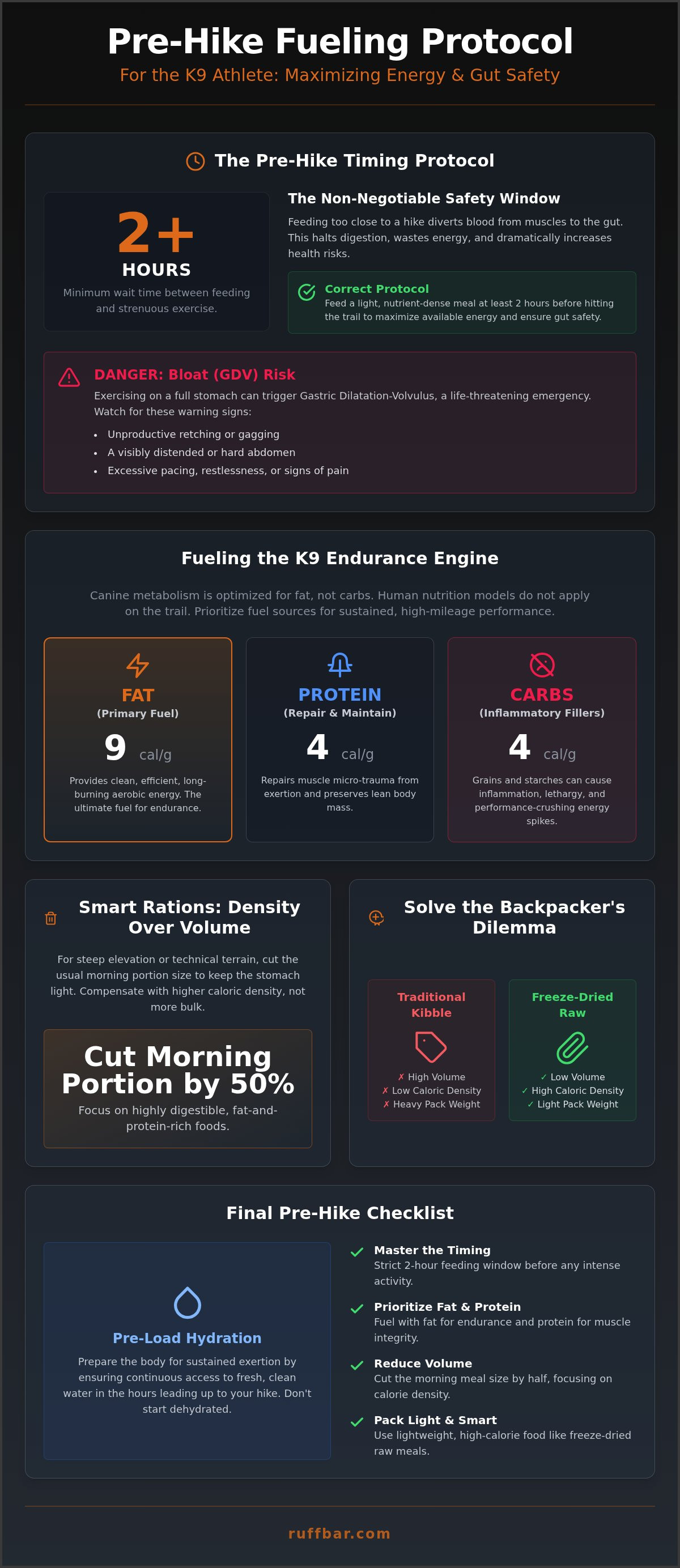
The 120-minute buffer is a non-negotiable standard for serious handlers. Your dog needs time to move food from the stomach into the small intestine before the heart rate climbs. During vigorous exercise, the body diverts blood flow away from the digestive tract and toward the skeletal muscles. This metabolic shift halts digestion and leaves a heavy mass of food sitting in a dormant stomach. Mastering what to feed a dog before a long hike involves more than just selecting ingredients; it requires a tactical schedule.
Gastric Dilatation-Volvulus (GDV) is a life-threatening condition where the stomach distends with gas and twists on its axis, often triggered by intense physical activity too close to a large meal. You must monitor your partner for specific warning signs during the climb. Watch for unproductive retching, a distended abdomen, or excessive pacing. These symptoms indicate an immediate medical crisis. Understanding Sport dog nutrition means respecting the biological limits of the canine gut. Early morning starts require metabolic readiness. If you hit the trail at dawn, feed your dog at least two hours prior. This ensures glucose is available for propulsion rather than sitting as dead weight.
Morning Rations: What Constitutes a 'Light' Start?
A light start means reducing volume, maintaining density, and ensuring stability. You aren't starving the dog; you're streamlining them. Focus on highly digestible proteins that provide clean energy without the bulk. For steep elevation gains or technical terrain, cut the usual morning portion by half. You can compensate for the smaller volume by choosing nutrient-dense options that offer rapid absorption and high fat-to-protein ratios.
Adjust the ration based on the day's objective. A flat five-mile loop requires less preparation than a twenty-mile ridge traverse. Quality always beats quantity for gut stability. Keep the stomach light, the muscles fueled, and the focus on the trail ahead. A disciplined feeding protocol ensures your dog remains an active partner rather than a liability in the backcountry.
Macronutrients for Endurance: Why Fat and Protein Rule the Trail
Human athletes reach for pasta before a marathon. Dogs reach for fat. When you are determining what to feed a dog before a long hike, you must abandon human-centric nutrition models. Canine physiology is built for lipid metabolism. Their bodies are high-performance engines that prioritize fat as the primary fuel source for sustained, long-distance hauls. This biological reality dictates every gram you pack in your kit. High-quality fats provide the propulsion; clean proteins provide the structural integrity.
The Fat-First Advantage for K9 Athletes
Lipids offer a massive caloric advantage. They provide nine calories per gram, compared to just four in proteins or carbohydrates. For the backcountry traveler, this means more energy in a lighter pack. Dogs convert animal fats into clean, aerobic energy with incredible efficiency. Unlike human "carb-loading," which leads to insulin spikes and subsequent crashes, fat-loading provides a steady, unrelenting burn that lasts from the trailhead to the summit. Animal-sourced fats are superior to plant-based alternatives. They are more digestible and less likely to cause the gastrointestinal distress that ruins an expedition. Experts in Canine Performance Nutrition emphasize that fat should constitute a significant portion of an active dog's caloric intake to maintain stamina over technical terrain.
Protein Quality: Beyond the Crude Analysis
Protein is not just for energy. It is for preservation. During steep descents and heavy climbs, your dog’s muscles undergo significant micro-trauma. High-quality, bioavailable canine natural food provides the amino acids necessary to repair tissue on the fly. We avoid the "carb trap" by eliminating grain-heavy fillers that cause systemic inflammation. Grains are cheap additives that lead to mid-day lethargy and joint stiffness. By focusing on USDA-graded, grass-fed meats, you ensure your partner is receiving clean fuel free from synthetic additives.
Consider these performance benefits of a fat and protein-focused diet:
- Sustained Energy: No glucose spikes or mid-hike crashes.
- Muscle Preservation: Amino acids protect lean mass during high-stress movement.
- Reduced Inflammation: Grain-free formulas keep working joints fluid and responsive.
- Caloric Density: More power in a smaller, lighter serving size.
Purity matters in the backcountry. Every ingredient must serve a functional purpose. If you want to optimize your dog's metabolic output, start by upgrading their fuel to a high-performance blend that respects their biology.
Hydration Strategy: Pre-Loading for Peak Performance
Hydration is the silent partner of nutrition. If you wait until your dog is thirsty to offer water, you have already lost the metabolic battle. Performance begins with a fluid-saturated system. When you plan what to feed a dog before a long hike, you must view water as the delivery vehicle for every calorie and electrolyte. A dog in a fluid deficit cannot regulate their core temperature or transport nutrients to working muscles effectively. Pre-loading starts at home, hours before the first mile.
Plain water has physiological limits. It lacks the osmotic pressure required for rapid cellular absorption during high-stakes movement. A Cornell University expert on canine athlete nutrition notes that active dogs have unique physiological demands that exceed those of sedentary pets. This includes a higher turnover of fluids and minerals. Relying on backcountry streams is a tactical error. Untreated water sources often harbor Giardia and Leptospirosis. These pathogens cause severe gastrointestinal distress and long-term health complications. Carry your own supply. Control the source to ensure the safety of your partner.
Encouraging Fluid Intake Before the Hike
Reluctant drinkers are a liability on the trail. You can entice them by creating "meat water"-soaking their morning meal or adding a clean protein topper to their bowl. Water temperature matters for absorption. Room temperature fluids are processed faster than ice-cold water, which can trigger gastric cramping in a working dog. Calculate your requirements based on intensity. A high-energy dog may need significantly more than the standard maintenance dose. Watch for early dehydration signs in thick-coated breeds. Tacky gums and a loss of skin elasticity are immediate red flags. If the mouth is dry, the performance is already compromised.
Electrolytes and Nutrient Toppers
Sodium and potassium are the electrical signals for cardiac function and muscle contraction. During a grueling climb, these minerals are depleted. Utilizing performance dog food supplements helps maintain the electrolyte bridge. These tools support fluid retention and joint health through natural collagen sources like bone broth.
Strategic use of the best dog food toppers for energy ensures that every ounce of water carries a functional payload. This isn't just about quenching thirst; it's about maintaining systemic pressure. A well-hydrated dog is a resilient dog. They recover faster, move smoother, and stay focused on the terrain. Don't leave hydration to chance. Build the reservoir before the boots hit the dirt.
Building the Trail Pack: Portioning and Portability
Every ounce in your pack must justify its existence. When you are deciding what to feed a dog before a long hike, you face the backpacker's dilemma: maximum calories versus minimum weight. Conventional kibble is bulky and inefficient. Canned wet food is a logistical nightmare. You need a solution that balances metabolic demand with physical mobility. Weight is a liability. Efficiency is a requirement.
Freeze-Dried vs. Wet Food: A Weight Comparison
The math of the backcountry is simple. Moisture is heavy. Carrying freeze dried raw dog food for backpacking is the most effective way to slash pack weight without starving your partner. These meals are up to 75% to 80% lighter than fresh or wet alternatives because the water has been extracted. The freeze-drying process locks in the nutritional integrity of USDA-graded meats while making the food shelf-stable and light. You carry the fuel. You find the water at camp or from a clean source to rehydrate the meal. This approach transforms a lightweight puck of protein into a high-moisture recovery tool that supports kidney function and muscle repair after a grueling day.
Mid-Hike Fueling: The Role of Energy Bars
Endurance isn't built on a single morning meal. It is sustained through a "Snack Often" philosophy. Micro-fueling prevents the glycogen crashes that leave dogs lagging on the return leg. Using high protein dog energy bars provides rapid recovery during short rest breaks without overloading the gut. These bars are designed for propulsion. For technical sections that require high mental focus, chewable "Stix" act as both a reward and a functional calorie hit. Small, frequent portions ensure the digestive system is never overwhelmed. This keeps blood flow concentrated in the skeletal muscles where it is needed most.
Efficiency extends to waste management and stewardship. Follow these trail protocols:
- Pre-Portion Everything: Use reusable, airtight bags to eliminate bulky original packaging.
- Leave No Trace: Pack out all wrappers and avoid spilling crumbs that disrupt local wildlife.
- Caloric Density: Aim for foods that offer the highest calorie-to-weight ratio available.
- Precision Timing: Use snacks to bridge the gap between the morning meal and camp dinner.
Don't let a heavy pack slow your pace or compromise your dog's stamina. Upgrade your equipment and fuel your next expedition with Ruff Food Freeze Dried Raw meals for the ultimate power-to-weight ratio.
Ruff Bar: Precision Nutrition for the K9 Athlete
Precision nutrition is not a luxury in the backcountry; it is a requirement. When you are determining what to feed a dog before a long hike, you are selecting the equipment that determines their success. Ruff Bar rejects the fillers, grains, and shortcuts found in domestic pet store brands. We prioritize biological function, metabolic efficiency, and functional excellence. Our philosophy is simple: no compromise. We provide the fuel your partner needs to navigate demanding environments with unrelenting vitality. Every calorie serves a purpose. Every ingredient supports propulsion.
Our commitment to sourcing transparency builds trust through high standards. We utilize USDA-graded, grass-fed meats and organic components to ensure purity and strength. This technical approach to nutrition mirrors the high-stakes preparation of human athletes. By focusing on what to feed a dog before a long hike, you are investing in their long-term resilience and joint health. This is high-standard fuel for high-standard partners.
Featured Trail Fuel: Ruff Food Freeze Dried Raw
Ruff Food Freeze Dried Raw Backpacking Meals Beef and Duck provide the massive caloric density required for multi-day itineraries. These formulas are engineered for maximum nutrition at minimum weight. They integrate seamlessly into your pack, allowing you to carry days of high-performance fuel without the bulk of traditional kibble. Preparation is fast and efficient. In rugged environments, you simply add water to rehydrate a nutrient-dense meal that supports muscle repair and hydration. The Beef and Duck options offer the lipid-heavy profiles necessary for sustained aerobic energy during technical climbs and long-distance hauls.
The Essential Trail Accessory: Ruff Stix®
The summit push requires an immediate metabolic hit. Ruff Stix® Bison Pork and Ruff Stix® Beef act as the ultimate mid-hike recovery tool. These high-protein stix are designed for the pocket or the pack, featuring rugged packaging that survives the elements. They provide a clean, functional calorie boost that maintains mental focus and physical drive when the terrain gets steep. Ruff Bar maintains an uncompromising standard by utilizing only USDA-graded meats and organic ingredients to fuel peak canine performance. Whether you are using the Bison Pork or the Beef variety, you are delivering a concentrated dose of amino acids and fats without the inflammatory response caused by cheap grains. Keep your dog moving. Keep them fueled. Keep them at peak capacity until the final mile is behind you.
Fuel the Expedition: Your Partner's Peak Performance Starts Here
Peak performance in the backcountry isn't an accident. It's the result of disciplined preparation and high-stakes nutrition. You now have the protocol for success. You know that the two-hour safety window is non-negotiable for gut stability. You understand that fat-loading provides the steady aerobic burn required for technical summits. Most importantly, you know exactly what to feed a dog before a long hike to ensure they remain an active partner rather than a liability.
Stop settling for domestic fillers that cause mid-day crashes and inflammation. Your dog deserves the same standard of equipment you carry in your own pack—from your technical apparel to your base camp organization with The Hunger Hub. Our grain-free and filler-free formulas use only USDA-graded grass-fed meats to provide the purest energy available. Trusted by K9 athletes nationwide, we build fuel for those who refuse to take shortcuts. It's time to upgrade your kit and push further.
When planning your next outing, remember that preparation extends beyond the bowl; Shocco's connects you with a network of pet-focused resources and locations to ensure a smooth journey.
Shop Ruff Bar Performance Fuel for Your Next Adventure and conquer the trail together. The summit is waiting.
Frequently Asked Questions
How many hours before a hike should I feed my dog?
You should feed your dog at least two hours before hitting the trailhead. This 120-minute buffer allows the stomach to empty before blood flow shifts to the skeletal muscles during exertion. Feeding too close to intense activity increases the risk of life-threatening bloat and performance-crushing cramps. If you are starting at dawn, adjust your schedule to prioritize this metabolic safety window.
Can I feed my dog human protein bars on the trail?
Never feed your dog human protein bars. Many contain xylitol, chocolate, or excessive sugars that are toxic or highly inflammatory to canines. Human bars are designed for carbohydrate metabolism, but dogs require lipid-based energy for endurance. Stick to functional tools like Ruff Food Bars that are specifically engineered for canine biology and the demands of rugged performance.
Is it better to feed one large meal or multiple small snacks during a long hike?
Multiple small snacks are superior to a single large meal during high-intensity movement. This micro-fueling strategy provides a steady stream of lipids without overwhelming the digestive tract. Large meals divert blood flow to the gut, causing immediate lethargy. Small portions of high-calorie food keep the focus on the summit and prevent metabolic crashes on the return leg.
What are the signs that my dog is running out of energy?
Watch for lagging behind, excessive panting, or a glazed expression in the eyes. When a dog runs out of steam, their coordination often drops, leading to stumbles on technical terrain. Don't wait for total exhaustion to occur. Deploy a high-protein snack the moment you notice a decrease in their usual propulsion or a loss of focus on the trail.
Should I give my dog extra water before we start the hike?
Pre-hydration is essential, but you should avoid forced water loading right at the trailhead. Encourage fluid intake two to three hours before the hike starts to ensure cellular reservoirs are full. You can use meat water or nutrient toppers to entice reluctant drinkers. This preparation ensures they have the hydration needed for thermoregulation before they begin losing moisture through panting.
What is the best high-calorie food for a backpacking dog?
Freeze-dried raw is the gold standard for high-calorie, lightweight backpacking fuel. It offers the highest power-to-weight ratio by removing heavy moisture while preserving critical nutrient density. When considering what to feed a dog before a long hike, look for formulas rich in USDA-graded beef or duck. These provide the fat-loading advantage needed for sustained energy on multi-day expeditions.
How do I prevent my dog from getting an upset stomach on the trail?
Prevent digestive distress by sticking to familiar, high-quality proteins and avoiding grain-heavy fillers that cause inflammation. Never introduce a new food for the first time during a trip. Test your performance snacks at home first to ensure gut compatibility. Maintaining a consistent, grain-free diet keeps the digestive system stable and resilient during the physical stress of high-elevation climbs.
Can I use freeze-dried raw food if my dog usually eats kibble?
You can use freeze-dried raw as a trail supplement even if your dog eats kibble at home. Its high bioavailability makes it easy on the gut, though a short transition period is recommended for best results. Start by mixing small amounts into their regular meals a week before your trip. This prepares their digestive enzymes for the transition to high-density, real-food nutrition.