
Freeze Dried vs Dehydrated Dog Food: The Performance Choice for K9 Athletes
Your dog is an elite athlete. Not a passenger. Every gram of food in your pack is either high-octane fuel or useless dead weight. When you are deep in the backcountry, you cannot afford to carry fillers that slow your dog down or compromise their muscle condition. The debate over freeze dried vs dehydrated dog food is a tactical decision. It is about performance. You need a nutrition strategy that prioritizes rapid recovery, extreme caloric density, and zero digestive lag.
You already know that maintaining your dog's stamina on a multi-day expedition requires more than just standard kibble. You want to see them bound up the trail, not struggling with a heavy pack or losing condition. This article analyzes the critical differences in nutrient density and bioavailability to help you optimize your dog’s energy-to-weight ratio. We look at the 2026 AAFCO nutritional standards and the impact of heat processing on vital enzymes. You will learn how to fuel for maximum performance. Ensure your partner stays strong from the first trailhead to the final descent.
Key Takeaways
- Master the science of sublimation. Learn why it preserves the gold standard of raw nutrients for your K9 athlete.
- Analyze the critical differences in freeze dried vs dehydrated dog food. Optimize your dog's metabolic load for faster recovery on the trail.
- Cut the dead weight from your backpack. Discover how to maximize caloric density per ounce for multi-day expeditions.
- Prioritize high-standard sourcing. Understand why USDA-graded, grass-fed proteins are essential for maintaining muscle condition in the wild.
- Implement a mission-ready nutrition plan. Use targeted formulations like Ruff Bar Beef and Duck to fuel relentless endurance.
Table of Contents
- The Architecture of Canine Fuel: Sublimation vs. Evaporation
- Bioavailability and Power: Why Freeze-Dried Raw Wins on the Trail
- The Energy-to-Weight Ratio: A Thru-Hiker’s Nutritional Framework
- Ingredient Integrity: Sourcing for High-Stakes K9 Performance
- The Ruff Food Performance System: Gear for the Modern Handler
The Architecture of Canine Fuel: Sublimation vs. Evaporation
Performance is a calculation. It starts at the molecular level. When you are miles from the nearest trailhead, your dog's food isn't just a meal. It's a critical component of their gear. The primary difference in freeze dried vs dehydrated dog food lies in how moisture is removed. One method protects the fuel. The other degrades it. You need a strategy that preserves every calorie and every enzyme for the work ahead.
Moisture removal is essential for shelf-stability. Bacteria need water to thrive. By extracting moisture, we create a product that stays fresh in your pack for days without refrigeration. However, the architecture of that food changes depending on the process. Dehydration relies on heat and airflow. Freeze-drying relies on cold and vacuum pressure. This choice dictates how much energy your dog can actually use.
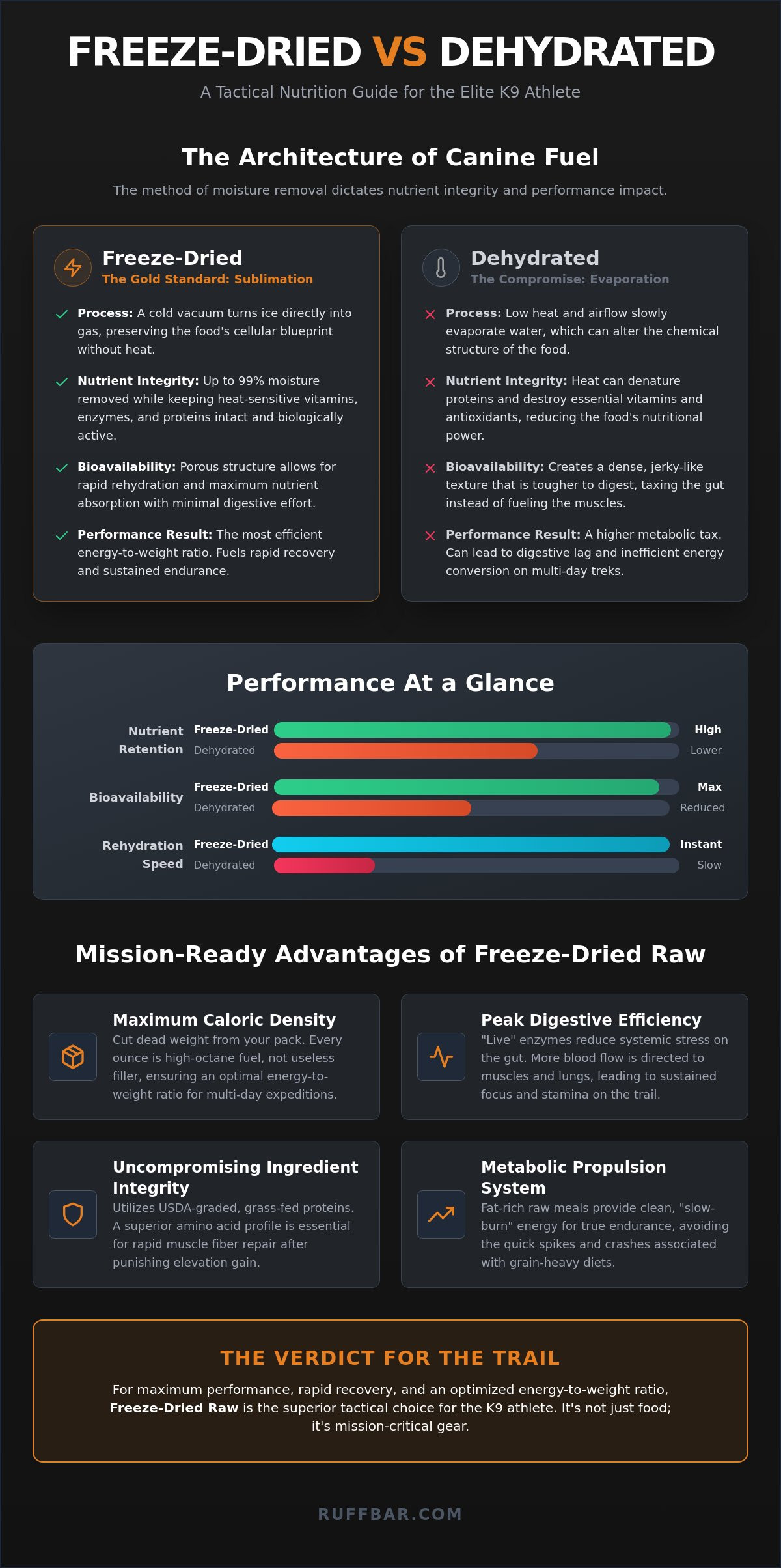
The scientific distinction involves sublimation vs. evaporation. In dehydration, heat turns liquid water into steam. This process can alter the chemical bonds of the food. In freeze-drying, the food is frozen solid. A vacuum then turns that ice directly into gas. This is sublimation. It leaves the physical structure of the protein exactly as it was. It's the difference between a collapsed sponge and one that's ready to absorb power. It ensures the food remains lightweight while retaining its original volume and nutrient profile.
Freeze-Drying: Preserving the Cellular Blueprint
Freeze-drying is the gold standard for high-stakes K9 nutrition. It begins with a flash-freeze. This step stops biological degradation instantly. It locks in freshness. The cold vacuum process then removes up to 99% of moisture. Because no heat is involved, vitamins and enzymes remain biologically active. This keeps the protein's "cellular blueprint" intact. It ensures maximum bioavailability. Your dog doesn't just eat; they absorb. Freeze-dried meals are lightweight. They are porous. They rehydrate almost instantly. This provides rapid access to energy when the mission gets tough.
Dehydration: The Impact of Heat on Integrity
Dehydration is a compromise. It uses low heat over long periods to pull moisture out. While this makes the food shelf-stable, the heat can denature proteins. It often destroys heat-sensitive vitamins and antioxidants. Dehydrated food is typically denser and tougher. It has a "jerky" texture that takes much longer to rehydrate. For an active dog, this creates a metabolic tax. Their body must work harder to break down the toughened fibers. This can lead to digestive lag. On a multi-day trek, you want energy going to the muscles, not the gut. Efficiency is the only thing that matters.
Bioavailability and Power: Why Freeze-Dried Raw Wins on the Trail
Performance is a calculation. It starts at the molecular level. When you're miles from the nearest trailhead, your dog's food isn't just a meal; it's a critical component of their gear. The primary difference in freeze dried vs dehydrated dog food lies in the metabolic load. Every calorie must work. High-performance dogs can't afford to waste energy processing complex carbohydrates or heat-damaged proteins. They need fuel that's ready for immediate absorption. Freeze-dried raw food provides this efficiency by keeping the natural structure of amino acids and fats intact.
Adhering to high standards of Ingredient Integrity ensures that your dog isn't consuming mystery by-products or low-grade fillers. While many dehydrated options rely on grains or starches to maintain their shape, freeze-dried raw is pure power. It offers a superior amino acid profile. This is essential for rapid muscle fiber repair after a punishing day of elevation gain. Clean fuel means a clean mission. It's the difference between a dog that's ready for day four and one that's losing condition.
Enzymatic Integrity and Digestive Efficiency
The mission demands efficiency. Raw food is "live" food. It contains active enzymes that assist in the breakdown of nutrients. This reduces the systemic stress on your dog's digestive tract during heavy exertion. When the gut doesn't have to work overtime, more blood flow is available for the muscles and lungs. High bioavailability also leads to smaller, firmer stools. This is a practical "Leave No Trace" benefit for the backcountry. Better absorption leads to sustained focus. Your dog stays sharp, responsive, and driven. It's about maximizing the return on every ounce of weight you carry.
Metabolic Propulsion: Fueling the K9 Athlete
Raw proteins provide a cleaner energy burn than grain-heavy diets. While carbs offer a quick spike, fat-rich raw meals provide the "slow-burn" energy required for true endurance. This metabolic propulsion keeps your dog's engine running at a steady temperature. Recovery is just as important as the trek itself. Integrating performance dog food supplements can further optimize this recovery window. These tools help replenish vital nutrients lost during high-intensity movement. Consider adding high-performance raw fuel to your next pack list to ensure your partner never hits the wall. Total vitality is the only acceptable outcome.
The Energy-to-Weight Ratio: A Thru-Hiker’s Nutritional Framework
Ounces equal pounds. Pounds equal pain. This is the law of the trail. When you're deep in the backcountry, every gram in your pack must justify its existence. Efficiency is the only metric that matters at mile fifteen. When evaluating freeze dried vs dehydrated dog food, the "Energy-to-Weight" ratio becomes your primary framework. It's a simple calculation: calories delivered per ounce of pack weight. High-performance dogs require massive caloric intake without the corresponding mass of traditional kibble or heavy, moisture-rich alternatives.
A seven-day supply of standard dry food is a logistical burden. It's bulky. It adds unnecessary pounds. Most importantly, it's inefficient. Transitioning to moisture-extracted nutrition removes the dead weight. You carry only the fuel. This logistical freedom allows for longer missions and faster movement. It keeps your dog agile on technical terrain. It keeps your own pack manageable. In a high-stakes environment, being lightweight isn't a luxury. It's a safety requirement.
Maximizing Calories per Ounce
A working K9 on a multi-day expedition can require two to three times their normal maintenance calories. They're burning through energy reserves to keep pace. Fat is the superior fuel source for canine endurance. It provides nine calories per gram, compared to only four calories from protein or carbohydrates. Freeze-dried raw diets prioritize these high-density fats. They offer the most energy for the least weight. This ensures your dog maintains muscle condition and body heat during cold nights. You get maximum propulsion with minimal loadout weight.
Backcountry Logistics: Space and Safety
Volume is just as critical as weight in a backpack. Moisture-extracted nutrition is incredibly compact. It leaves more room for essential safety gear and water. Shelf-stable raw meals provide the safety of a raw diet without the risk of spoilage. They handle the temperature fluctuations of the trail better than fresh-frozen options ever could. Rugged packaging is essential. It must withstand pack pressure, sharp gear, and environmental exposure. Your dog's fuel is their lifeblood. Protect it with a system designed for the rigors of the wild. Don't settle for domestic solutions in a wilderness environment.
Ingredient Integrity: Sourcing for High-Stakes K9 Performance
Nutrition is tactical equipment. You don't compromise on your boots. You don't compromise on your rope. You cannot afford to compromise on your dog's protein. The no-compromise standard starts with USDA-graded meats. This is human-grade integrity. It stands in stark contrast to pet-grade by-products. By-products are the floor. USDA-graded cuts are the ceiling. When evaluating freeze dried vs dehydrated dog food, the quality of the raw material determines the ceiling of your dog's performance. Filler-free is the total absence of corn, soy, and binders.
Synthetic vitamin packs are a red flag. Manufacturers often use them to mask low-quality, nutrient-stripped ingredients. Real food does not need a chemical boost. It carries its own power. Natural sourcing ensures that nutrients are delivered in their most bioavailable form. This allows your dog's body to recognize and utilize every gram of fuel. Anything less is just dead weight in the gut.
Grass-Fed Proteins and Anti-Inflammatory Benefits
Grass-fed livestock offers a superior nutrient profile. The difference is measurable. Grass-fed proteins contain significantly higher levels of Omega-3 fatty acids compared to grain-fed alternatives. These are essential for reducing systemic inflammation in active joints. Grain-fed meat is often pro-inflammatory. Grass-fed meat is anti-inflammatory. It supports longevity and rapid recovery. Organ meats like heart and liver are tactical inclusions. They provide concentrated doses of fat-soluble vitamins. This is ancestral nutrition optimized for the modern athlete. It keeps the engine running clean.
The Role of Organic Whole Foods
Organic produce provides cleaner antioxidants. These compounds drive cellular recovery after high-intensity exertion. There is a biological synergy between raw meat and organic whole foods. They work together to support a resilient gut microbiome. A healthy gut is a high-performance gut. For mid-mission fueling, high protein dog energy bars provide the same standard of integrity in a portable format. Every ingredient must serve a specific purpose. If it does not build muscle or provide energy, it does not belong in the pack. High-stakes environments demand high-standard preparation. Upgrade your K9's gear list with USDA-graded performance nutrition today.
The Ruff Food Performance System: Gear for the Modern Handler
Performance isn't a single choice. It's a cohesive system. It's a series of tactical decisions made before the first step is taken. You've seen the data on freeze dried vs dehydrated dog food. You understand the metabolic advantage of raw integrity. Now, it's time to equip. Ruff Food Freeze Dried Raw Backpacking Meals serve as the core mission fuel. They are the foundation of your dog's endurance. This isn't just food; it's essential equipment. It's designed to survive the pack and thrive on the trail. No fillers. No binders. Just pure, bioavailable propulsion.
A high-performance dog is a partner, not a passenger. Their fuel must match the intensity of the mission. When you're miles from civilization, efficiency is the only metric that matters. Every gram of nutrition must justify its weight. The Ruff Food system ensures you carry only what builds muscle, drives energy, and sustains focus. It's the no-compromise approach for handlers who demand the best from themselves and their animals.
Mission-Ready Meals: Beef vs. Duck
Beef or Duck. Select the right tool for the environment. Ruff Food Freeze Dried Raw Backpacking Meals Beef provides the high-protein power needed for sustained muscle maintenance. It's the standard for grueling elevation gains. For high-intensity summer missions, Ruff Food Freeze Dried Raw Backpacking Meals Duck is the strategic choice. Duck is recognized as a "cooling" protein. It helps manage metabolic heat when the sun is relentless. Both formulas are strictly grain-free. They contain zero fillers. This prevents the "digestive lag" or trail diarrhea that can end a mission early. Your dog stays lean. They stay fast. They stay ready.
Integrating Supplements for a Complete System
A complete system requires layers. Mid-mission recovery is just as vital as the morning meal. Use freeze dried treats for dogs to provide instant energy spikes during steep ascents. These are tactical supplements, not mere rewards. They maintain focus. They prevent the "bonk." For dogs that struggle with hydration in remote environments, Ruff Bar Functional Nutrition Toppers are essential. They entice picky eaters to finish their water. They turn a hydration break into a nutritional win. You can also deploy Ruff Stix® as mid-mission recovery tools. Every ounce of a Ruff Bar product serves a functional purpose. There's no fluff. There's no waste.
Equip your dog for the next mission. Don't rely on domestic solutions for wilderness challenges. Your partner deserves the same standard of gear that you carry. Maximize your energy-to-weight ratio. Ensure total vitality from the trailhead to the summit. It's time to move.
Master the Mission: Fuel Your K9 Athlete
Backcountry success is a direct result of superior preparation. You have analyzed the science of freeze dried vs dehydrated dog food and seen why sublimation is the gold standard for nutrient preservation. It is about more than just convenience. It is about bioavailability. It is about protecting the cellular blueprint of your dog's fuel to ensure they stay strong on day five of a high-altitude trek. Efficiency is the only metric that matters when you are miles from the nearest trailhead. Every gram in your pack must justify its existence.
Ruff Food is engineered for this exact environment. We use USDA-graded grass-fed meats to deliver high-density power without the unnecessary weight. Every meal is 100% grain-free and filler-free. This is tactical gear designed for backcountry endurance. Don't let inferior nutrition or heavy fillers hold your partner back. Your dog's vitality is the foundation of every shared adventure. They deserve fuel that matches their drive.
Equip your K9 with Ruff Food Freeze Dried Raw Backpacking Meals and take on the next summit with absolute confidence. Your dog is ready for the challenge. Make sure their fuel is too. See you on the trail.
Frequently Asked Questions
Is freeze-dried dog food better than dehydrated for active dogs?
Freeze-dried is superior for active dogs because it preserves live enzymes and maintains a higher caloric density. While dehydrated food is a viable shelf-stable option, the heat used in processing can denature proteins and reduce vitamin potency. High-performance dogs require maximum metabolic efficiency. The freeze dried vs dehydrated dog food choice determines how much energy is actually available for muscle repair. Freeze-drying ensures your dog isn't wasting energy processing heat-damaged fibers.
Does freeze-dried raw dog food need to be rehydrated on the trail?
Rehydration is critical for proper digestion and maintaining your dog's fluid levels during heavy exertion. While some handlers feed small pieces as dry treats, full meals should be mixed with water to prevent dehydration. This process is rapid because the porous structure of freeze-dried meat absorbs liquid almost instantly. Adding water ensures your dog stays hydrated in remote environments where water sources might be scarce between trail points. It supports total systemic health.
How do I calculate the weight savings of freeze-dried vs. kibble for a 5-day hike?
Calculate weight savings by comparing the total calories needed against the dry weight of the food. A 5-day supply of kibble for a working dog can weigh several pounds due to heavy fillers and lower energy density. Freeze-dried raw provides significantly more calories per ounce. You can often reduce your food bag weight by 30% to 50% while delivering a higher level of performance fuel. This directly translates to a lighter pack and less fatigue.
Is raw freeze-dried food safe to handle in the backcountry?
Raw freeze-dried food is safer and more manageable in the backcountry than fresh alternatives. The moisture removal process inhibits bacterial growth, making it shelf-stable for high-stakes environments. You should still follow standard hygiene practices by cleaning bowls and hands after feeding. Because it is dry and lightweight, there is no risk of blood leakage or spoilage in your pack. It provides the benefits of a raw diet without the logistical hazards of raw meat.
What is the difference in shelf life between freeze-dried and dehydrated food?
Both options offer excellent shelf life for rugged expeditions. Freeze-dried food typically stays viable for years when sealed because it contains only 1% to 5% moisture. Dehydrated food retains about 10% moisture and usually has a shorter shelf life once the packaging is opened. For the modern handler, both are reliable for multi-day treks. The primary concern isn't just longevity but the preservation of nutrients over time. Freeze-drying keeps those vital nutrients locked in more effectively.
Can I use freeze-dried raw as a topper for a working dog's meal?
Using freeze-dried raw as a topper is a tactical way to boost caloric intake and palatability. It is an excellent solution for dogs that lose their appetite during high-stress missions or extreme weather. A high-quality topper adds essential fats and amino acids without significantly increasing pack weight. This approach allows handlers to enhance standard rations with the benefits of freeze dried vs dehydrated dog food metrics. It ensures your dog finishes their fuel and recovers fast.
Why is freeze-dried dog food more expensive than dehydrated?
The cost reflects the specialized equipment and energy required for the sublimation process. Freeze-drying takes longer and uses advanced vacuum technology to remove moisture without using heat. Dehydration is a simpler, faster process using basic heating elements. While the price point is higher, the value lies in the nutrient integrity and extreme energy density. You aren't paying for fillers or water. You're investing in high-standard equipment for your dog's athletic performance and long-term vitality.
Which protein is best for a dog with a sensitive stomach on the trail?
Duck is often the superior choice for dogs with sensitive stomachs or food sensitivities. It is a highly digestible, nutrient-dense protein that provides a clean energy source. For summer missions, its cooling properties help manage metabolic stress. Avoiding common allergens like corn and soy is essential for preventing trail-side digestive upset. A grain-free, single-protein raw meal ensures your dog's system stays focused on movement rather than fighting inflammation or irritation. Efficiency is the only acceptable outcome.